GarmentCare Guide
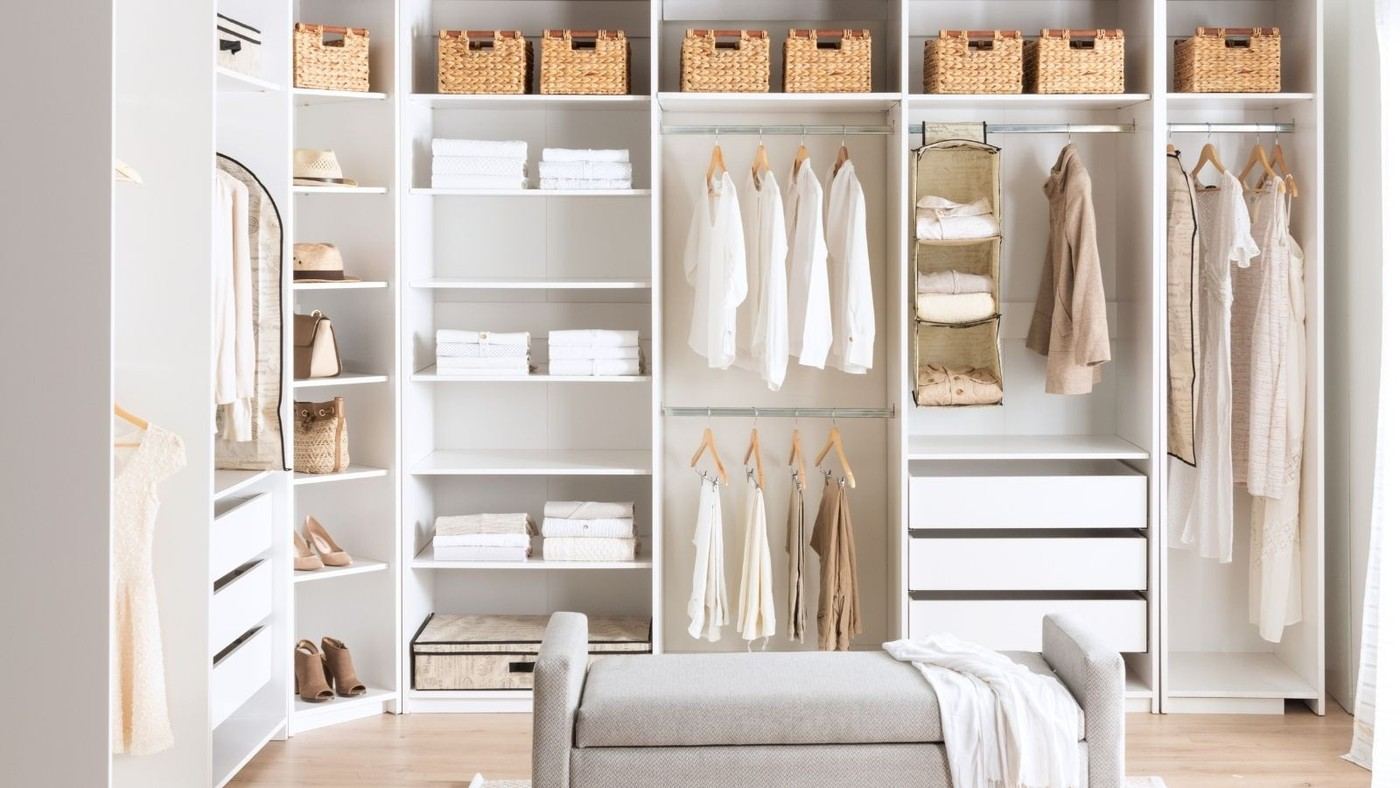
Allow suitable dresses enough clearance
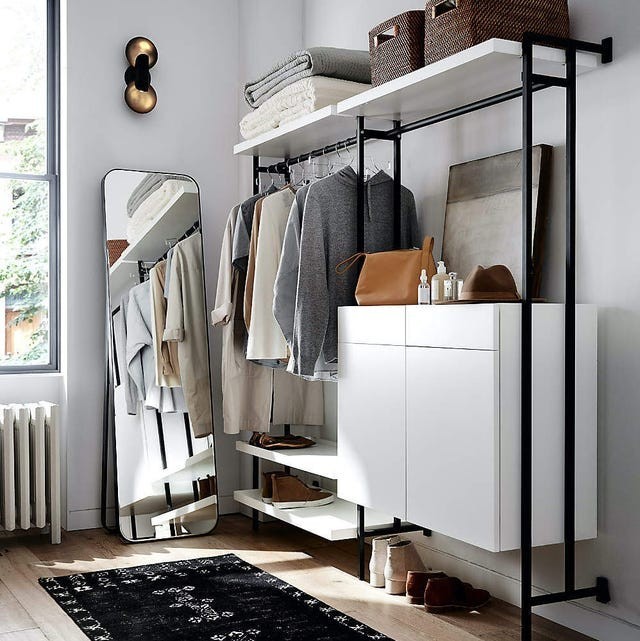
Homes and Gardens discusses hanging dresses as a way to reduce unnecessary folding and keep them visible. Choose a hanger that supports the piece without straining narrow points, and allow enough height so the hem is not crushed against the floor or another shelf. Heavier decoration needs particular care because its weight may stress both garment and hanger. The source itself notes that some embellished pieces can stretch when hung. Check the construction rather than assuming every dress belongs on a rail. A long hanging section is useful only if it supports the actual items stored there and leaves them easy to remove.
Support outerwear and wrinkle prone pieces
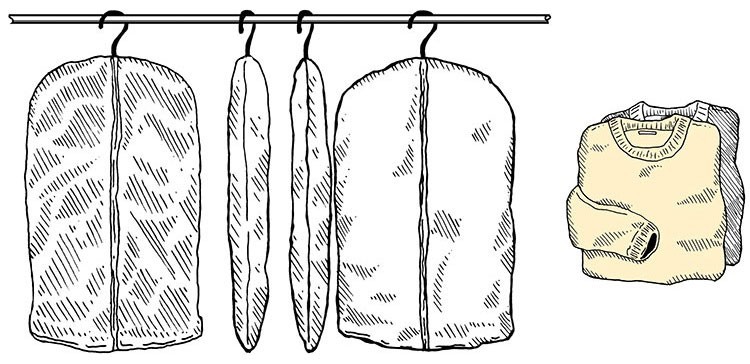
Structured jackets and coats often need appropriate shoulder support to help maintain their shape. Use a hanger sized for the garment and avoid crowding adjacent pieces tightly enough to compress them. The article also identifies selected linen and silk clothing as candidates for hanging where folding would add unwanted creases. The right method still depends on the specific garment and finish. Protective covers may be useful for some occasion wear, provided they are suitable for storage and do not replace checking that clothes are clean and dry. Arrange categories so the next outfit can be found without disturbing an entire rail.
Keep flexible knitwear out of a universal rule
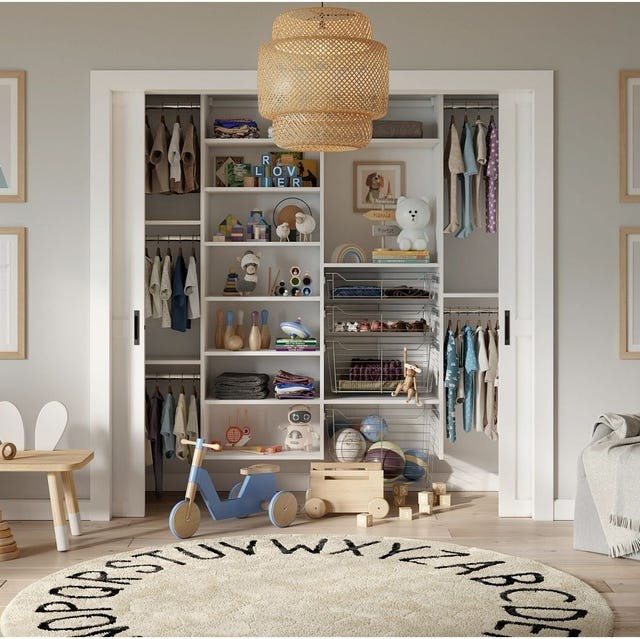
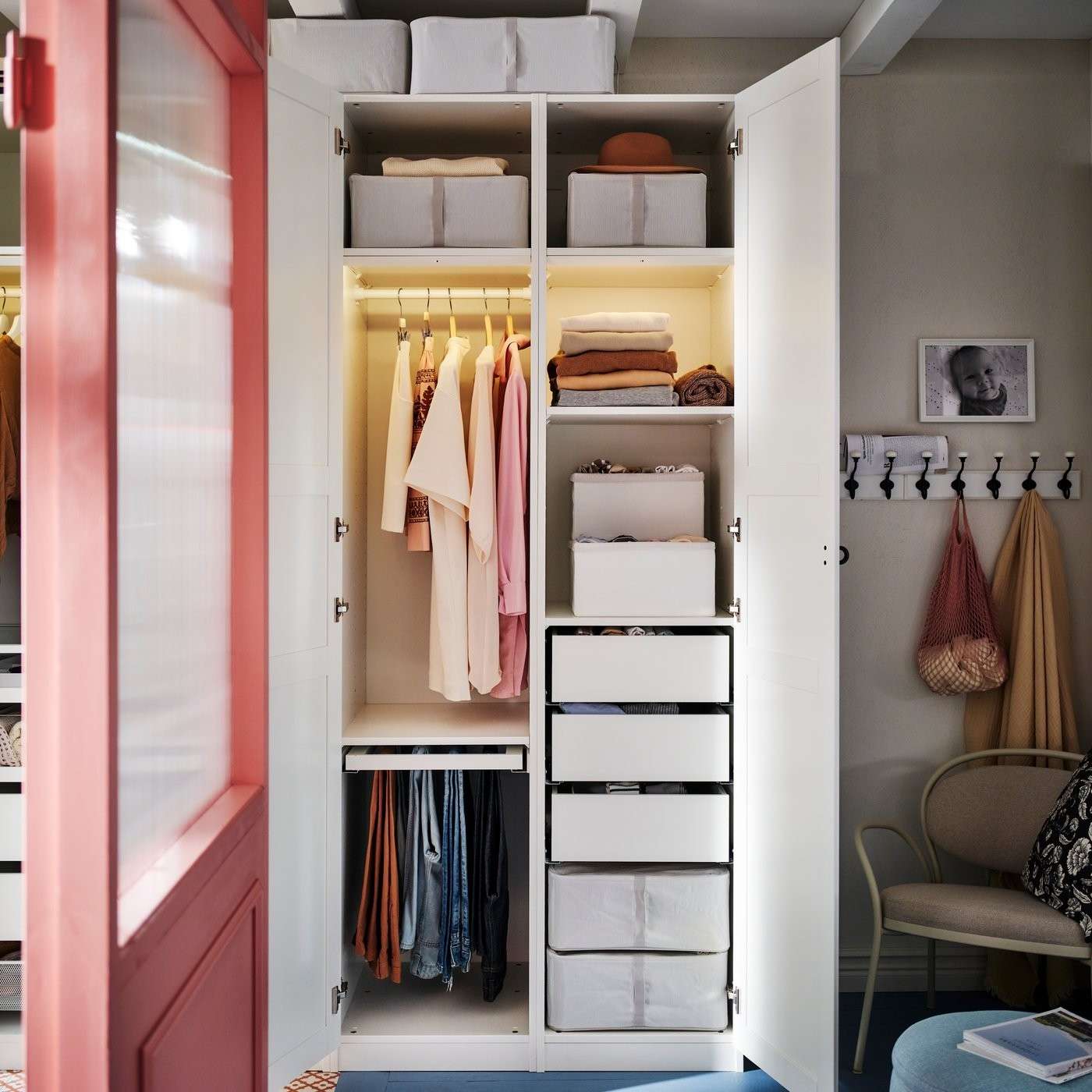
Sweaters and knitted tops may lose shape under their own hanging weight, making folded support the better option. Casual pieces such as jeans can be stored in different ways depending on available space and the user's routine; hanging is an option rather than a requirement. Review how the item behaves after normal storage, including shoulder marks, stretching or difficult creases. A wardrobe can combine rails, shelves and drawers instead of forcing one approach across the collection. Match support to construction first, then choose the arrangement that preserves visibility and makes returning clean clothing straightforward.
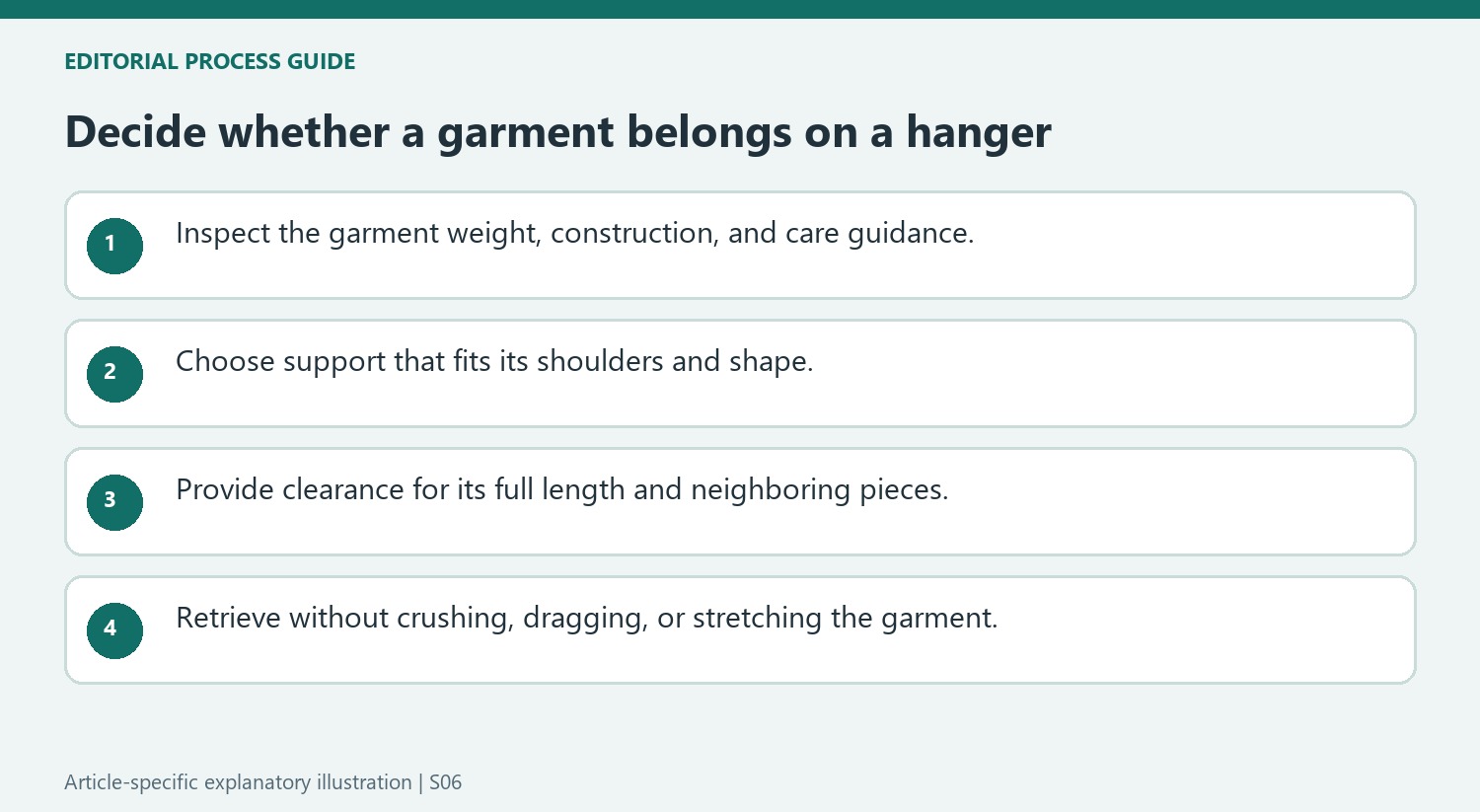
Inspect the weight and construction before using a rail
The article recommends hanging several categories but also acknowledges that heavy embellishment can make a garment stretch. That exception is central to applying the advice sensibly. Look at where the item's weight will be carried and whether its hanger provides suitable support. A strong hanger is not enough if the garment itself is strained at narrow straps or delicate areas. Allow adequate clearance for a long hem and room around decorative details. Check the piece after storage changes to see whether shoulder marks or distortion appear. A category such as dress is only a starting description; the particular construction and any maker guidance decide whether hanging or another supported arrangement is the better choice for the item.
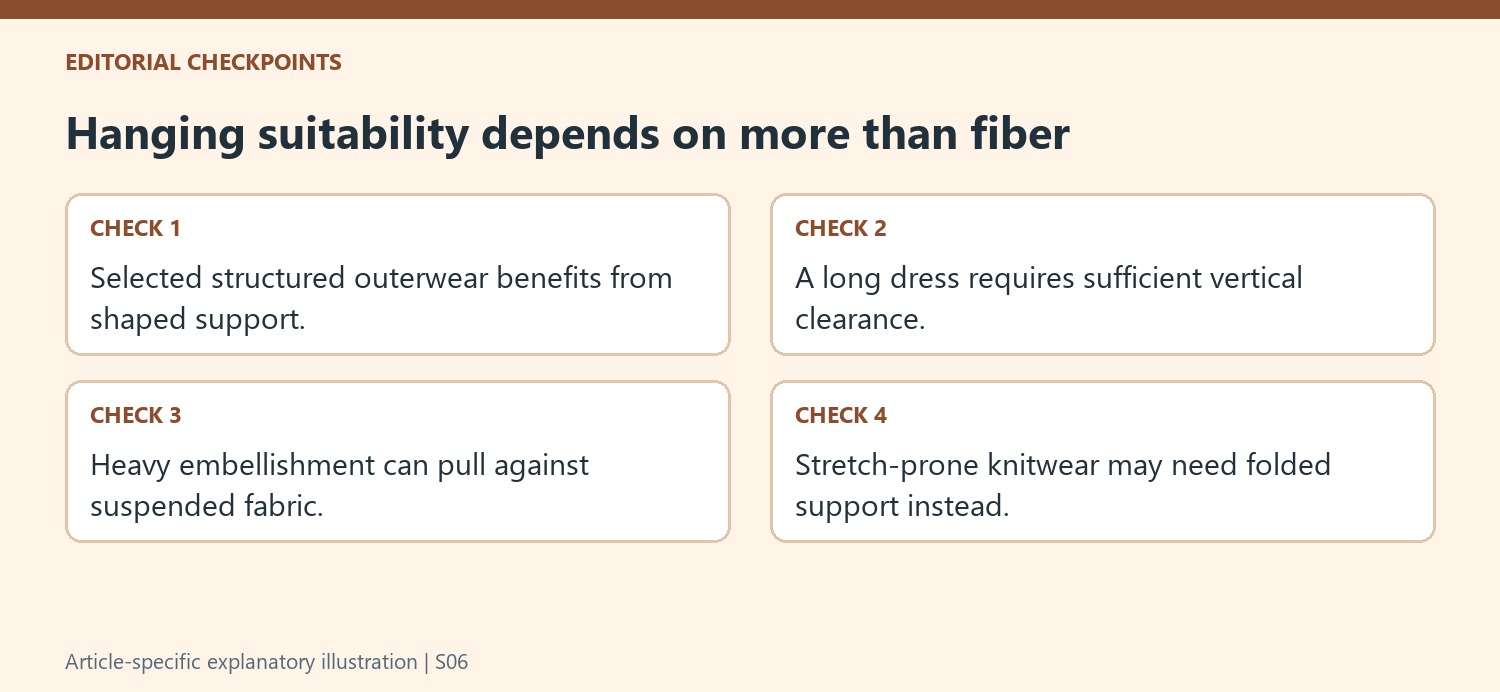
Keep wrinkle prevention separate from universal hanging rules
The source discusses selected linen and silk pieces as candidates for hanging because folding can introduce unwanted creases. The useful principle is to consider the finish and construction, not to hang every garment containing one of those fibers. A knitted or heavily decorated piece can have different support needs from a lightweight woven blouse. Structured jackets and coats often benefit from a hanger suited to their shoulders, while flexible knitwear may need folded support. Jeans can fit several storage routines depending on the space and how they are used. Compare the actual result after ordinary storage rather than following a viral space-saving method solely because it makes the rail look compact or promises more room for another category.
Leave room for retrieval and an appropriate cover
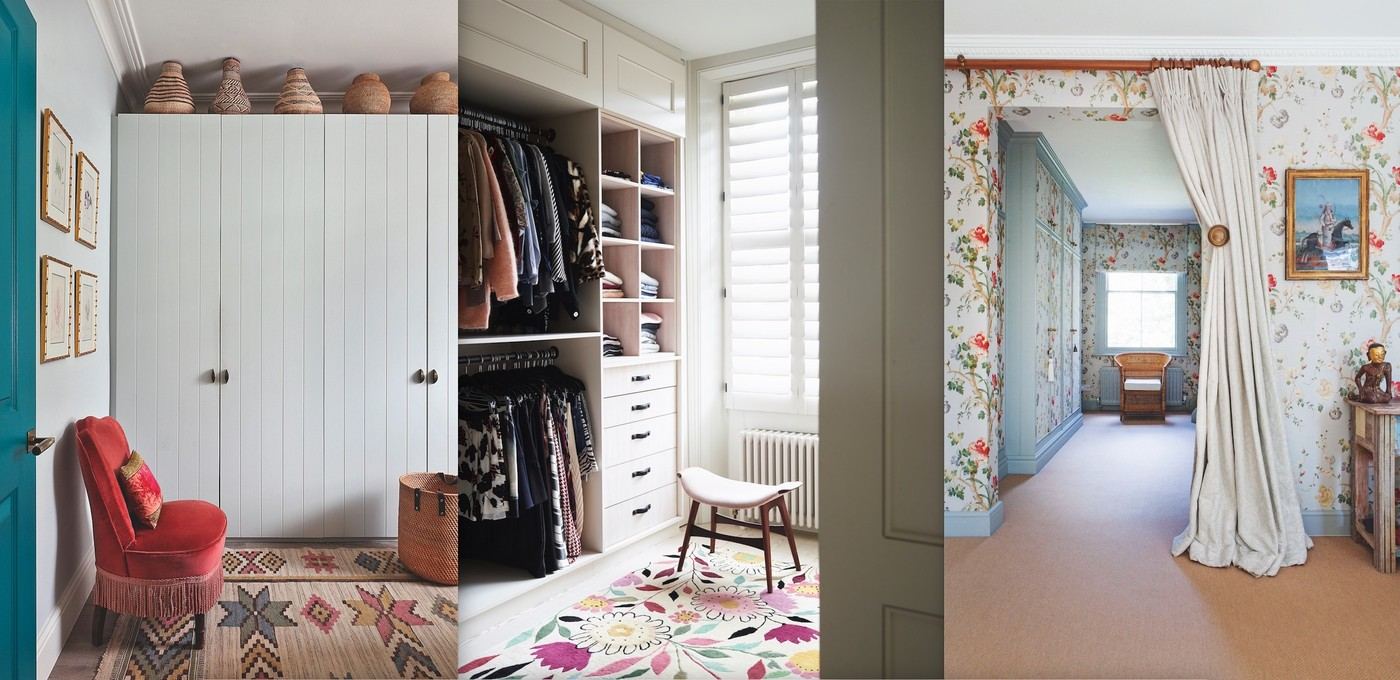
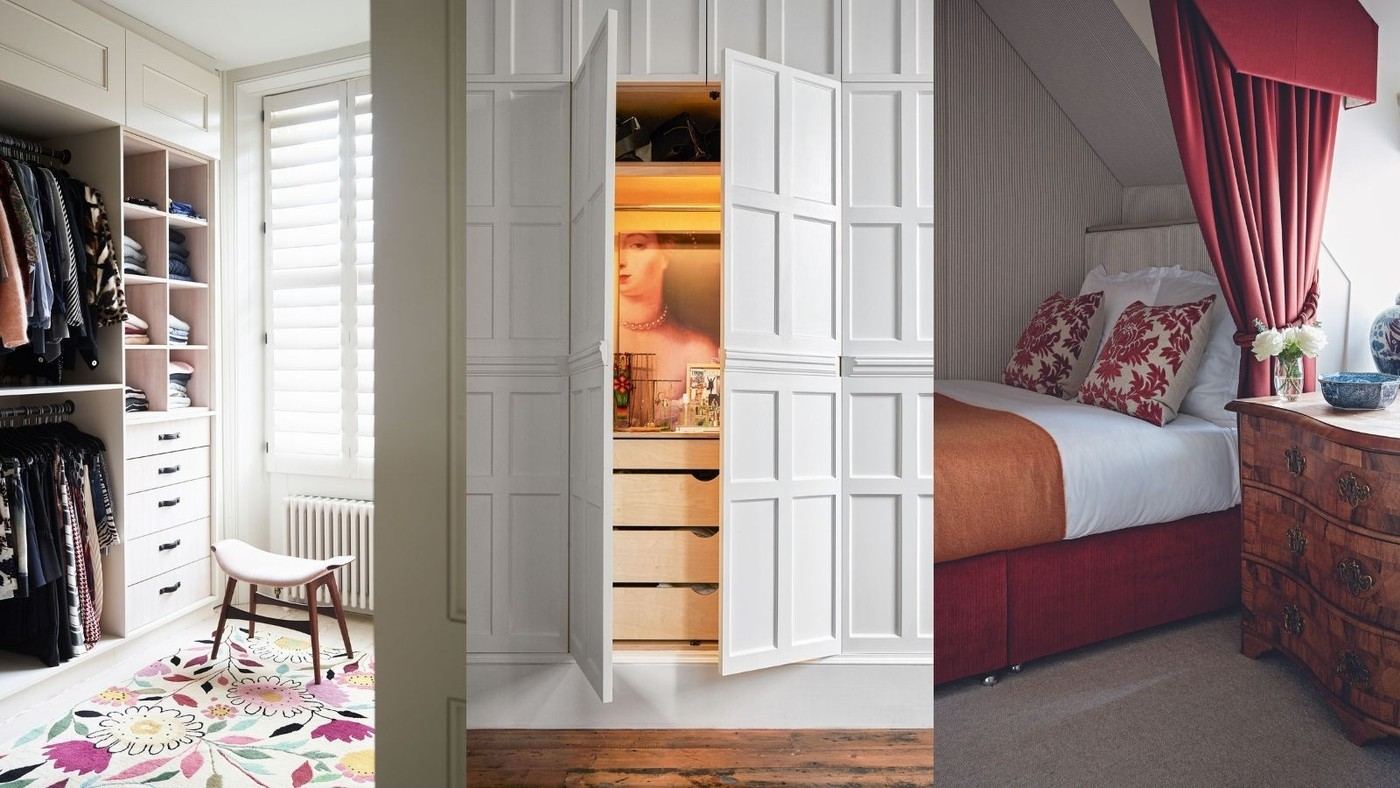
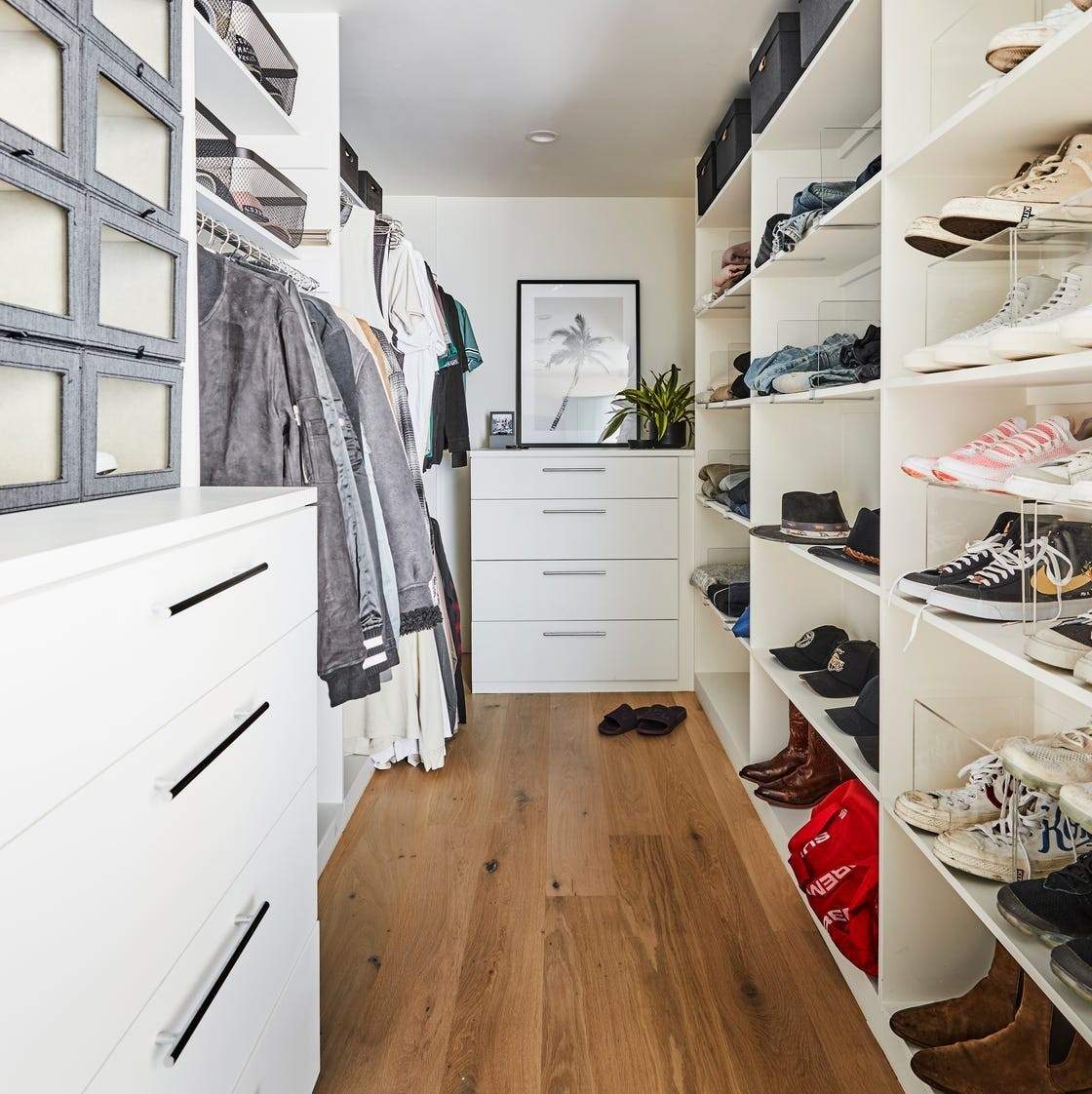
Even a suitable hanger becomes less helpful when the rail is packed so tightly that clothing is compressed or hard to identify. Keep categories clear and allow a piece to be removed and returned without dragging neighboring garments along. Protective covers can suit some occasion wear, but choose products intended for the storage task and begin with clean, dry clothing. A cover does not remove the need to inspect condition or preserve support. If the rail is still crowded, review which pieces need immediate access and which can be stored appropriately elsewhere. A wardrobe can combine drawers, shelves, and hanging areas. The most useful arrangement preserves shape and visibility while making the next laundry return straightforward, rather than maximizing the number of garments suspended in one place.
References
- I'm a homes writer and I always store these clothing items hung up – for space-saving storage and crease-free garments. Homes and Gardens; Ottilie Blackhall.