GarmentCare Guide
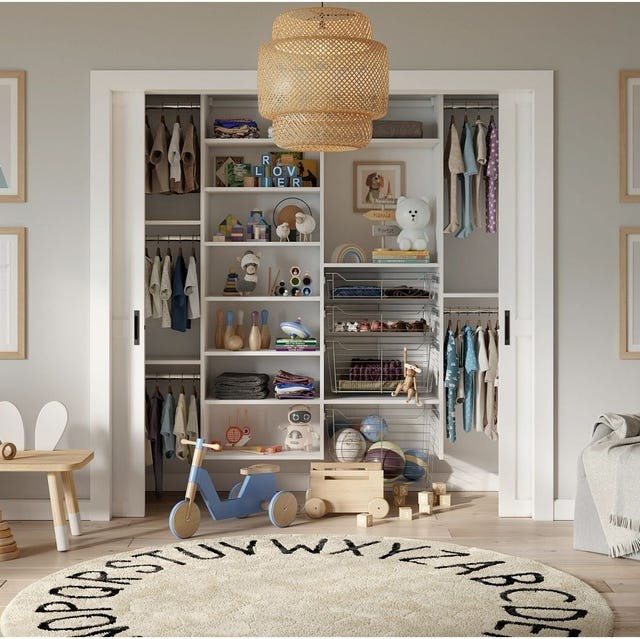
Plan for smaller pieces and daily access
House Beautiful's children's closet ideas address the challenge of many small garments competing for limited space. Vertical shelves and built in compartments can help use height, but everyday clothing needs positions the child can manage appropriately. Keep the arrangement clear enough to distinguish outfits without searching through a packed rail. Pairing related pieces may make selection easier, while small categories such as socks need a defined container. The purpose is not simply a smaller version of an adult's display closet. Consider how the child chooses clothes and how an adult or child returns clean laundry during the ordinary daily routine.
Give costumes and awkward garments a separate home
The article shows a freestanding rack used for dress up clothing, making costumes easier to choose and put away than when they are mixed into the main wardrobe. Cubbies or drawers can suit items that do not sit neatly on hangers. Choose furniture and fittings appropriate to the room and follow installation and stability instructions. A defined place for these pieces can keep them from repeatedly becoming a floor pile. Use higher storage for less frequently needed items where appropriate, leaving the accessible area focused on daily tasks rather than trying to display the entire collection at once.
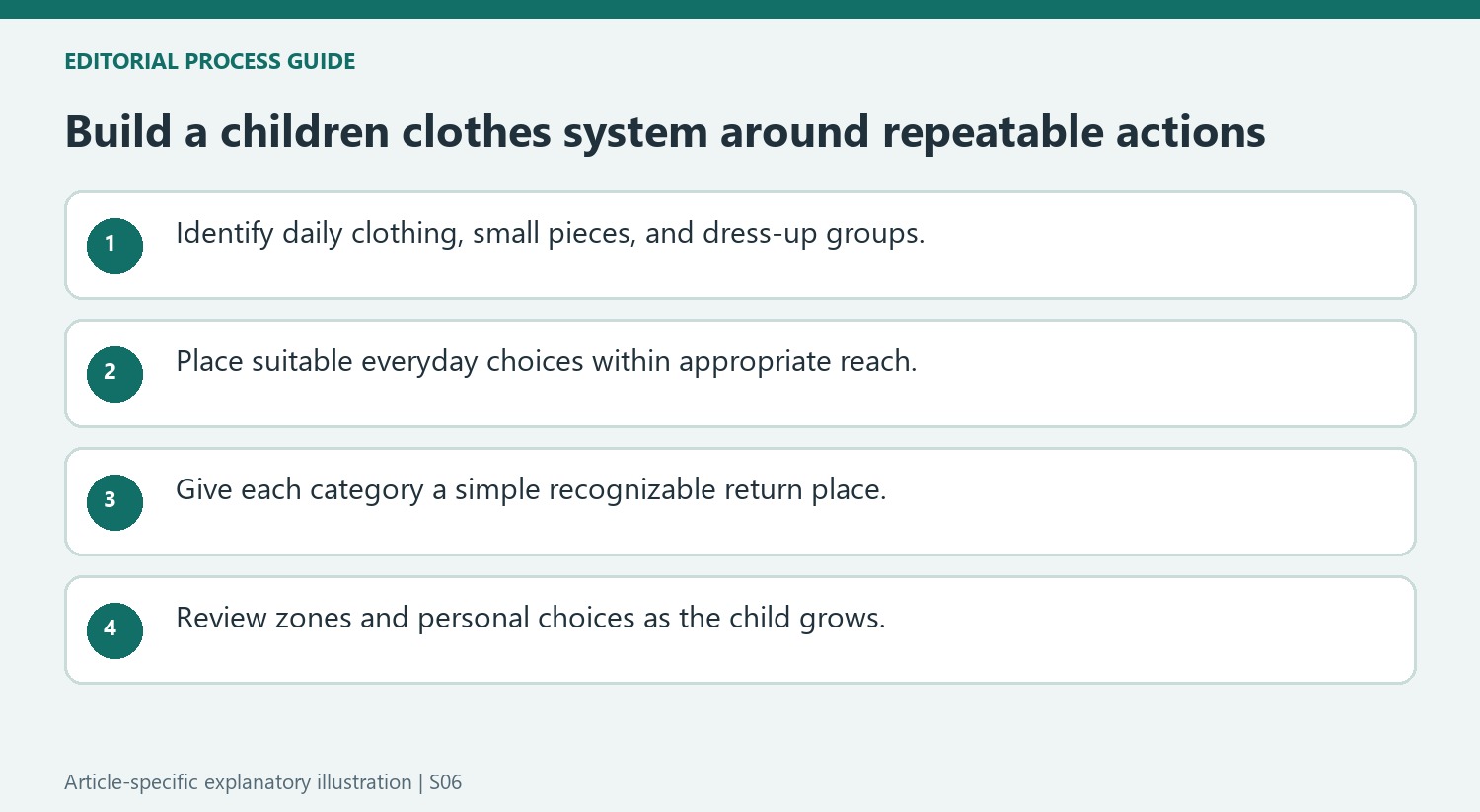
Create understandable zones and involve the user
Shared closets can be divided into separate sections, giving each child a recognizable area without requiring a different furniture style on each side. House Beautiful also suggests involving older children in choices such as baskets, hanger colors and personal details. A familiar arrangement is easier to maintain when the user understands and accepts it. Color grouping may help some families, while clothing type or outfit groups may be more practical for others. Review the setup as sizes and routines change. A useful children's closet supports growing independence through simple choices and clear return places, rather than depending on constant adult restyling to remain usable.
Design the return action as carefully as the choice
The source focuses on small clothes that can be awkward to hang and easy to scatter. Consider how the child or adult will put them away after laundry, not only how outfits look when selected. A reachable compartment with a clear purpose may be easier to maintain than a crowded rail of tiny hangers. Group related pieces where that helps dressing and give socks or other small categories their own manageable place. Higher positions can hold suitable less-used items while everyday clothing remains appropriately accessible. Follow furniture and fitting instructions for stability and installation. A system supports independence when its ordinary actions are understandable, rather than relying on an adult to reconstruct the display after each outfit is chosen.
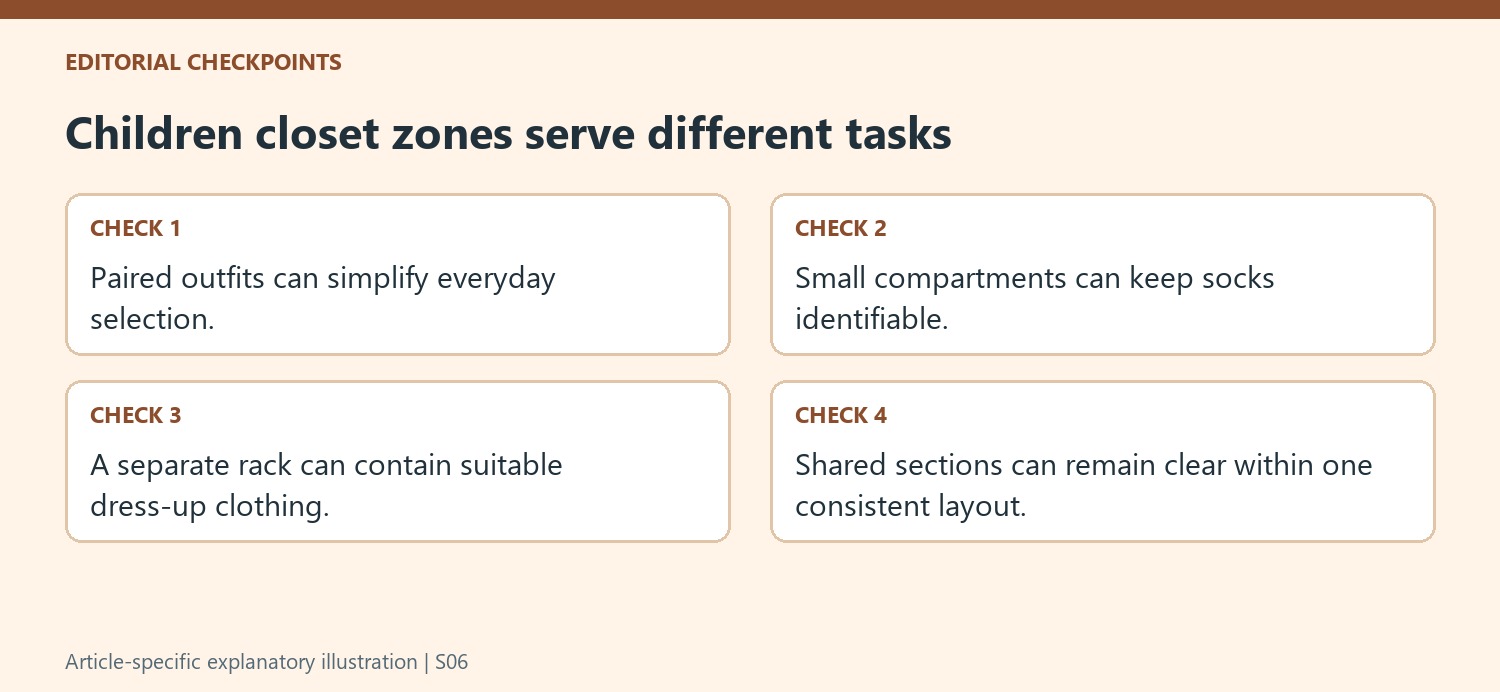
Separate costumes and awkward pieces from daily clothing
House Beautiful shows a freestanding rack for dress-up clothes and compartments for garments that do not sit neatly on a hanger. These examples address distinct uses within the same room. A costume can be easier to find and return when it has a dedicated place rather than being mixed among school or everyday clothes. Choose support appropriate to the piece and keep the number of items within the rack or storage unit's intended capacity. Cubbies can contain irregular shapes without requiring a precise folding performance every time. Review the arrangement with the actual user: if the return step is too complicated, simplify it before adding another container. The goal is a clear home for each group, not merely moving a floor pile into a prettier crowded corner.
Let shared zones and personal choices evolve
The article suggests recognizable sections for shared closets and involving older children in details such as baskets and hanger colors. A consistent overall layout can still give each user a clear area. Color grouping may help one household, while clothing type or paired outfits may make more sense for another. Ask what can be maintained during an ordinary morning and laundry return, then revise as sizes, school routines, and preferences change. Decorative touches can make the space familiar without dictating how every garment must be arranged. Keep frequently used clothing visible and avoid filling the accessible area with the entire collection. A children's closet is a changing system, so its usefulness depends on simple rules that can grow with the person using it.
References
- 10 Ingenious Ways to Organize Your Kid's Closet 2024. House Beautiful.