GarmentCare Guide
Prepare the shirt before learning the motion
Ariel's folding guide starts with a clean flat surface and a T-shirt laid front side upward. Smooth the fabric so the method begins with an even shape rather than trapping an existing wrinkle. Handle suitable laundry promptly after drying, while still following the garment's permitted drying method. A quick fold is easiest to learn on one ordinary shirt before attempting a whole pile. Give yourself room to identify the points used in the motion. The goal is a consistent shape that suits storage, not speed at the expense of bunching the cloth or stretching the neckline.
Pinch aligned points and cross the hands
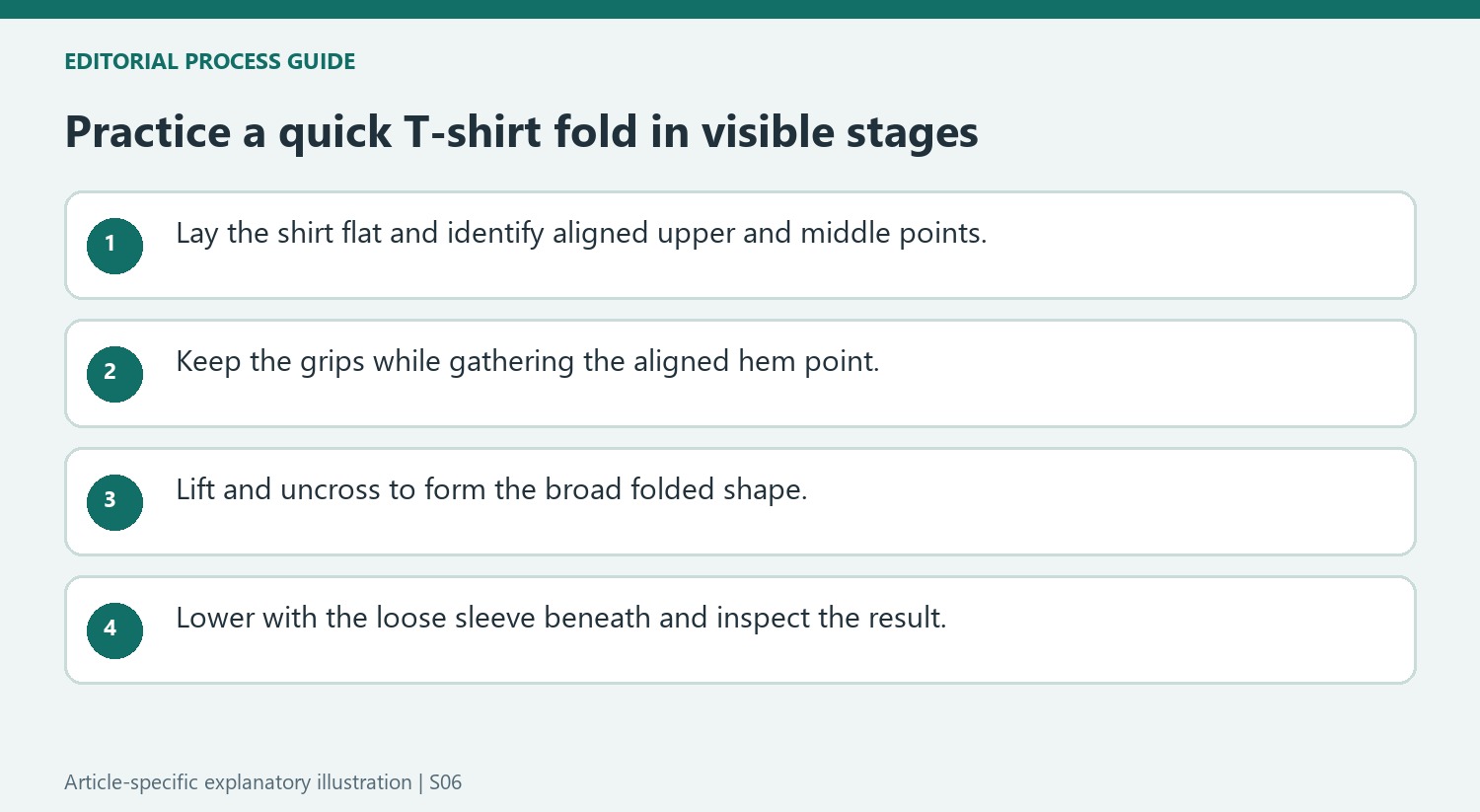
The method uses points along an imaginary line running down from just outside the neckline to the bottom hem. One hand holds the upper point and the other holds the middle point. Keeping those grips, cross the upper hand toward the hem and gather that lower point as well. Lift the shirt while uncrossing the arms, allowing the cloth to hang into a broad folded shape with one sleeve still loose. Work slowly at first so the sequence is clear. If the shirt twists into a bundle, lay it out again rather than tugging hard to force the fold into place.
Tuck the loose sleeve and check the result
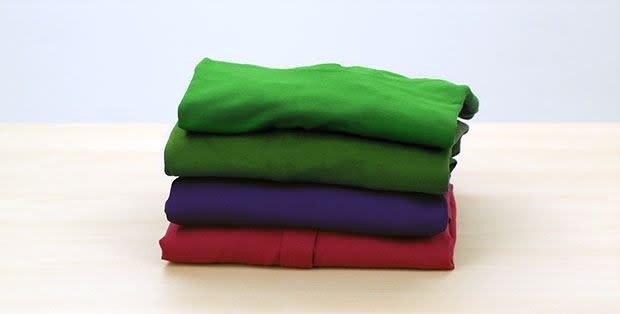
Return the shirt to the surface with the loose sleeve positioned underneath as the final side is folded over it. Check that the body lies smoothly and that the finished shape can be stacked or arranged in its intended drawer. A printed front may help identify the garment later, so consider which detail remains visible. Repeat with similar shirts to make the motion more familiar, adjusting for differences in size and sleeve shape. This is one useful technique rather than the only acceptable fold. A slower conventional method is equally practical when it produces a manageable shape without adding awkward creases.
Learn the grip positions before trying to gain speed
The source's quick fold follows aligned points from the upper shirt toward the hem. Locate those points on one smooth T-shirt while it lies flat, and rehearse the sequence slowly. Keep the fabric in its natural shape rather than pulling the neckline or stretching the body to make the points meet. The technique is easier to understand when there is enough surface to see the entire shirt and both sleeves. If a grip slips, lay the item out again instead of tugging a twisted bundle into submission. A consistent result matters more than matching an advertised speed. Once the movement is familiar on an ordinary shirt, it can be adapted carefully to another size or sleeve shape.
Check the lift before making the final fold
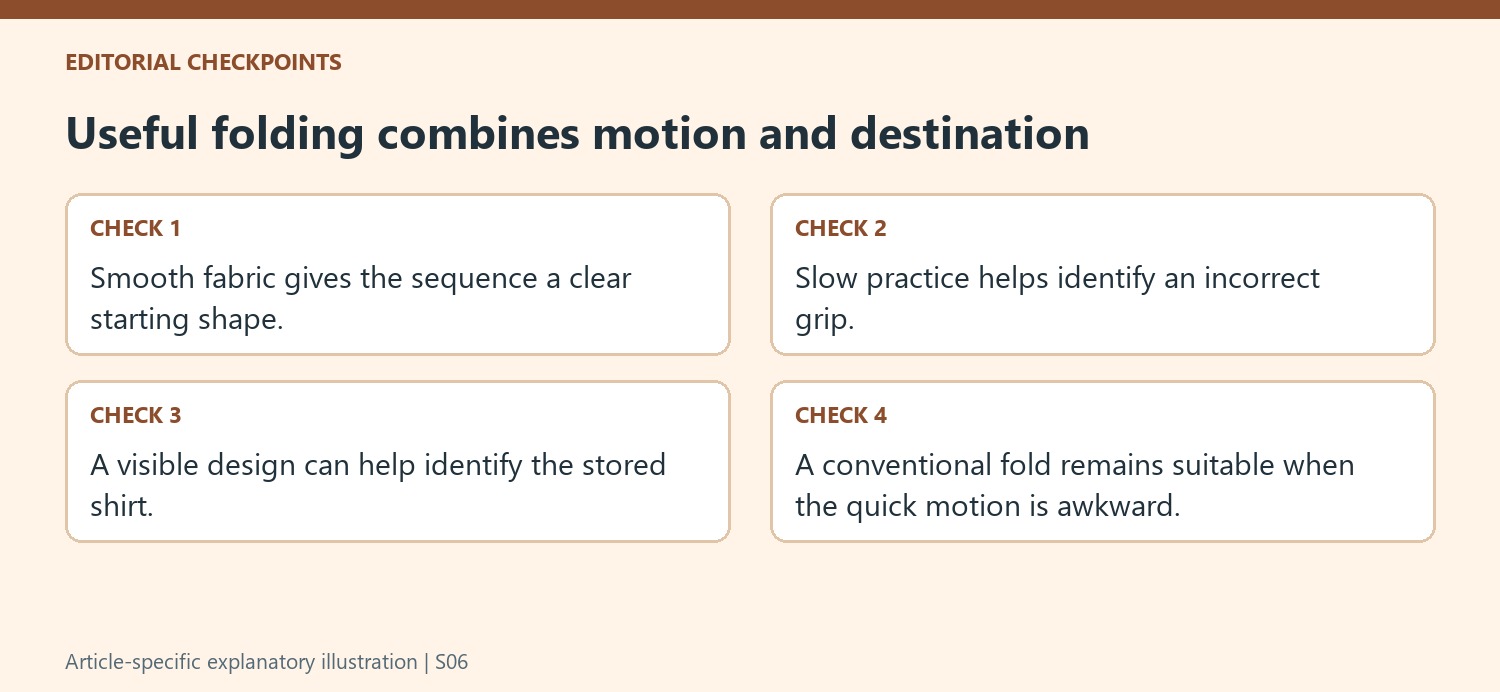
When the hands uncross and the shirt is lifted, the cloth should form a broad folded shape with one sleeve left loose. This is a useful pause to check whether the fabric has bunched or whether the grips were misaligned. Lower the shirt to the surface in the source's sequence, arranging the loose sleeve underneath the remaining side. Smooth the final shape rather than adding more folds to hide an uneven edge. A visible design can help identify the shirt in storage, so inspect which part faces outward after the method is complete. The motion is a means of arranging the garment; it should still leave the material ready for the drawer or shelf where it will actually be used.
Fit the finished shape to an ordinary storage routine
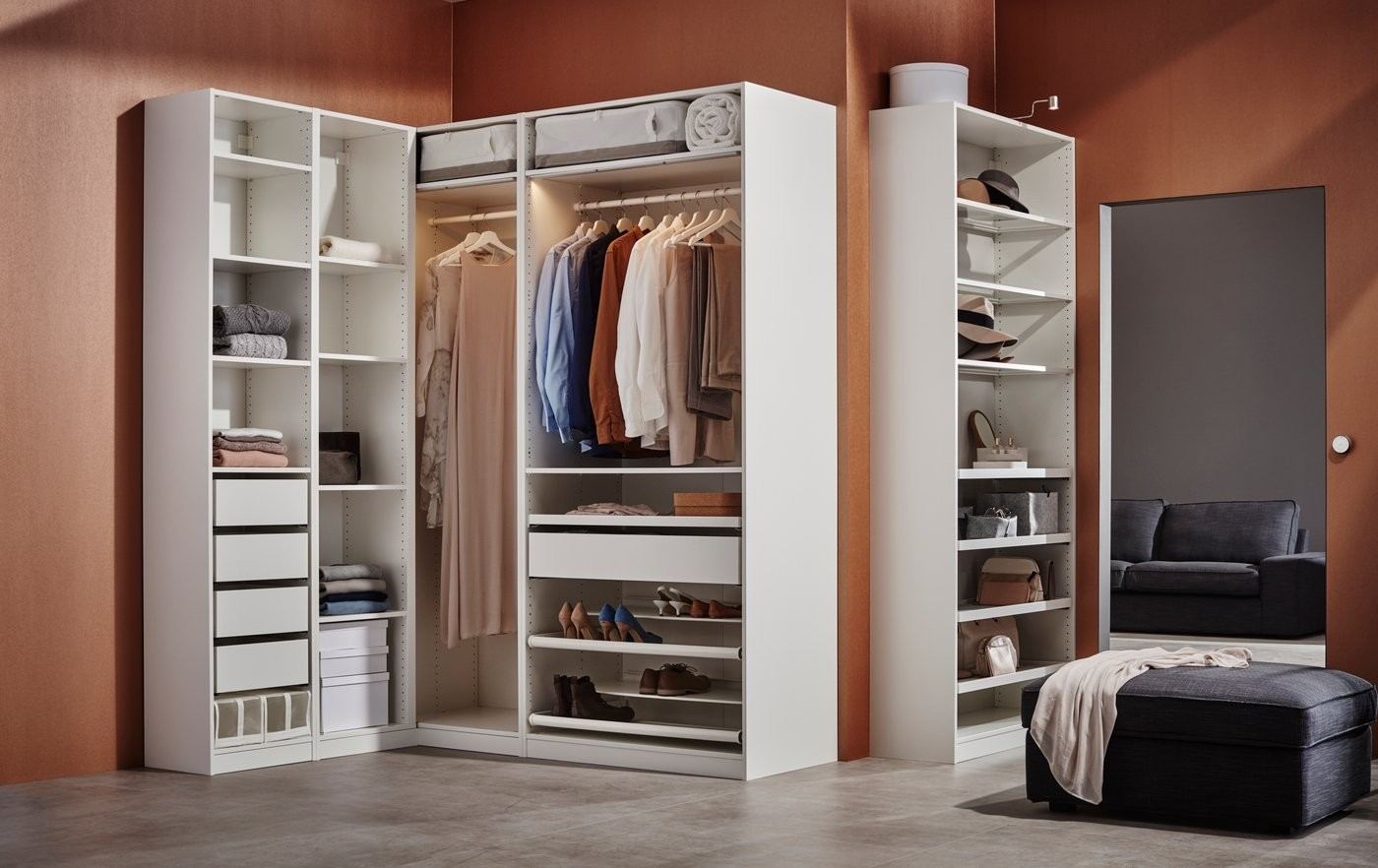
A fast folding method saves effort only when the resulting package suits its destination. Compare the width with the available drawer or stack and leave room to remove the shirt without pulling neighboring clothing out of position. Handle suitable laundry promptly after its permitted drying process, rather than expecting a fold to remove creases that have already settled in a heap. If a particular shirt's construction makes the quick motion awkward, use a conventional fold that supports it more clearly. Practice with similar pieces can make repetition easier, but every garment need not be forced into one identical shape. The useful routine finishes by putting the clothing away in a recognizable, accessible arrangement instead of creating another temporary pile of neat rectangles.