GarmentCare Guide

Make the first sorting decision visible
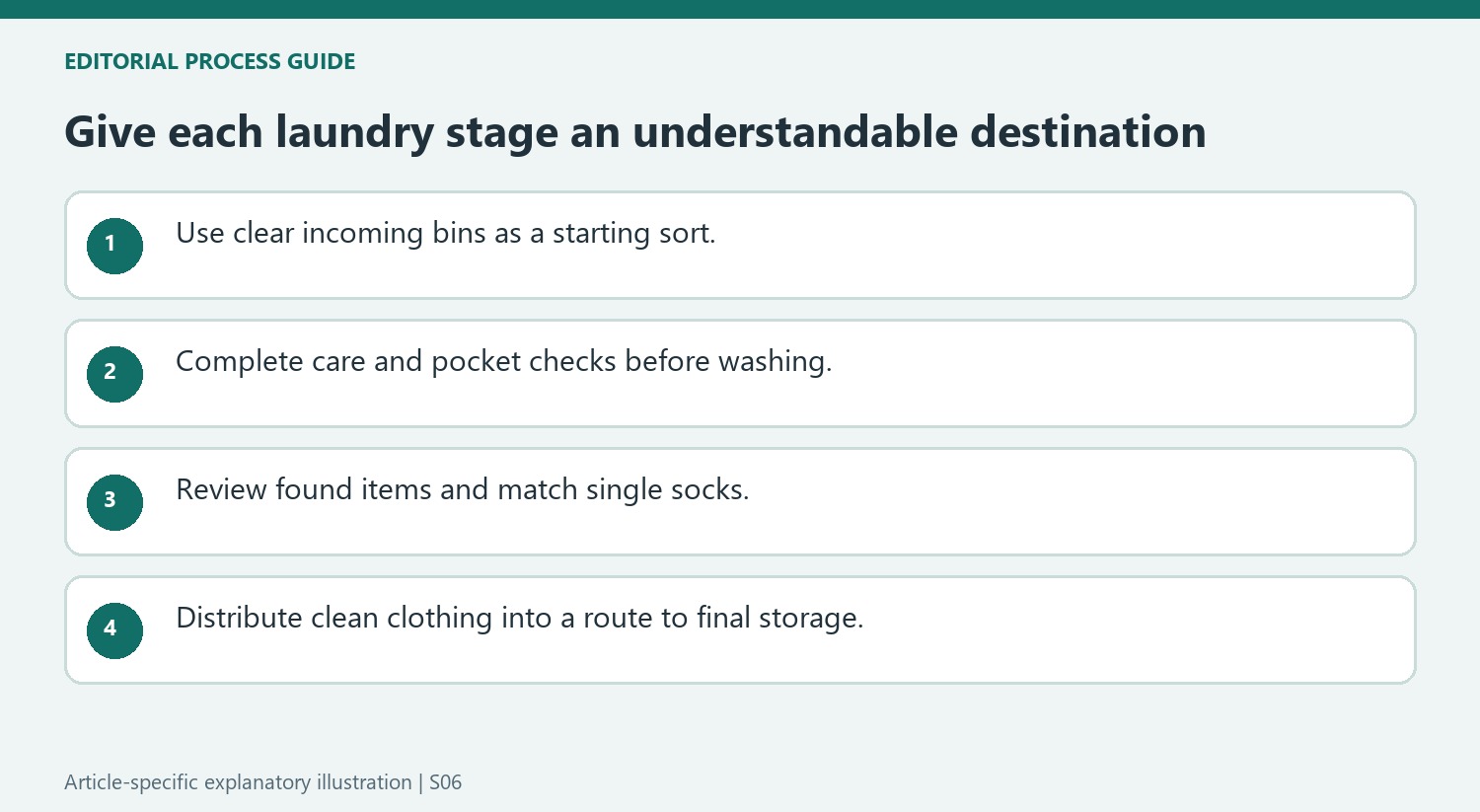
Ariel suggests clearly labeled bins for dark and light laundry so household members can begin sorting before washing day. These groups provide a useful start, while final loads still need checks for care instructions, color transfer risk and fabric requirements. A label cannot decide whether a delicate item belongs on a normal machine cycle. Place the bins where they are easy to use and keep their purpose understandable. The aim is to reduce repeated sorting work, not create a system so detailed that clothes are left beside it because nobody is sure where an item belongs.
Contain the small things found during washing
The source proposes a place for single socks while their missing partners are being located. A visible collection can prevent a matching sock from being discarded too quickly and stops loose pieces scattering around the laundry area. A separate container for money found during pocket checks also gives those discoveries a destination. Continue checking pockets before washing, since the container is not a substitute for removing objects from clothing. Review the single sock area periodically so it does not become an unchanging display of forgotten pieces. Small defined locations work when their contents receive a clear next step.
Create return places for clean clothing
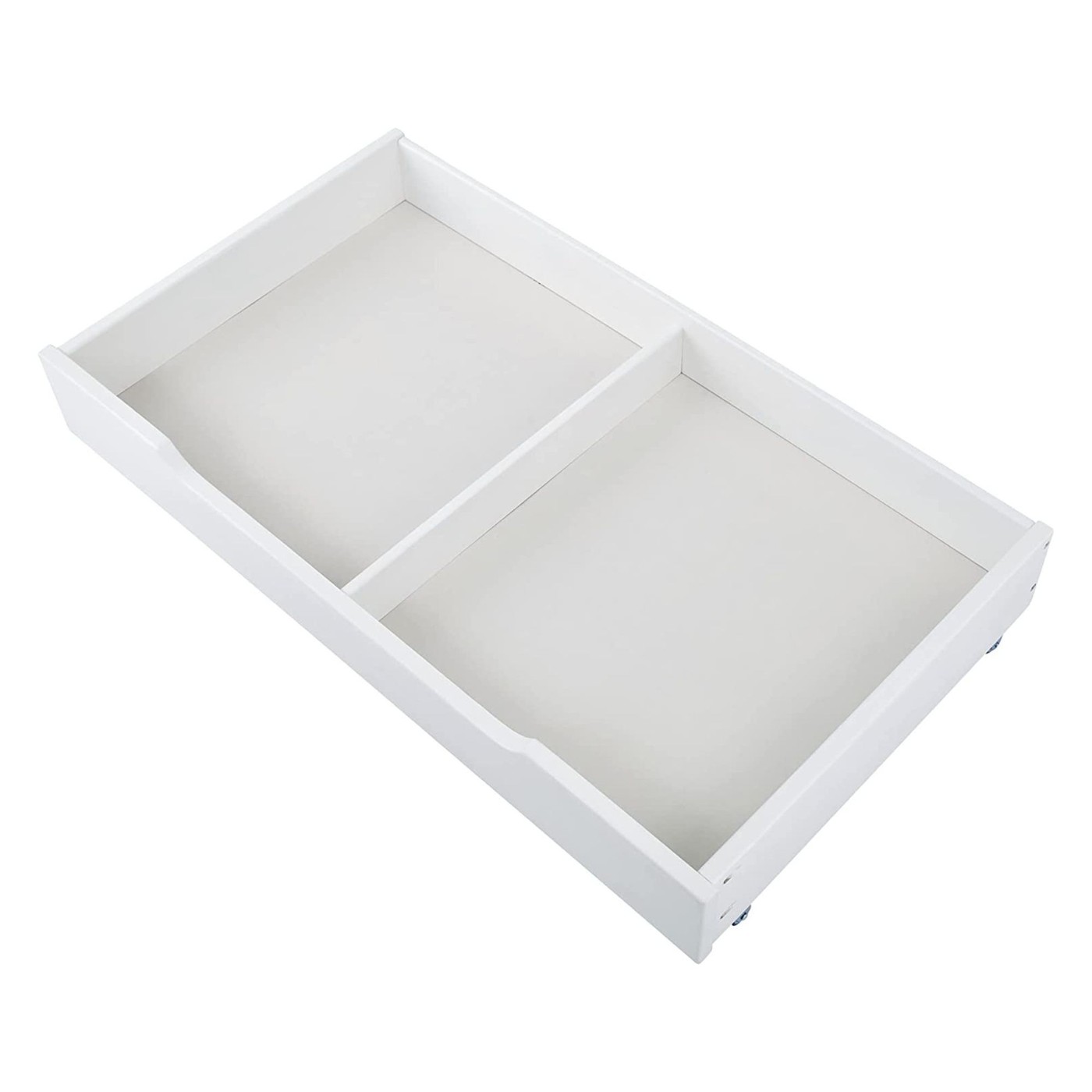
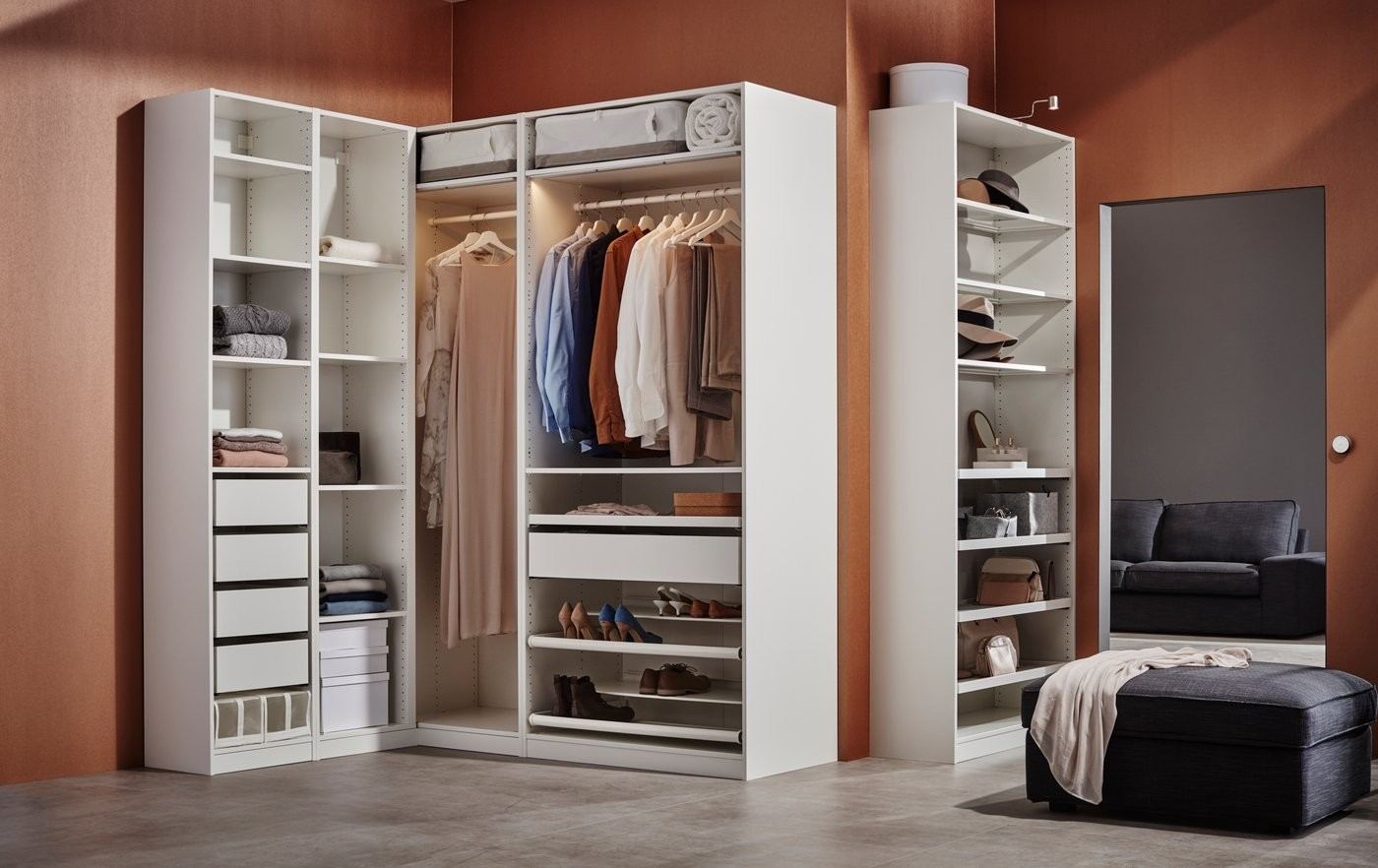
Individual baskets, bins or shelves can help distribute clean laundry by household member, making collection and putting away easier to share. Choose a setup that fits the room and the people using it. Fold or hang garments as appropriate rather than leaving them compressed indefinitely in a return basket. Ariel also recommends accessible stain guidance, which can help identify a suitable treatment before a mark becomes an ordinary wash problem. Keep product directions and garment compatibility in mind when following any chart. Clear sorting, collection and return areas connect the stages of laundry, reducing the temporary piles that make the room harder to use.
Make the first sort easy without making it final
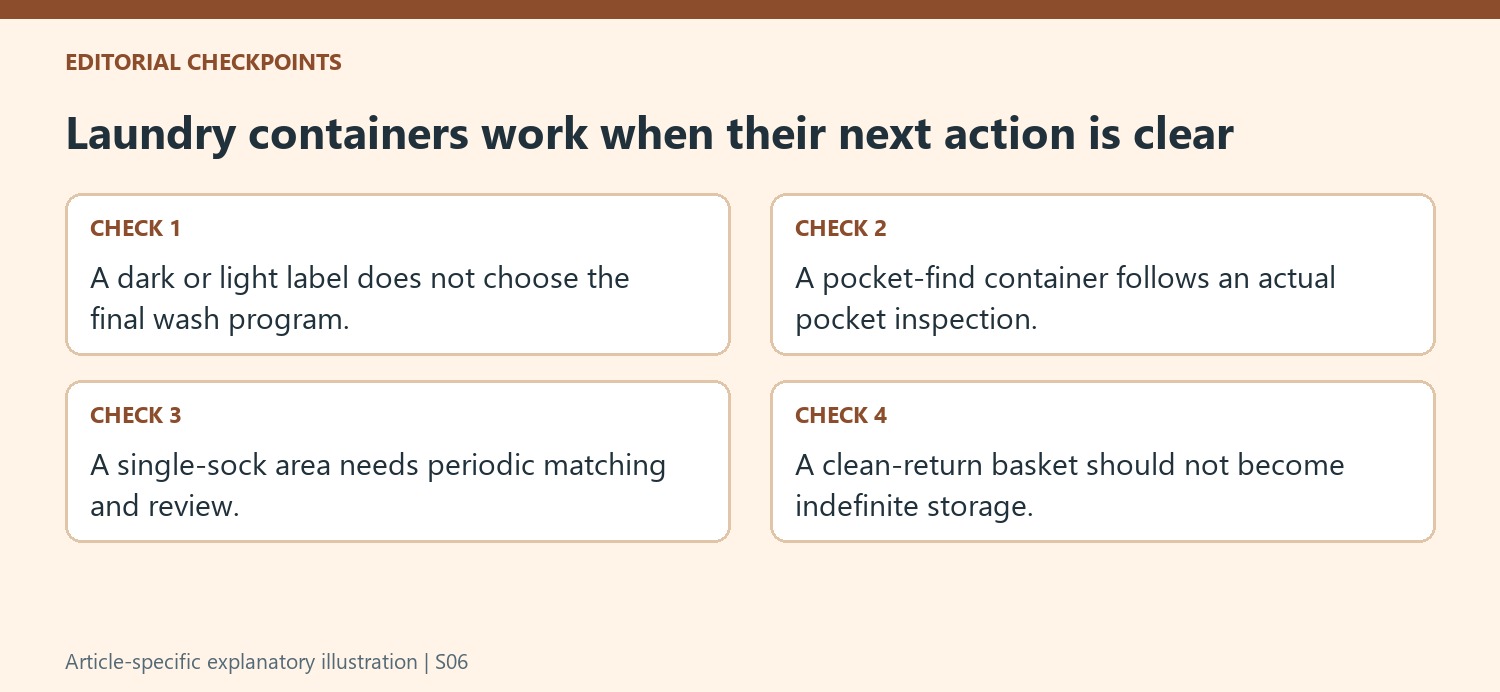
Ariel suggests clearly marked dark and light bins so household members can contribute before washing day. Those labels can reduce repeated work, but they cannot decide every care question. Before starting a load, check the actual garments for fabric instructions, unfamiliar dyes, stains, and items needing another method. A delicate dark garment does not become suitable for a normal cycle simply because it reached the dark bin. Place the containers where they are convenient and keep the categories understandable enough that clothing does not accumulate beside them. The useful system creates a better starting point for the final care-based sort, rather than replacing that judgment or expanding into more labeled divisions than the household can realistically maintain.
Give pocket finds and single socks a review step
The source's piggy-bank and lost-sock ideas make small discoveries visible instead of scattering them around the room. Continue inspecting pockets before the wash and place found objects in an appropriate defined location. A money container is a destination after a check, not protection for an object left in the drum. Likewise, a single-sock board or basket can keep a pair available for reunion, but its contents need periodic review. Compare new finds with the existing group and decide what happens to pieces that remain unmatched. These small areas work when they support a next action. Without that follow-through, the display may simply become a permanent collection of forgotten objects occupying space needed for the laundry process.
Connect the return baskets to putting clothes away
The guide suggests a basket, shelf, or bin for each household member so distributing clean laundry becomes easier to share. Choose a size and position that fit the room and the people collecting the clothes. Keep clean returns distinct from incoming washing, and fold or hang garments according to their support needs instead of leaving them compressed indefinitely. An accessible stain chart can assist an early decision, but the garment and product instructions still determine the actual treatment. Review where temporary piles appear between these stages. A basket should shorten the path to final storage, not become an alternative wardrobe that never gets emptied. Clear incoming, found-item, and clean-return areas make the whole routine easier to understand and repeat.