GarmentCare Guide

Distinguish sentimental pieces from daily clothing
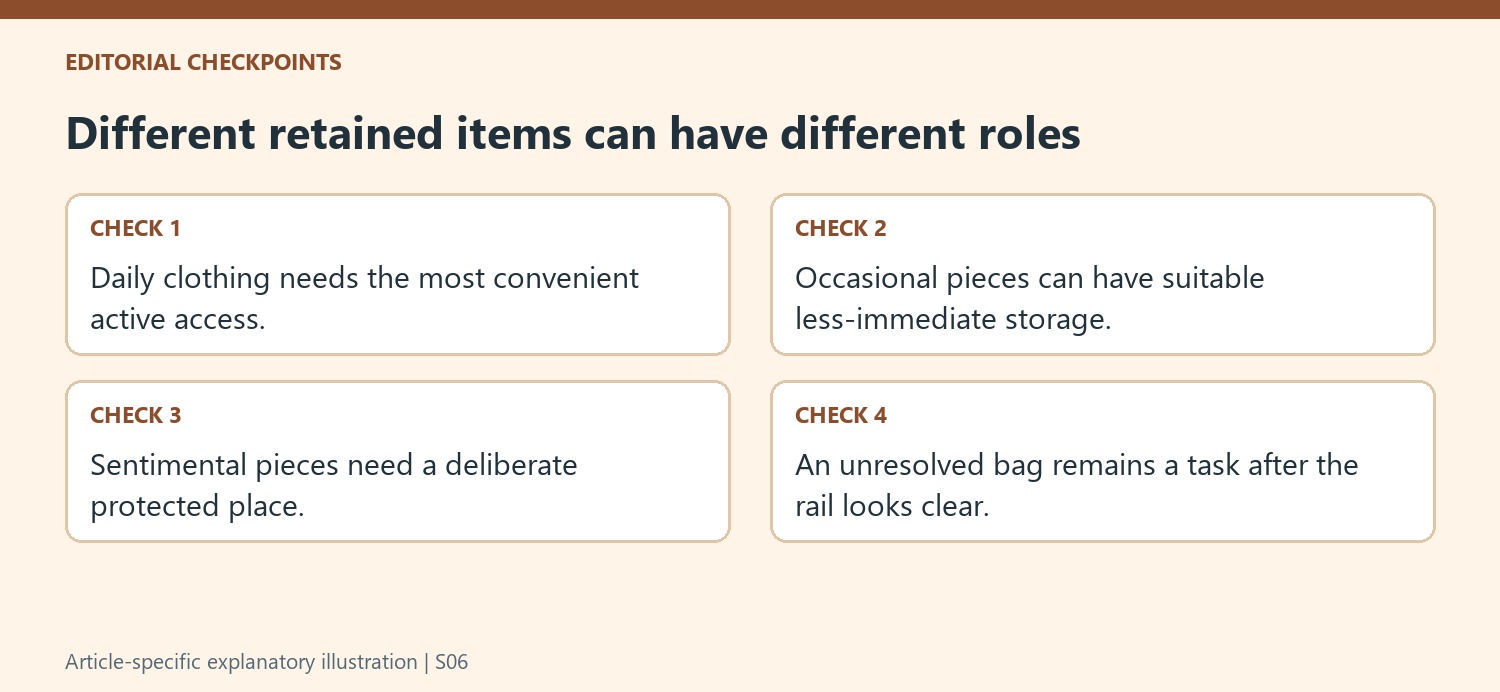
Homes and Gardens identifies just in case clothing as a common source of closet crowding. Some pieces remain because of memories, while others are kept for an imagined future need that never becomes part of everyday life. Review those reasons deliberately instead of repeatedly moving the garments around the same rail. A sentimental item can have a protected place separate from current outfits, without requiring its removal from the household. Clothing that no longer fits the user's needs may be suitable to sell or donate. The useful decision is about the item's role, rather than applying one rigid deadline to every possession.
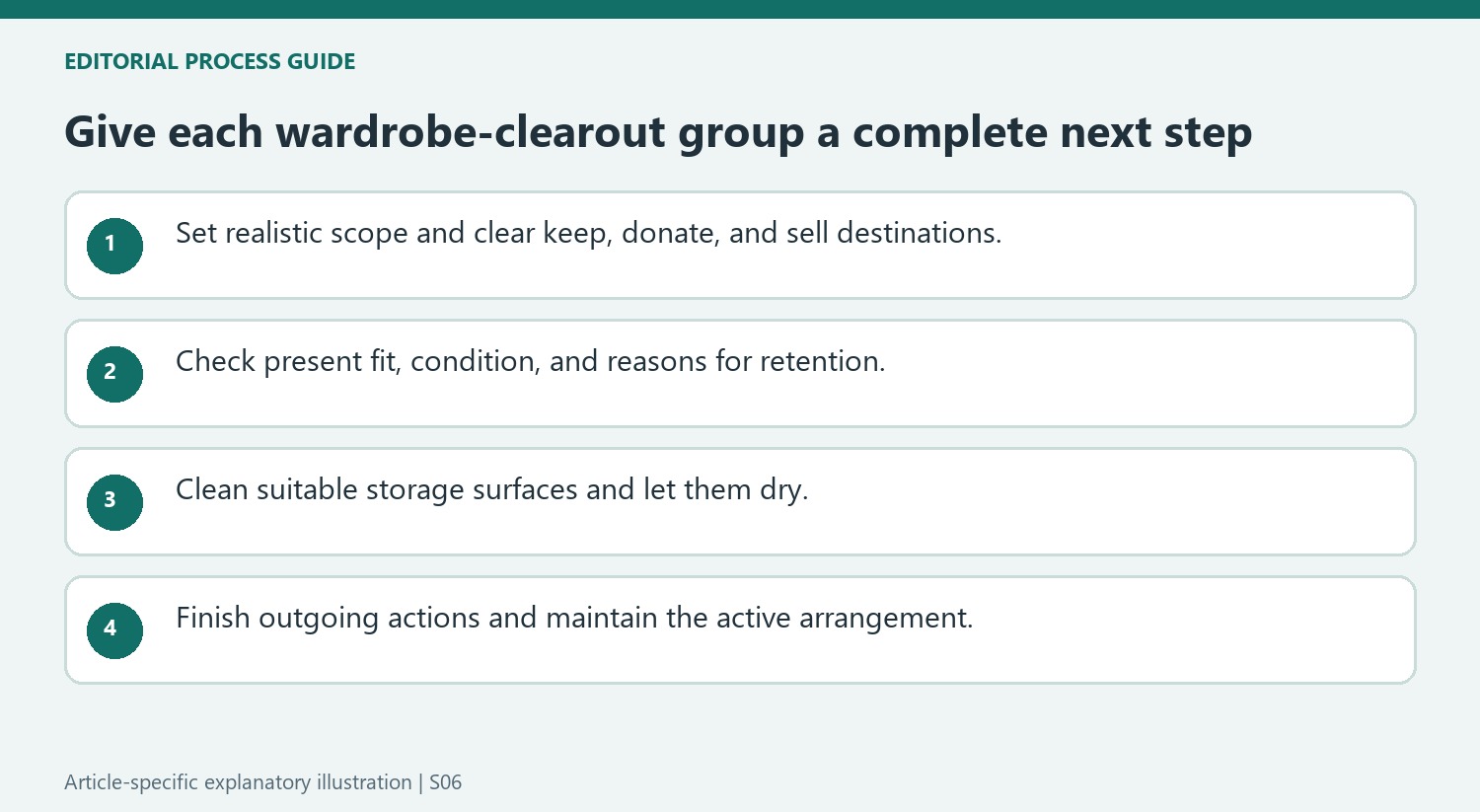
Sort with clear destinations before starting
The article recommends a plan that distinguishes what will be kept, donated or sold. Set aside places for these groups so sorting does not create one indistinguishable mound. A smaller starting selection can be more manageable when emptying the whole wardrobe would be overwhelming. Make each decision complete enough to guide the next action, including repairs or cleaning where needed. A bag marked for donation still needs to leave the dressing area through an actual planned handoff. Without that follow through, the apparent clearout may simply relocate clutter from the closet into another part of the room.
Return only what belongs in the active setup
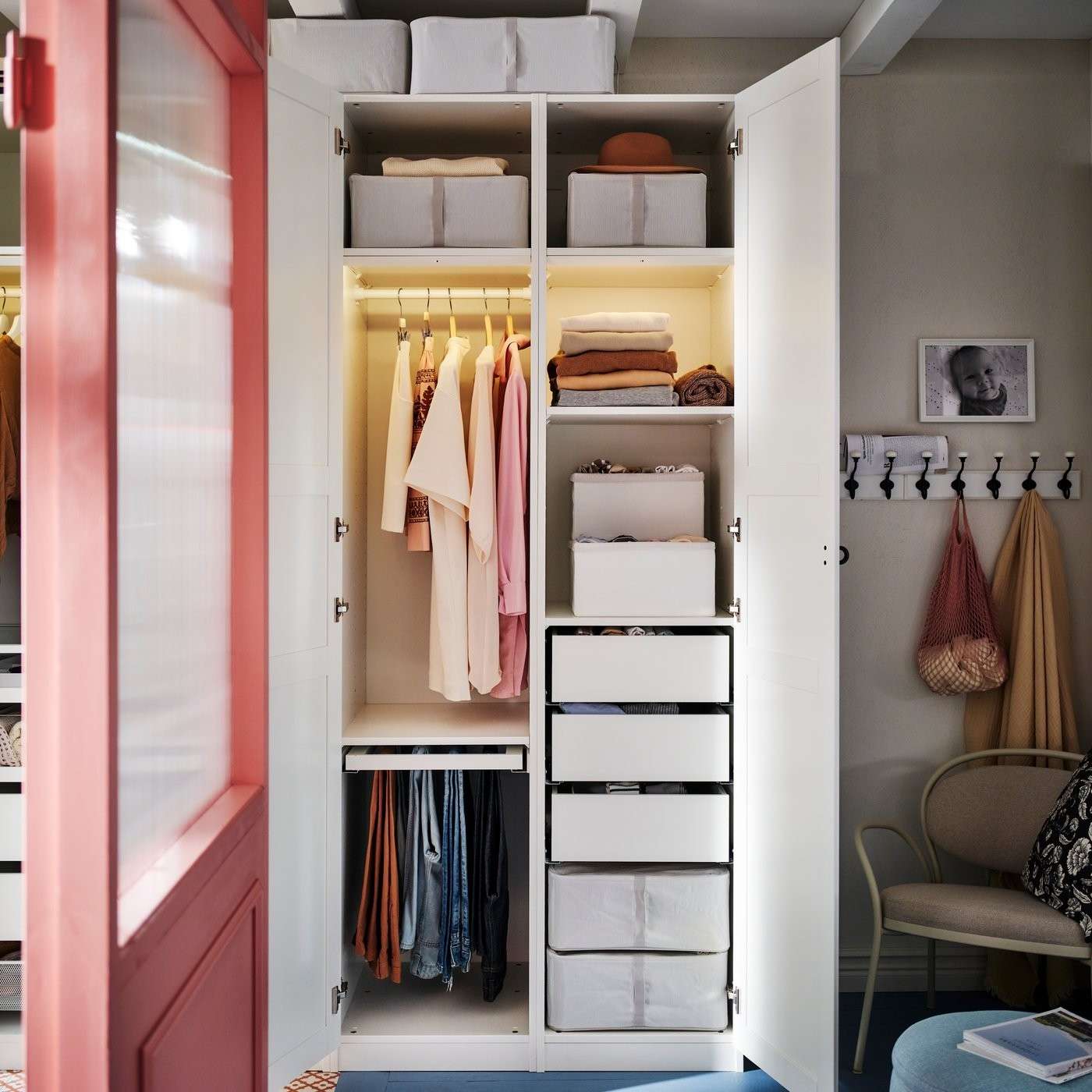
Use the reset to check fit, condition and likely use before clothing goes back into prime storage. Prepare retained seasonal pieces appropriately and assign them understandable positions. Clean suitable shelves or drawers while access is available, allowing surfaces to dry before replacing clothes. The arrangement should remain usable after the clearout day, with room to remove and return ordinary outfits. Review it as laundry comes back rather than waiting for the next large seasonal effort. A successful wardrobe reset finishes with clear destinations and a manageable routine, not merely a temporarily empty rail and several unresolved bags nearby.
Define the result before emptying the wardrobe
The source recommends a plan that separates keeping, donating, and selling before the clothing becomes one large indistinguishable pile. Decide the scale that can realistically be completed and set out clear destinations for each group. A small start can still be useful when a full emptying would be overwhelming. If comparing categories, keep related items visible enough to identify duplicates and actual favorites. Take breaks where needed instead of rushing decisions simply to clear the bed or floor. The intended result should be specific: an active selection that fits and is used, an appropriate place for retained occasional or sentimental pieces, and a concrete next action for clothing leaving the wardrobe. Sorting is only the first stage of that outcome.
Test fit and usefulness rather than relying on memory
The article suggests trying uncertain clothing on so the decision reflects its present fit and how it feels to wear. An item may look familiar on a hanger while no longer serving the same role in daily life. Ask why it has not been used, distinguishing a genuine occasional need from a future scenario that repeatedly fails to arrive. Sentimental value is another valid reason to retain something, but it can be given a protected place away from the prime daily rail. Avoid applying one rigid time limit to every garment. Make a deliberate decision that explains where the item belongs and what happens next, including cleaning, repair, separate storage, sale, or donation, rather than postponing the same question at every seasonal change.
Close the loop with cleaning and follow-through
The source highlights cleaning shelves, rods, and drawers while the closet is accessible. Use a method suitable for those surfaces and allow them to dry before clothing returns. Then arrange the retained selection with enough room for retrieval and ordinary laundry returns. A donation bag still occupying the bedroom and a sale pile without a listing plan are unfinished actions, even if the rail looks better. Choose manageable follow-through steps and review the active wardrobe as use changes. The article recommends regular maintenance because everyday habits can rebuild crowding after an energetic clearout. A useful reset therefore ends with clear destinations and a repeatable return routine, rather than depending on another major seasonal effort to solve the same problems again.
References
- 7 mistakes to avoid when spring cleaning your closet | Homes and Gardens. Homes and Gardens.