GarmentCare Guide
Separate a user's experience from a guarantee
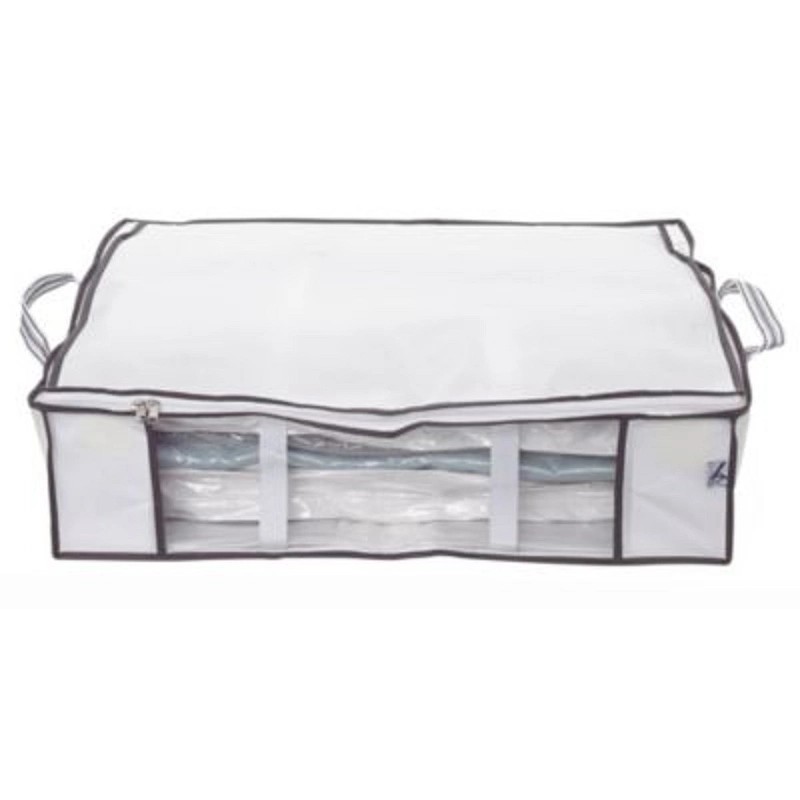
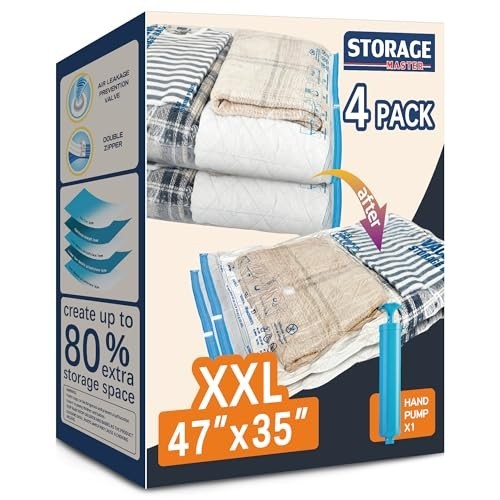
Homes and Gardens describes one writer's use of vacuum bags to rotate clothing in a small wardrobe. The article reports a substantial reduction in packed volume and a preference for keeping everyday storage limited. Those results belong to that particular product and routine, rather than guaranteeing the same space saving with every load. Compression depends on the items and how they are packed. Begin by deciding which clothes genuinely need storing, leaving frequently used pieces accessible. A smaller active wardrobe can be easier to navigate, but only if the stored selection is still organized and suitable for its packing method.
Choose garments that can tolerate the method
Woolmark's storage guidance notes limitations of vacuum packing, including reduced breathability, possible trapped moisture and unsuitability for some delicate clothing. Check the construction and care needs of each item before compressing it. Clean and dry garments fully before packing; removing air does not make damp clothing ready for storage. Use the bag according to its filling and sealing instructions, rather than forcing an overloaded package closed. The Homes and Gardens writer found leaving space near the seal useful in her own setup, but the current product guidance should determine how a particular bag is handled.
Keep checking the bags and their location
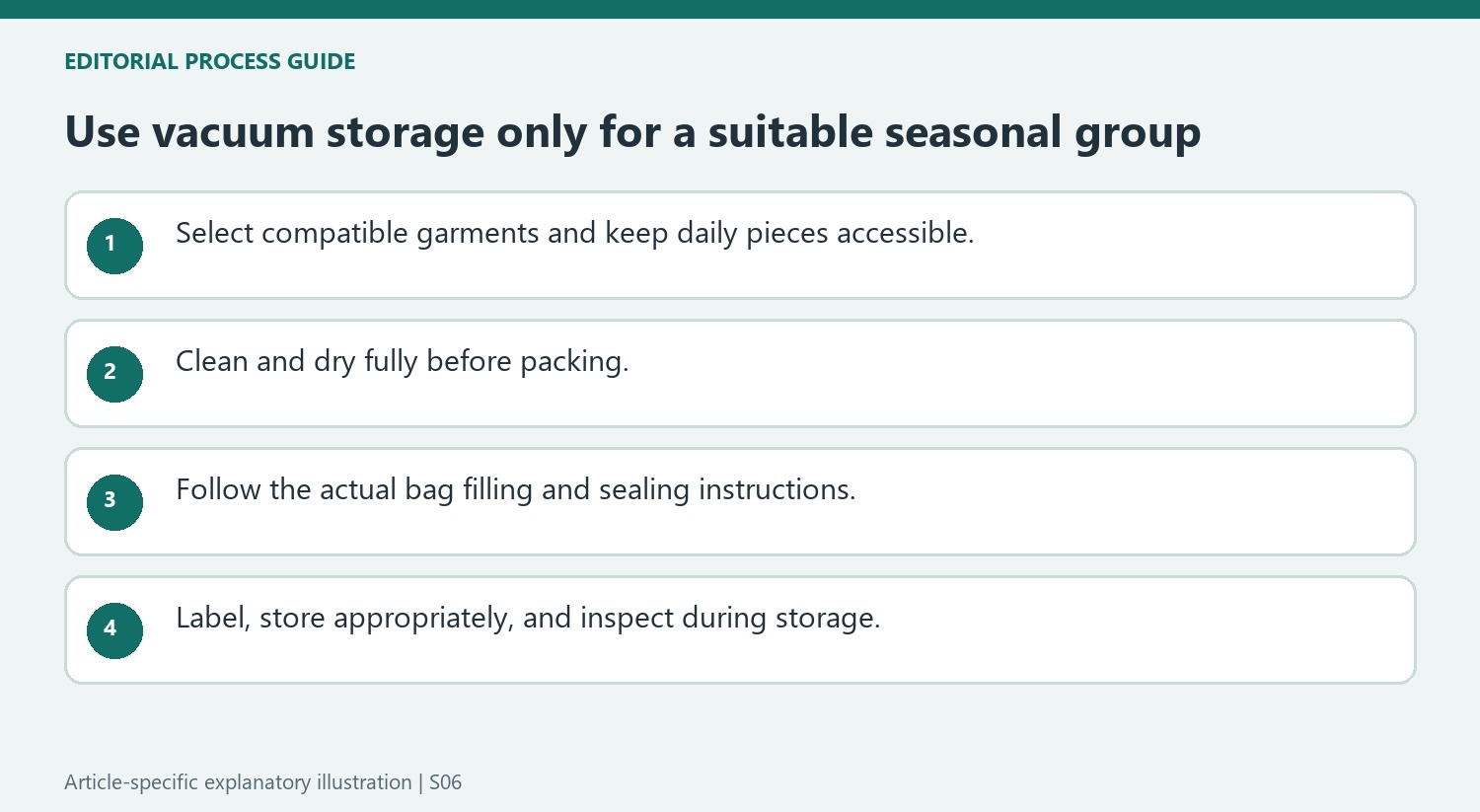
The source recommends checking stored packages periodically, especially in less controlled areas of the home. Look for loss of compression, moisture or signs of damage rather than assuming a closed bag needs no attention until the next season. Label contents so retrieving one item does not require opening every pack. A clean suitable storage location matters alongside the bag itself. Fragrance sachets cannot replace dryness or condition checks, and protective claims should not be interpreted as proof that pests or mold are impossible. Compression is a storage tool to manage carefully, not a substitute for garment care.
Treat the reported volume saving as a particular experience
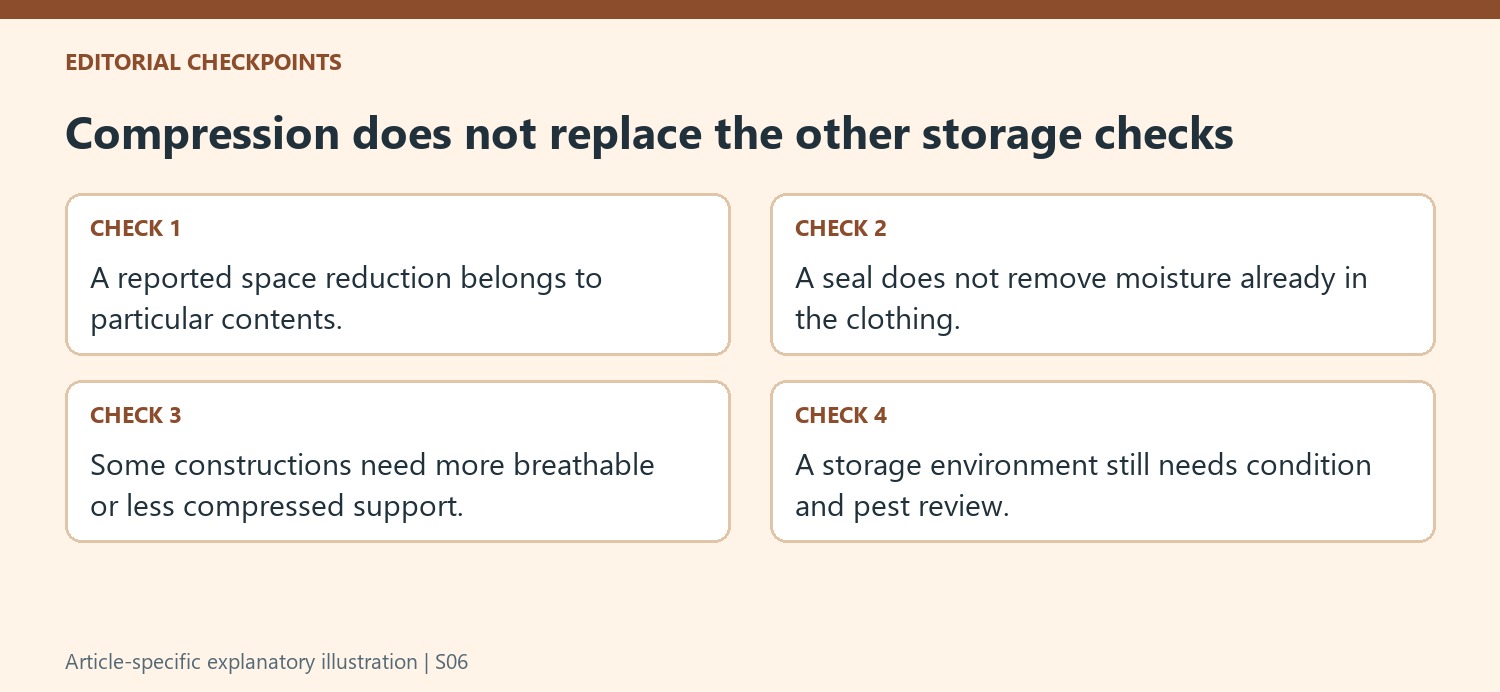
The source describes one writer's choice to keep a small active wardrobe and use vacuum bags for seasonal rotation. Its quoted reduction belongs to those products, contents, and packing decisions, not to every combination of clothes. Start with the items genuinely being put aside rather than assuming compression creates unlimited wardrobe capacity. Keep frequently used pieces accessible so one unexpected need does not require reopening several packages. Assess the garment's construction and care needs before deciding that a bag is appropriate. A smaller stored volume can be useful without establishing that every bulky or delicate item should be compressed. The value of the routine comes from a suitable selection as well as from the bag's ability to remove air.
Keep dryness and sealing as separate checks
Removing air does not make damp clothing ready for months out of sight. Clean suitable garments by their permitted method and allow them to dry fully before packing. Then follow the actual bag's fill, closure, and suction directions, including any stated space around its seal. The writer found leaving a generous area near the opening helpful, but that observation should not replace the instructions for another product. Check whether compression is suitable at all for the retained pieces; the accompanying Woolmark guidance notes limits around breathability and delicate clothing. A well-closed package and an appropriate garment are both necessary considerations. Neither one alone proves the storage arrangement is suitable for every material or length of time.
Review the package and the environment during storage
The source recommends periodic checks, especially in less controlled parts of a home. Look for lost compression, damaged material, moisture, and any change in the stored clothing when inspection is needed. Do not assume an apparently sealed bag makes a damp attic or unsuitable garage harmless. Label contents so a targeted retrieval is possible without opening every package, and update the label when items are moved. Fragrance sachets may affect scent but cannot confirm dryness or eliminate the need to investigate a problem. Use a storage location appropriate to the clothing as well as the package. Compression remains one tool in a broader care plan that includes selection, cleaning, support, environment, and review rather than a guarantee against every storage risk.
References
- Yes, Even Small Closets Can Be Tidy with Vacuum Storage Bags | Homes and Gardens. Homes and Gardens.
- How to store wool clothes. The Woolmark Company.