GarmentCare Guide
Begin with flat smooth clothing
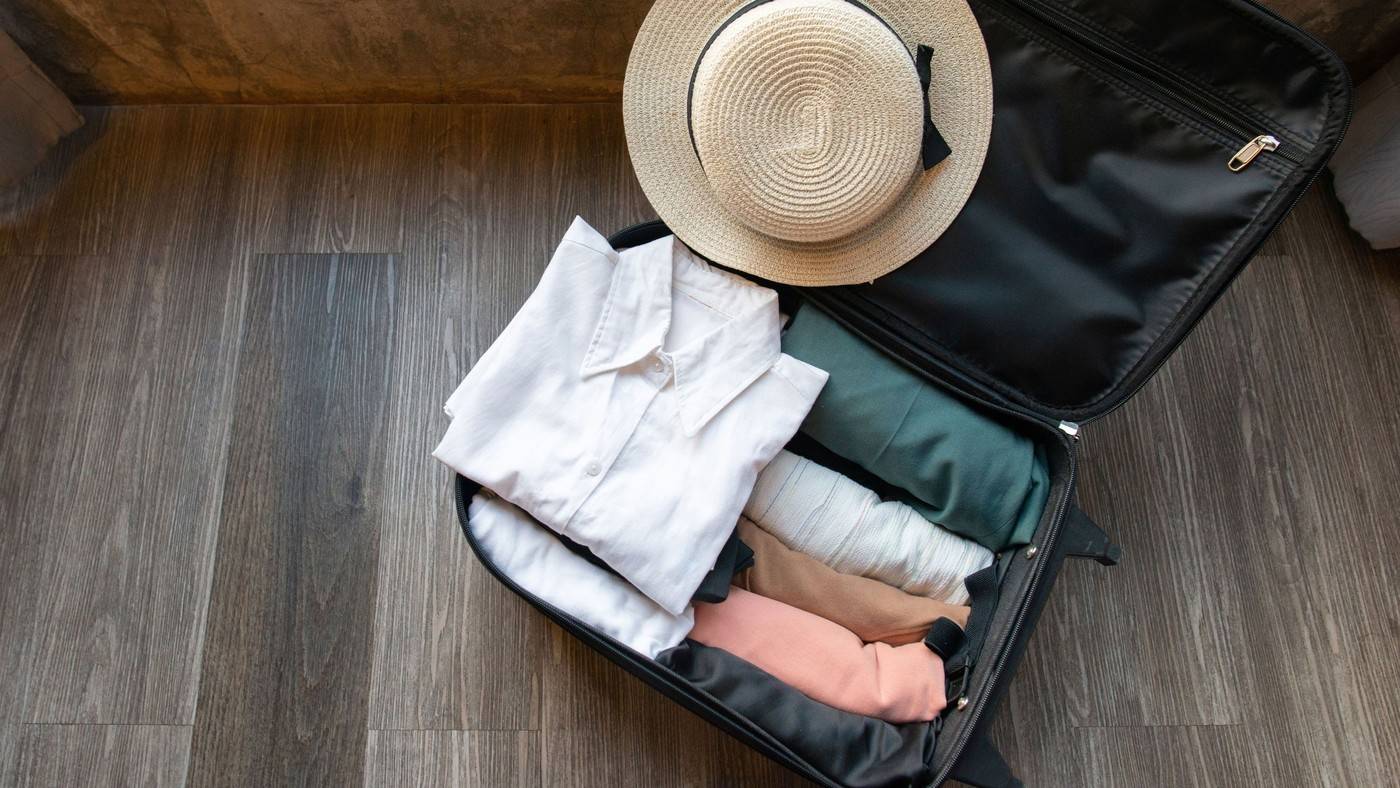
Homes and Gardens recommends laying garments out and smoothing them before choosing a packing method. Rolling can suit many casual shirts, while more delicate blouses may benefit from careful folding with suitable tissue. The useful choice depends on material, structure and the finish wanted on arrival. A method that makes a small bundle is not automatically appropriate for every garment. Check for existing wrinkles before packing rather than tightly rolling them into the cloth. Combining methods allows the suitcase to reflect the actual wardrobe instead of forcing every item into a single packing technique chosen for its appearance.
Keep tailored pieces and bulky areas controlled
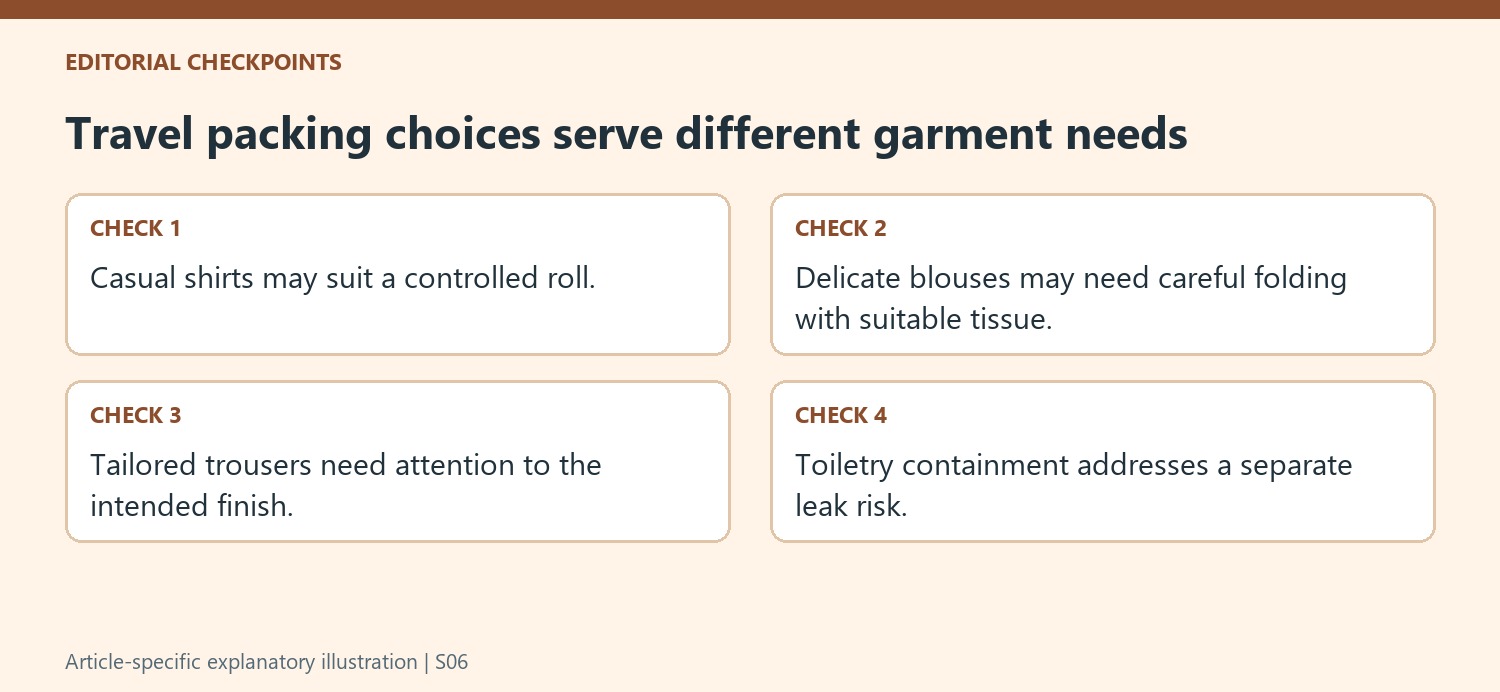
The source favors folding smarter trousers, aligning the legs before making further folds. Jeans and other less wrinkle prone casual items may be rolled instead. When stacking trousers, alternate the position of waistbands so the thickest areas do not build one uneven mound. Dresses can be arranged with sleeves and extra skirt width brought inward before folding or rolling as suitable for the fabric. Accept that some clothing may still need appropriate finishing after travel. Careful packing can limit random compression, but it does not guarantee a pressed appearance regardless of how tightly the suitcase is filled.
Contain the small pieces separately
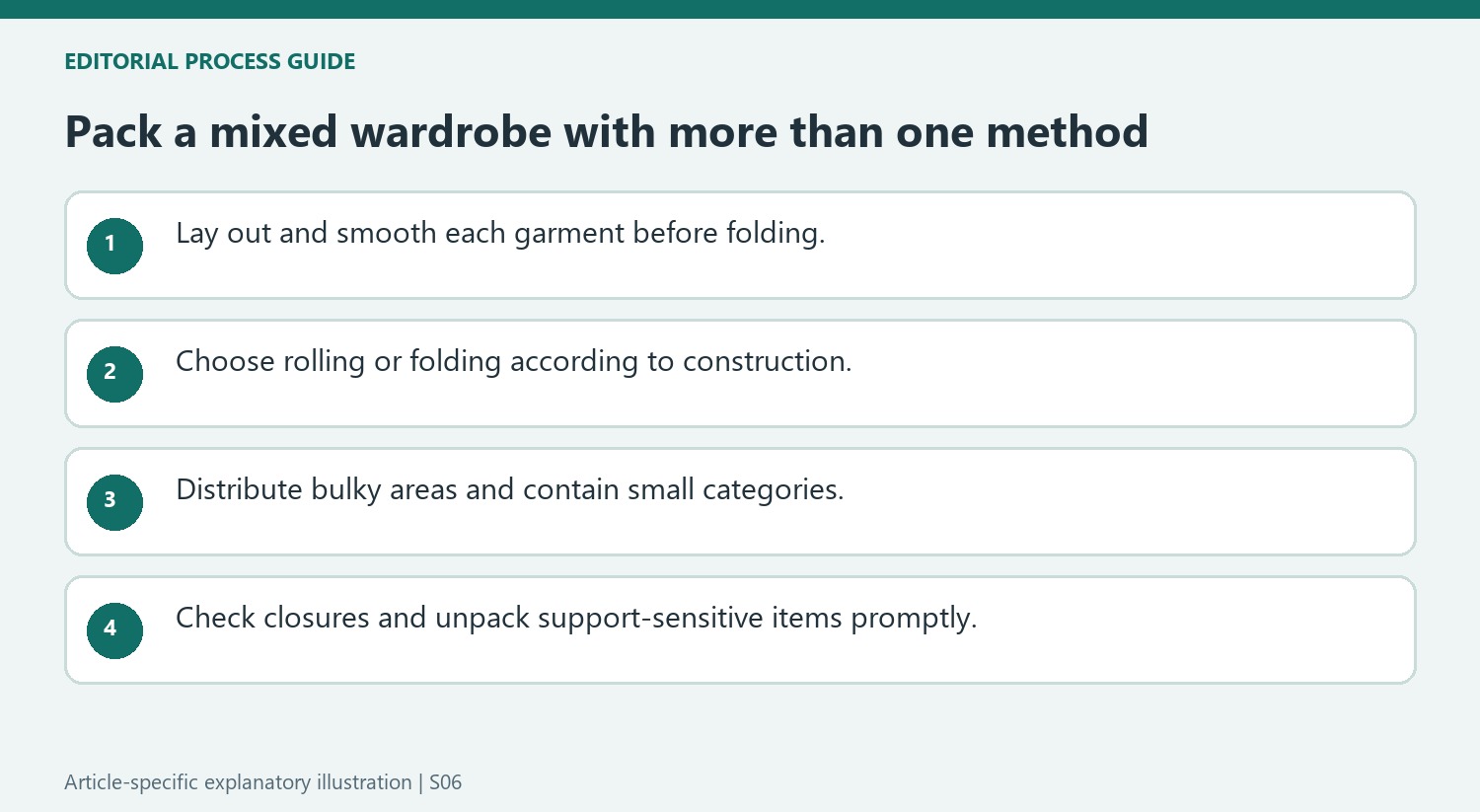
Socks, underwear and swimwear can be grouped in a small packing cube or another suitable container, reducing the need to search among larger clothes. Keep toiletries contained separately so a leak is less likely to reach fabric. Choose groups that make unpacking straightforward, especially when several outfits share similar small items. Before closing the case, check that clothing is not caught awkwardly around the edges or forced into sharp folds by overfilling. A clear arrangement helps on arrival as well as departure. Unpack items needing hanging or reshaping promptly instead of leaving them compressed until they are next worn.
Choose the fold after identifying the garment
The source recommends combining packing methods because material, size, and construction differ across a travel wardrobe. Start with each piece flat and smooth, then decide whether folding or rolling suits it. Casual shirts can be rolled in a controlled shape, while a delicate blouse may need careful folding with suitable tissue. Do not assume a tight cylinder prevents every wrinkle; it can also conceal a fold already present in the fabric. Check bulky seams and decoration before compressing an item. The useful result is clothing that can be identified and unpacked in reasonable condition, not a suitcase filled with perfectly matching bundles regardless of what those bundles contain or how their surfaces need to be treated.
Distribute bulk instead of building one uneven stack
The article suggests alternating trouser waistbands so thick areas do not accumulate in one mound. This is a practical way to think about the case as a whole after individual folds are made. Align tailored trouser legs with attention to the intended finish, then arrange the packages so hard or bulky sections are not pressing randomly into neighboring garments. Dresses may need sleeves and excess skirt width brought inward before a suitable final fold. Accept that some items may still require permitted finishing on arrival. Packing does not replace a care label or guarantee a freshly pressed appearance. Avoid using the lid and body weight to force an overfull case closed, which can undermine the deliberate arrangement inside.
Keep small categories and leak risks understandable
The source recommends containing socks, underwear, and swimwear so they are not scattered between larger clothes. A packing cube or other suitable organizer can make these pieces easier to locate and return during the trip. Keep toiletries separately contained as well, since fabric folding cannot protect against a leaking bottle on its own. Choose groups based on how the case will be used at the destination, especially if it will not be fully unpacked each night. Before closing it, check the edges and closures for caught clothing. On arrival, remove items needing hanging or reshaping promptly. A useful packing method continues through retrieval and unpacking instead of ending as soon as the suitcase looks tidy at departure.
References
- How to fold clothes for packing – for wrinkle-free results and to free up space in your case. Homes and Gardens; Tara King.