GarmentCare Guide

Set up the folding stage first
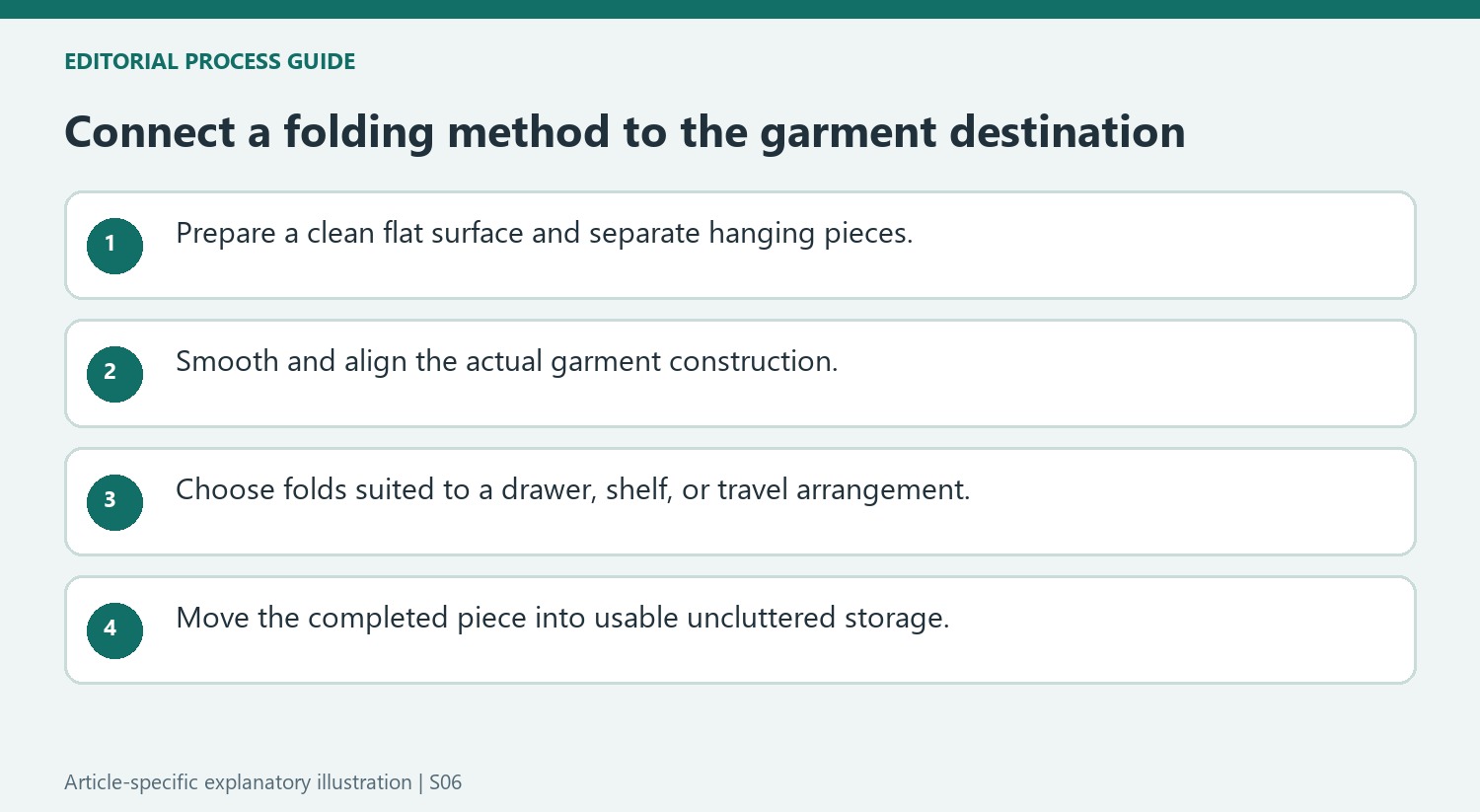
Maytag recommends preparing a flat clean surface large enough to lay out a pair of pants. Separate clothing that needs hanging from items that will be folded, then group similar types together. This reduces switching between different methods and makes the work easier to repeat. Handle suitable clothes promptly after drying rather than allowing them to settle into a heap. Smooth the fabric before making folds, since a compact package can conceal an existing wrinkle rather than remove it. The aim is a manageable sequence that ends with garments ready for their actual storage place, not merely a smaller laundry pile.
Make a T-shirt fit its destination
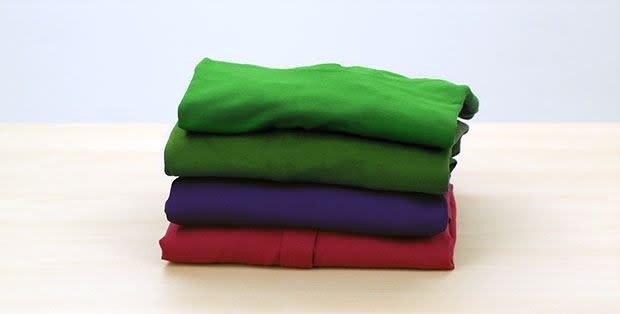
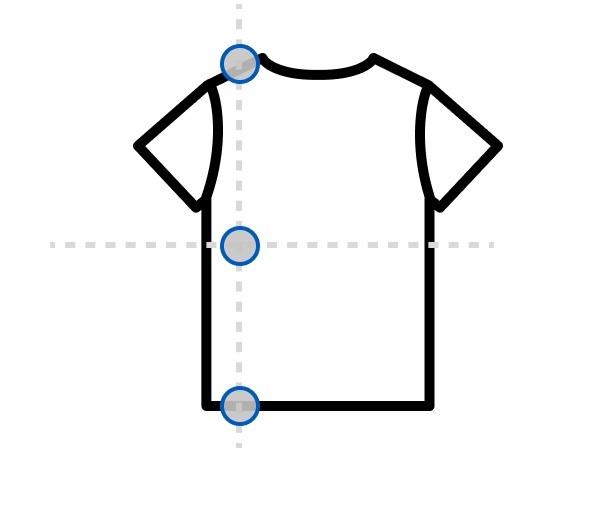
For a classic fold, the source lays a shirt face down, smooths it and brings each side inward before folding the bottom toward the top. A smaller fold can use thirds or additional sections to produce a compact shape for upright drawer storage. Adjust the finished width to the space available so neighboring shirts form a usable row. Keep an identifying feature visible where possible, helping distinguish similar pieces without unfolding each one. Consistency is useful, but it should not require stretching the shirt or forcing bulky fabric into an impractically tight bundle.
Align trouser legs before folding them up
For jeans and casual trousers, Maytag starts by folding one leg over the other and matching the seams and hems. Smooth bumps before bringing the lower section upward and making the remaining folds. A broad surface makes it easier to see where fabric is bunching. More tailored trousers may need their intended crease respected rather than being treated exactly like casual jeans. Once folded, move clothing to its assigned shelf or drawer, leaving room to retrieve individual pieces. A repeatable folding method saves effort most effectively when the resulting shape fits a storage system that stays easy to use.
Make the folding surface large enough for the item
The source recommends a clean flat area that can accommodate a pair of trousers. That detail matters because a garment partly hanging off the edge is harder to smooth and align. Sort hanging items away from the folding group and work through similar types so the same movements can be repeated. Before making a compact shape, inspect the cloth for bunching and existing creases; folding does not remove either problem automatically. Prepare the destination too. A shirt folded to an unsuitable width may have to be unfolded and started again when it reaches the drawer. An orderly process connects the available surface, the garment's construction, and the final shelf or drawer rather than optimizing only the speed of a single motion.
Use shirt construction to guide the sequence
For a classic T-shirt fold, the source begins with the shirt face down, brings the sides inward, and then lifts the hem toward the top. A long-sleeve shirt needs its sleeves arranged across and down the back so they sit within the body width before the final fold. Smooth each stage rather than burying a twisted sleeve under another layer. Buttons can be fastened as the guide describes to help the front stay aligned when the garment is laid out. The exact compactness should suit the destination and material, not force every shirt into an identical tight parcel. Keep useful identifying details visible where practical so selecting one piece later does not require opening several similar bundles.
Distinguish casual trouser folds from deliberate creases
Maytag's jeans method starts with matching one leg over the other, smoothing seams and hems before folding upward. Tailored trousers may need their intended creases aligned differently, so do not apply the casual fold automatically to every pair. A wide surface makes these differences easier to see. Keep a hand inside a developing fold where needed to prevent bunching, and check the finished shape before stacking or filing. Travel packing introduces another choice: the source discusses rolling suitable smaller items while folding bulkier clothing. That is a space arrangement, not permission to compress a construction that needs gentler support. Choose a repeatable method that leaves the item identifiable and ready for its actual next use, whether that is a drawer or a suitcase.
References
- How to Fold Clothes Fast | Maytag. Maytag.