GarmentCare Guide

Match support to the garment's shape
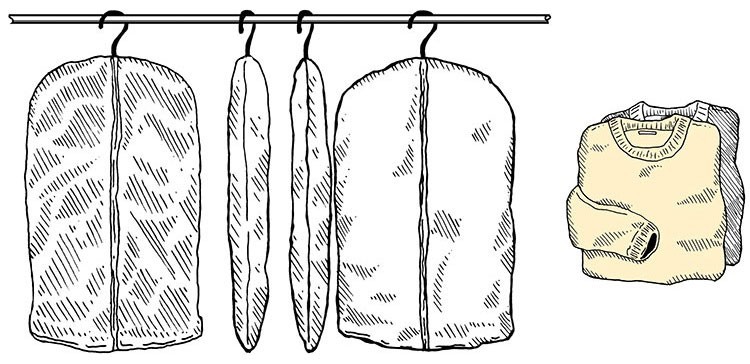
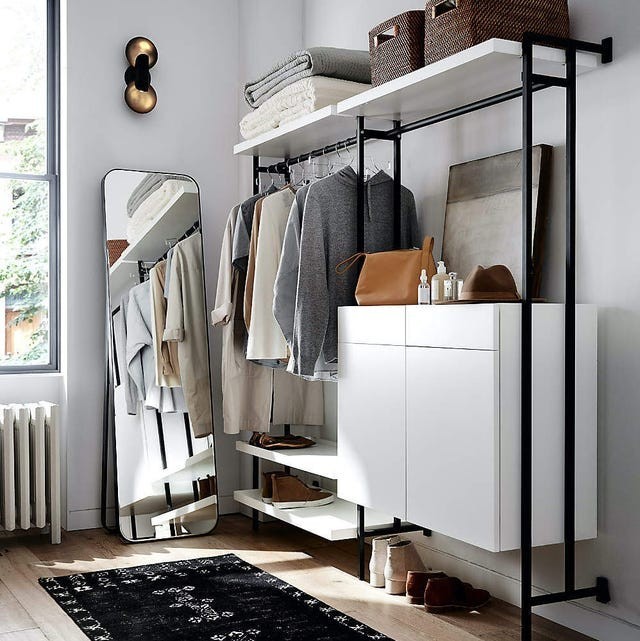
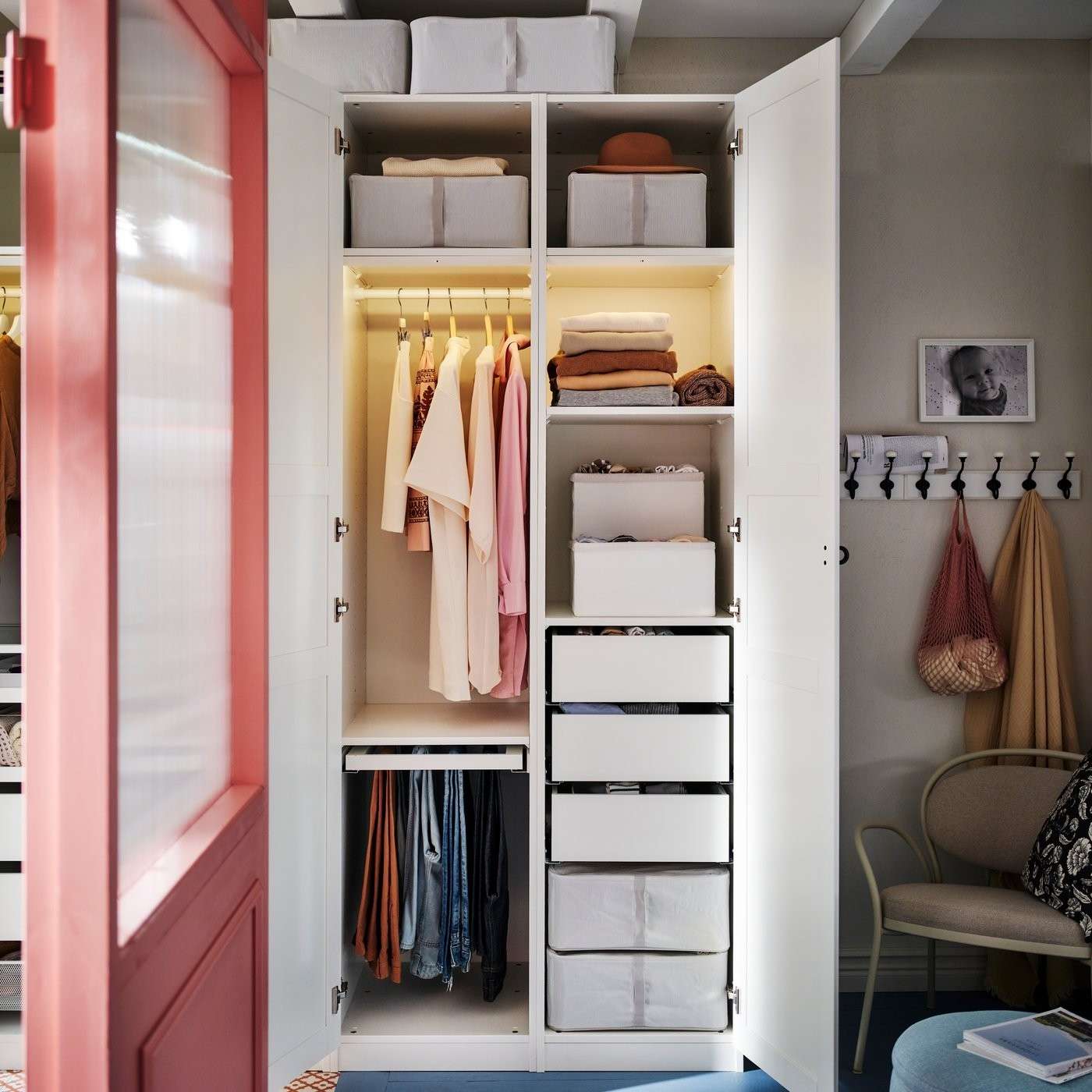
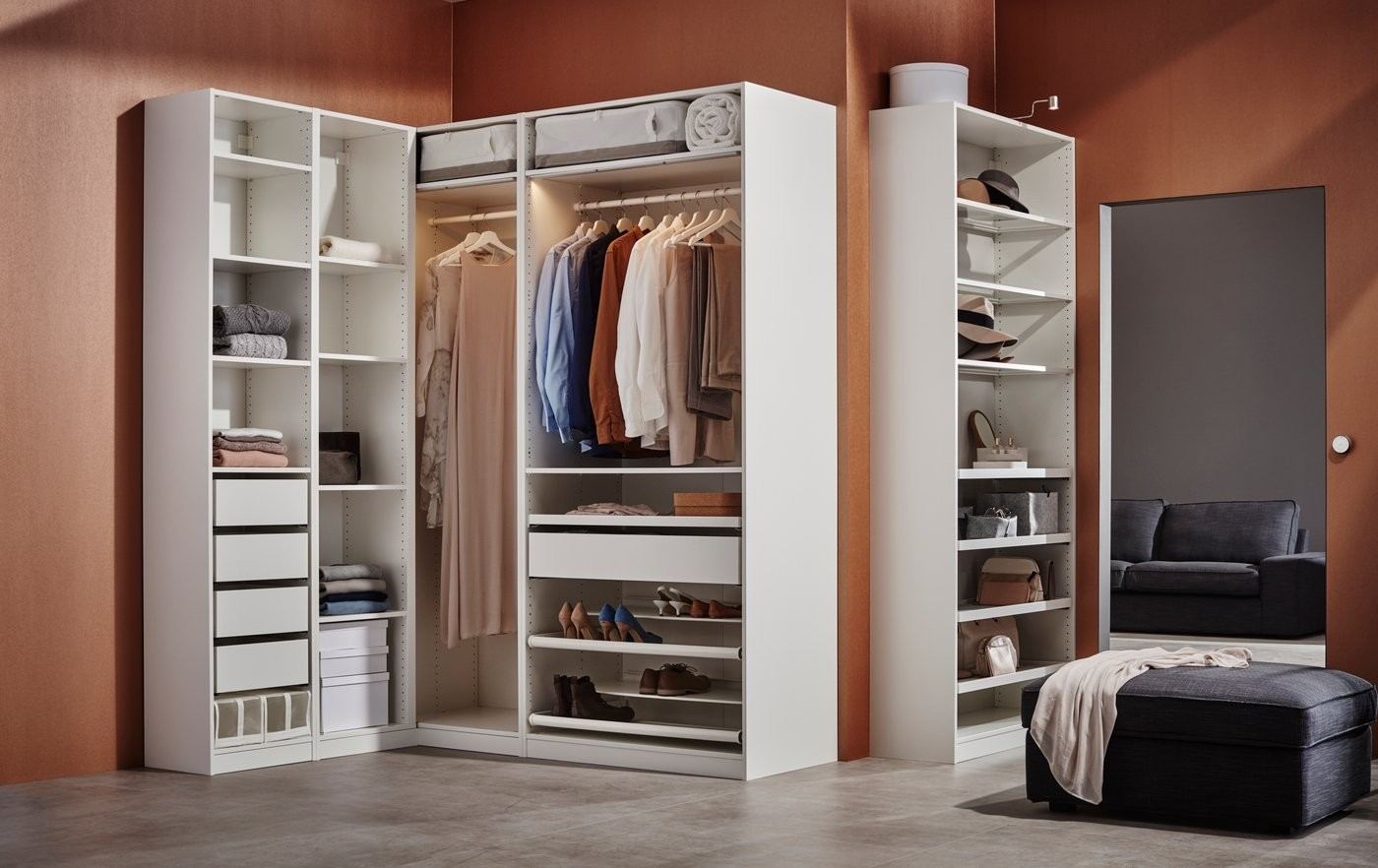
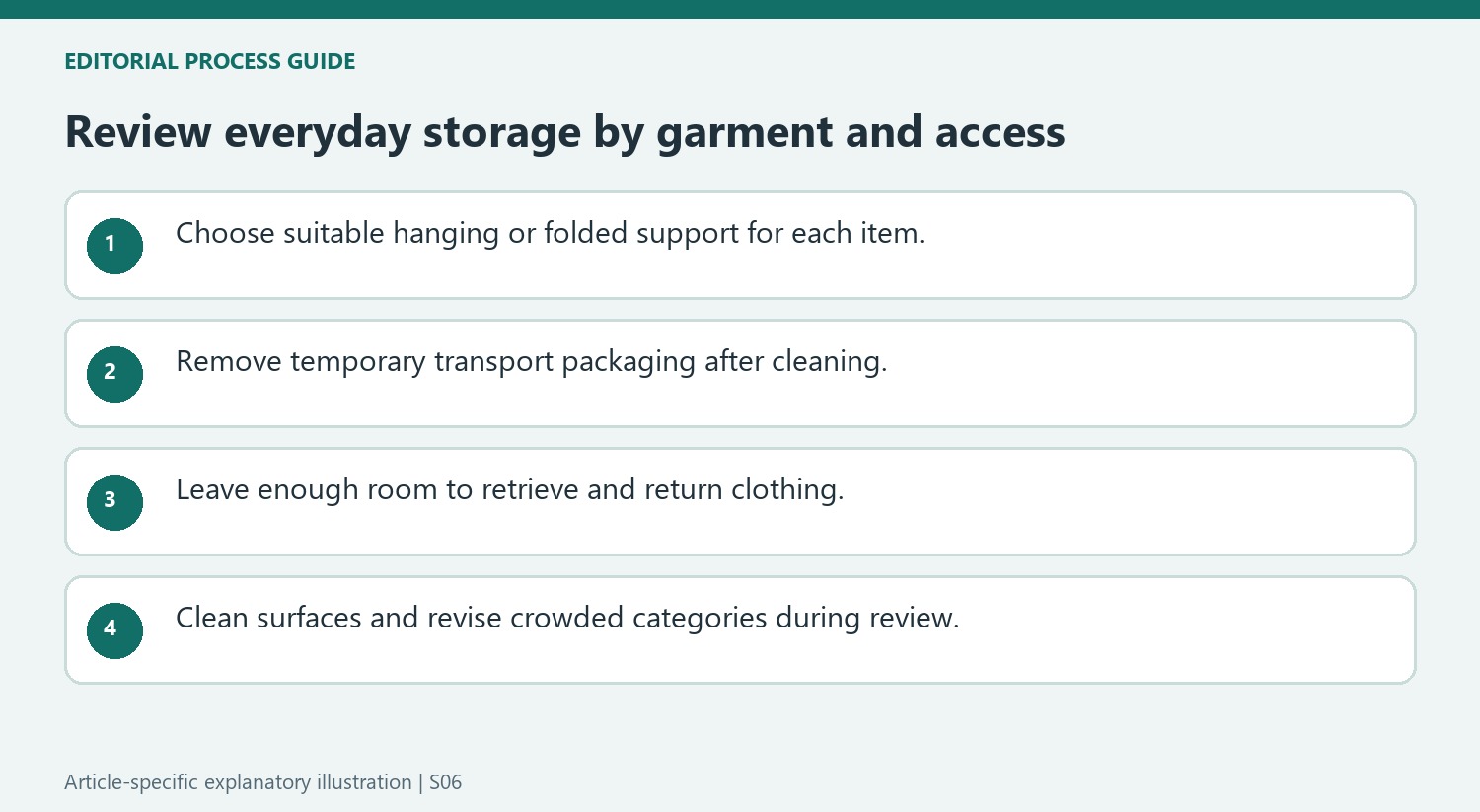
A hanger that works for a lightweight shirt may not provide suitable support for a structured coat. Homes and Gardens recommends considering padded hangers for appropriate delicate clothing and broader support for jackets or coats. Heavy knitwear often belongs folded rather than hanging under its own weight. Check the garment's construction instead of using one storage method for the whole wardrobe. A neat rail is not useful if shoulders become distorted or a sweater stretches while suspended. The relevant question is how the item needs supporting during the time between wears, not whether every hanger matches its neighbors.
Unpack cleaning and leave room in drawers
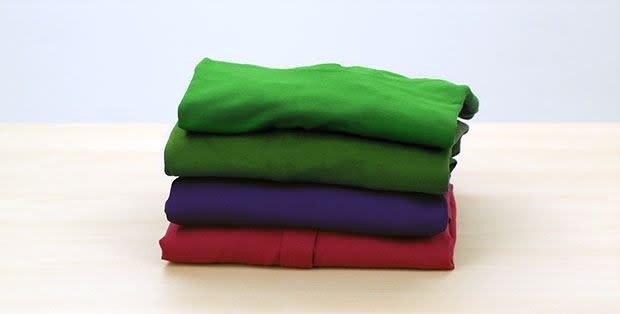
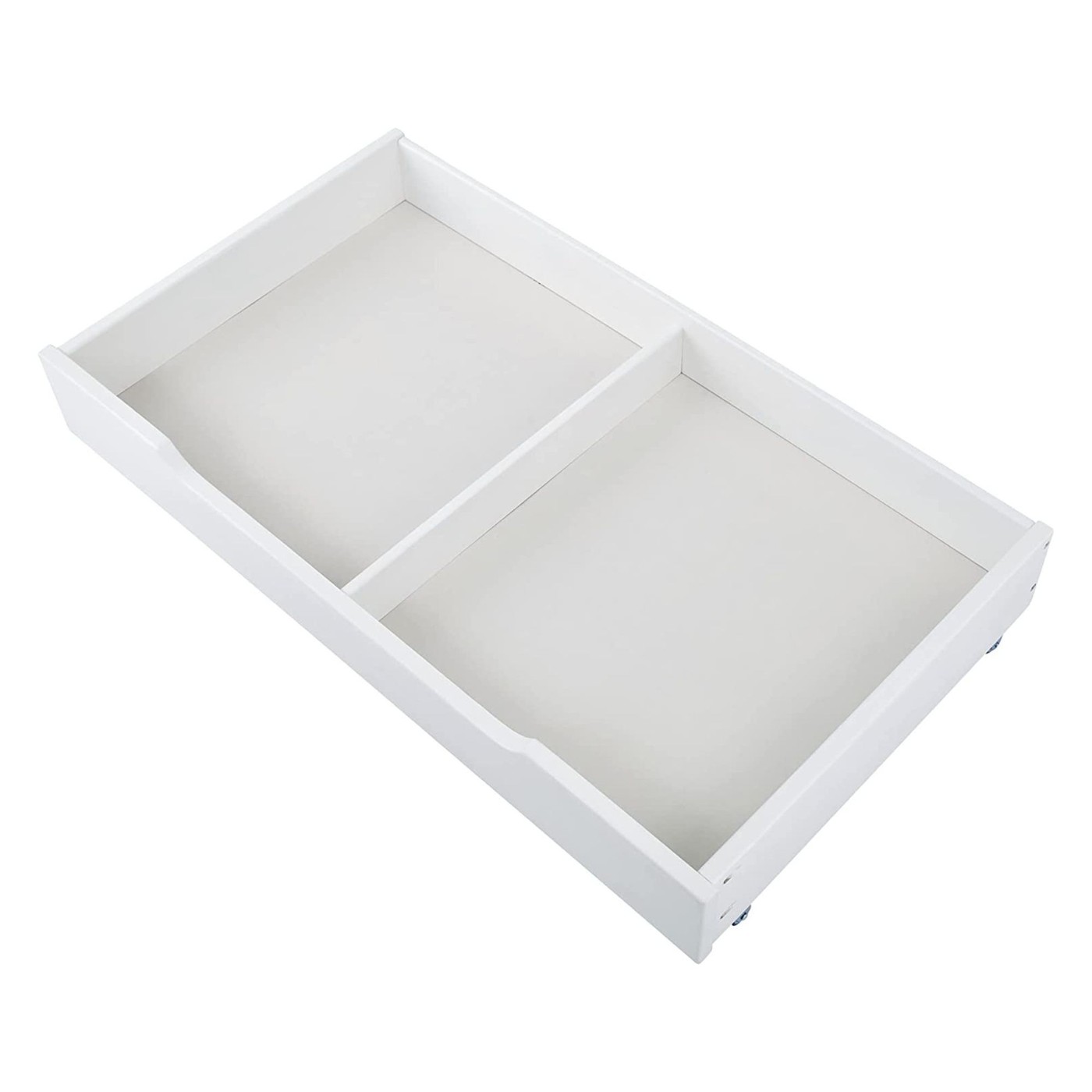
The source advises removing temporary dry cleaning bags when bringing clothes home, then placing garments on suitable hangers or in their intended storage. Transport packaging should not automatically become a permanent cover. Drawers need space too: pushing another item into an already compressed compartment can make retrieval awkward and displace clothing behind the drawer. File folding may improve visibility, but it does not justify overfilling. Leave enough room to remove and return pieces without squeezing or dragging them. The exact capacity depends on the furniture and garments; ease of use is more informative than trying to fit every last piece into one drawer.
Give the wardrobe a repeatable system
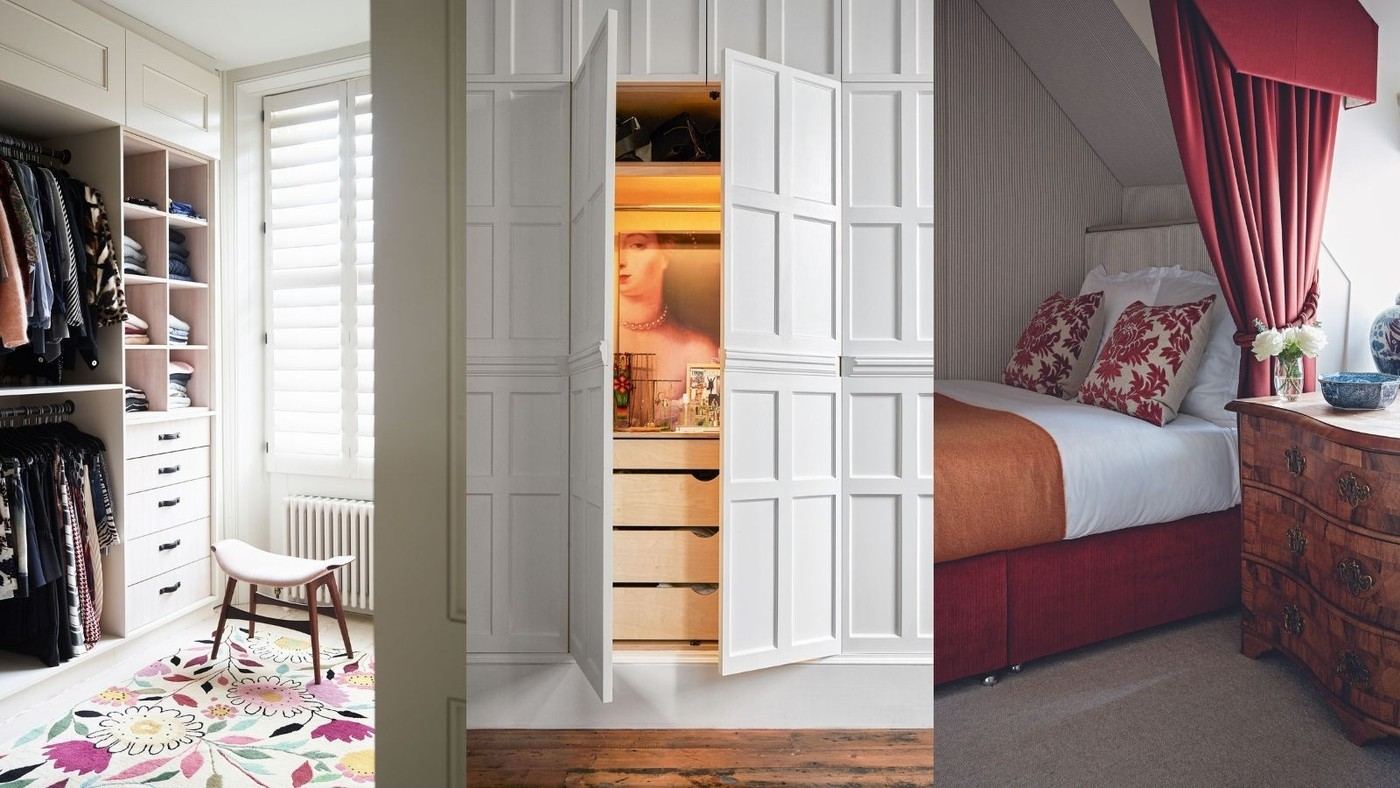
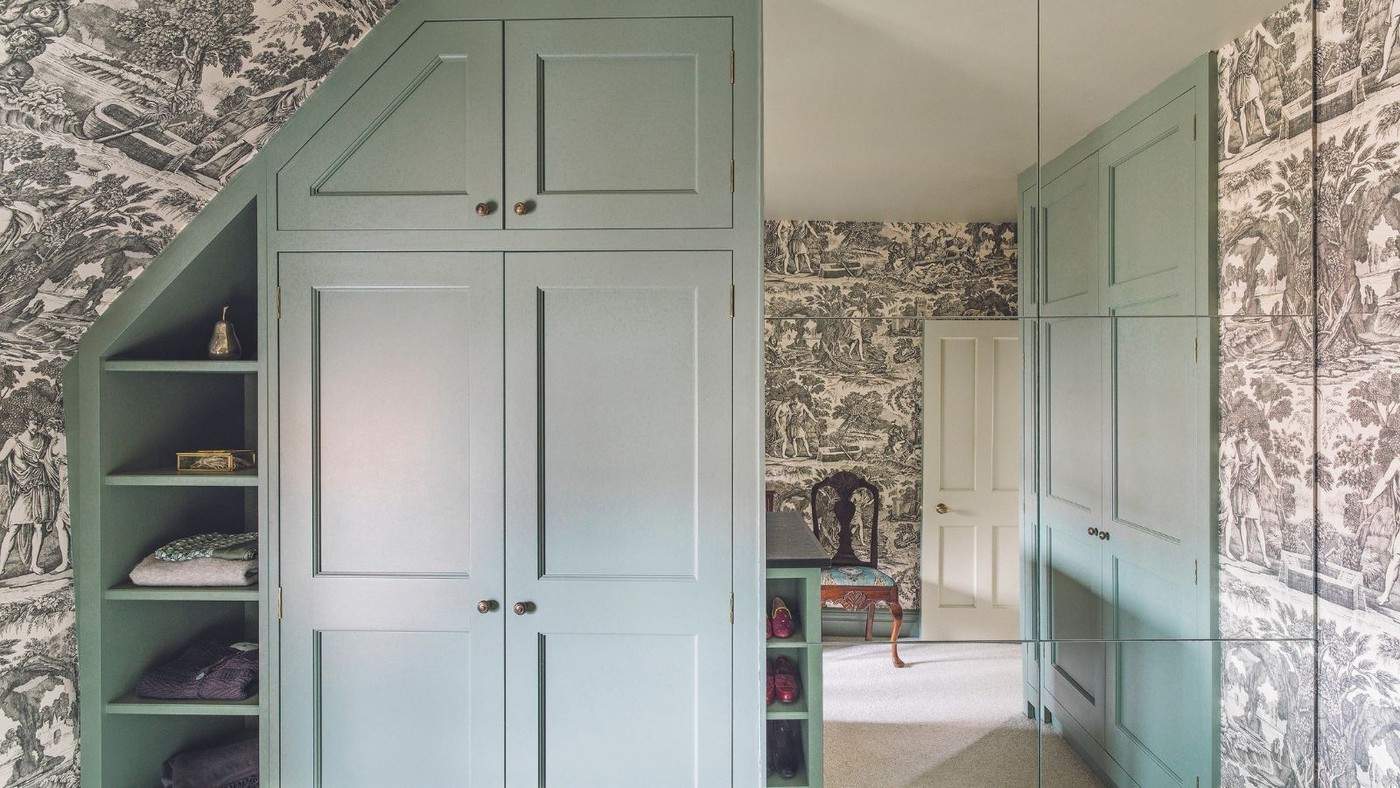
Assign places to clothing categories and decide which pieces need the most accessible positions. Seasonal rotation can reduce crowding, while appropriate boxes help contain smaller or less frequently used items. Measure containers so their size supports retrieval rather than becoming another obstacle. The article also emphasizes cleaning closet surfaces periodically, since clothing rests directly on them. Review the system when returning clean laundry: if pieces are repeatedly left outside, the arrangement may need adjusting. Good storage combines garment support, usable capacity and an understandable layout. It should protect clothes while making an ordinary morning easier to navigate.
Choose garment support before matching the hangers
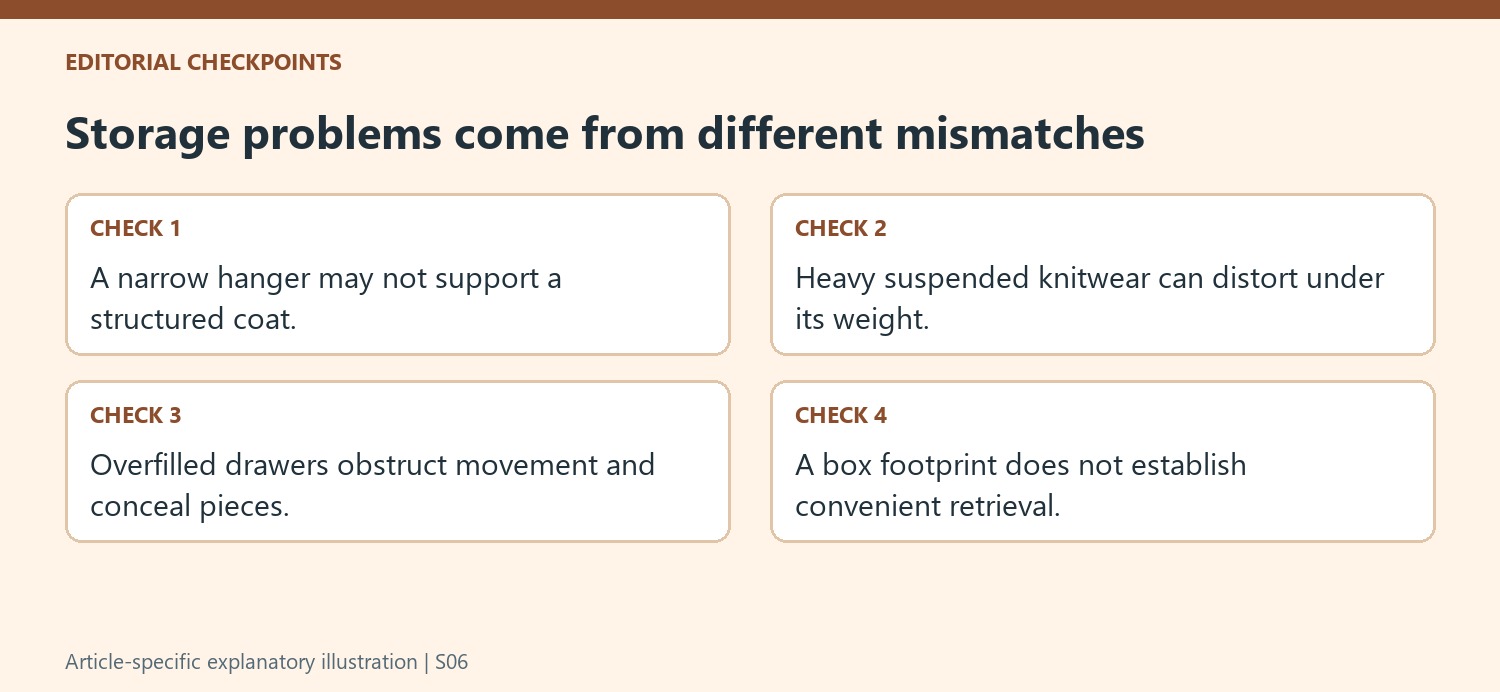
The source's hanger advice distinguishes delicate clothing from jackets and coats, which can need different shapes of support. Begin with the garment rather than a desire for a completely uniform rail. A narrow hanger may be convenient for one light piece but unsuitable for the shoulders of a structured coat. Heavy knitwear can stretch when its own weight hangs for long periods, making supported folding a better choice where the item's care permits it. Check the garment after a storage change rather than judging the hanger alone. If the shoulder shape or drape is altered, reconsider the support. An attractive arrangement is useful only when it also preserves the form of the clothes being stored.
Treat transport packaging as a temporary stage
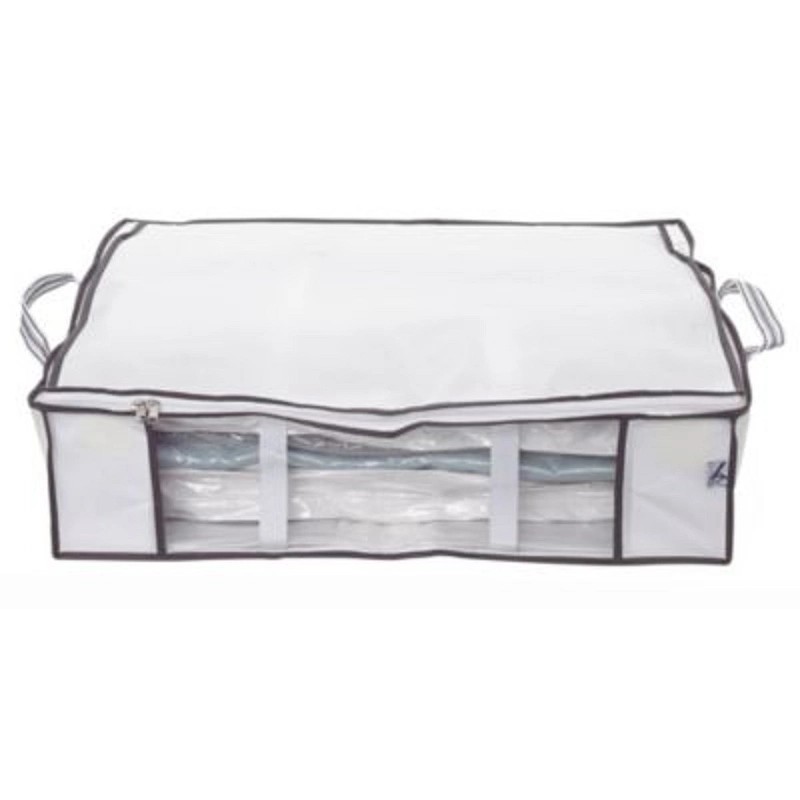
The article recommends removing ordinary dry-cleaning bags when clothing comes home and putting the garments into their proper places. Packaging used for a journey is not automatically intended as a long-term protective cover. Unpack the pieces, inspect their condition, and move them to appropriate support rather than leaving the whole delivery on one crowded hook. Use garment storage products according to their intended purpose when longer protection is needed. Apply the same practical distinction to boxes and baskets: a container that fits the shelf still has to accommodate the clothing without forcing it into an awkward shape. Measure the usable space and consider retrieval, including how easily a full box can be moved and a single garment returned after wear.
Test capacity through ordinary use
The source warns against overfilled drawers and inaccessible shelves. Rather than treating a particular fill fraction as a universal rule, test whether the arrangement allows normal handling. Can one folded shirt be removed without dragging others along? Can the drawer close without pushing fabric behind it? Are items at the back visible enough to remember? If the answer is no, reduce the load or adjust the layout instead of compressing it more firmly. Seasonal rotation and deliberate decisions about unworn pieces can free space without changing the furniture. Clean the surfaces clothing touches during these reviews. The wardrobe should remain workable after several laundry returns, not only immediately after a careful display has been arranged for the first time.
References
- 10 clothes storage mistakes we are making every day – and how professionals avoid them. Homes and Gardens; Chiana Dickson.