GarmentCare Guide
Separate bulky pieces from hanging garments
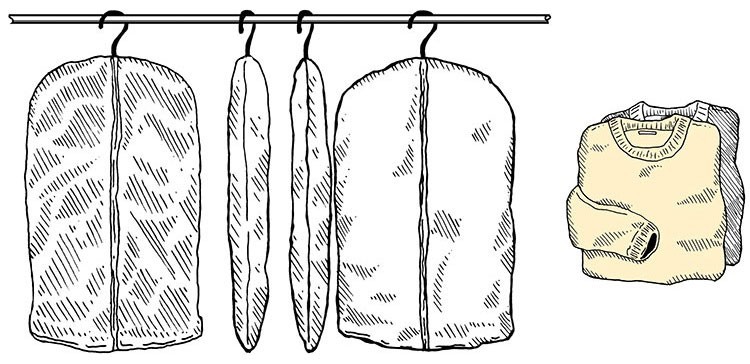
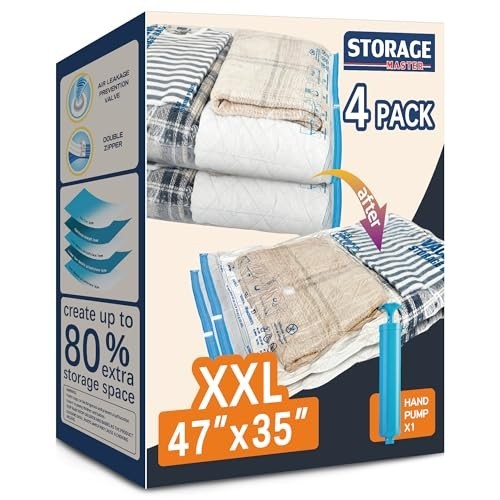
Homes and Gardens presents several ways to put winter clothing aside when warmer weather arrives. Bulky folded pieces can go into suitable storage containers, while garments that should remain hanging may need protected hanging space instead. The article discusses vacuum bags as one space saving option, but compression is a choice to assess against the construction and care needs of each item. Do not squeeze every coat or delicate piece into the same package simply to make the smallest bundle. Decide how the garment should be supported first, then choose a container that fits that method.
Label containers for practical retrieval
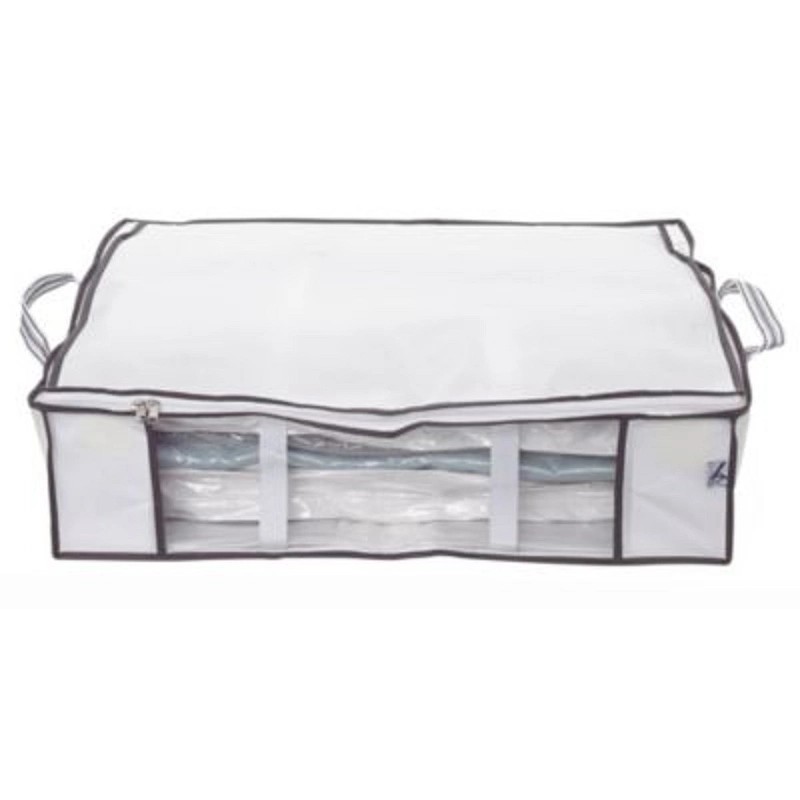
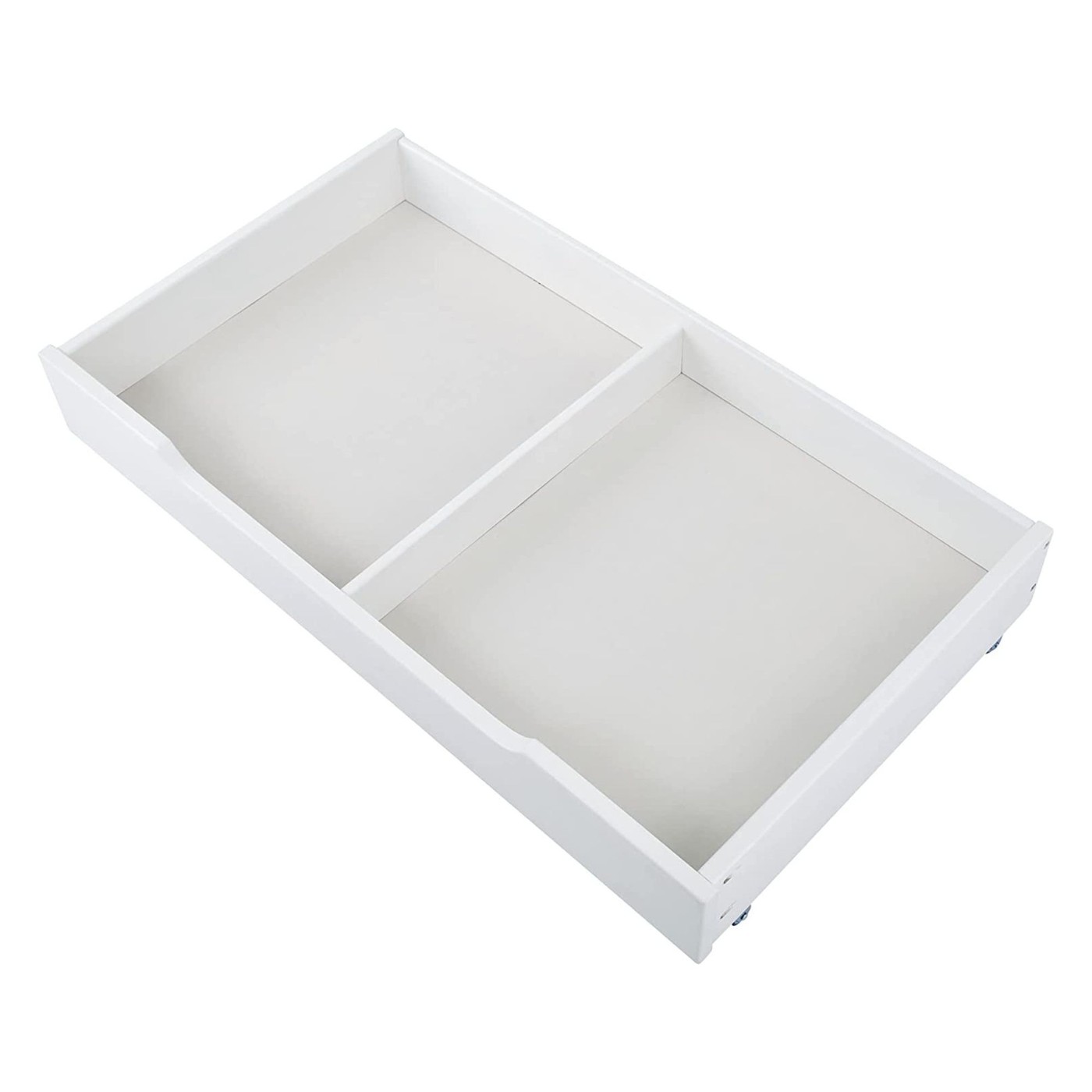
Stackable bins can keep seasonal clothing together and make the contents easier to find when the weather changes. Label each container before moving it out of the main dressing area. Underbed storage is one option the source highlights where closet space is limited, provided the container fits and can be accessed comfortably. Prepare clothing before packing: clean it by the permitted method and allow it to dry fully. Footwear also needs cleaning and drying, with appropriate shaping support for pieces that need it. A storage location is most useful when retrieving one item does not require dismantling the entire arrangement.
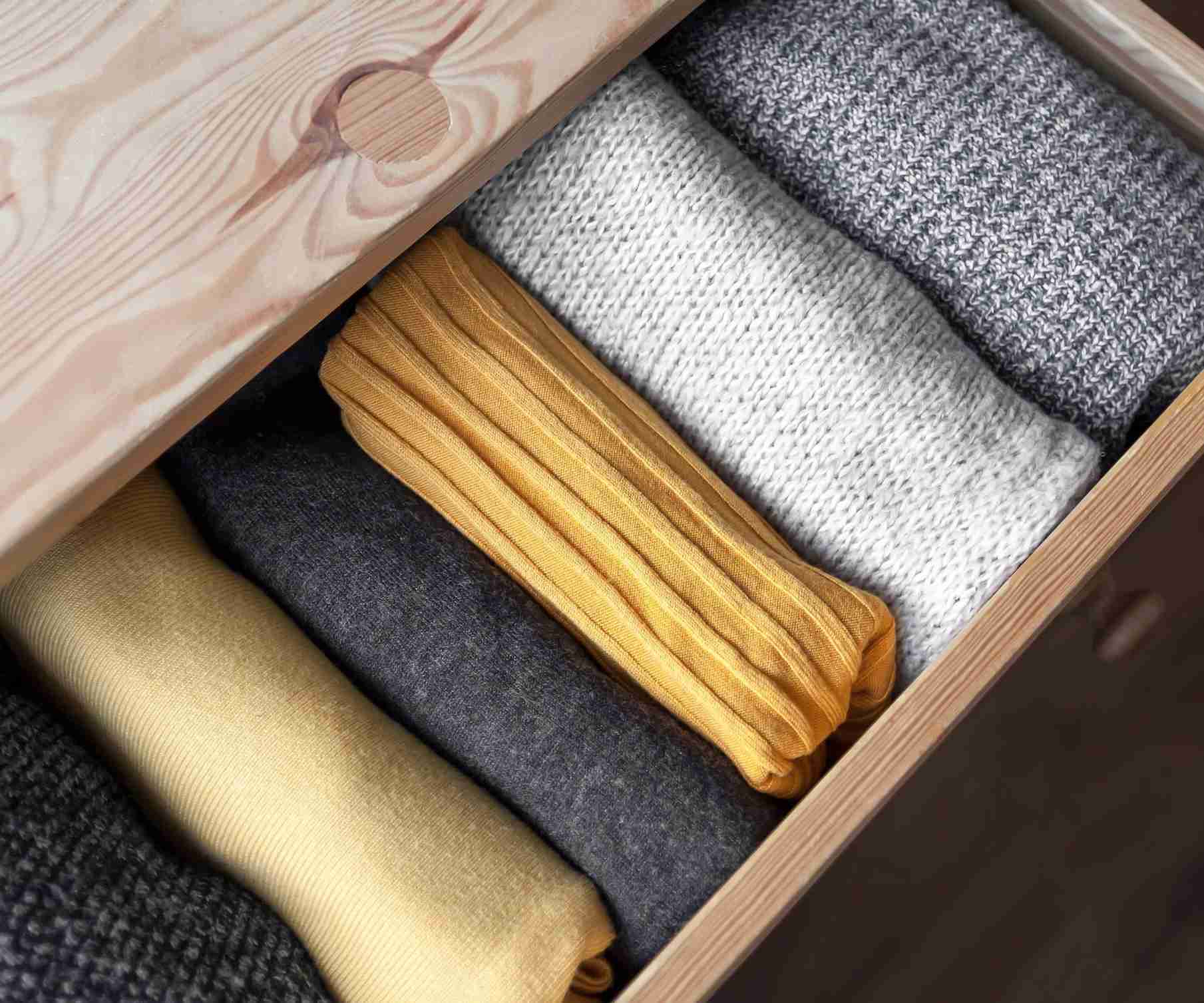
Rotate what stays in the main closet
A home with enough wardrobe space may only need a change in placement rather than separate storage for everything. The article suggests moving heavier sweaters to less immediate shelves and positioning winter garments away from the everyday selection. Bring current season pieces forward so the visible wardrobe reflects what is actually being worn. Protective garment bags may suit appropriate hanging items, but they are not a reason to overlook condition checks. Review the winter selection during the move and address repairs before it disappears from view. A deliberate rotation reduces crowding while keeping retained clothing ready for its next period of use.
Choose support before choosing the smallest package
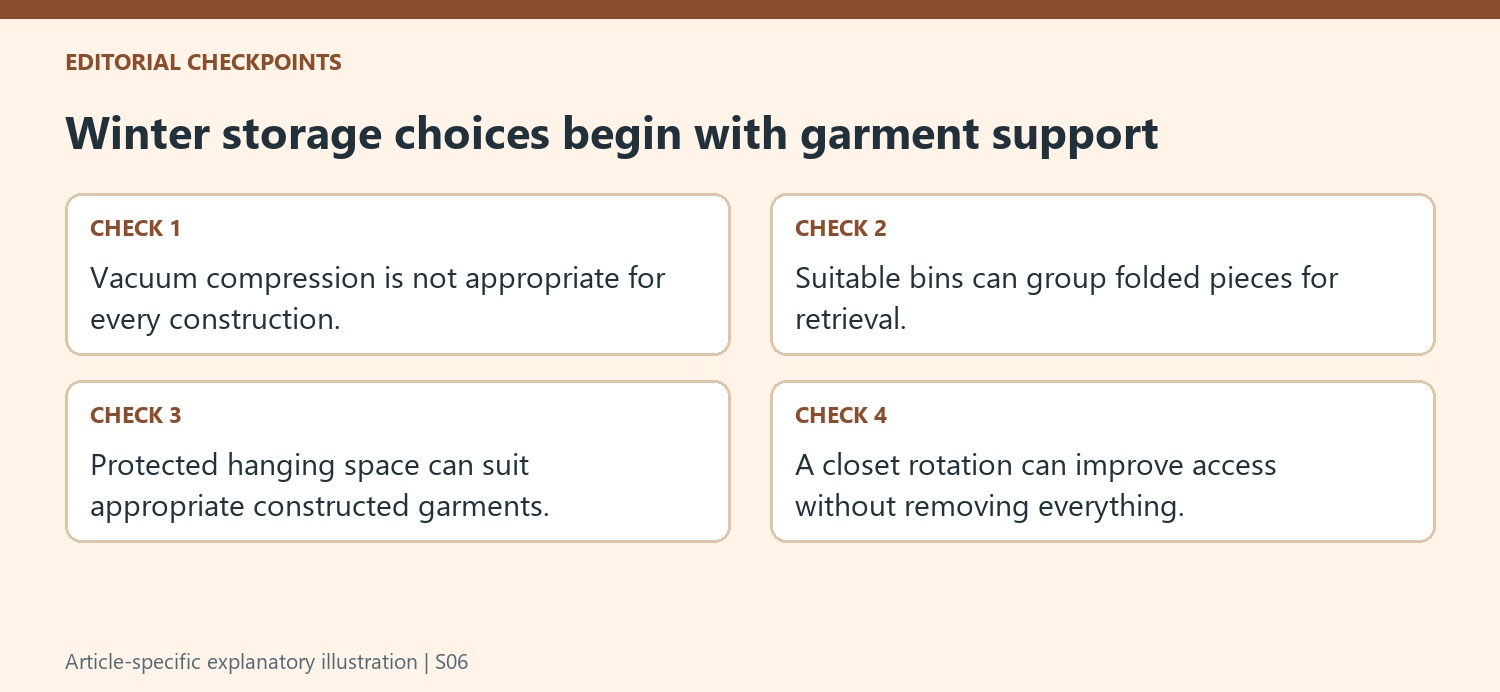
The source presents vacuum bags, totes, and protected hanging space as different storage options. Start with how each winter piece should be supported, then compare the containers that suit it. A bulky washable item and a delicate constructed coat do not necessarily belong in the same compressed package. Check any care or maker guidance relevant to storage and avoid flattening a garment simply because an empty bag has room. For a hanging piece, use suitable support and protection without cramming it against neighboring items. For folded pieces, allow a container shape that does not force an awkward bundle. The useful space saving is the one that leaves the clothing in an appropriate condition for its next season of wear.
Make out-of-sight storage genuinely retrievable
Underbed boxes and rolling bins can reduce crowding in the main wardrobe, as the article suggests, but only if they fit the available clearance and remain accessible. Measure the intended location and consider how a full container will be removed. Label the contents before moving it so one unexpected cold day does not trigger a search through every box. Group items in a way that matches likely retrieval, including separate footwear where appropriate. Clean and thoroughly dry shoes and boots first, using suitable shaping support for pairs that need it. A suitcase can provide temporary seasonal space only when it is not required for travel and the contents suit that storage arrangement. Hidden storage still needs a practical route back into use.
Use the rotation as a condition check
When moving winter garments out of everyday reach, inspect them for marks, dampness, and repairs before packing. Address each issue through the item's permitted care rather than hoping it will be less noticeable next year. The source also describes a simpler rotation for homes that can keep everything in the same closet: bring current-season clothing forward and move less-needed pieces to appropriate less-accessible positions. This changes access without requiring every garment to leave the room. Keep heavier folded items safely supported and avoid placing a difficult load where retrieving it becomes awkward. Review retained pieces during the move so the storage area reflects real needs. A deliberate exchange can reduce daily crowding while keeping the next seasonal change clear and manageable.
References
- How to store winter clothes correctly – 5 tricks to save space and protect fabric. Homes and Gardens; Chiana Dickson.