GarmentCare Guide

Respond to stains before the next laundry pile
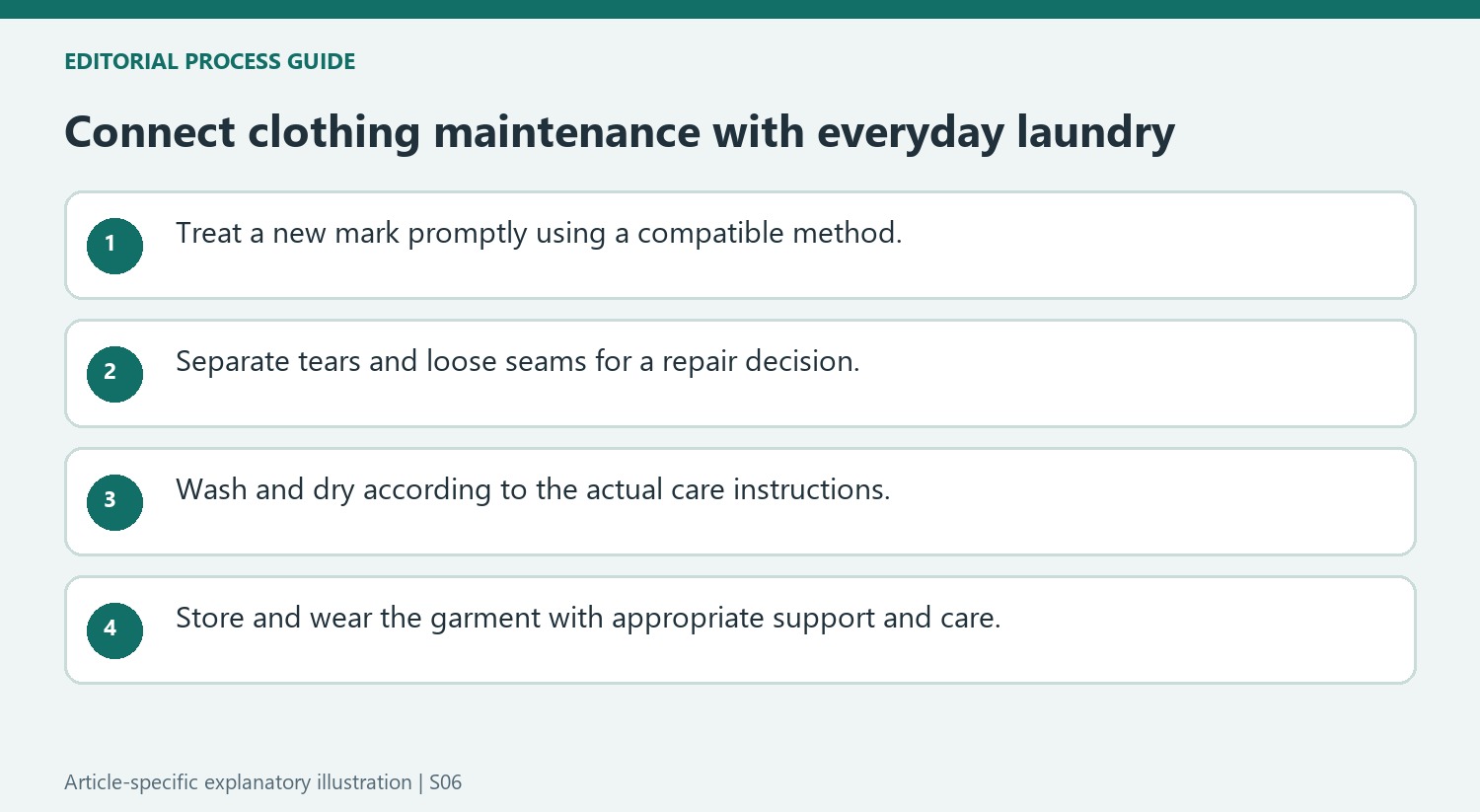
Ariel's clothing maintenance guide emphasizes acting promptly when a stain appears. Check the fabric's care instructions and choose a treatment compatible with both the garment and the mark, rather than allowing it to remain unnoticed until washing day. A cleaning product should be used according to its own directions; a brand's general advice is not permission to apply every detergent to every fabric. Inspect the treated area after washing before using a heated drying or pressing method. Prompt attention is one part of care, while the correct treatment and appropriate finishing steps determine how useful that attention will be.
Repair damage before washing makes it worse
A small hole or tear can become harder to deal with when the garment continues through normal wear and laundry. The source recommends mending a valued item or taking it to a suitable repair professional before further washing aggravates the damage. Check stressed areas and loose seams when sorting clothes, giving repair items a distinct place instead of returning them to the ordinary load. Fasten zips as appropriate so exposed hardware is less likely to catch neighboring material. These checks are simple ways to connect cleaning with the condition of the actual garment, rather than treating every basket as a uniform task.
Store and wear clothing with its construction in mind
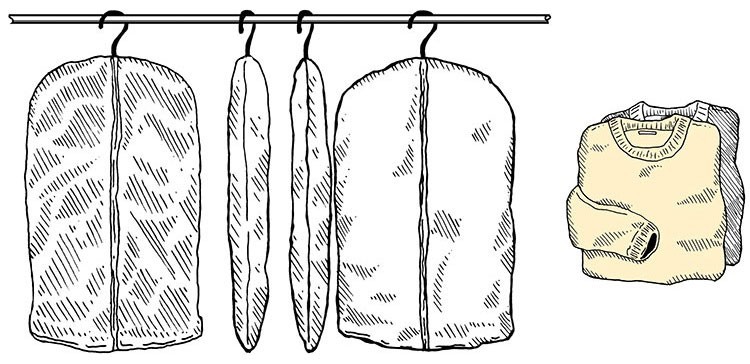
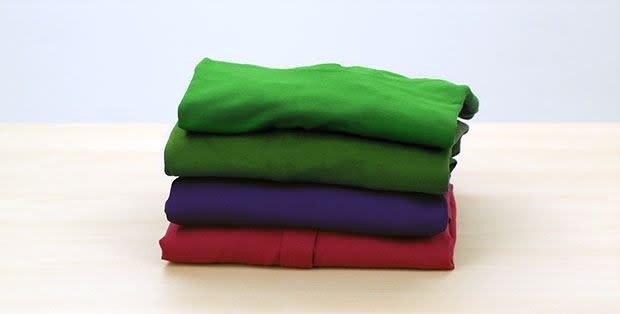
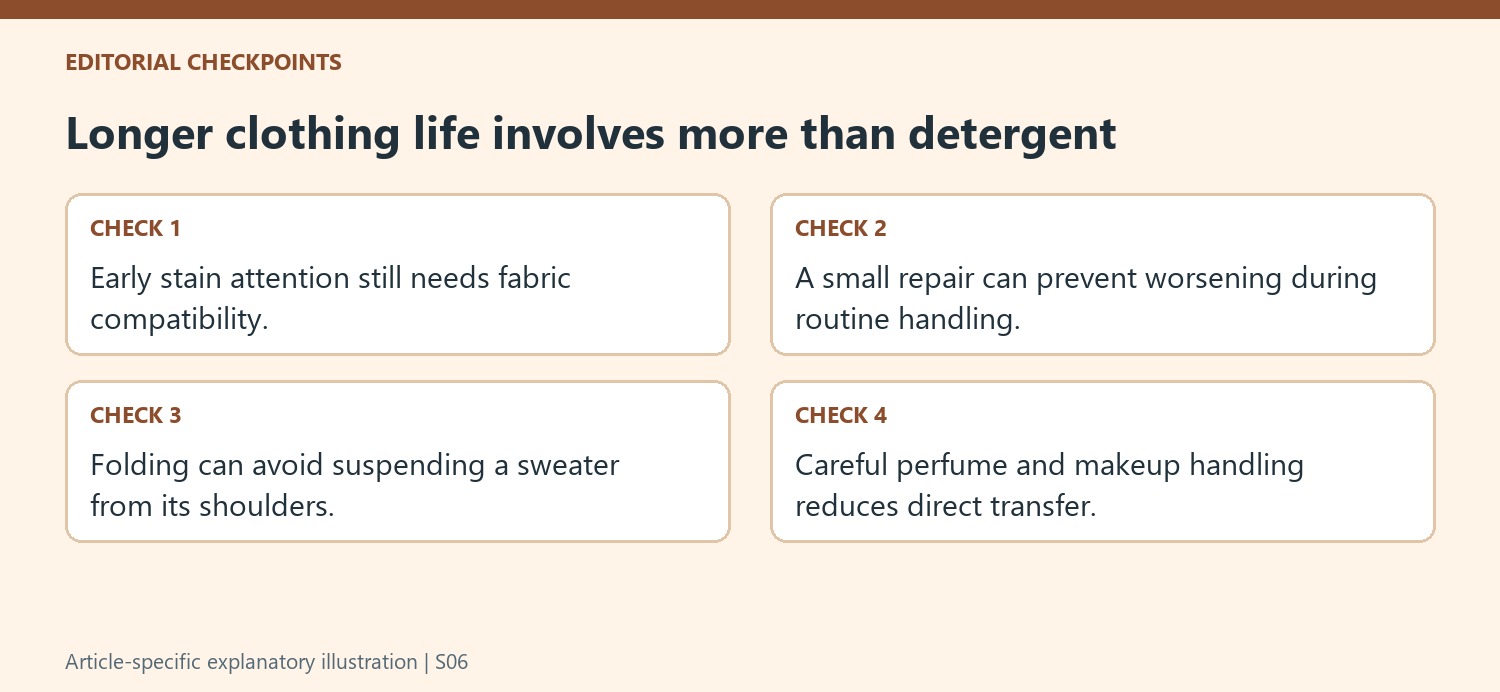
The guide advises folding sweaters rather than suspending their weight from a hanger, which can distort their shape. It also highlights avoiding perfume or makeup transfer directly onto clothing. Follow the garment label for washing, drying and any instructions about turning the item inside out. These details can differ across denim, corduroy, delicate pieces and blended fabrics. A favorite garment lasts through a sequence of decisions, not just a detergent choice. Suitable storage, considered wear and small timely repairs all reduce the need for aggressive cleaning or replacement later.
Connect early stain attention with a complete care route
Ariel encourages prompt treatment, but speed is only helpful when the selected method fits the garment and the stain. Read the care claim and product directions before applying a detergent directly to an unfamiliar fabric. A washable cotton item and a specialist-clean-only piece do not automatically share the same options. Keep the affected area identifiable during the wash so it can be inspected afterwards, before a heated dryer or iron is used. If a mark remains, decide on the next compatible step instead of assuming another hotter cycle is the answer. This turns a general instruction to act quickly into a specific routine from noticing the stain through checking the result of the permitted treatment.
Give small repairs a destination outside the wash pile
The source highlights a sock hole or cardigan tear that can worsen with further wear and laundering. During sorting, separate that item from clothing ready for the machine and decide whether the repair is a suitable home task or needs a professional. A distinct repair place prevents the same piece from repeatedly rejoining the ordinary basket without attention. Check loose seams and closures at the same time, fastening zips where appropriate for the garment and wash method. These small observations link maintenance to the actual construction rather than treating the entire load as interchangeable. Repair does not have to be dramatic to matter; the useful action is to address a developing weak point before another routine cycle increases the damage.
Protect the garment between cleaning sessions
The guide's storage and wearing suggestions address problems that detergent alone cannot solve. Folding a sweater can avoid suspending its weight from the shoulders, while careful handling of perfume and makeup can reduce direct transfer onto clothing. Apply personal products with attention to the garment, especially around high collars that may contact the face during dressing. Follow any item-specific instructions for turning clothing inside out or avoiding particular drying conditions. A low-temperature-capable detergent still has to be suitable for the fabric and used at its directed dose. These choices work together: compatible washing preserves one part of the care routine, while suitable support, timely repairs, and considered wear reduce avoidable problems before the next laundry day arrives.