GarmentCare Guide
Think about the combination reaching the cloth
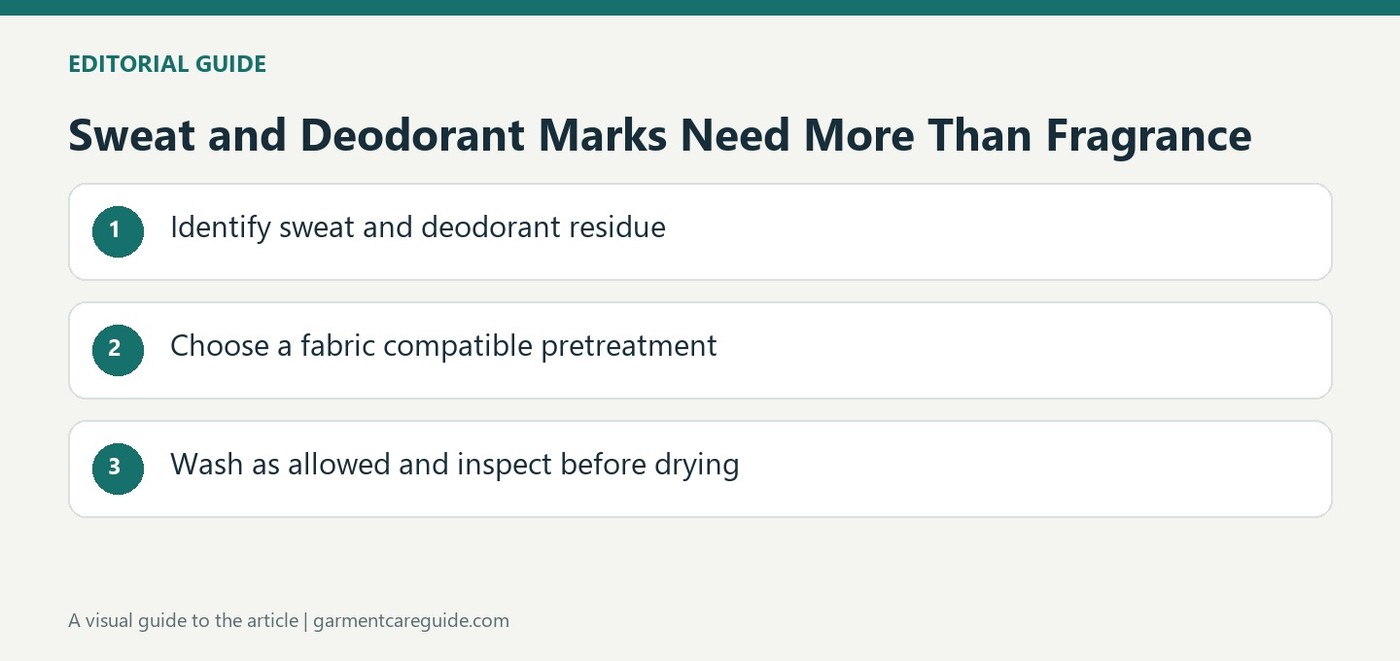
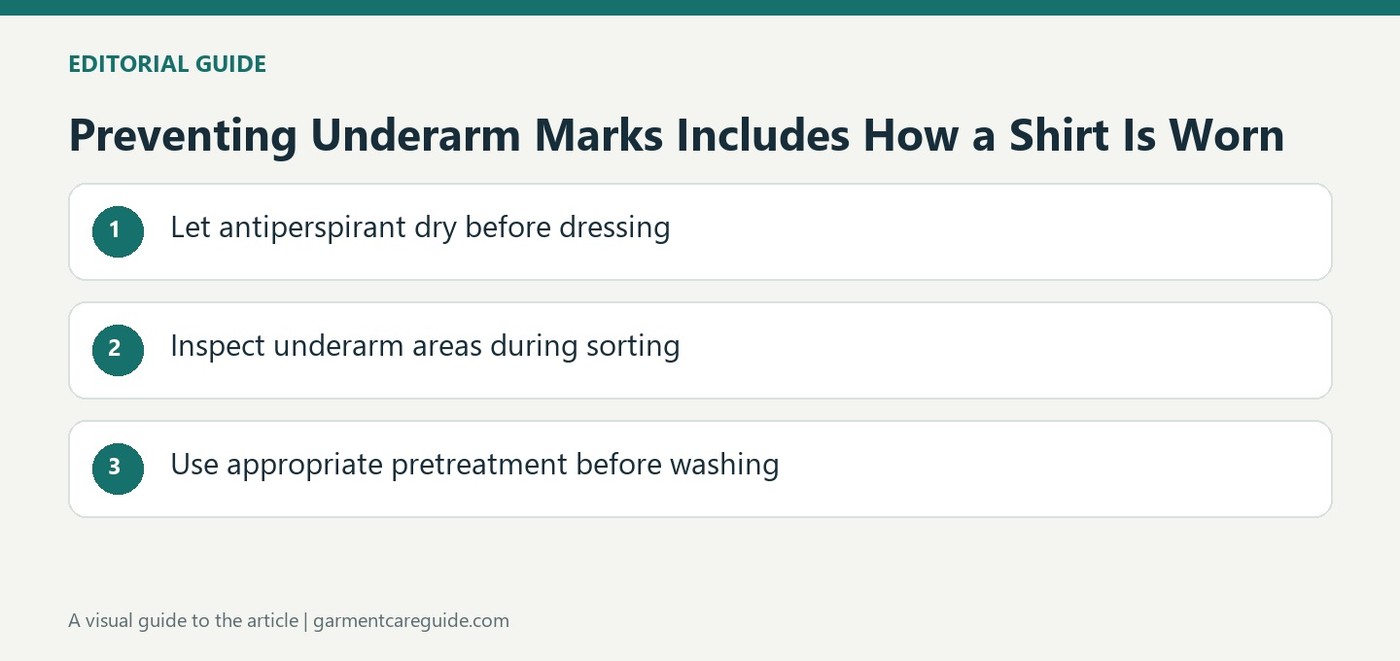
Whirlpool describes underarm discoloration as buildup involving perspiration, body oils and ingredients from deodorant or antiperspirant. The source therefore treats the mark as more than moisture alone. A shirt can look dry while still carrying residue from repeated wear. Check the underarm area and the care label before cleaning, especially where the fabric has a delicate construction or finish. A white color does not eliminate those restrictions or make every bleach and stain product suitable. The actual item and formulation remain central to the treatment decision.
Reduce direct contact where practical
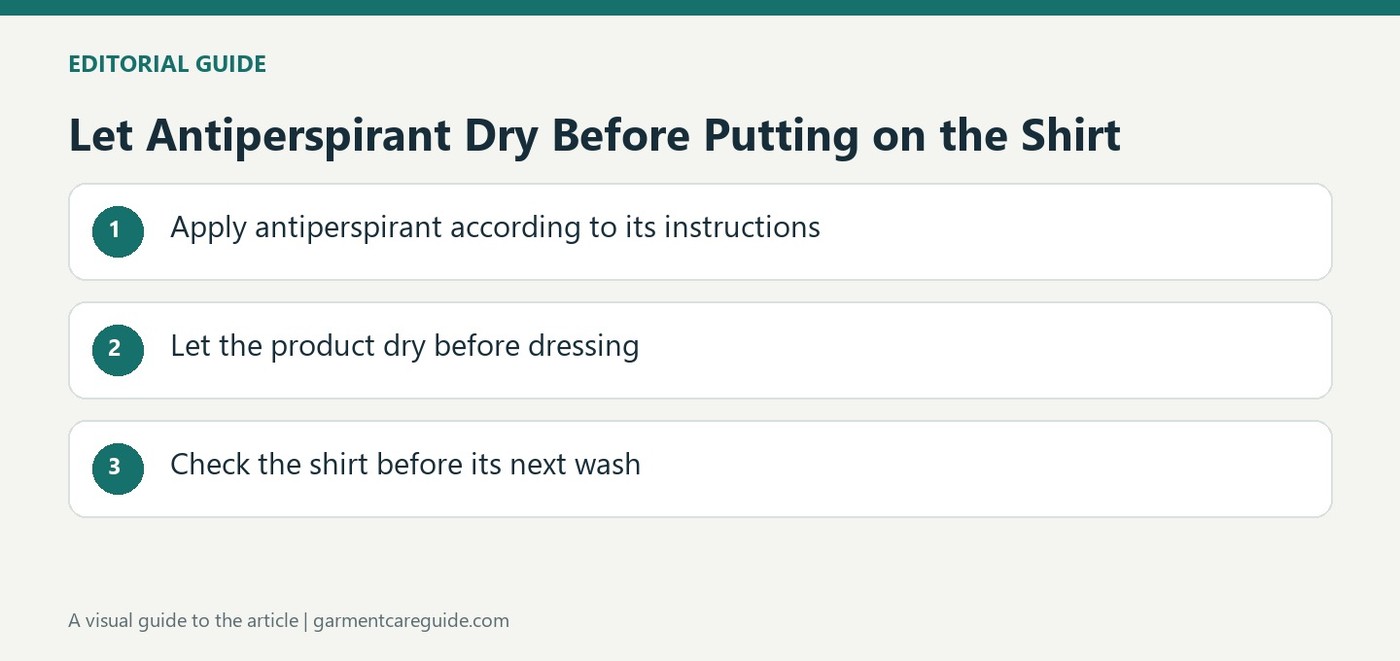
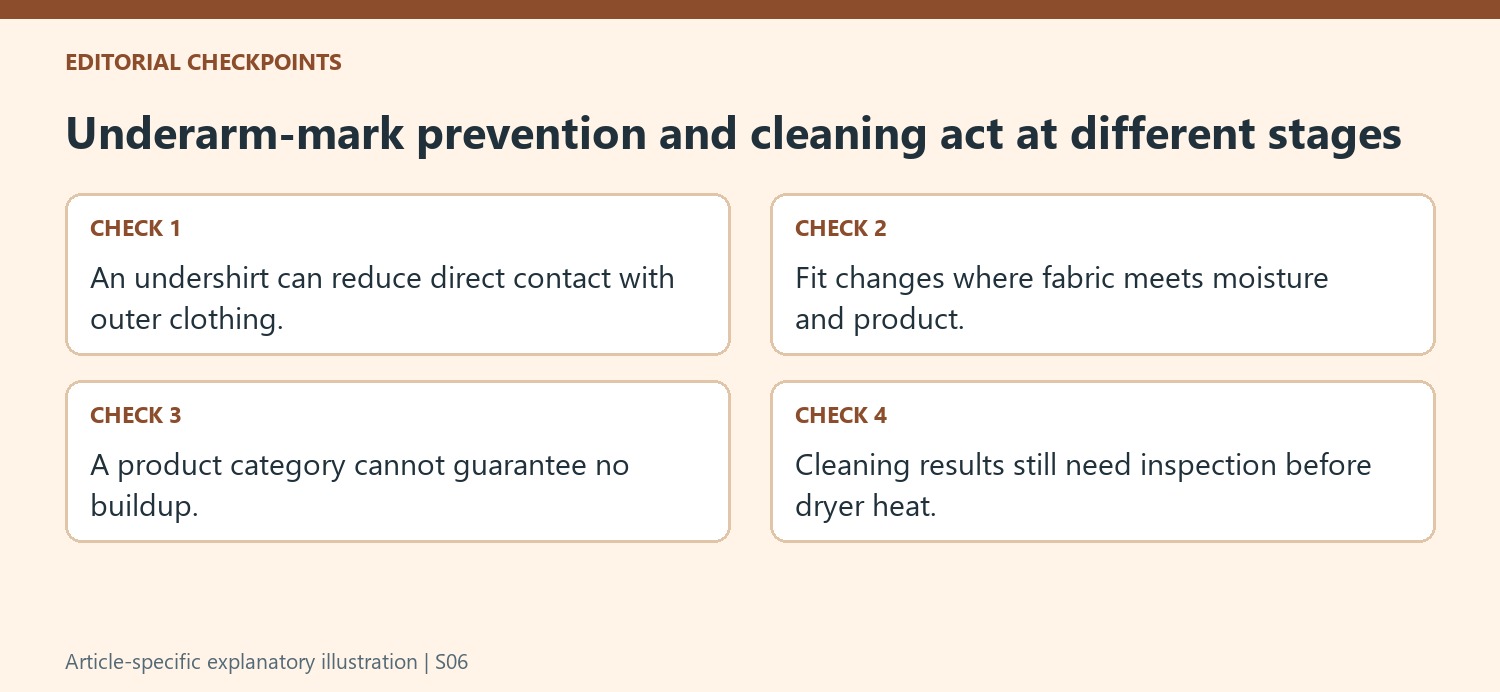
The guide discusses an undershirt as one way to reduce direct exposure of outer clothing to underarm moisture and product. It also notes that fit can affect contact between the fabric and the underarm area. These are practical garment-use choices rather than guarantees that marks will never develop. Changing an underarm product may alter buildup, but the source cautions that other ingredients and perspiration can still contribute. A useful prevention routine therefore observes the actual clothing instead of assuming that one product label or fiber category removes the need for care.

Clean promptly and inspect before heat drying
For washable items, Whirlpool discusses suitable pretreatment and a wash within the clothing label's instructions. Any soaking or spot product needs its own compatibility and contact-time check. Natural drying is recommended while the result is assessed, keeping remaining residue away from dryer heat. Choose the drying support specified for the garment and consider further appropriate cleaning if discoloration remains. Combining reduced transfer during wear with timely, permitted treatment gives each part of the routine a purpose: limit buildup where possible, then judge the condition of the actual fabric after cleaning.
An undershirt changes contact rather than supplying a stain guarantee
Whirlpool suggests an undershirt as one way to reduce direct exposure of outer clothing to underarm moisture and product. That is a garment-use decision, separate from the later cleaning method. Choose what is practical for the outfit and observe the actual clothing rather than assuming an extra layer prevents all discoloration. Fit also changes where fabric contacts the underarm area, which the source discusses alongside product buildup. These considerations can reduce a specific transfer opportunity while leaving other causes present. Continue checking the shirt after wear and follow its care instructions when treatment is needed. The prevention stage supports garment care but does not replace inspection or make a frequently worn outer shirt permanently free of residue.
Changing underarm products does not identify the whole cause
The guide notes that product ingredients can contribute to marks but that perspiration and other components may still create buildup. Avoid reading an aluminum-free or natural description as proof that no clothing stain can occur. Follow the chosen personal-care product's own use directions and assess what actually happens to the garment. That observation is more useful than assigning a guaranteed laundry outcome to a label category. If discoloration appears, identify the textile and its permitted cleaning route before selecting a treatment. The same location on a shirt can carry a combination of residues, so a product change and a suitable wash address different points in the routine rather than functioning as interchangeable solutions.
Natural drying can make the result easier to assess before heat
Whirlpool recommends keeping remaining residue away from dryer heat while the stain-removal result is being judged. Use the natural-drying support appropriate to the garment and inspect the affected area again when it can be assessed clearly. A wet surface can make the result uncertain, while heat may make persistent marks harder to address. Any further treatment still needs garment and product compatibility, including permission for soaking, local application, and movement. White color is not automatic approval for bleach or a hot cycle. The full routine therefore connects practical transfer reduction during wear with timely allowed cleaning and an inspection grounded in the actual fabric condition after treatment.