GarmentCare Guide
Several residues can accumulate in one area
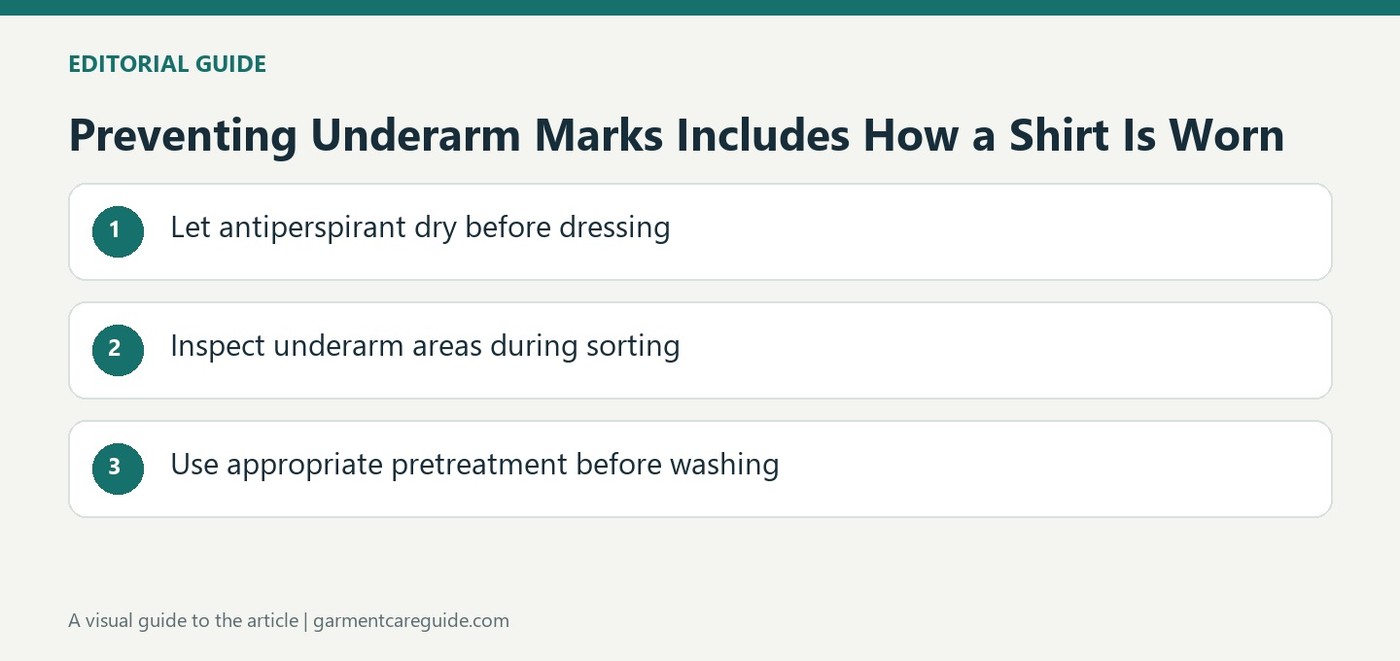
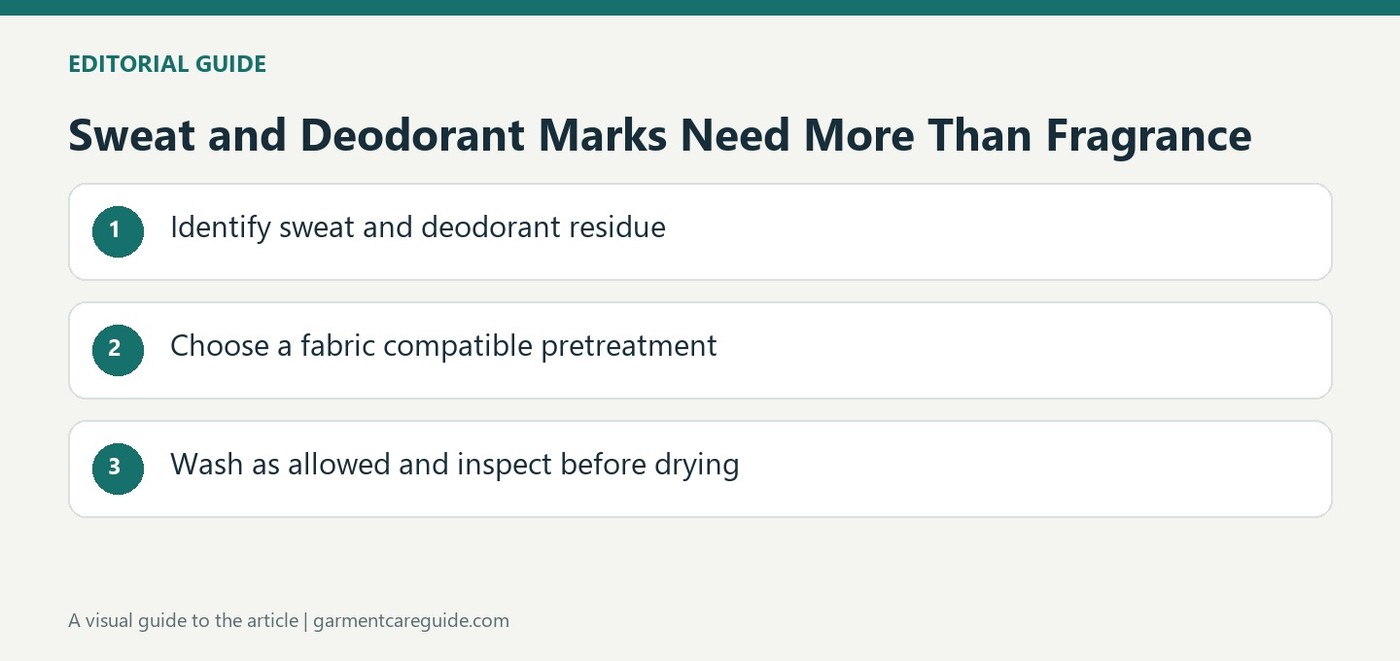
Maytag's sweat-stain guide describes the combined effect of perspiration, body oils and ingredients from underarm products. Repeated contact can leave buildup and yellow discoloration in a shirt's underarm area. This is a more specific explanation than assuming every mark is simply water that failed to dry. Inspect the fabric and consider the products involved before selecting treatment. The finished garment's care label still governs what can be used, particularly when its fiber, dye or construction differs from an ordinary robust washable shirt.
A targeted treatment needs material compatibility
The source discusses soaking and localized stain treatment before washing. Those options require a garment that permits the selected products and process; they should not be transferred automatically to wool, silk or another sensitive textile. Product directions are important for concentration, contact time and rinsing. Maytag also cautions that chlorine bleach can worsen the appearance of certain sweat marks, so white fabric should not be treated as automatic approval for that product. Read both the bleach symbol and the actual formulation's instructions before considering any bleaching step.
Judge the dry result before returning to dryer heat
Maytag advises natural drying while the stain-removal result is assessed, because residue can be harder to identify while fabric is wet and dryer heat can make persistent marks more difficult to remove. Use the appropriate support position for the garment. A further compatible treatment may be needed, but removal is not guaranteed for every accumulated stain. Its prevention discussion also returns attention to underarm-product buildup. A useful routine combines understanding the residue, choosing a permitted treatment and inspecting the result, rather than assuming a single strong wash will solve every discoloration.
Buildup can involve several sources at the same location
Maytag describes perspiration, body oils, and underarm-product ingredients contributing to deposits in clothing. That combination helps explain why a repeated underarm mark is more than water that failed to evaporate. Consider the product history and inspect the fabric before choosing treatment. A yellow area can identify where attention is needed without proving one exact cause or one universally effective recipe. The garment's care claim remains central, especially for a blend, fine finish, or construction unlike a robust washable shirt. Keeping the explanation tied to the observed textile avoids using a general buildup account as permission to apply every stain-removal ingredient mentioned in an advice page to any garment with discoloration.

White fabric does not make chlorine bleach the automatic response
The source specifically cautions that chlorine bleach can worsen the appearance of some sweat marks. Read the garment's bleaching instruction and the actual product directions rather than choosing that treatment from color alone. An oxygen-based alternative also needs compatibility; it should not be treated as unrestricted simply because it belongs to another chemical category. The same garment checks apply to proposed soaking or localized products and to any brushing. Select a supported route for the textile, use the directed concentration and contact period, and avoid adding more ingredients merely because a stain has accumulated over time. A visible white shirt is still a finished article with dye, material, and construction limits that continue during stain treatment.
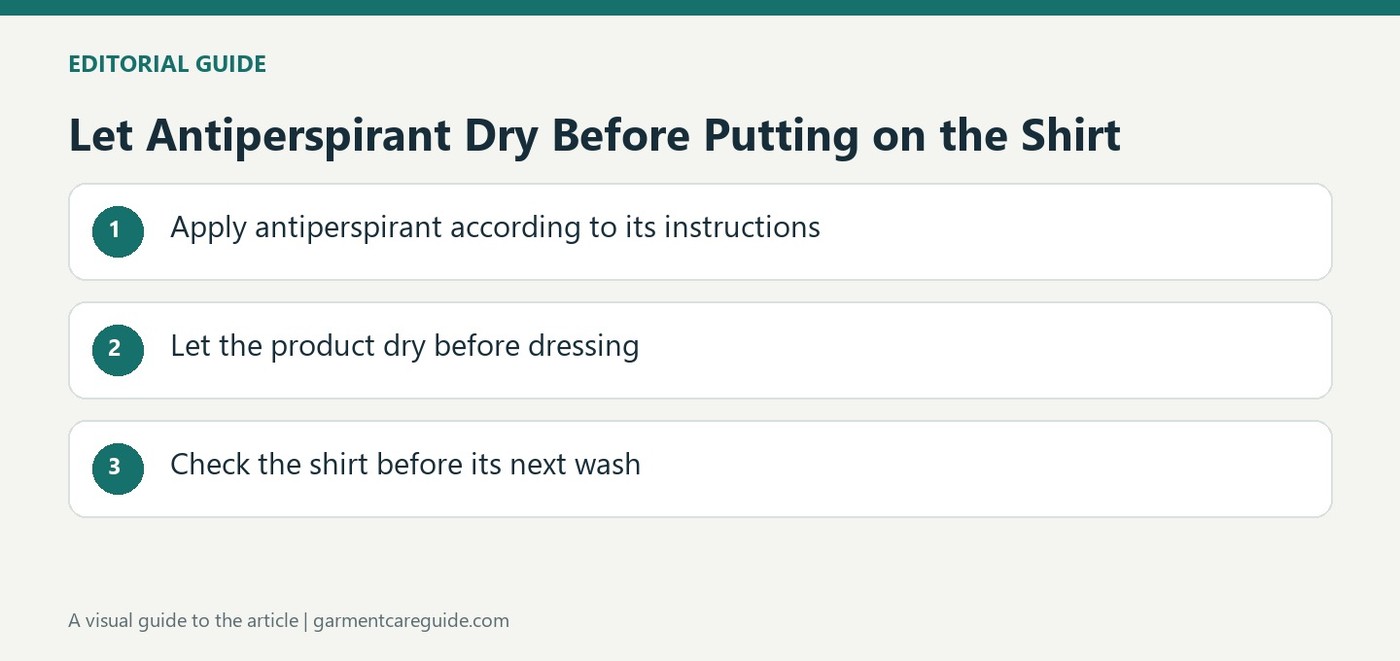
Assess the naturally dried area before returning to heat
Maytag points out that a remaining mark can be difficult to judge while the fabric is wet and advises natural drying during stain assessment. Use the support position required by the garment rather than automatically hanging every wet item. Then examine the area again before deciding on another compatible treatment or permitted heat finishing. The process should respond to the actual result, not to a promise that one strong wash solves every accumulated deposit. A persistent mark may need more specific advice. Prevention can also include reviewing how underarm products transfer onto clothing, but changes in personal-care use should follow their own directions. Garment care remains focused on the material and the condition visible after each appropriate step.