GarmentCare Guide
Identify whether the residue is dry or oily
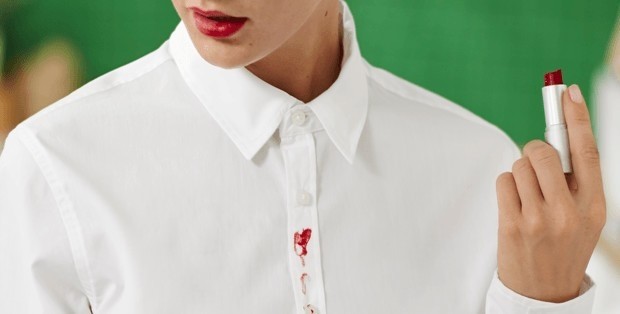
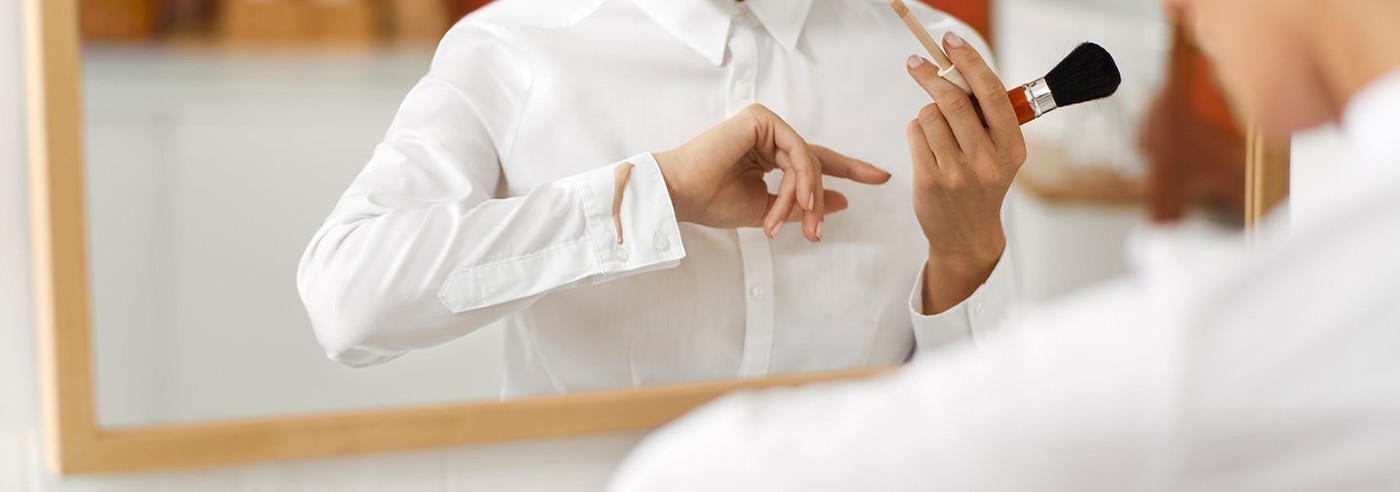
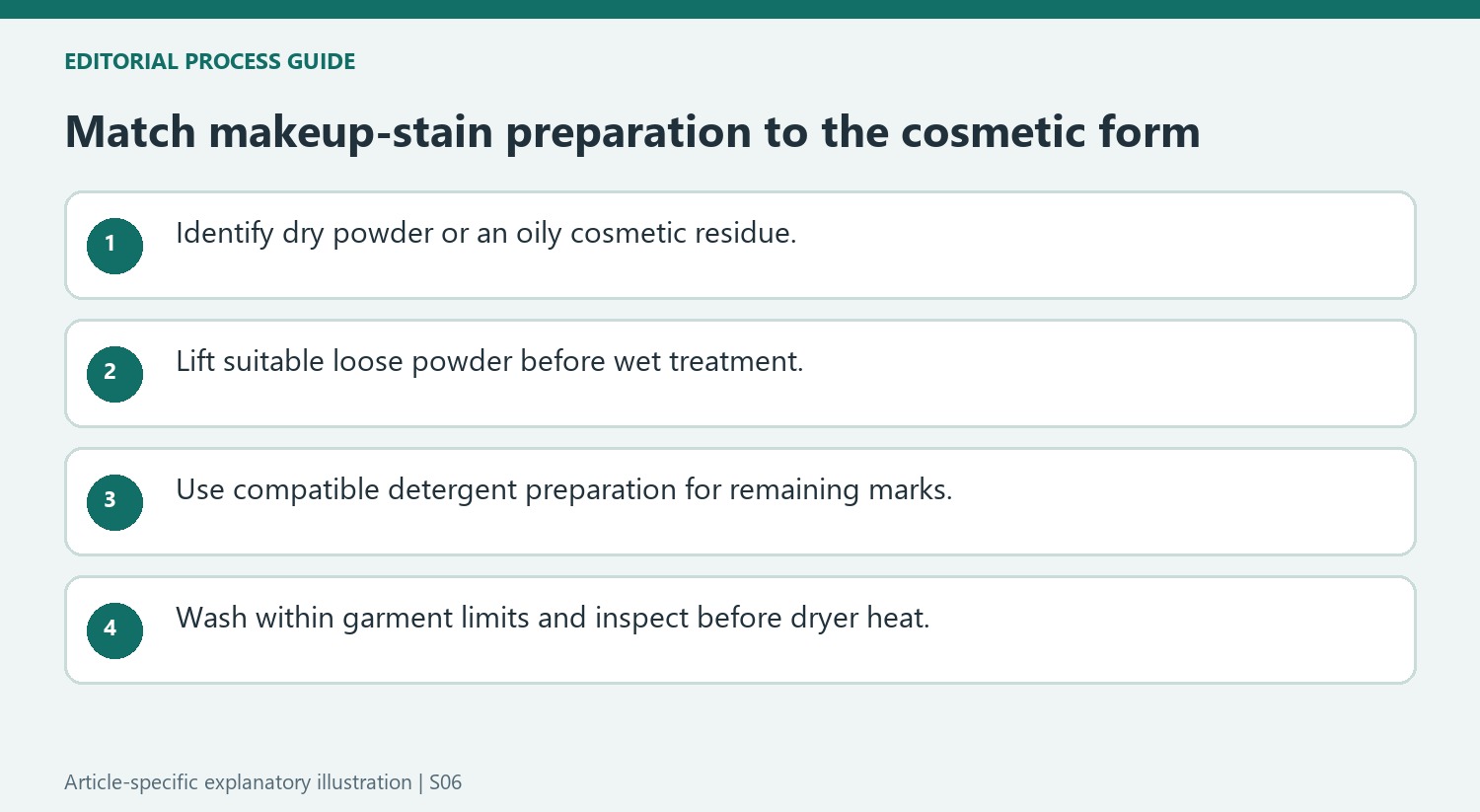
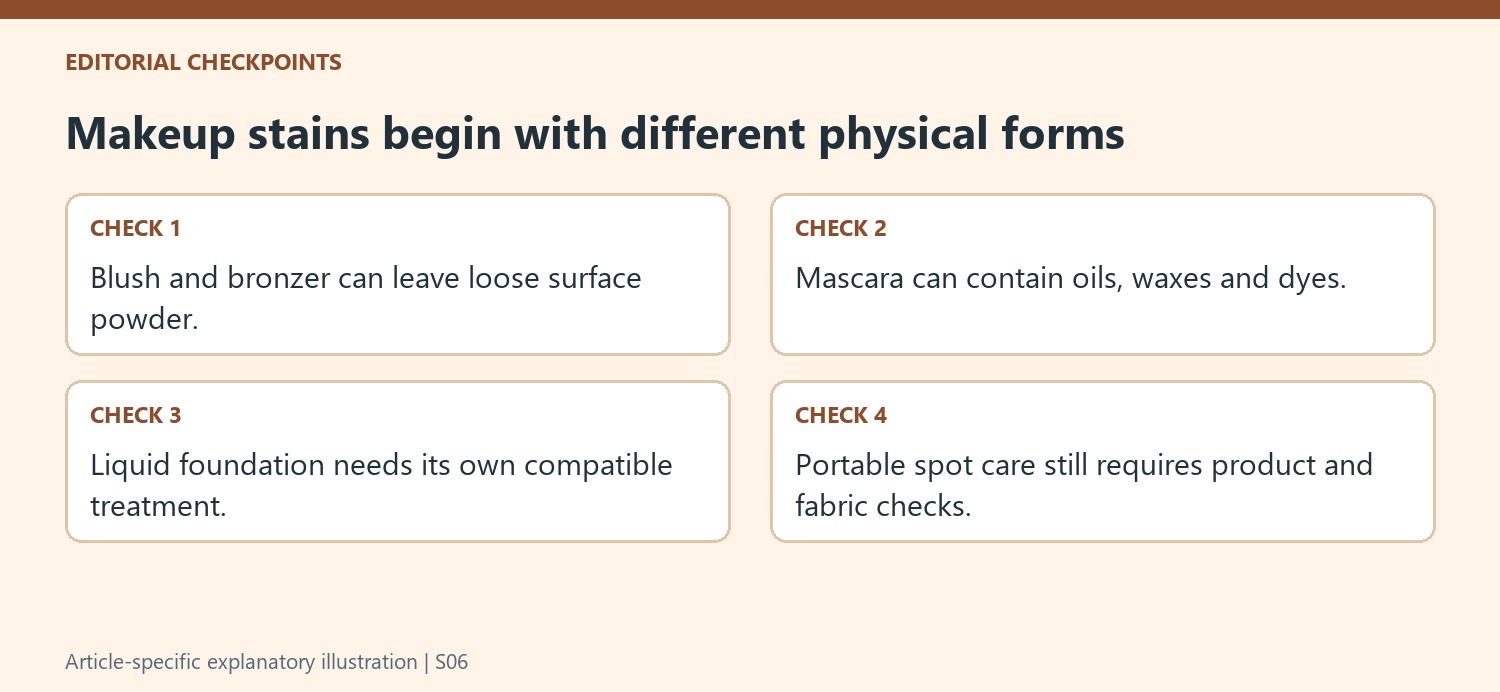
Tide's makeup-stain guide distinguishes products rather than treating all cosmetics as the same material. Blush or bronzer can leave loose powder on the surface, while mascara contains ingredients such as oils, waxes and dyes. Those differences matter before anything is rubbed into the fabric. Read the garment's care instructions and identify the cosmetic as accurately as possible. A powder spill and a liquid smudge on the same shirt may require different initial handling, even if they later permit the same laundering process.
Lift loose material before applying detergent
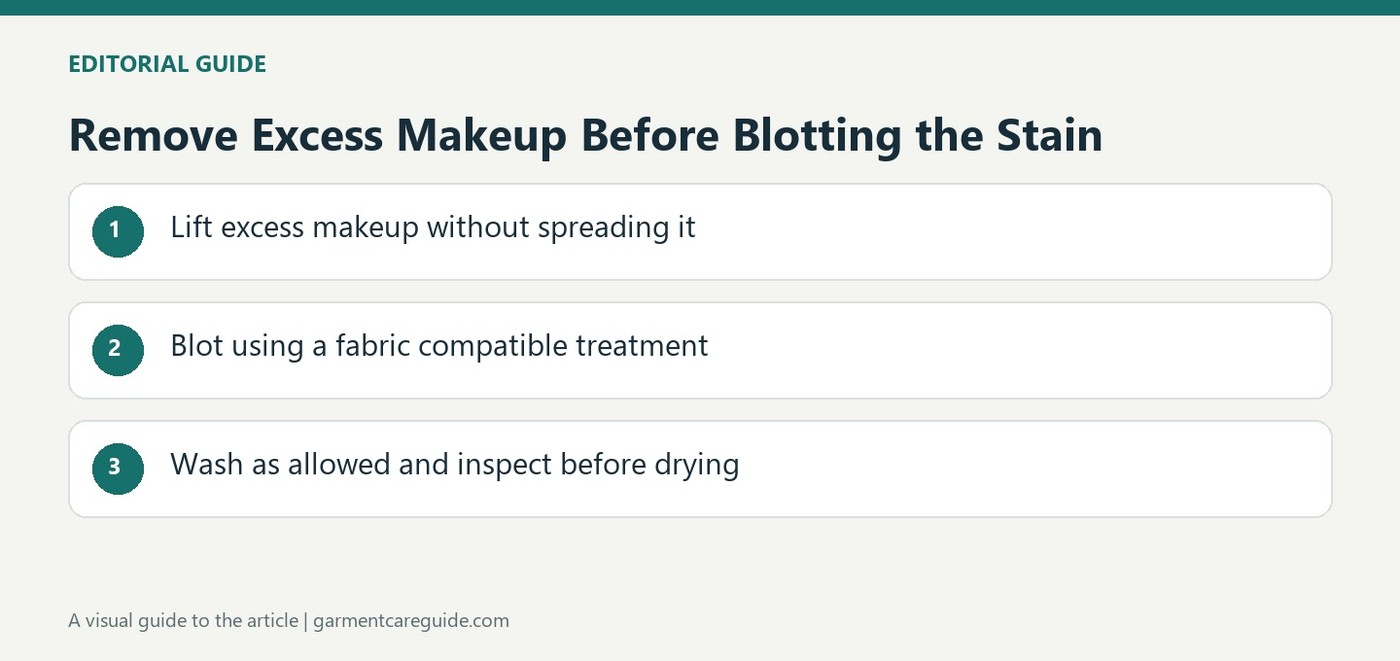
For suitable powder marks, the source discusses using a lint roller to lift loose residue. This avoids immediately turning dry powder into a broader wet stain. Oily cosmetics are handled through a compatible detergent pretreatment before washing, with gentle action suited to the fabric. Follow the current product directions for concentration and contact time, and do not assume a toothbrush is appropriate for every delicate surface. The purpose is to remove excess material and prepare the remaining mark in a controlled way, rather than spreading it into a larger section of the garment.
Keep the final wash and result check separate
Tide recommends a washing temperature allowed by the care label, with the selected detergent used properly for the load. Check the affected area afterward and repeat an appropriate treatment if a mark remains before applying dryer heat. Quick spot products also need compatibility checks and should not be treated as substitutes for all later cleaning. The useful distinction is between the cosmetic's formulation, the garment's limits and the actual condition after treatment. Keeping those three things in view makes the routine more precise than using one vigorous rubbing method for every makeup accident.
Keep powder removal dry until the loose residue has been assessed
Tide distinguishes blush and bronzer powder from oily cosmetics and suggests lifting suitable loose powder with a lint roller. That first action aims to remove surface material without immediately spreading it through wet rubbing. Check that the garment's surface can tolerate the chosen handling, then treat any remaining mark with a compatible method. A fine textured or embellished area may need more specific care than an ordinary washable shirt. The broader principle is to identify the form of the cosmetic before introducing detergent or water. Loose particles and an oily smear are different starting conditions, even when both are called makeup stains and appear on garments that otherwise share a washing route.
Oils waxes and dyes make mascara a different preparation task
The guide describes mascara as containing oils, waxes, and dyes, giving a reason for compatible detergent pretreatment rather than treating it as loose powder. Lipstick and liquid foundation present their own formulations as well. Read the actual garment's label and the selected detergent's directions for amount, contact period, and handling. A brush mentioned in an example is not automatically suitable for every delicate surface, and extra force is not a universal response to a dark cosmetic mark. Keep any rinsing temperature within the clothing limits too. This makes the stain response more specific than choosing one vigorous rubbing routine for every cosmetic simply because they were all applied while getting dressed.
Quick spot care still needs compatibility and a later assessment
Tide discusses on-the-go products as well as full laundering, but convenience does not remove the need to check the fabric and use directions. A portable treatment should not be assumed to replace every later cleaning stage or to suit professional-care clothing. For an allowed wash, dose the detergent appropriately and use the garment's permitted temperature and process. Then inspect the affected area before dryer heat, repeating only a compatible treatment where appropriate. If a delicate or valuable item remains uncertain, obtain more specific advice rather than collecting household alternatives. The routine works by keeping three facts connected: the cosmetic's physical form, the finished garment's limits, and the actual condition after the chosen treatment has been completed.