GarmentCare Guide

Do not push loose dirt across the garment
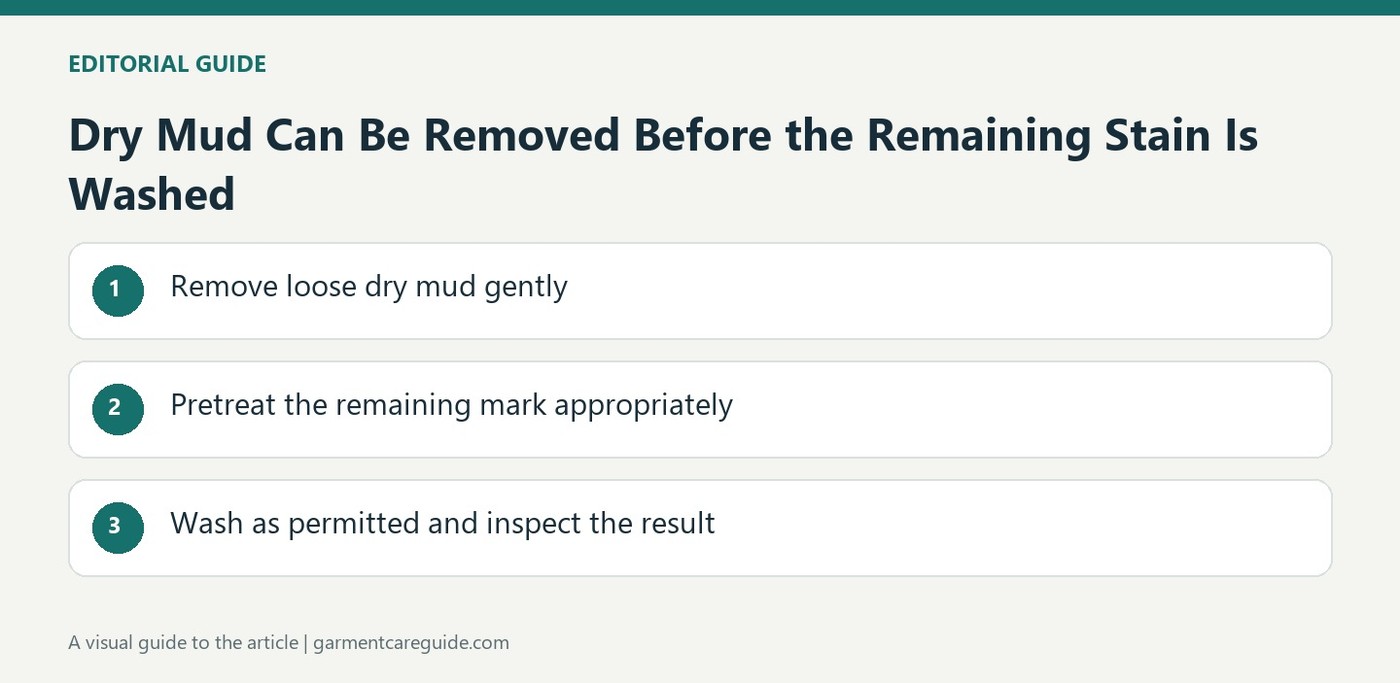
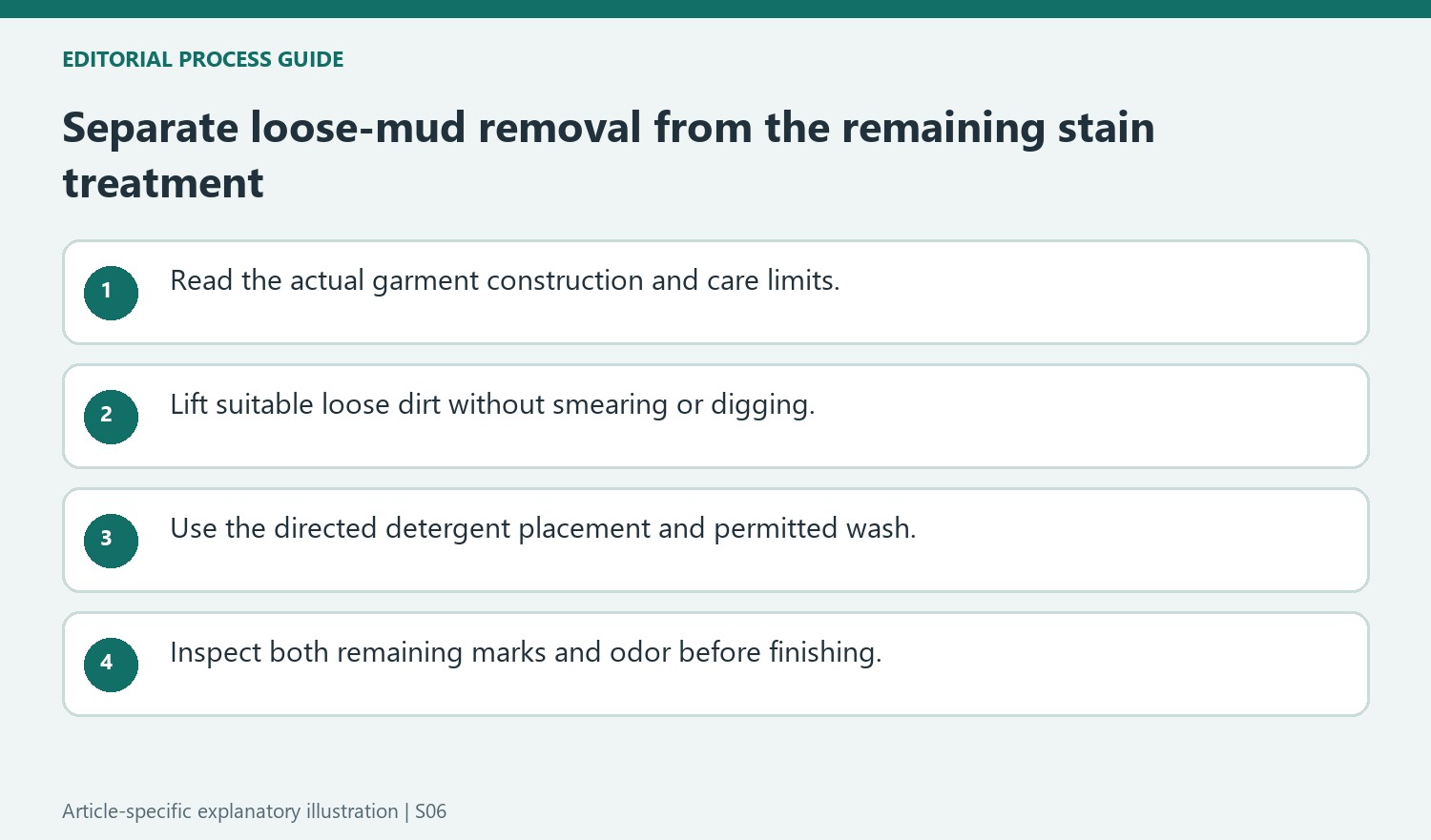
Tide's mud-stain guide begins with taking away excess material before the clothing enters the machine. It discusses lifting or scraping loose mud carefully and, where appropriate, allowing dry particles to be removed without smearing wet residue further into the fabric. The handling should fit the textile: use a suitable blunt edge rather than digging into a delicate surface. This preparation reduces the amount of dirt left for the wash to handle. It also keeps a large removable deposit from being treated as though it were already part of the fabric.
Match detergent placement and the wash to the item
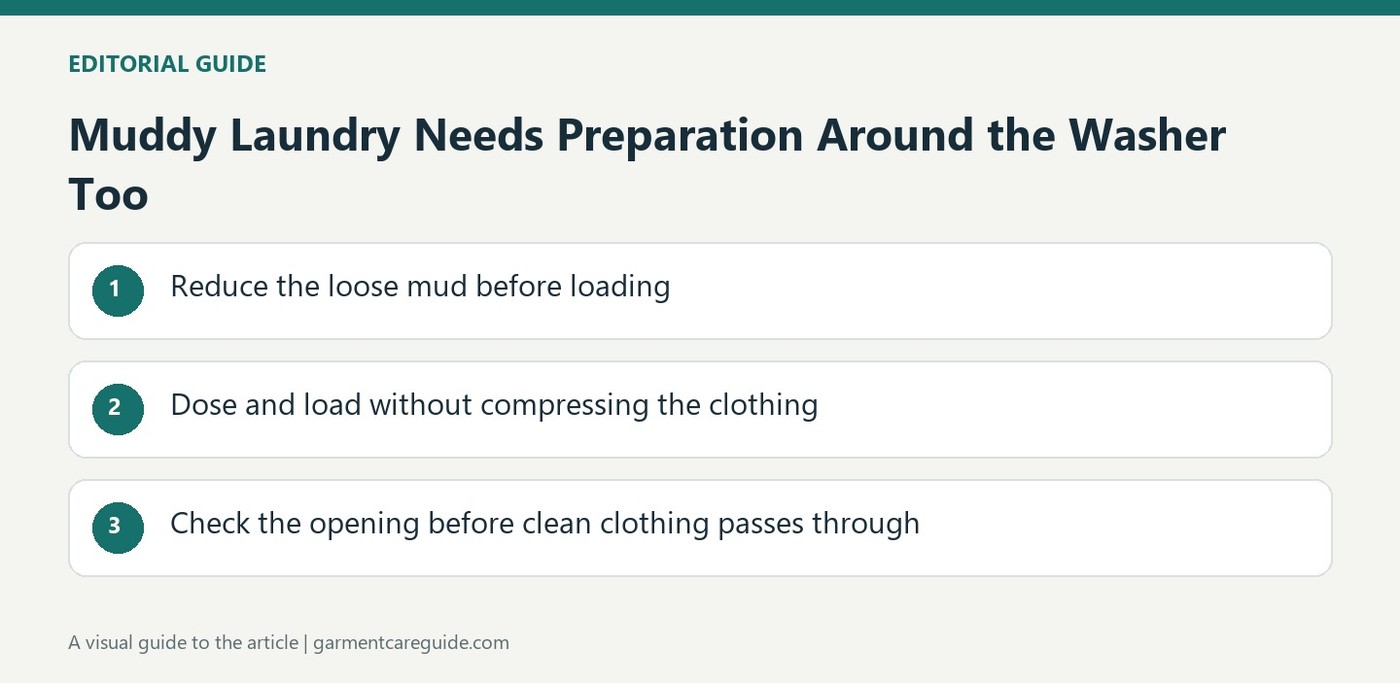
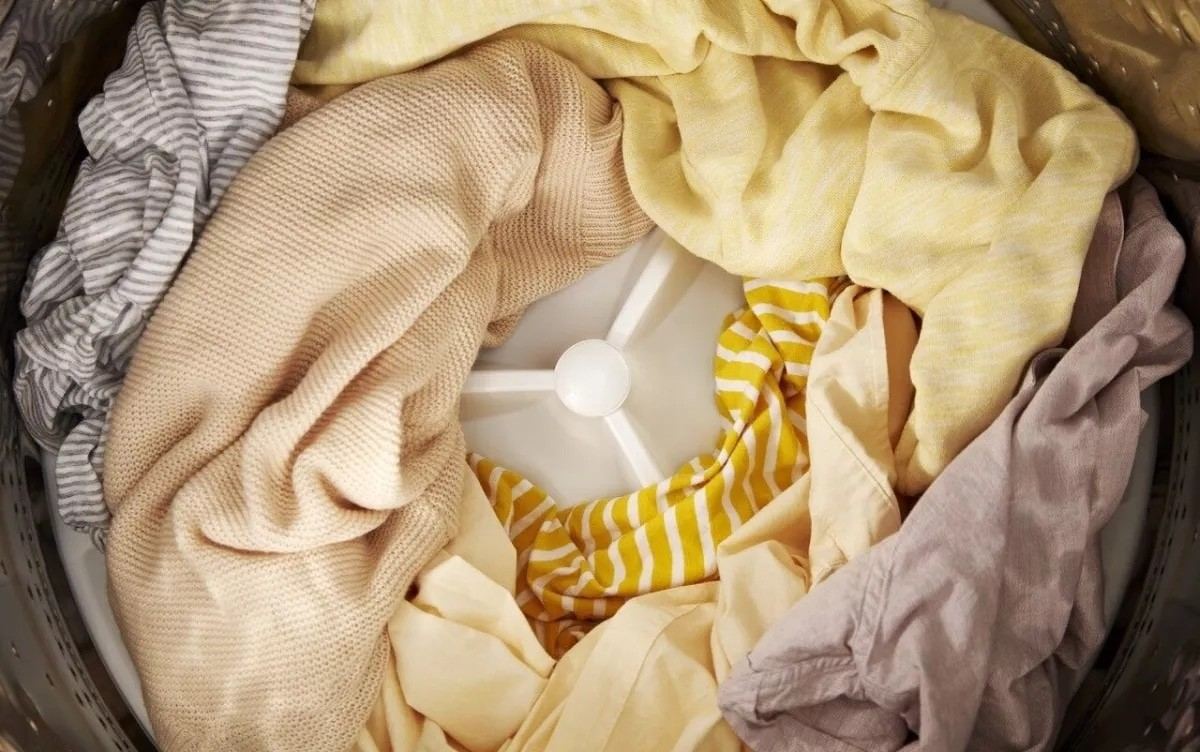
The source describes a capsule-based wash with detergent placed in the empty drum before clothing is added. Follow the current pack's dosing instructions and the washer manual rather than assuming one measure applies to every formulation. A garment's care label determines the permitted program and temperature. Mud does not have a single uniform composition, so the stain should not be assigned a universal hot-wash rule. Separate heavily soiled items where their needs differ from lightly worn clothing and avoid overloading the appliance.
Inspect before heat drying or putting the item away
Tide recommends checking both the visible mark and any remaining unpleasant odor before finishing the garment. If further compatible cleaning is needed, keep the item from receiving dryer heat, which can make a persistent stain harder to remove. Natural drying also needs the correct support and exposure for the fabric. A completed cycle is therefore a checkpoint rather than proof that every trace of the outdoor mess has disappeared. The routine connects loose-soil removal, suitable washing and a deliberate result check, instead of relying on detergent alone to address a thick deposit of mud.
Loose mud and residual discoloration are different parts of the task
Tide begins by reducing excess mud before the main wash. The removable material sitting on the surface is not the same problem as the mark left within the textile after that material is lifted. Handle each stage accordingly. Where the fabric permits, a suitable blunt edge can remove loose dried particles without smearing wet residue across a wider area. Do not dig into a fine surface merely because mud is visible. Check the garment's construction and care claim first, then use an appropriate rinse or preparation for what remains. This staged approach reduces the amount of soil introduced into the washer without treating scraping as a universal substitute for stain care on every kind of outdoor clothing.
The muddy condition does not establish one wash temperature
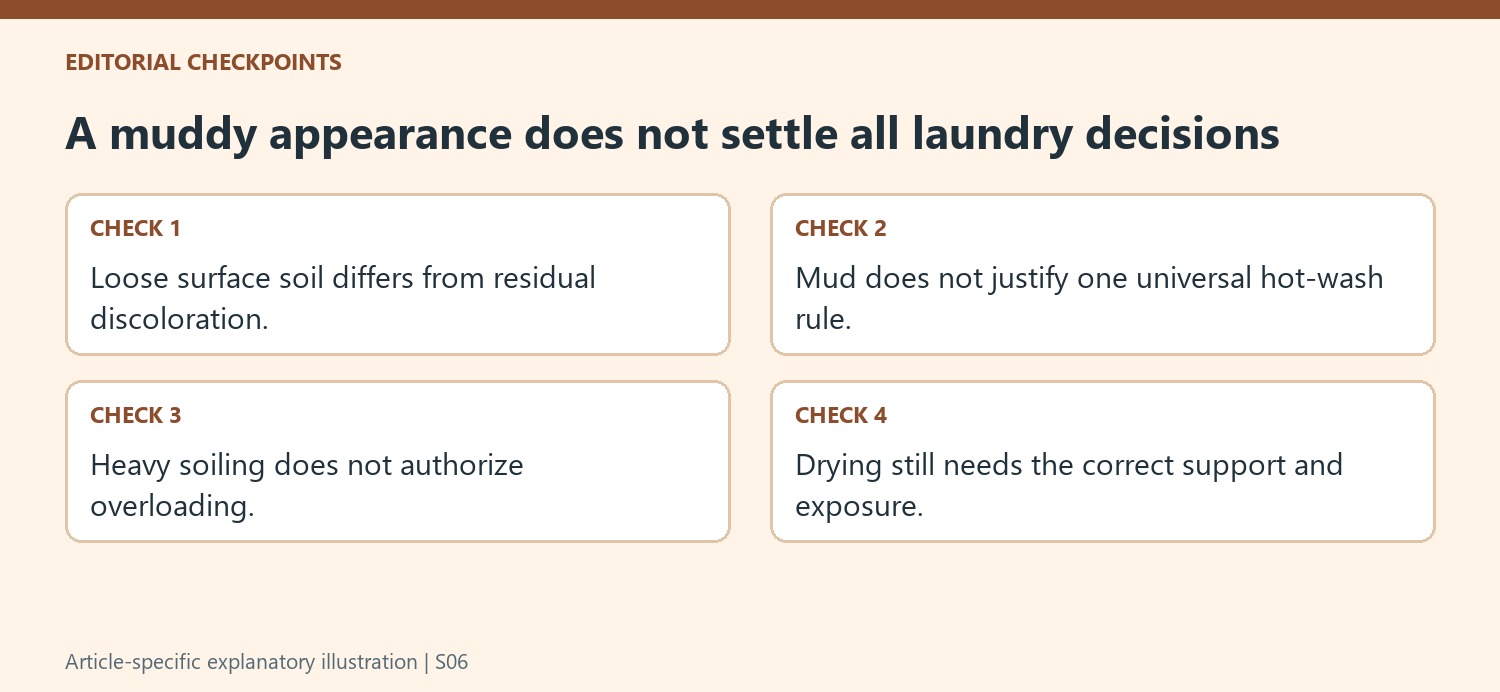
The source's practical routine directs washing back to the garment label. Keep that instruction central rather than assuming all mud has one composition and therefore one correct hot-wash response. Outdoor soil can vary, while the textile may include dyes, finishes, and components with specific limits. Read the actual item and choose a compatible load before using detergent. If the routine uses capsules, follow the current pack's dose and empty-drum placement directions instead of copying a generic quantity. Heavy soiling may need separate attention and adequate loading space, but it does not authorize heat or action beyond the care claim. The machine should receive a prepared compatible task, not an unrestricted challenge defined only by how dirty the clothing looks.
Include odor in the inspection before finishing
Tide recommends checking for unpleasant odor as well as a visible mark after washing. That gives the result assessment more substance than a quick glance at the former mud patch. If either concern remains, consider suitable further cleaning before dryer heat or storage. Do not interpret a completed cycle as proof that the outdoor residue has been fully addressed. Use the garment's permitted drying method and exposure conditions while assessing it; sunshine or heated tumbling is not automatically appropriate for every fabric. The final checkpoint therefore connects appearance, remaining odor, and the actual care claim, helping keep an apparently finished item from being put away or heat-finished before its condition has been properly considered.
References
- Remove Mud Stains from Clothes Easily | Tide. tide.com.