GarmentCare Guide
Underarm marks can include product buildup
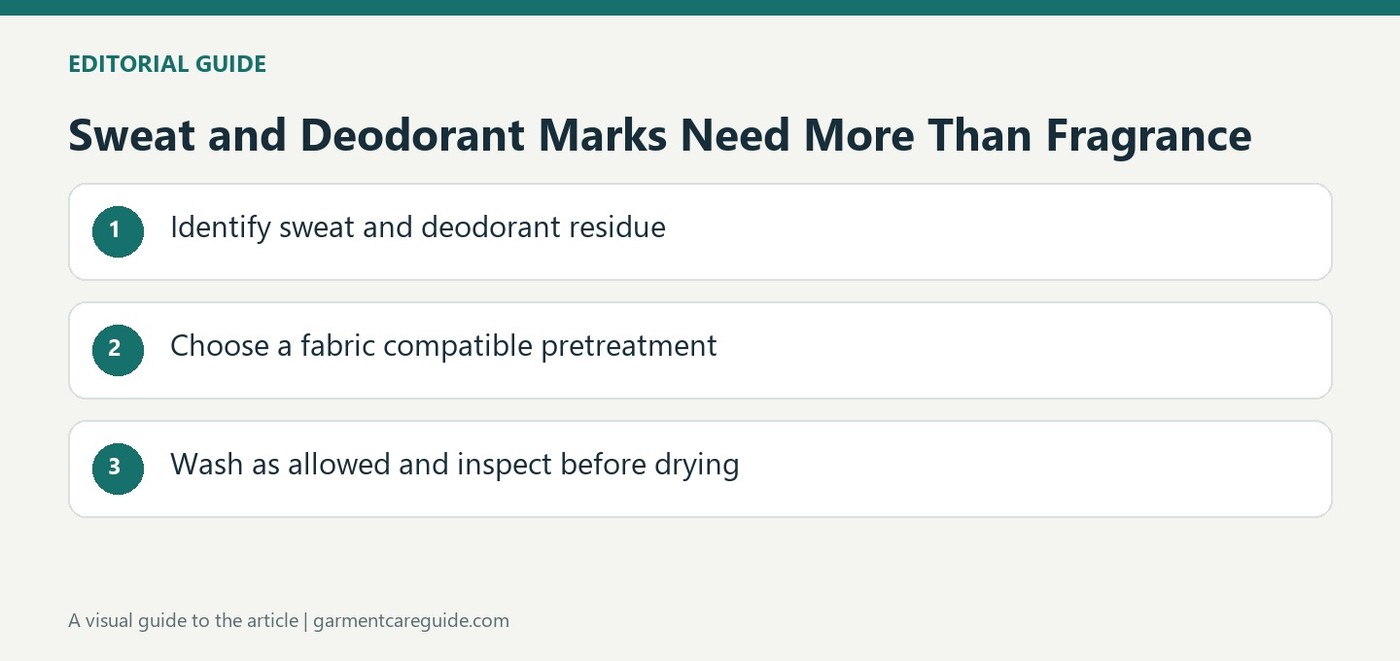
Ariel's underarm-stain guide distinguishes perspiration-related marks from buildup associated with deodorant or antiperspirant. The appearance can vary, and accumulated residue may feel different from the surrounding fabric. This makes the area worth checking before a shirt is put into an ordinary load. A visible color alone is not a precise diagnosis of the ingredients involved, so consider the products used and read the clothing label. The treatment still needs to suit the actual garment rather than relying on a generic rule for every underarm patch.
Attend to suitable garments before residue accumulates
The source recommends prompt cleaning rather than leaving affected clothing untreated in the laundry basket. Its routine includes careful surface-residue removal and a cold rinse for appropriate washable items, followed by the permitted wash with suitable detergent. Ariel's more detailed sweat guide likewise emphasizes the clothing's care instructions. Do not turn prompt attention into aggressive rubbing or an unsuitable hot cycle. A blouse and a sports top can develop marks in the same location while needing different products, temperatures and mechanical treatment during cleaning.
Reduce transfer while getting dressed
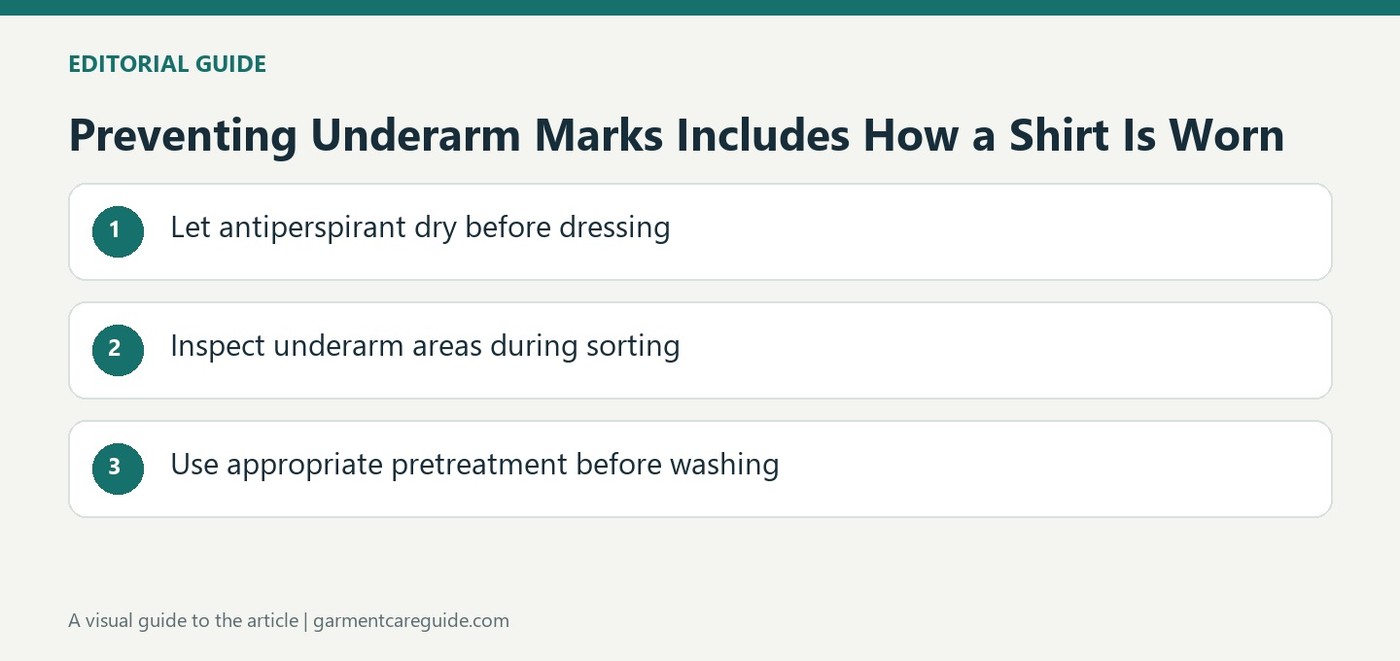
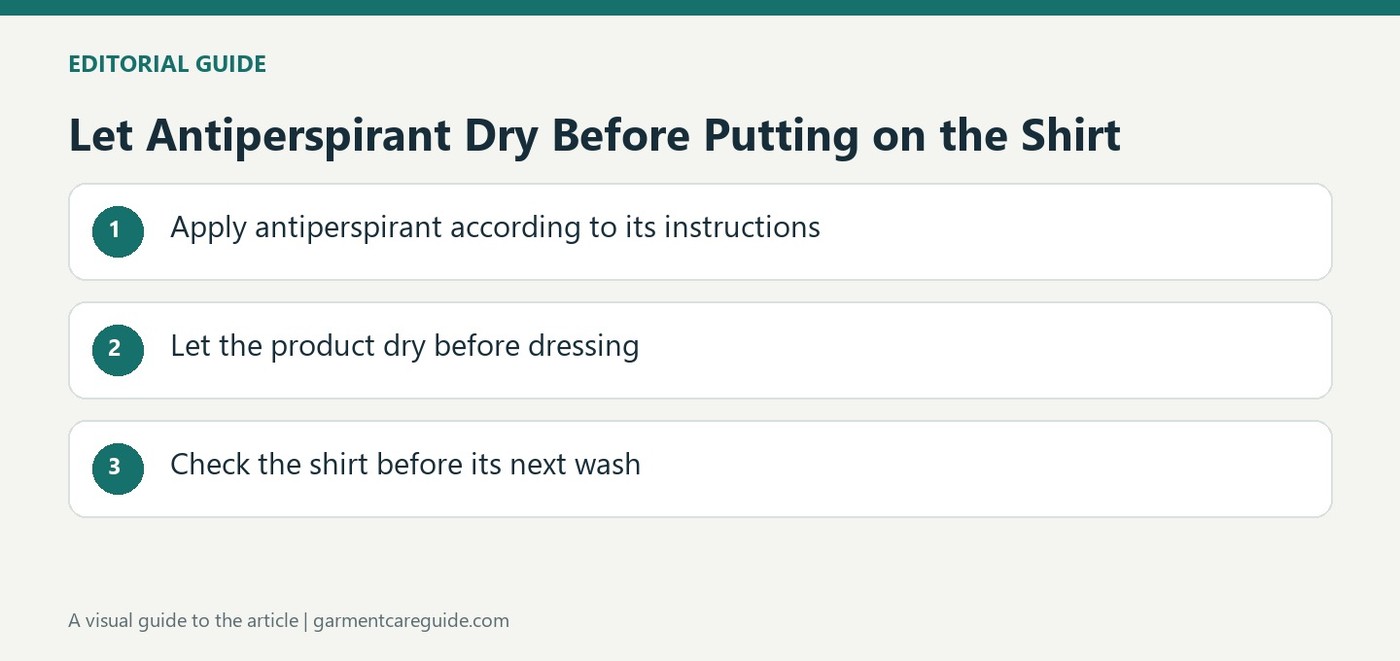
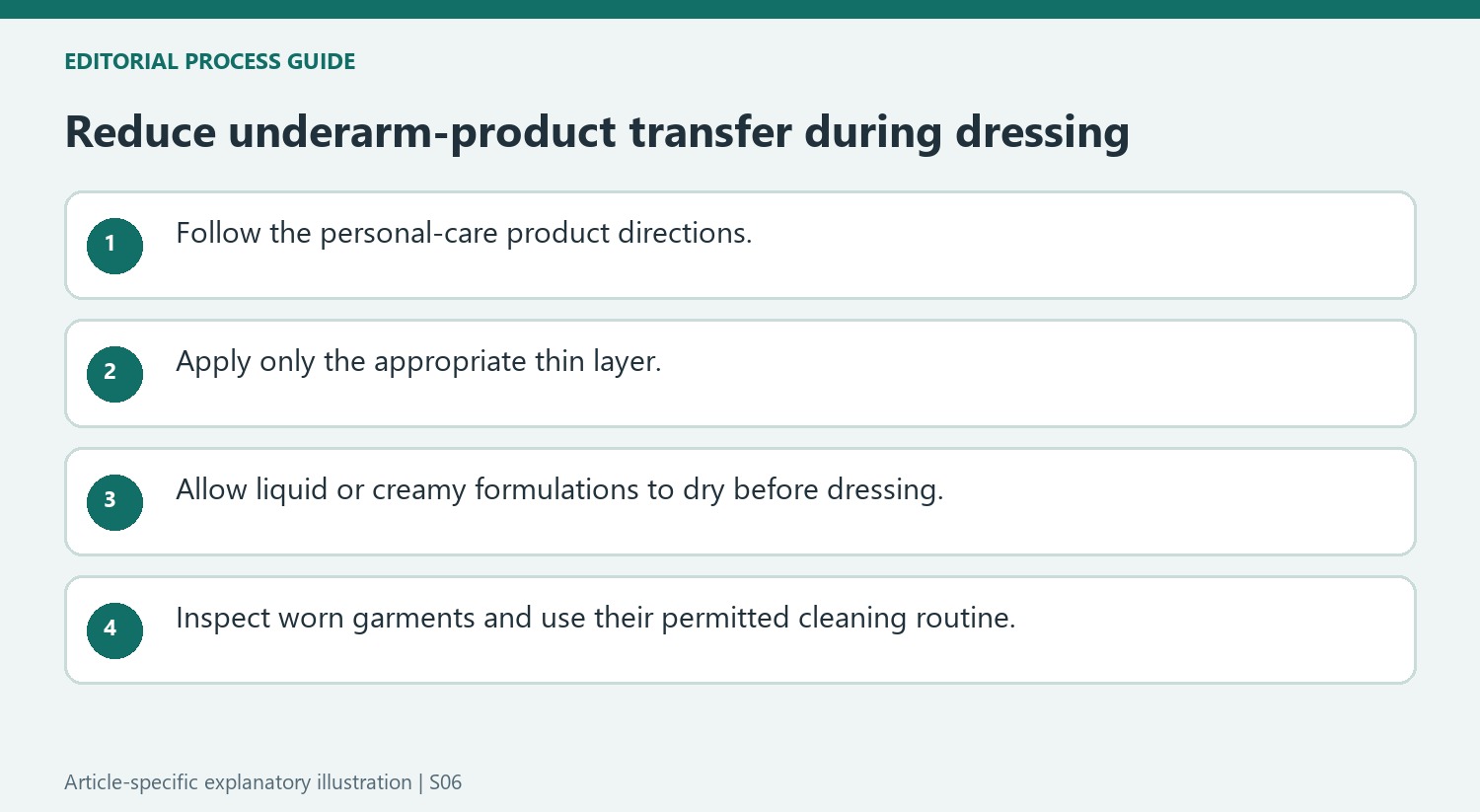
Ariel offers a specific prevention habit: apply only a thin layer of the relevant underarm product and allow liquid or cream formulations time to dry before putting clothing on. This can reduce how much product transfers directly onto the fabric. It is a practical handling step rather than a guarantee that no stain will develop, since wear conditions and formulations vary. Pair it with checking frequently worn clothing for buildup and using the permitted care routine when needed. Preventing immediate transfer and addressing accumulating residue solve different parts of the same garment-care problem.
Timing during dressing can reduce immediate product transfer
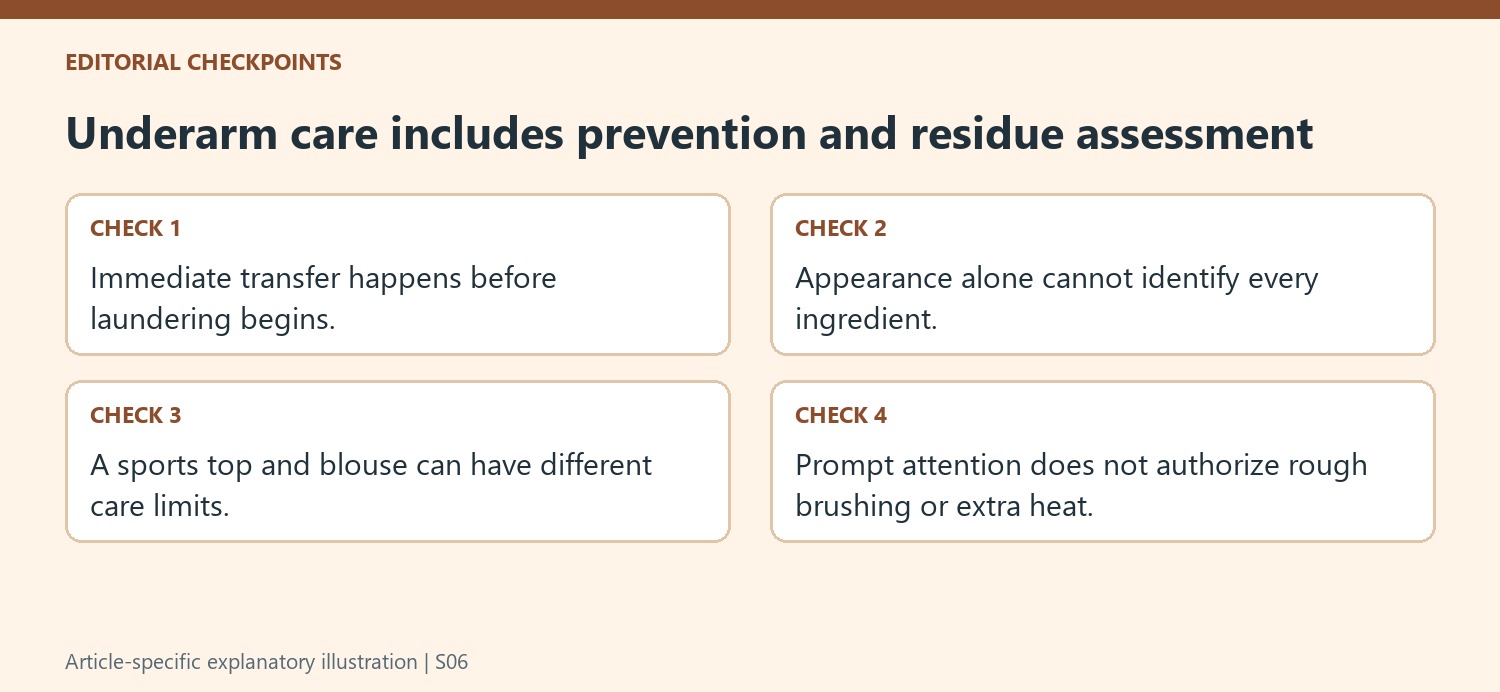
Ariel's prevention advice focuses on a small change before clothing is put on: apply a thin layer of the underarm product and allow liquid or creamy formulations to dry. This addresses transfer from skin onto fabric at the moment of dressing. It is different from attempting to remove an established deposit later. Follow the personal-care product's own use instructions and allow the appropriate drying opportunity rather than applying an unnecessary extra layer. The habit cannot guarantee that no mark develops under every wearing condition, but it targets a practical source of residue described in the guide. Pairing it with garment inspection gives the routine a preventive stage instead of relying exclusively on stronger laundry treatment after buildup becomes obvious.
Appearance offers a clue without identifying every ingredient
The source describes underarm marks in different colors and notes that some product buildup can feel hard or crusty. Use those observations to inspect the area, not as a laboratory diagnosis from color alone. Consider the products used, the condition of the fabric, and how long the garment has remained untreated. Then read its actual care claim before selecting detergent or local handling. A fine blouse and a sports top can show discoloration in the same place while allowing different methods. This distinction is useful because a familiar underarm location can make a household routine feel universal. The location helps identify what to examine, while the garment and product directions still establish how the cleaning task may proceed.
Prompt washing should not mean uncontrolled mechanical treatment
Ariel recommends attending to suitable garments rather than leaving affected clothing in the basket for a prolonged period. Its rinse and surface-residue steps still need to fit the textile. Do not turn a general reference to brushing into vigorous work on a sensitive finish, or use a warmer cycle than the item permits because the mark has become crusty. Choose compatible detergent, correct dose, and permitted process, then assess the area after washing. Further appropriate treatment may be necessary before finishing. The useful contrast in timing is between attending to the actual need and allowing residue to accumulate unnoticed; it does not establish that speed, high heat, or force should override ordinary clothing-care instructions.