GarmentCare Guide
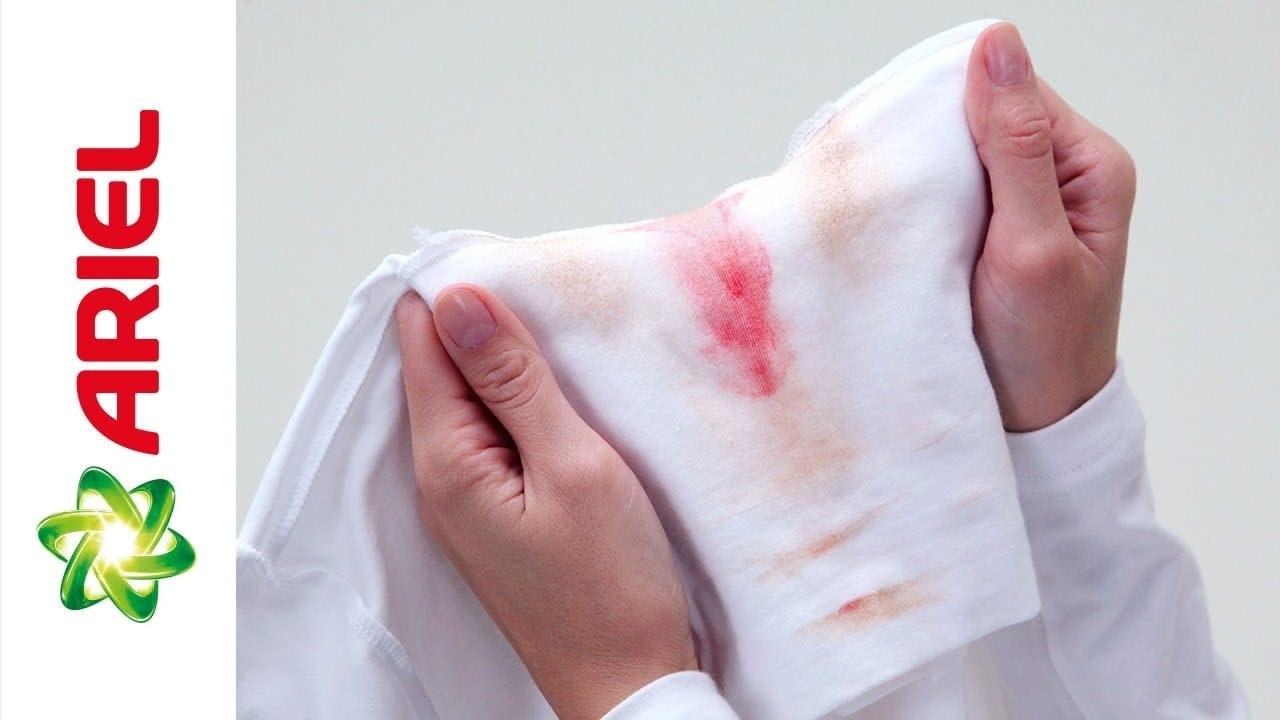
Makeup can contain several kinds of residue
Ariel groups mascara, lipstick and foundation among difficult cosmetic marks and emphasizes pretreatment designed for greasy stains. These products can leave more than a simple colored-water mark, making the formulation relevant to the cleaning decision. Check the garment's care label before applying detergent directly. A washable cotton shirt and a professionally cleaned occasion garment do not automatically allow the same method. The cosmetic's ingredients help explain the stain, while the finished textile determines what treatment can actually be used to address it.
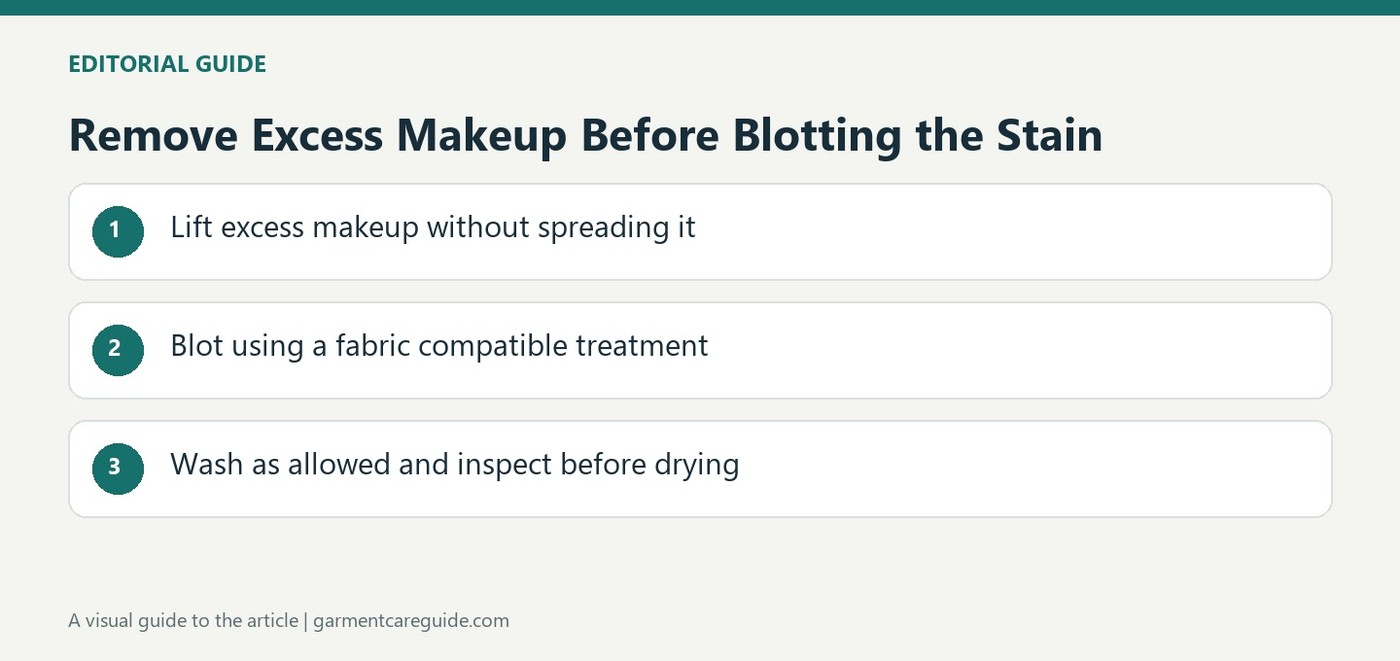
Apply a suitable liquid only as directed
The source describes covering a compatible makeup mark with liquid detergent and distributing it gently using the product's pretreatment cap. This is a direction for a particular product format and appropriate fabric, not an instruction to open a capsule or use concentrated powder on a visible patch. Follow the current pack for amount and contact time. Keep any working action gentle and suited to the material. A product intended to help release grease should not be made stronger by adding bleach or unrelated household chemicals without compatible instructions.
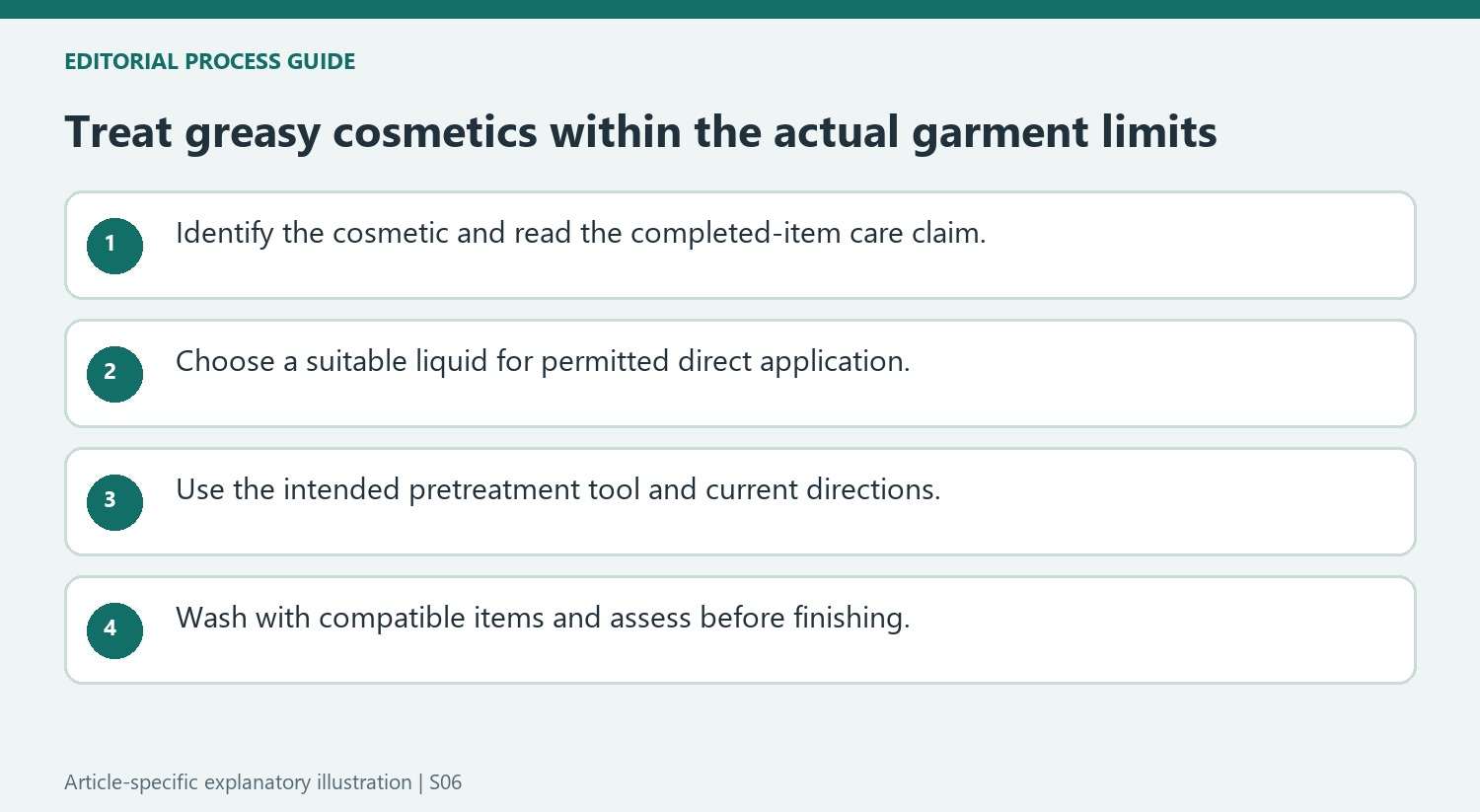
Wash with suitable items and unload promptly
Ariel's next steps are a compatible load, correct detergent dosing and a wash within the temperature stated on the label. The hottest allowed setting is a limit, not permission to exceed it because the stain appears stubborn. Unload when the cycle finishes and assess the area before further finishing. Some marks may require another appropriate treatment, and removal cannot be guaranteed for every cosmetic and textile combination. Keeping preparation, pretreatment and the main wash separate makes it easier to apply the source's practical method accurately while respecting the garment's care requirements.
A greasy cosmetic mark is not simply colored rinse water
Ariel groups lipstick, mascara, and foundation with residues for which a suitable grease-focused detergent pretreatment can be useful. The cosmetic may contain material that remains on the fibers after an ordinary light rinse. Identify the product where possible, then read the garment's care information before choosing a response. A strongly colored mark does not establish that bleach is permitted, and an oily character does not make every cleaner suitable. The finished textile still controls the available method. This keeps the stain description in its proper role: it helps explain what needs removing, while the item's material, dye, construction, and treatment claim determine which practical approaches can be used without assuming the same routine fits every makeup accident.
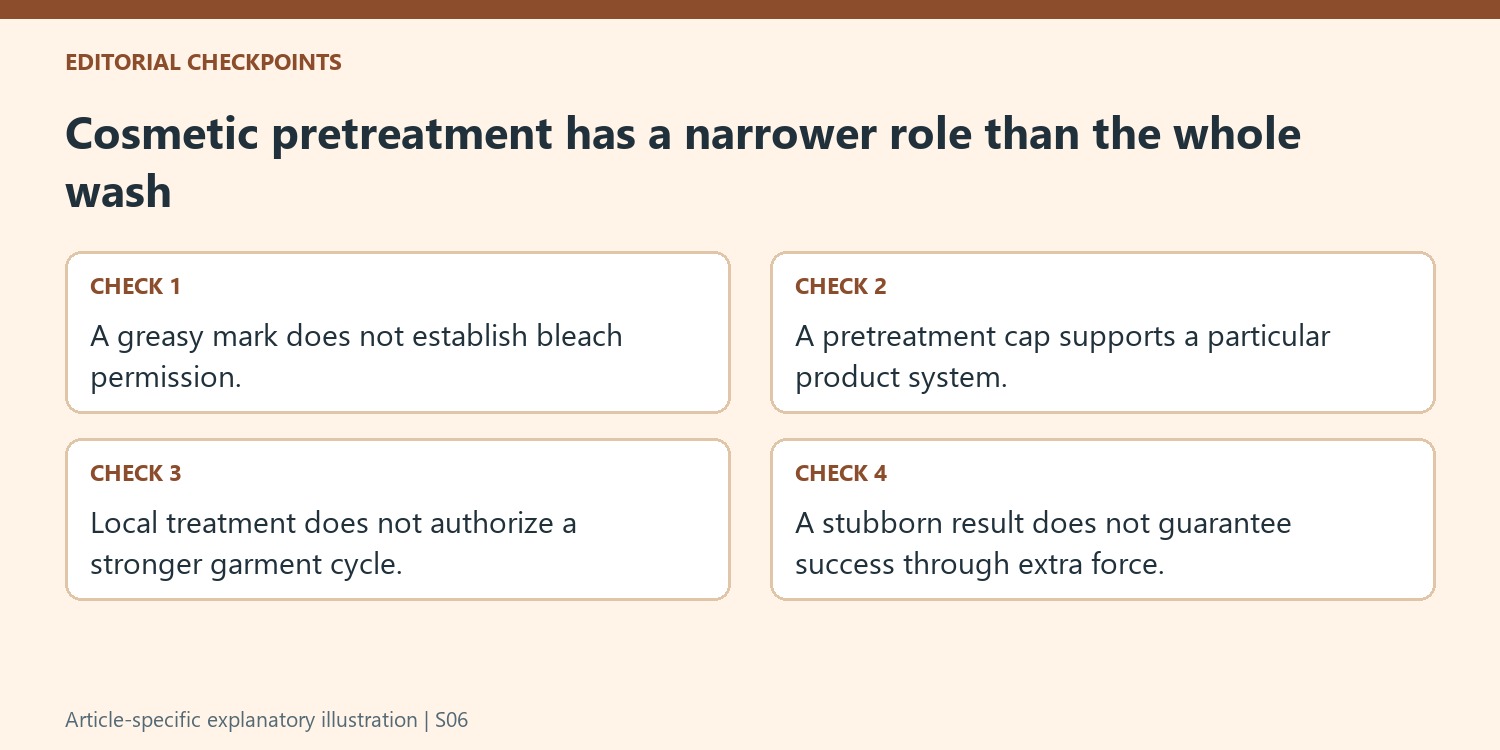
Use the pretreatment cap as part of its intended product system
The source describes spreading suitable liquid detergent with the product's pretreatment cap. That is a specific handling method for an appropriate formulation and fabric, not proof that any cap or tool should be used to rub a sensitive area. Read the current pack for amount, contact period, and intended use. Keep the action gentle and avoid transferring the example to capsules or undissolved powder. A liquid may also change in concentration or directions when a product is replaced, so a remembered measure is not enough. The tool's purpose is controlled distribution within an allowed treatment, rather than giving permission to force concentrated detergent deeper into any garment whose cosmetic mark remains visible.
The subsequent load still needs independent care matching
After local preparation, Ariel places the garment into a suitable wash with compatible items and the correct detergent dose. Compare the whole group's requirements before choosing the settings. Pretreating one spot does not make the rest of a delicate item tolerant of a stronger cycle, and the source's maximum permitted temperature remains a boundary rather than a reason to exceed it. Follow the actual label and unload promptly after washing. Inspect the affected area before further finishing, considering a compatible repeat or more specific advice if needed. This retains a clear distinction between applying product to a stain, washing the completed garment, and deciding how it can properly be dried after the result is known.