GarmentCare Guide
The first action depends on the product
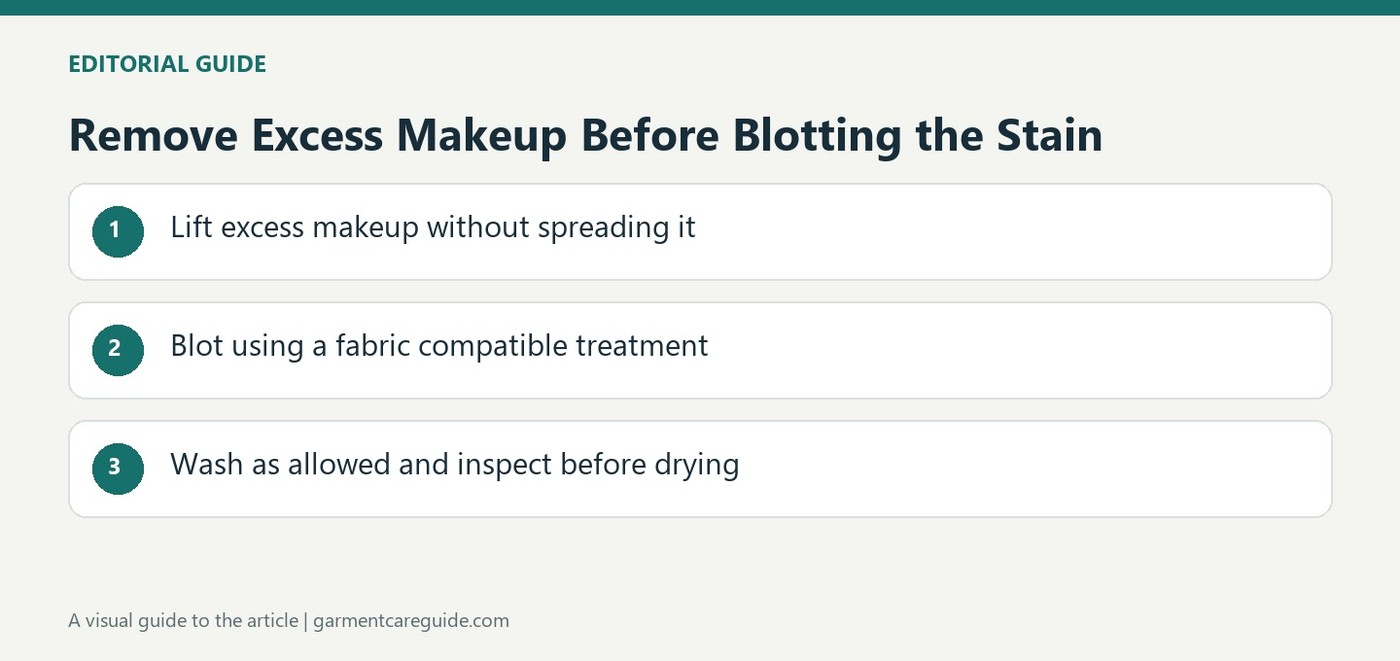
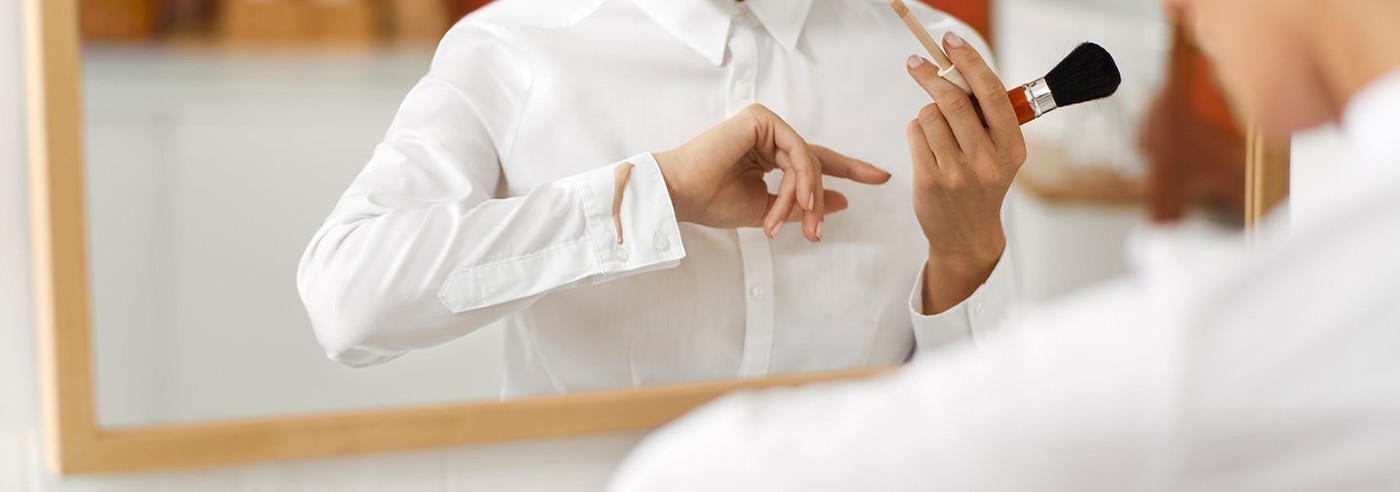
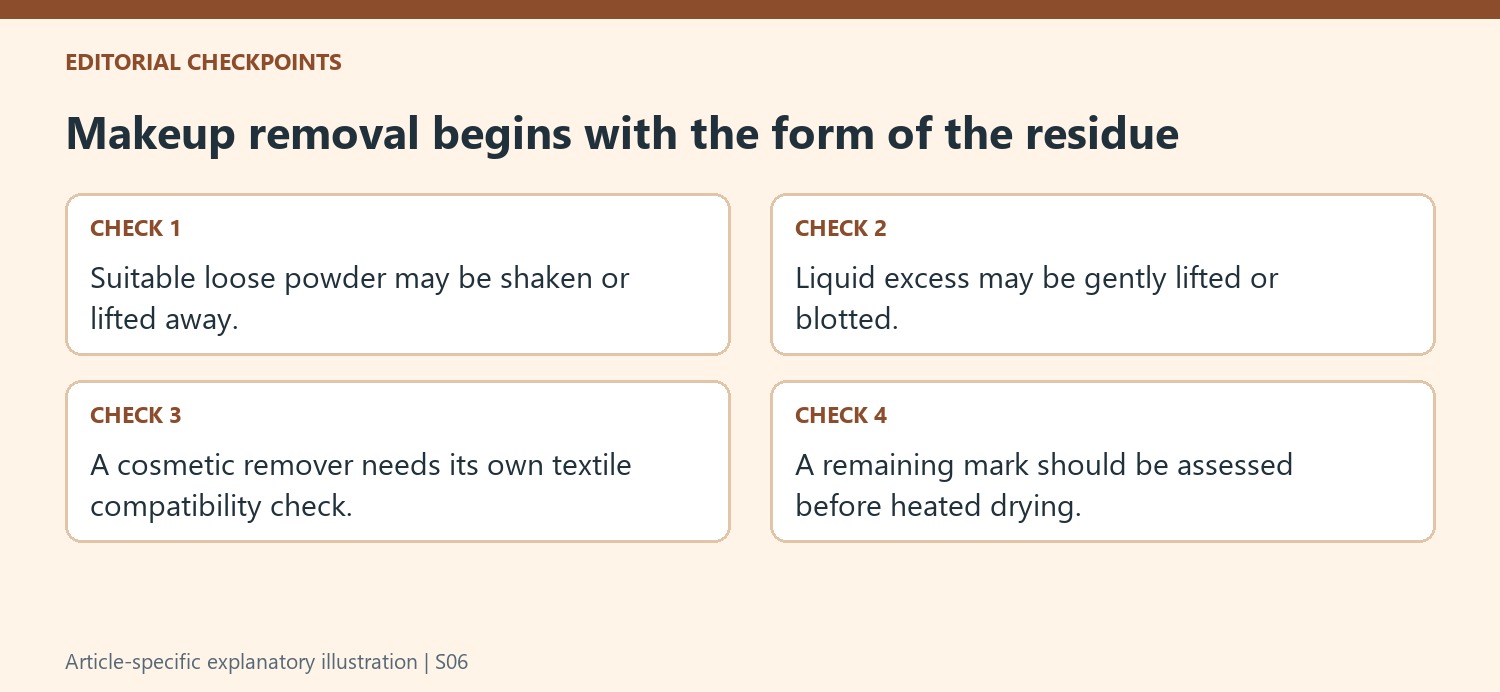
Whirlpool separates liquid foundation or concealer from powder-based cosmetics when explaining how to remove excess material. Liquid residue can be lifted carefully with a suitable blunt utensil or blotted gently, avoiding pressure that pushes it deeper. Dry powder should instead be shaken or brushed away gently where the fabric permits. The guide also discusses cool airflow as an option for loose powder. These are different responses to different residues, showing why immediately wiping every cosmetic spill with a wet cloth can spread rather than control the mark.
Choose a pretreatment that the garment allows
The source recommends checking the clothing label before using detergent, stain treatment or an appropriate oil-free makeup remover. For suitable washable items, a liquid detergent or intended stain product can be applied for the directed contact period before the main wash. Follow the product's current directions rather than transferring a timing or dose from an unrelated formulation. If rinsing from the back of a stain is permitted, it can help flush residue without forcing it further through the surrounding cloth. Fine fabrics and restricted-care items may require another route.
Keep drying separate from the first wash result
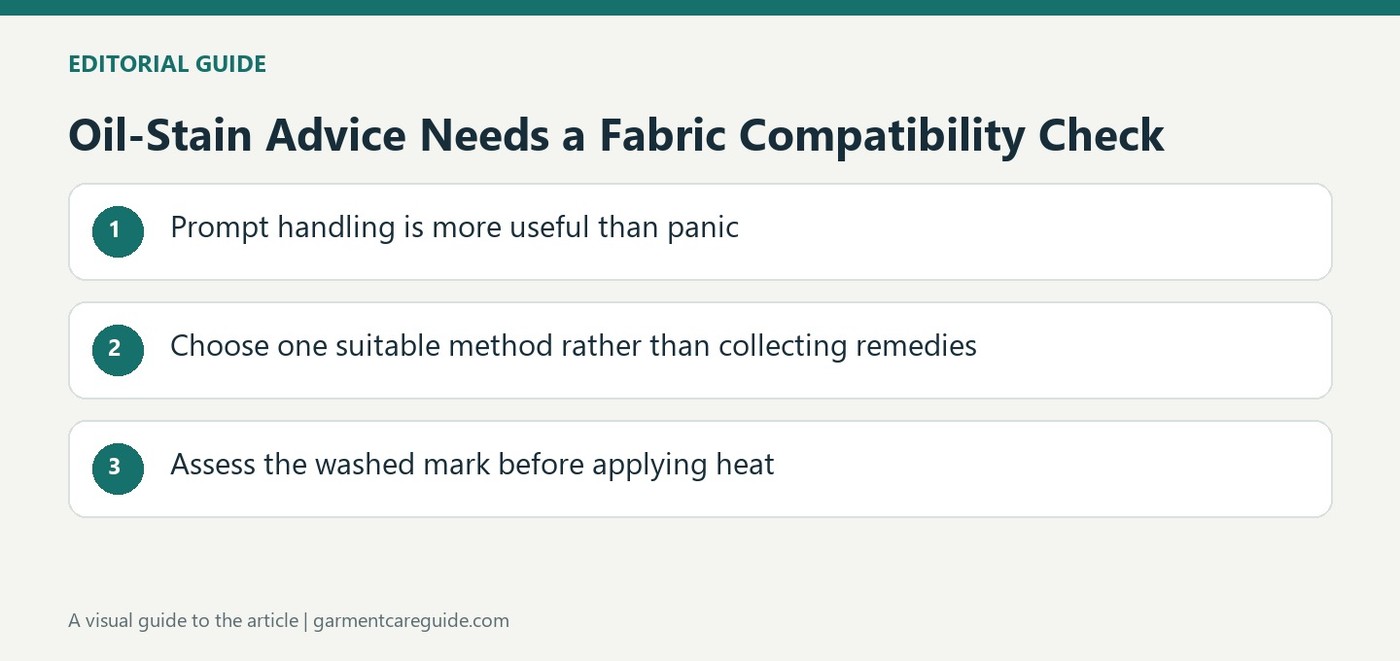
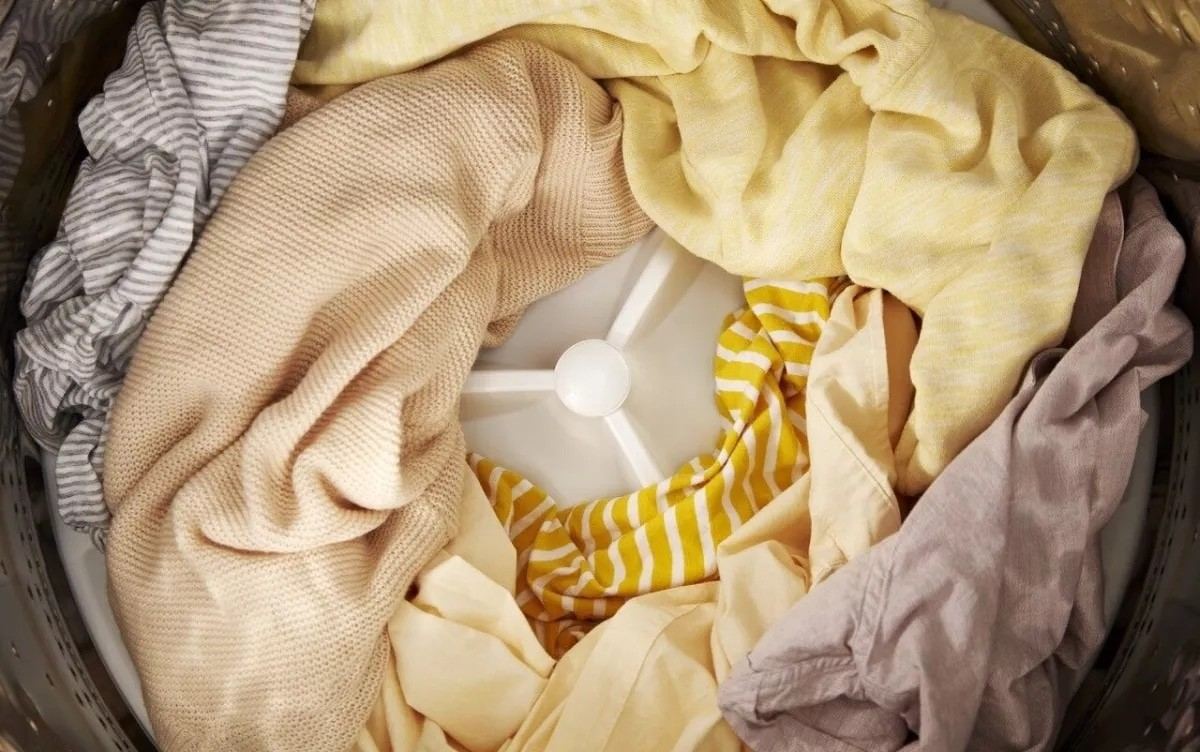
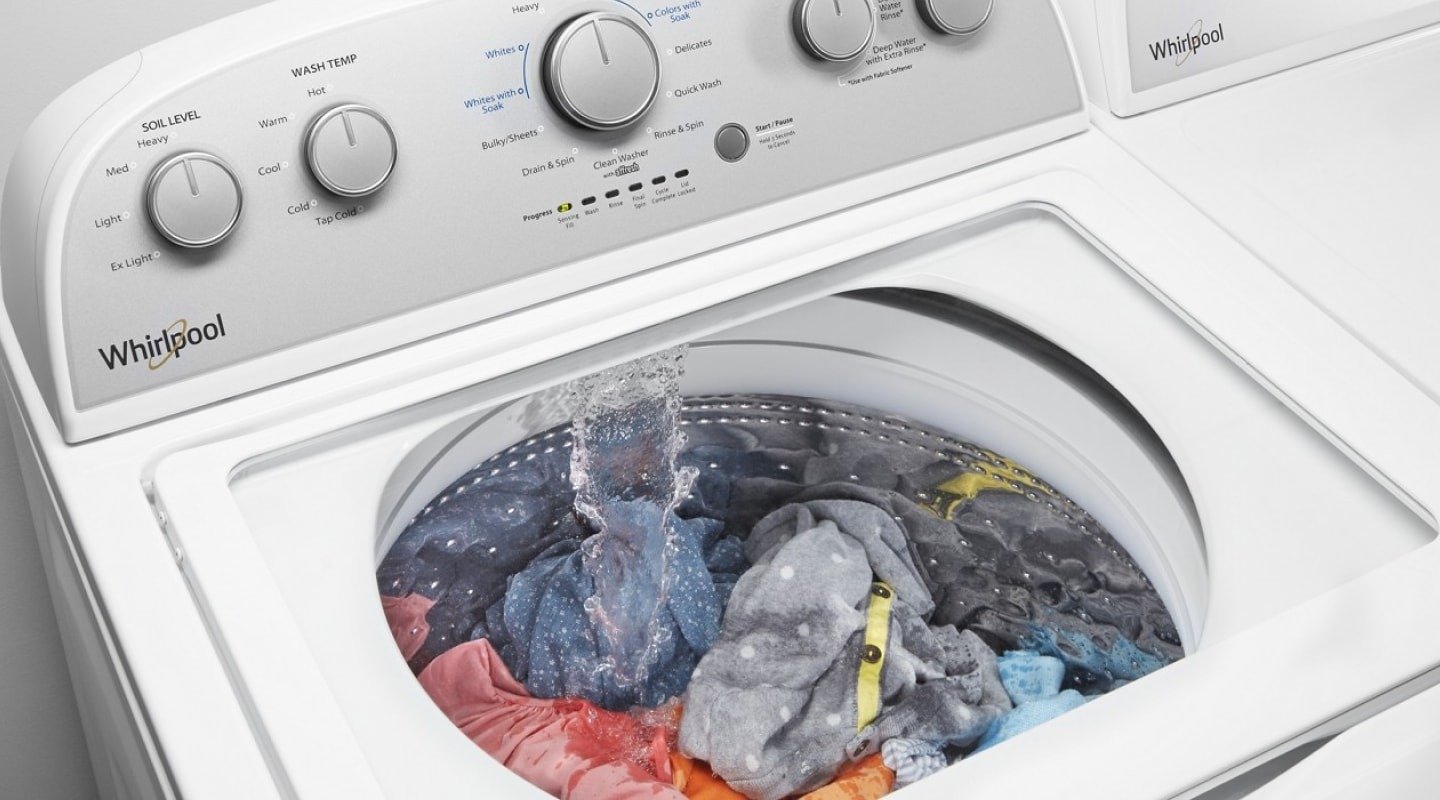
Whirlpool recommends washing at the warmest temperature permitted by the care label, then naturally drying while the area is inspected. Avoid applying dryer heat to a garment with remaining cosmetic residue, since that can make the mark harder to treat. Choose the appropriate support for the item's natural drying method. A further compatible treatment may be necessary, and results vary. The practical sequence is based on the actual residue and textile: remove excess carefully, use an allowed pretreatment, wash within the label and assess the outcome before finishing the clothing.
Loose powder and liquid residue need different first movements
Whirlpool's guide recommends gently removing surplus liquid foundation or concealer, while powder is shaken or brushed away where suitable. Its cool-airflow suggestion for powder has the same limited purpose: move loose material off the textile rather than drive it across the surface. Read the actual garment information and handle fine finishes carefully. A wet wipe applied immediately to every cosmetic spill can turn a small dry deposit into a broader stain. The first decision should therefore be what physical material is present. Once removable excess is dealt with, reassess what remains before selecting a compatible pretreatment. This separates control of the surface residue from the later chemical and washing stages instead of assuming they are one continuous rubbing task.
A cosmetic remover is an alternative with its own conditions
The source discusses an oil-free nonflammable makeup remover, detergent, and intended spot products as possible approaches for suitable garments. Those choices are not automatically equivalent or a sequence to combine. Check the selected formulation's directions and the fabric's care claim before direct application. A remover made for skin does not establish suitability for every textile, dye, or finish simply because it can dissolve the cosmetic itself. Where the garment permits rinsing from the back of the mark, follow that directed handling to help move residue away. Keep all water temperatures within the actual item limits, including local rinses that happen before the main machine wash, rather than checking only the final cycle setting.
Use natural drying as an assessment stage where permitted
Whirlpool advises air drying while inspecting for residue before using a dryer. Arrange the garment in the support position required by its own instructions; natural drying does not mean every wet piece should be hung. Look at the affected area after the wash and repeat only an appropriate compatible treatment if necessary. A lighter mark shows some change, not proof that the original stain has entirely disappeared. Do not treat a stronger heat setting as the next automatic response to incomplete removal. This checkpoint connects the residue-specific first action with the actual outcome, keeping detergent use, allowed washing, and final drying as related decisions whose suitability must be established for the same finished garment.
References
- How to Get Makeup Out of Clothes | Whirlpool. Whirlpool.