GarmentCare Guide
Start with what remains on the surface
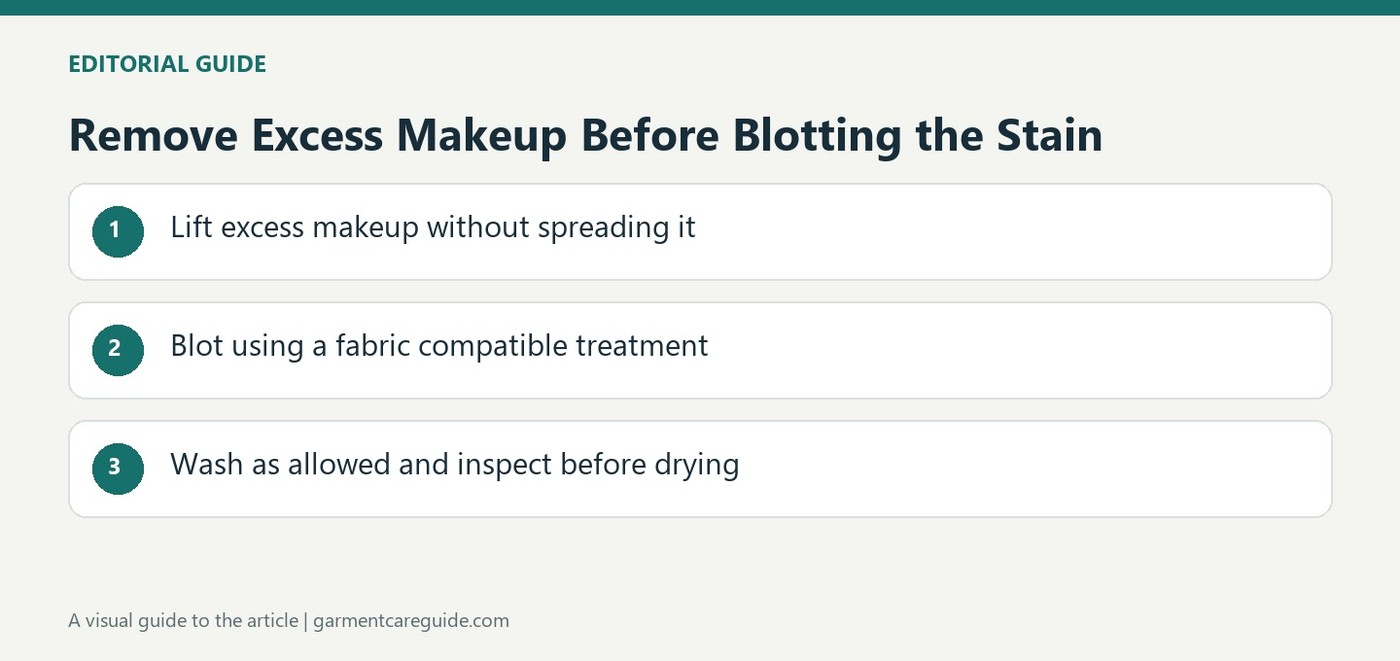
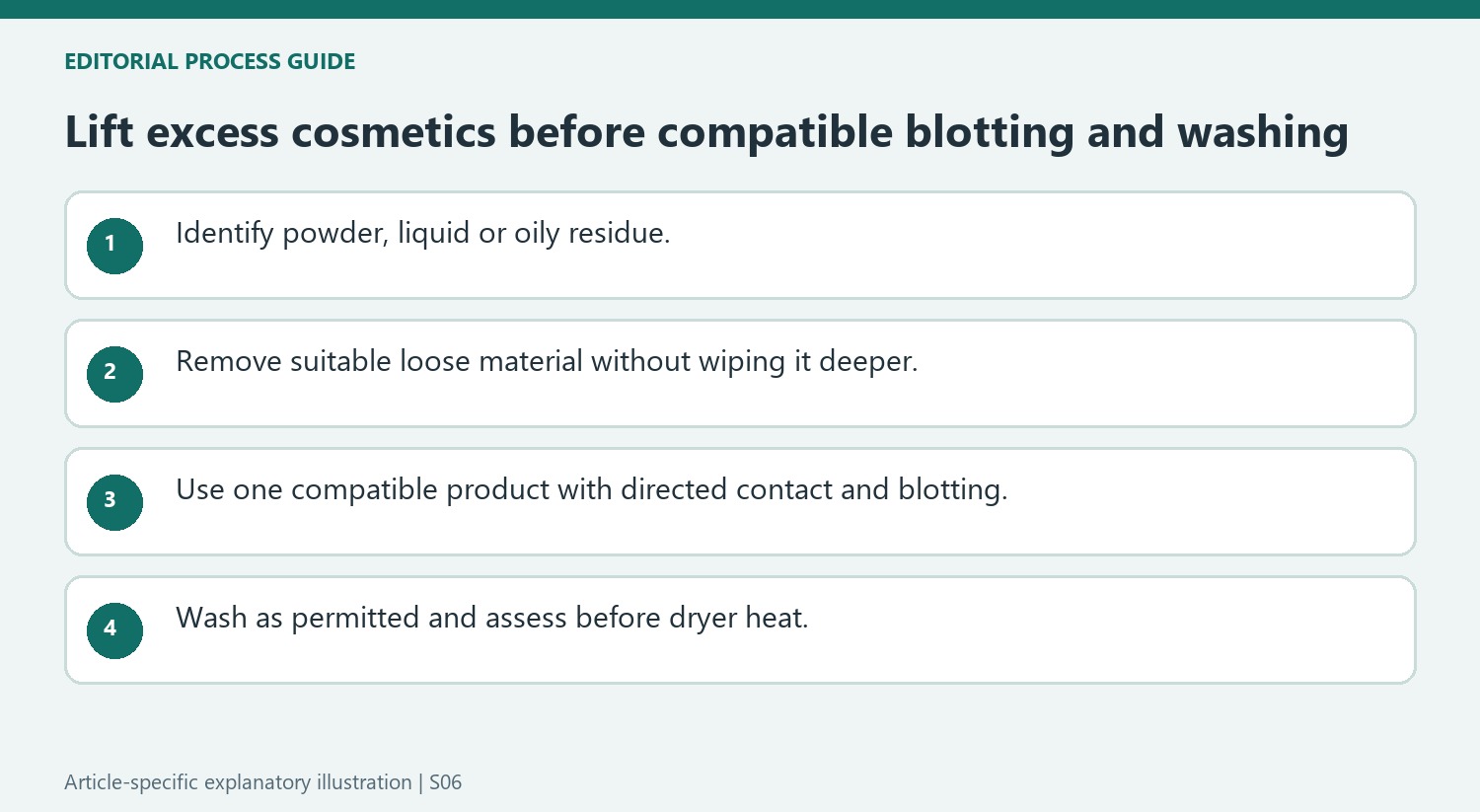
Maytag's makeup guide recommends removing excess cosmetic material before the main treatment. A spoon edge or suitable card can lift liquid residue carefully, while loose dry powder may be shaken or blown away gently. Avoid wiping the cosmetic across the surface or pressing it deeper into the textile. The initial action depends on the makeup type, so identify whether the mark came from an oily liquid, a moisturizer or a powder. Read the clothing label before applying water or a product, particularly on a sensitive finish.
Use a compatible localized treatment
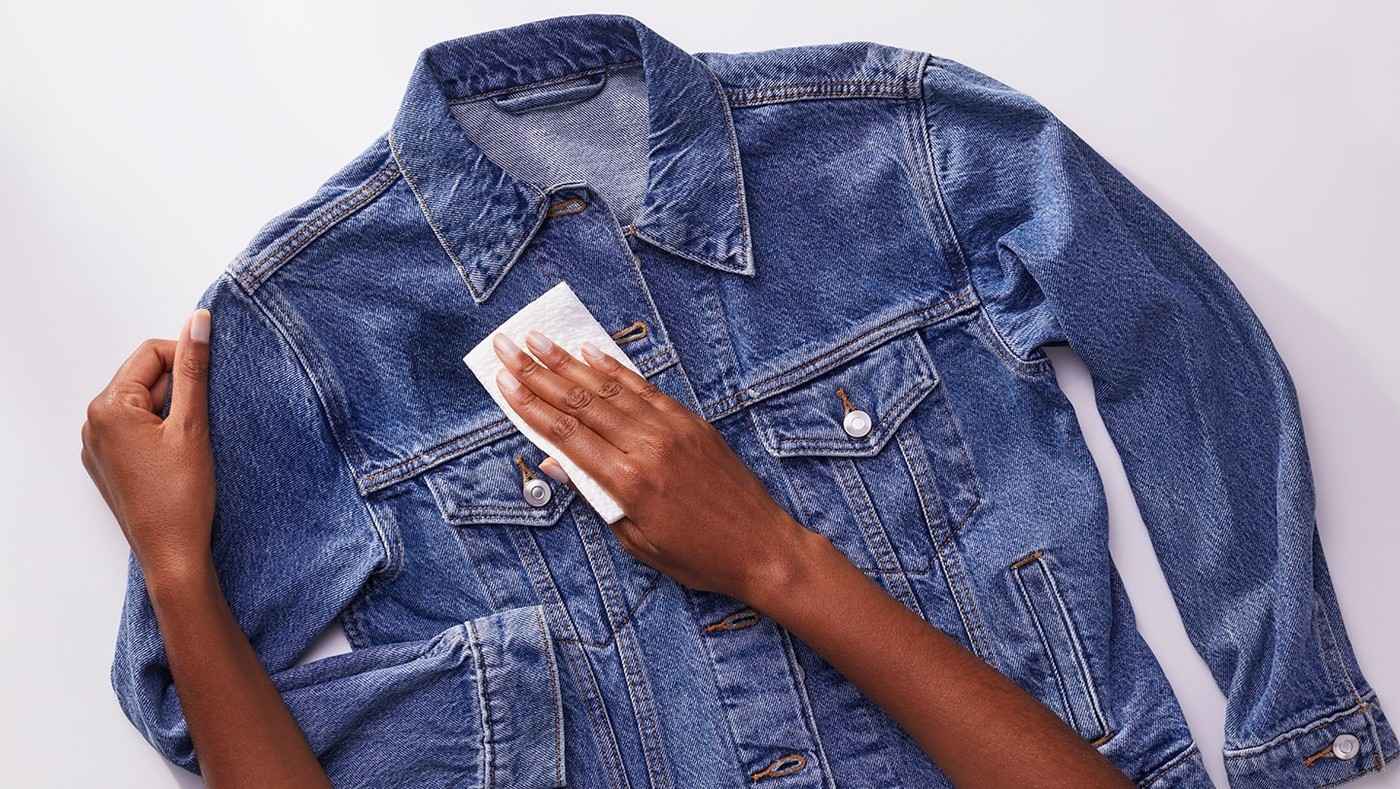
The source describes applying suitable liquid detergent and blotting from the front and back with a clean white cloth or paper towel. Its general routine allows a short treatment period before the permitted wash. Product directions and material compatibility govern the actual method. Maytag also discusses nonflammable, oil-free makeup remover for certain foundation and concealer marks, but that alternative still needs a garment check. It should not be interpreted as proof that any bathroom cosmetic remover is appropriate for clothing or that several treatments should be combined.
Check progress before using dryer heat
After treatment, follow the garment's allowed machine- or hand-washing method, keeping temperature and process within the label. Maytag recommends natural drying while the result is assessed because dryer heat can make a remaining cosmetic mark harder to remove. A further suitable attempt may be needed for older stains. Use the drying position required by the item instead of automatically hanging every wet garment. The routine works as a sequence of decisions: remove surface residue, choose a compatible product, wash appropriately and inspect the actual result before finishing.
Remove what is sitting above the textile before treating what remains
Maytag's first stage uses different actions for liquid and powder cosmetics. A suitable spoon edge or card can lift excess liquid without wiping it over the surrounding fabric, while loose dry particles may be shaken away gently. Choose the action for both the residue and the garment surface. The purpose is not to scrape every visible trace away at any cost, but to reduce removable material before introducing an appropriate treatment. This distinction matters because pressure can push a cosmetic farther into the textile or widen the affected area. Identify the makeup type and read the care claim while planning that first response instead of treating every smudge as though it had the same consistency.
A compatible local application needs controlled blotting and timing
The source describes liquid-detergent preparation using a clean white cloth or paper towel to blot the affected area from the front and back. Read the current detergent directions and garment information for the appropriate amount and contact period before applying it. More liquid or longer exposure should not be assumed to improve the result safely. The guide also mentions a nonflammable oil-free makeup remover for certain foundation or concealer marks. That is a separate option requiring its own product and textile compatibility, not an instruction to use any cosmetic remover available in a bathroom. Choose one appropriate route and complete its directed rinsing or washing transition rather than combining unrelated preparations on the same surface.
Older marks still need the same care boundaries
Maytag notes that older makeup stains can be more difficult to address and may require another suitable attempt. That does not establish permission for an unrestricted soak, stronger rubbing, or a higher temperature than the garment allows. Use the actual clothing and product instructions throughout. After a permitted wash, inspect the area while following the item's appropriate natural-drying support. Avoid applying dryer heat to remaining cosmetic residue because it may become harder to remove. If progress is uncertain or the textile is sensitive, obtain more specific guidance. The routine remains result based: an old stain identifies a challenge to assess, while the garment's limits still govern what may reasonably be tried in response.