GarmentCare Guide
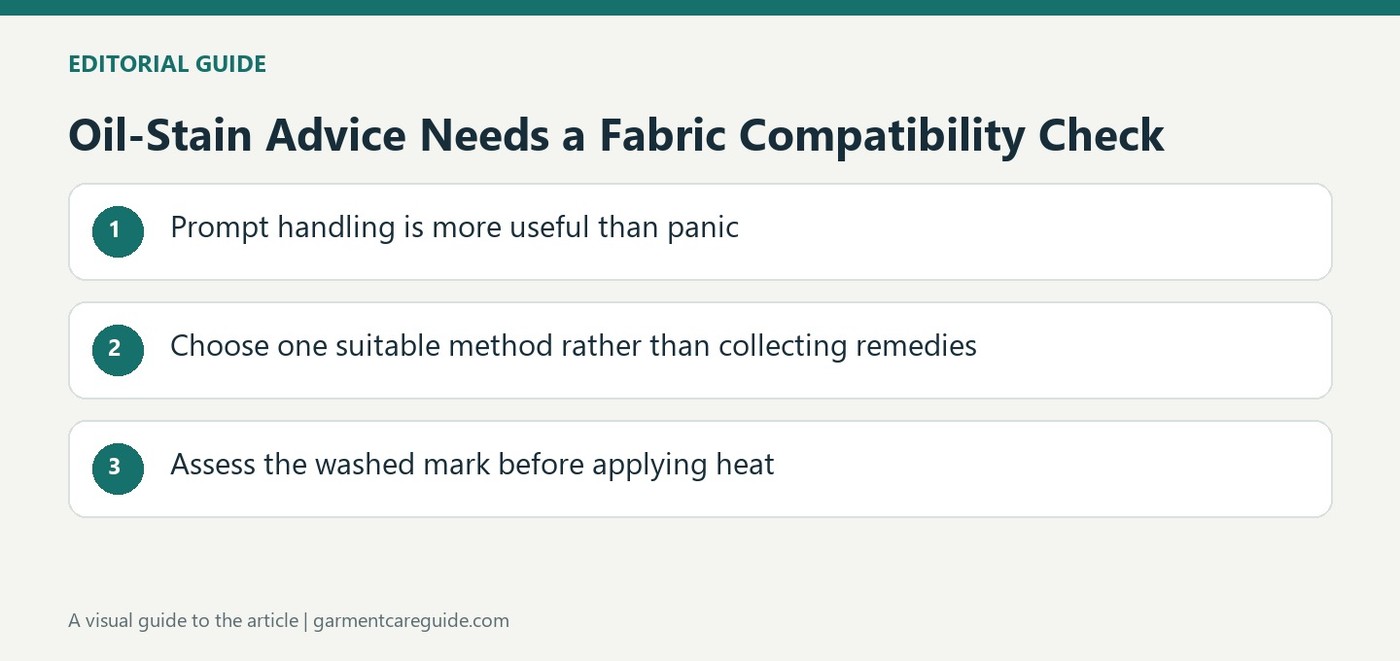
Prompt handling is more useful than panic
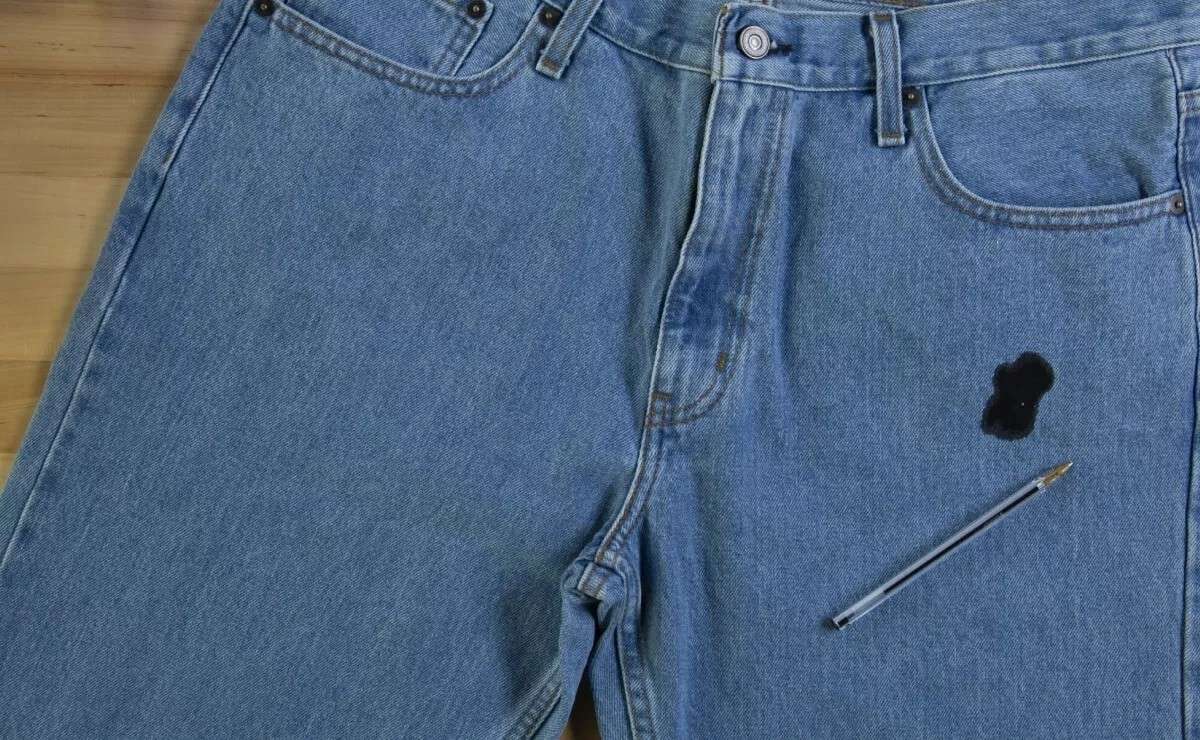
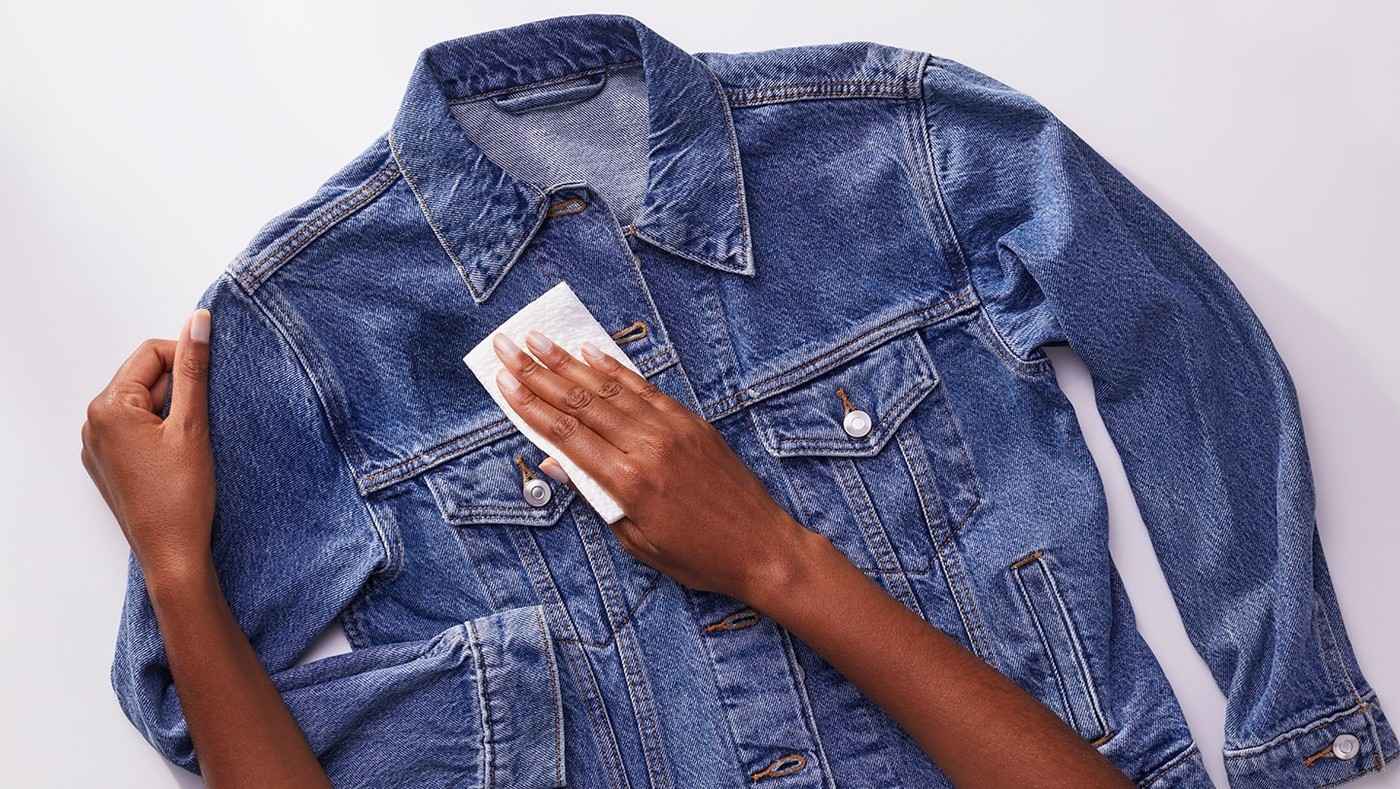
Homes & Gardens' oil-stain guide describes spills ranging from salad dressing and butter to motor oil. It recommends addressing marks before simply putting the garment through an ordinary wash. Start by identifying the substance, removing the item if practical and blotting surplus oil with a clean absorbent material. Read the care label before selecting a treatment. Different oils and different textiles create different problems, so the same dark patch on two garments does not establish that both can tolerate identical chemicals, rubbing or water temperatures.
Choose one suitable method rather than collecting remedies
The article discusses dish soap and several household treatments, but an extensive list of suggestions should not be read as a sequence to combine. Whirlpool's complementary grease guide provides a more specific route for suitable washable clothing: small-scale dish-detergent pretreatment, complete rinsing and then a label-led wash. Use a product only where its instructions and the garment's care requirements are compatible. Delicate surfaces or uncertain contaminants may need professional advice. More ingredients and stronger rubbing do not automatically make a treatment appropriate for the fabric.
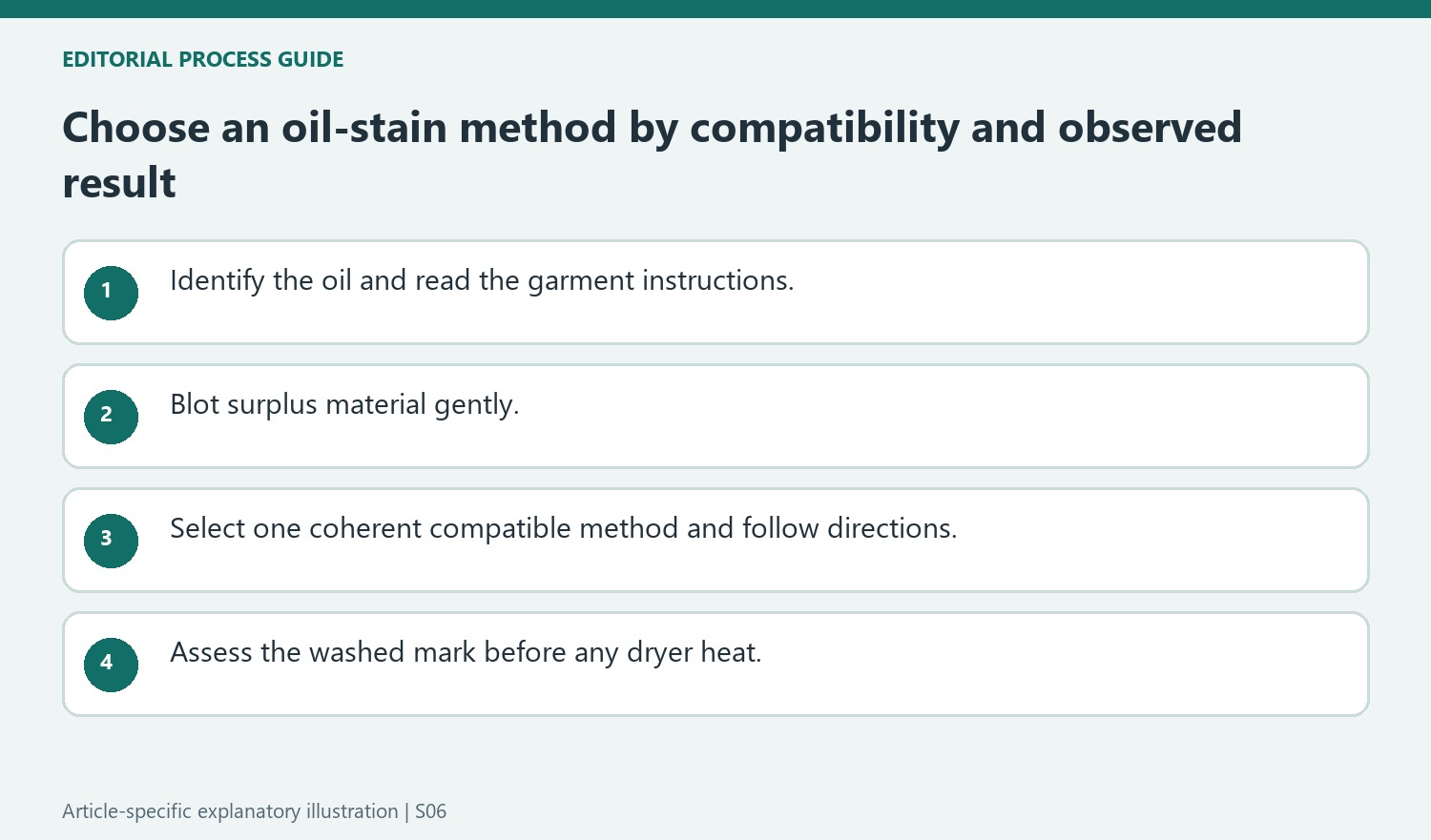
Assess the washed mark before applying heat
Both sources emphasize checking whether the oily patch remains before using the dryer. Heat can make persistent residue harder to remove, making this inspection a useful break between cleaning and finishing. Follow the item's permitted natural drying support while further treatment is considered. A stubborn mark may require another compatible attempt or specialist attention, and success is not guaranteed. The useful takeaway from oil-stain advice is a controlled decision process, from identifying and blotting the spill to selecting a suitable method and checking the result, rather than a promise that one household recipe works on every garment.
A collection of remedies still needs one coherent treatment choice
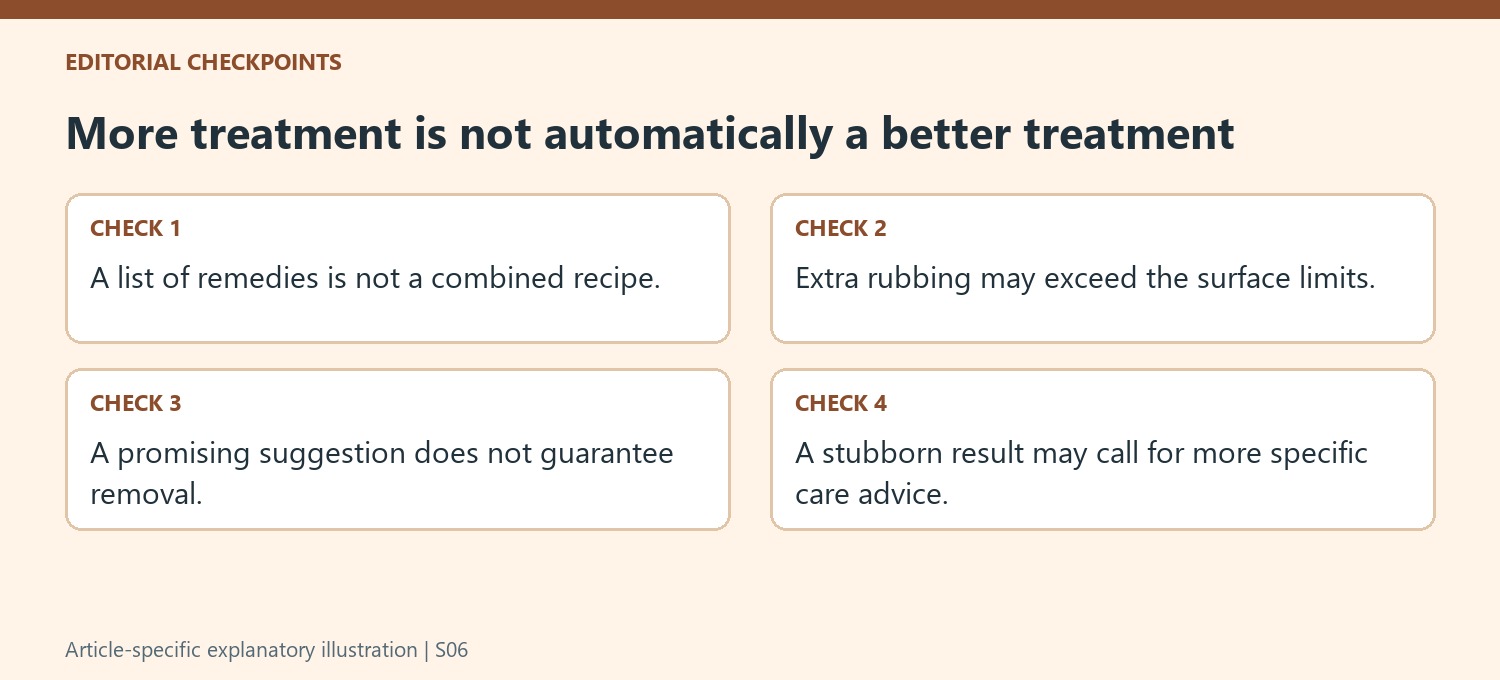
Homes & Gardens presents several possible household approaches to oil marks. The number of suggestions should not be mistaken for a sequence that becomes more effective as ingredients accumulate. Identify the oil and garment first, then select a route whose product directions and fabric requirements agree. The complementary Whirlpool guide gives a specific local dish-detergent example for suitable washable clothing, including complete rinsing before the main wash. Use a clearly defined method rather than improvising a combined paste or solvent routine from separate paragraphs. If the item is delicate, its care claim restrictive, or the contaminant uncertain, obtain appropriate advice. The goal is a compatible process for that actual spill, not the largest possible set of cleaning ingredients.
Force is another treatment variable rather than a universal improvement
A visible oily patch can make vigorous rubbing feel productive, but the textile's surface still sets limits on mechanical action. Begin with gentle blotting of surplus material and read the garment instructions before selecting further handling. A sturdy washable fabric and a fine dyed finish can respond differently to the same brush or sponge. More pressure is therefore not automatically a safer route to a cleaner result. Where a treatment is allowed, follow its directed quantity and contact period rather than substituting aggressive work for an uncertain method. This keeps the response focused on removing the mark without creating an additional abrasion or color problem around the original stained area.
Separate a promising suggestion from the observed outcome
Both sources emphasize examining the garment before using the dryer. That inspection is necessary even when the selected method sounds convincing or the first treatment appears to have reduced the mark. A wash cycle confirms that cleaning took place, not that every residue has gone. If an oily patch remains, choose another compatible attempt or specialist assessment before adding heat. Follow the garment's permitted support arrangement for natural drying where needed. Also avoid treating a source's confident wording as a guarantee for every material and oil type. The practical decision remains based on the actual result, with product compatibility and care limits governing what can reasonably happen next to the same finished article.
References
- How to get oil stains out of clothes – easy methods to shift ugly marks. Homes and Gardens; Millie Hurst.
- How to Get Oil & Grease Out of Clothes | Whirlpool. Whirlpool; Order Status.