GarmentCare Guide
Natural pigments can leave a strong visible mark
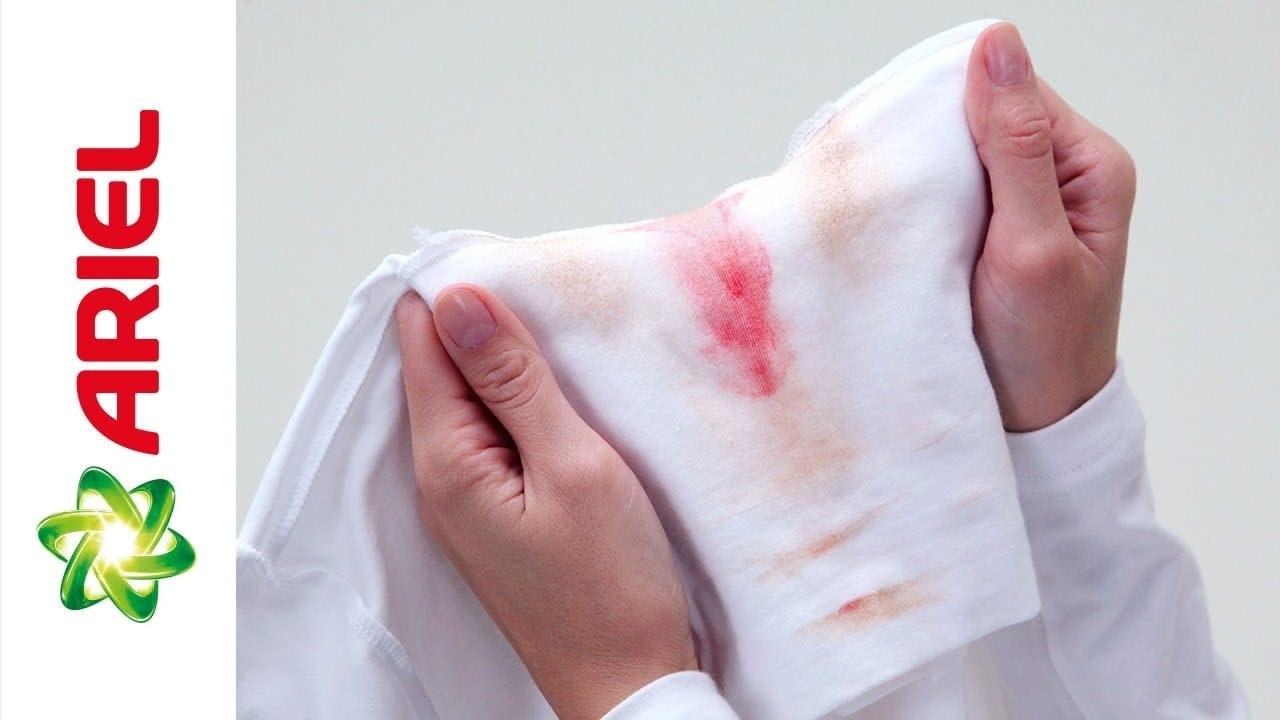
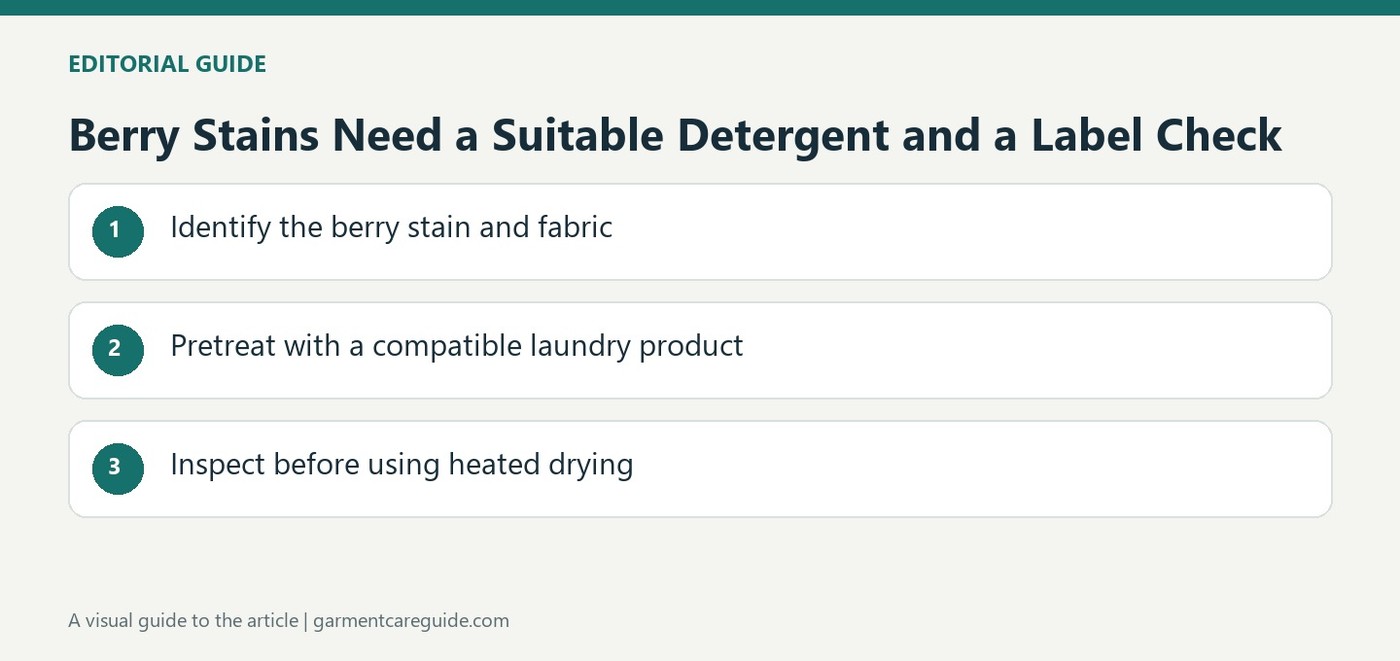
Ariel's berry-stain guide describes the colors left by fruit such as blackberries and strawberries as natural-pigment stains. Their vivid appearance is a reason to address the spill promptly, rather than assuming fruit will rinse away completely on its own. Check the garment's care label before choosing a detergent or wash. A berry mark on a light garment does not establish permission for bleach, enzymes or a hot cycle. The stain and the finished textile both need to be considered when deciding which treatment is appropriate.
Follow the actual detergent's loading instructions
The source's example uses laundry capsules placed in the empty drum before the stained clothing is added. Dose according to the current pack and load conditions rather than treating a generic number of capsules as a rule for every product. A formulation containing bleaching ingredients may not suit all materials, so its compatibility must be checked independently. If additional pretreatment is needed, choose a method intended for that garment and product format. Do not open a capsule for local application or combine unrelated household remedies in an attempt to force the color out.
Complete the permitted wash and assess the stain
Ariel recommends washing within the temperature stated on the care label and unloading when the cycle ends. Tide's complementary general stain guide adds a useful checkpoint before drying: inspect the area so a remaining mark does not receive dryer heat while further appropriate treatment is considered. Use the garment's own drying method and support position. This keeps the routine grounded in what the textile permits, with prompt attention, correct product use and an actual result check. A vivid berry stain should be assessed carefully rather than accompanied by an unconditional promise of removal in one wash.
A natural pigment can still need a material-specific response
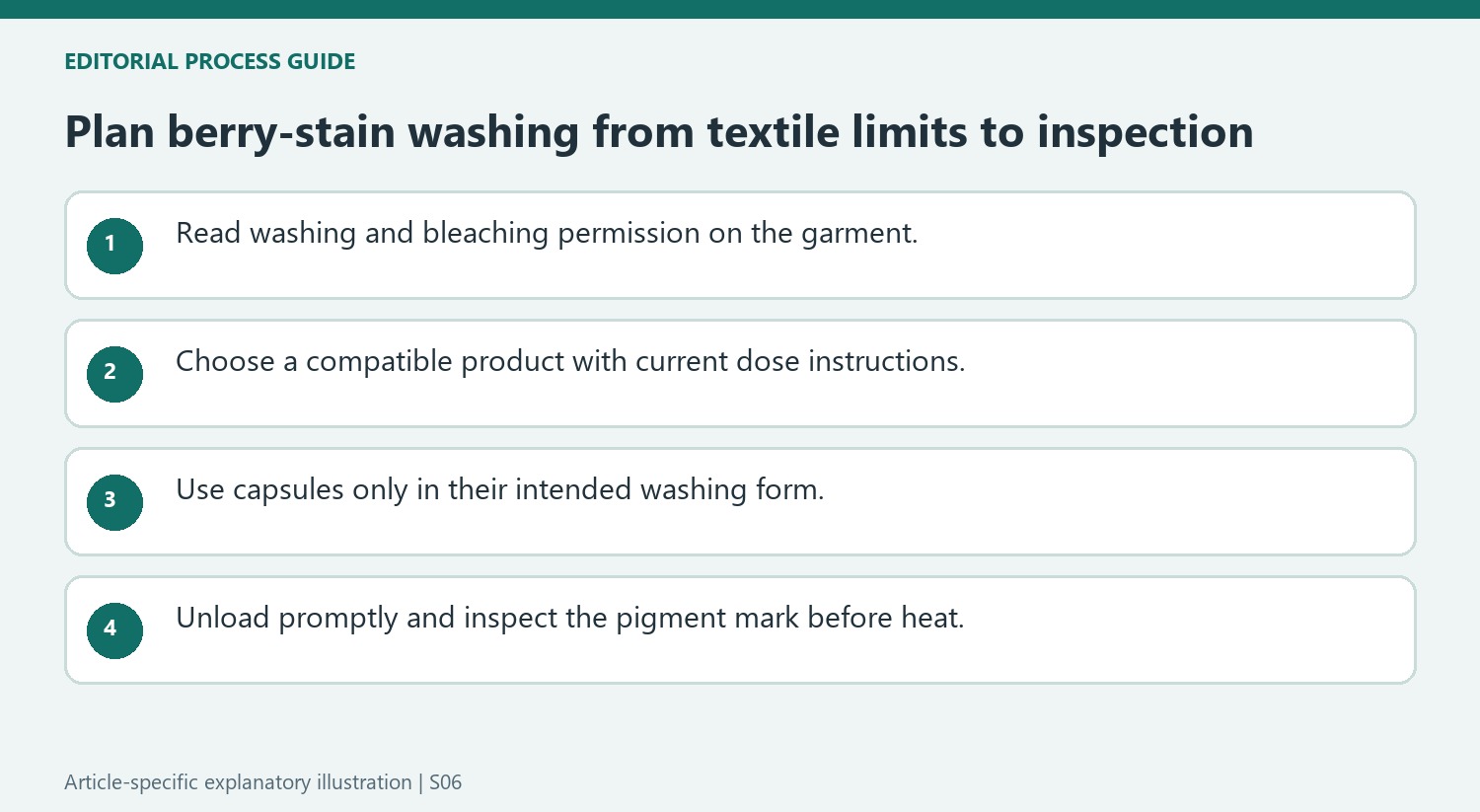
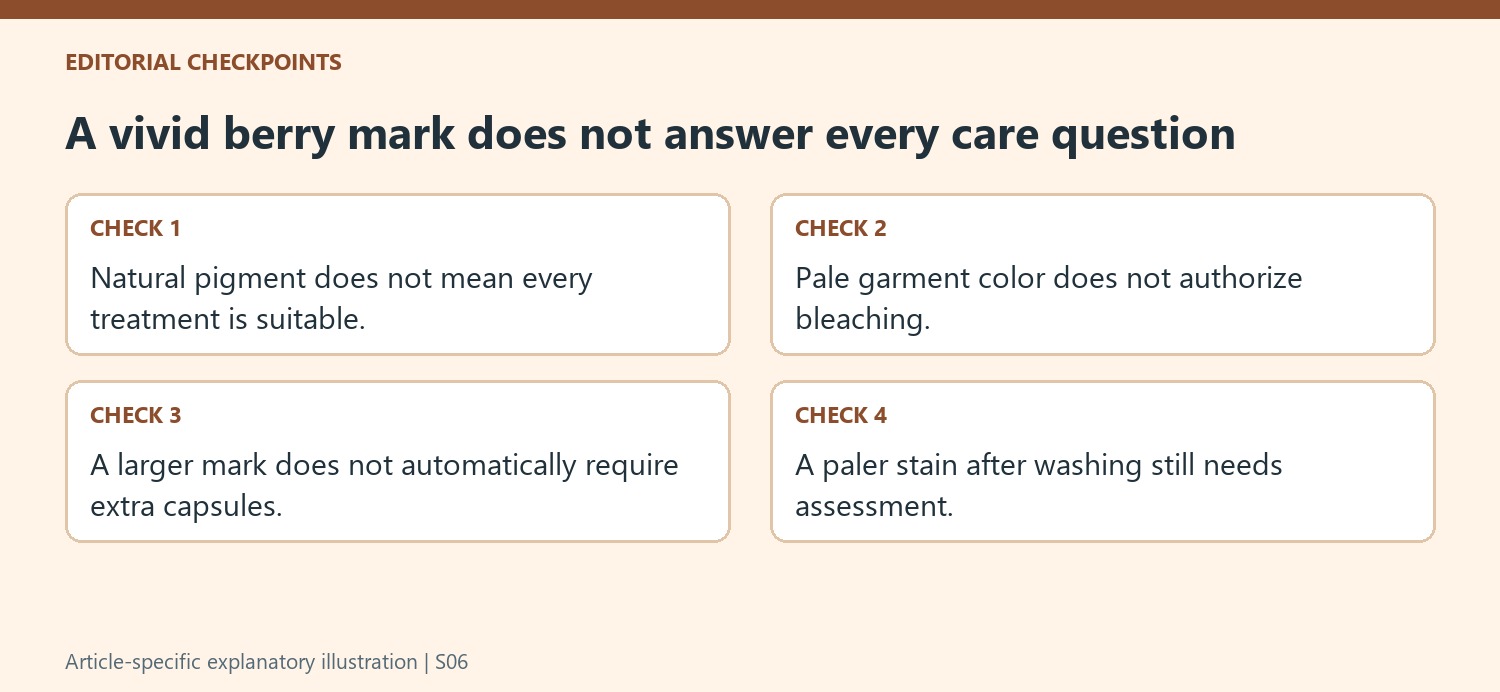
Ariel describes berry marks as stains carrying natural pigments. Natural origin does not mean they will rinse out completely or that every treatment aimed at them suits the affected garment. Identify the textile and read its washing and bleaching instructions before selecting a product. A vivid red or purple mark on a light garment can make bleaching seem like an obvious response, yet whiteness or pale color does not establish chemical permission. The source's proposed detergent formulation needs its own compatibility check. This keeps stain identity useful without allowing it to dominate every other consideration. The practical task is a particular berry residue on a particular finished item, with both the pigment and the fabric influencing the available route.
Follow the current capsule directions instead of a stain-based guess
The source places capsules in the empty drum before the suitable stained clothing, but directs dosing back to the package. Use the current product's instructions for the actual load conditions rather than treating a generic extra-capsule suggestion as a universal rule for vivid stains. Product formulations and unit sizes can differ. Do not open a capsule for direct application, and do not transfer a liquid detergent's pretreatment method onto that format. If separate local preparation is needed, choose a product and method intended for the garment. Correct placement and measured use are part of a compatible wash, not a substitute for checking what the textile permits or for reading the detergent's actual intended applications.
Inspect the pigment mark before making the drying decision
Ariel recommends prompt unloading after the allowed wash, and Tide's general stain guidance adds an inspection before dryer heat. Combine those stages deliberately. Look at the treated area when the garment leaves the washer rather than assuming a completed cycle has removed all visible color. If the mark remains, consider further compatible guidance before heat finishing. Follow the garment's required support arrangement during any permitted natural drying. This checkpoint matters even where the initial stain has become much paler, because an improved appearance is not the same as a verified complete result. A careful routine can support stain removal without promising that every berry mark disappears in one pass regardless of fabric, dye, or prior treatment.
References
- How to remove berry stains. Ariel.
- How to remove stains. tide.com.