GarmentCare Guide
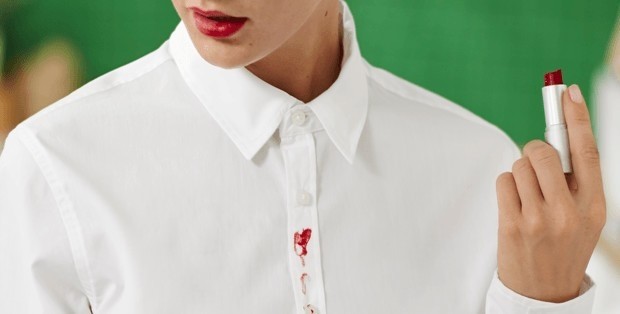
Identify the product that reached the fabric
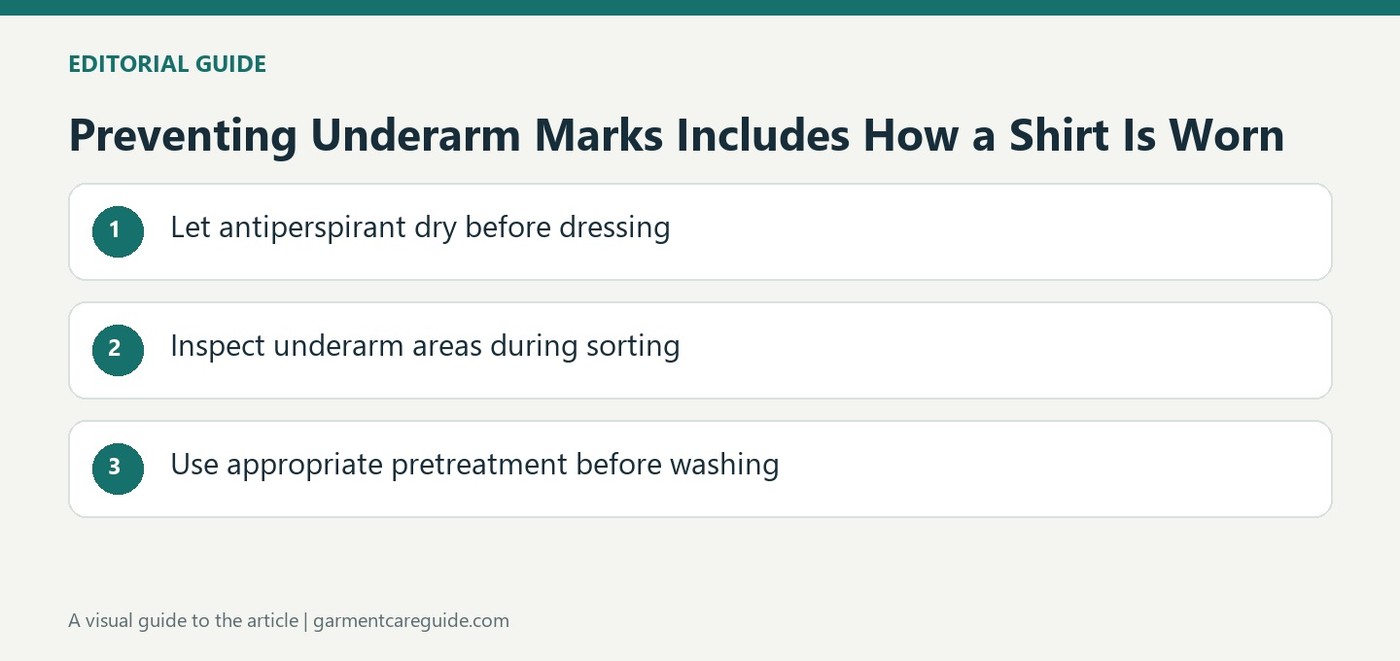
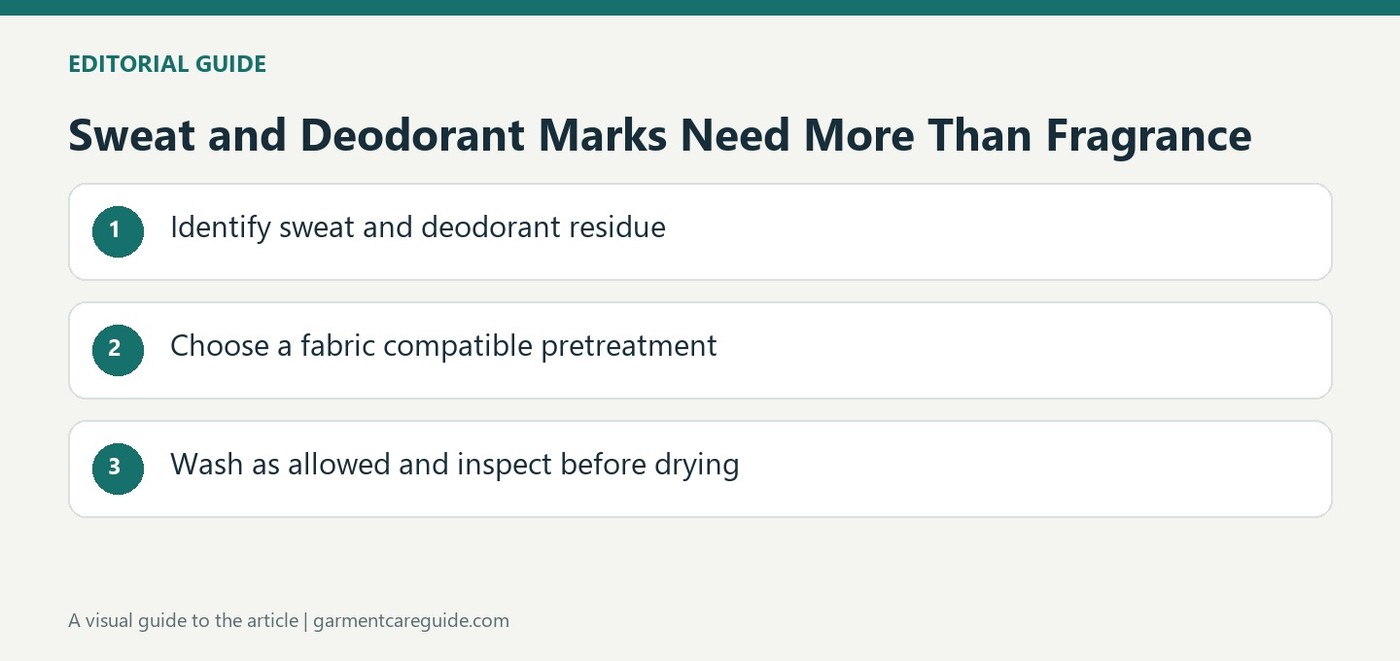
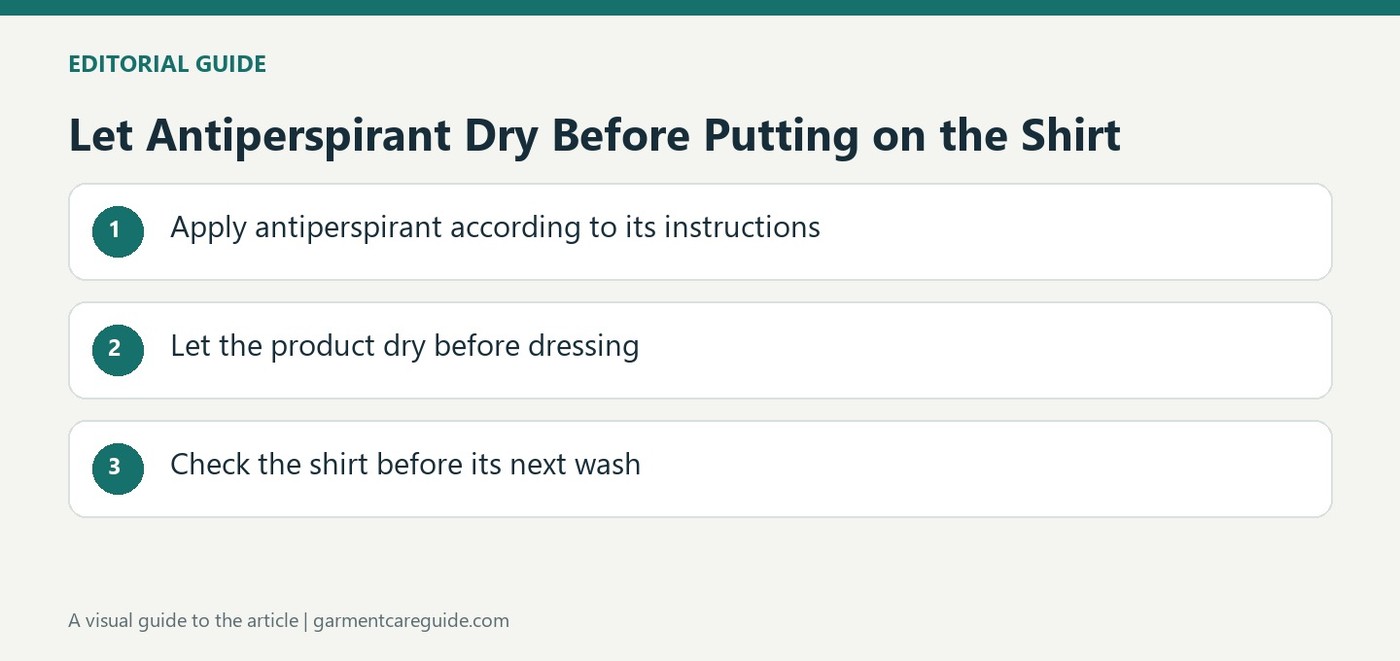
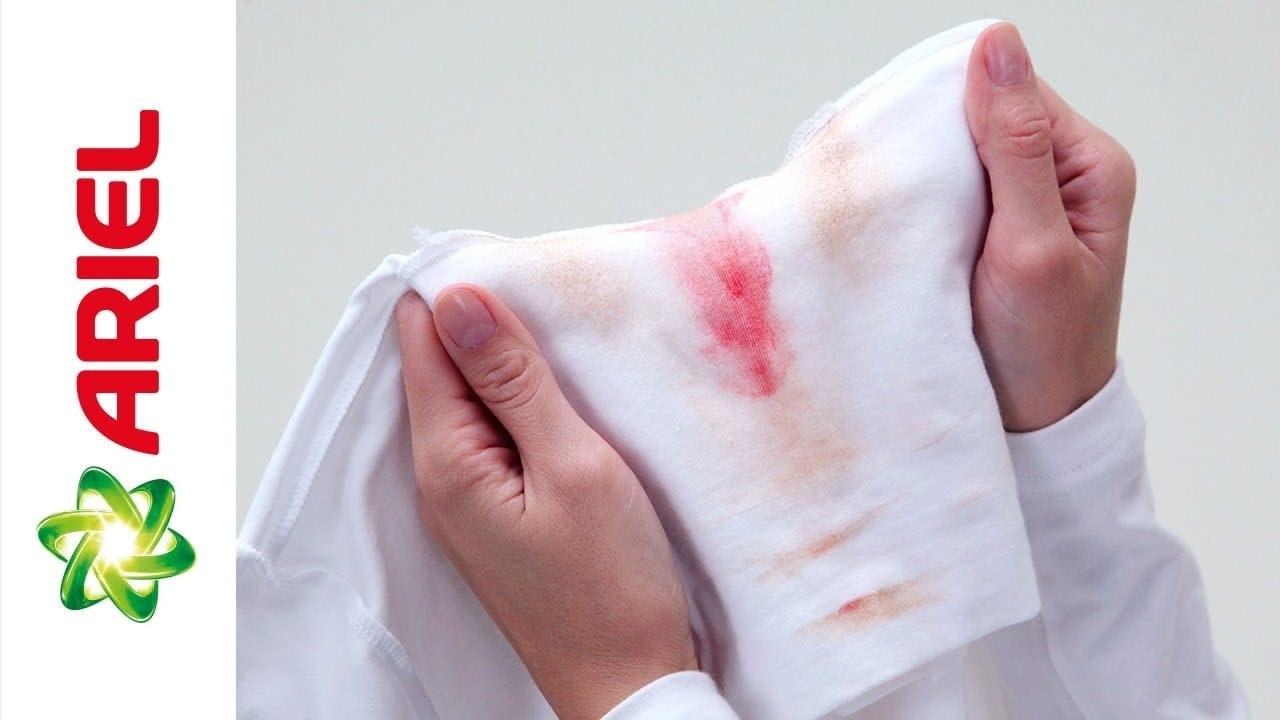
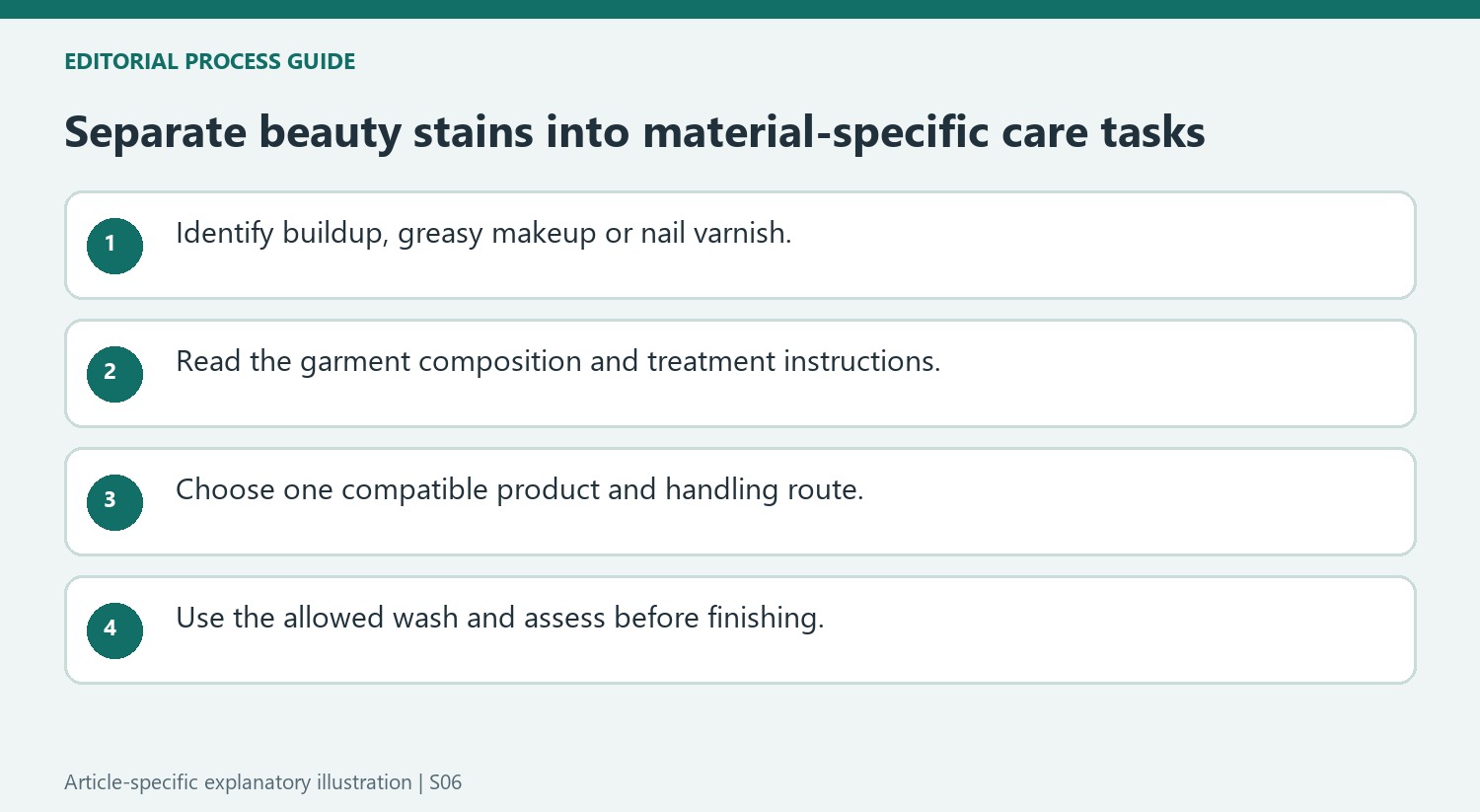
Ariel's beauty-stain guide separates deodorant or antiperspirant buildup from cosmetic smudges and nail-varnish spills. That organization is useful because the term beauty stain covers materials with different ingredients and behavior. A white underarm mark, a lipstick smear and dried polish should not all receive the same treatment by default. Read the garment's care instructions before selecting a method. The product's identity helps explain what needs removing, while the fiber, dye and construction determine which cleaning approaches remain available for the actual item.
Use suitable detergent for washable buildup and makeup
The source describes detergent pretreatment for permitted deodorant marks and greasy cosmetics such as mascara or lipstick. A compatible liquid product can be distributed over the affected area according to its directions, followed by the item's allowed washing method. Soaking is another separate permission to check rather than an automatic step for every garment. Keep the action gentle where the fabric requires it. A general recommendation to pretreat should not be read as approval for concentrated product, vigorous brushing or a hotter cycle than the label allows.
Treat nail-varnish remover as a compatibility question
Nail-polish remover is discussed separately in the source because it is a different kind of treatment from detergent. It must not be assumed suitable for all clothing. Ariel's acetate guide specifically warns that acetone can dissolve acetate fibers and cause irreversible damage. That detail makes material identification essential before attempting a polish-related stain. For an uncertain garment or formulation, seek appropriate professional advice instead of experimenting. The useful routine distinguishes the cosmetic category, checks product compatibility and follows the finished item's permitted process, rather than applying one bathroom cleaner to every beauty-related mark.
A beauty-stain category should identify a task rather than a single recipe
Ariel separates deodorant and antiperspirant buildup, greasy cosmetic marks, and nail-varnish spills. These materials can have different behavior even when they appear on the same garment. Begin by identifying what reached the cloth and how much loose residue remains, then read the care label. A white underarm area, a lipstick smear, and a dried polish spot should not all inherit the same treatment solely because they came from a personal-care routine. The source's organization is useful because it directs attention to the product category first. The finished textile then supplies a second necessary filter, determining what chemical contact, water, handling, and later washing are permitted for that actual item.
Detergent pretreatment and soaking are separate permissions
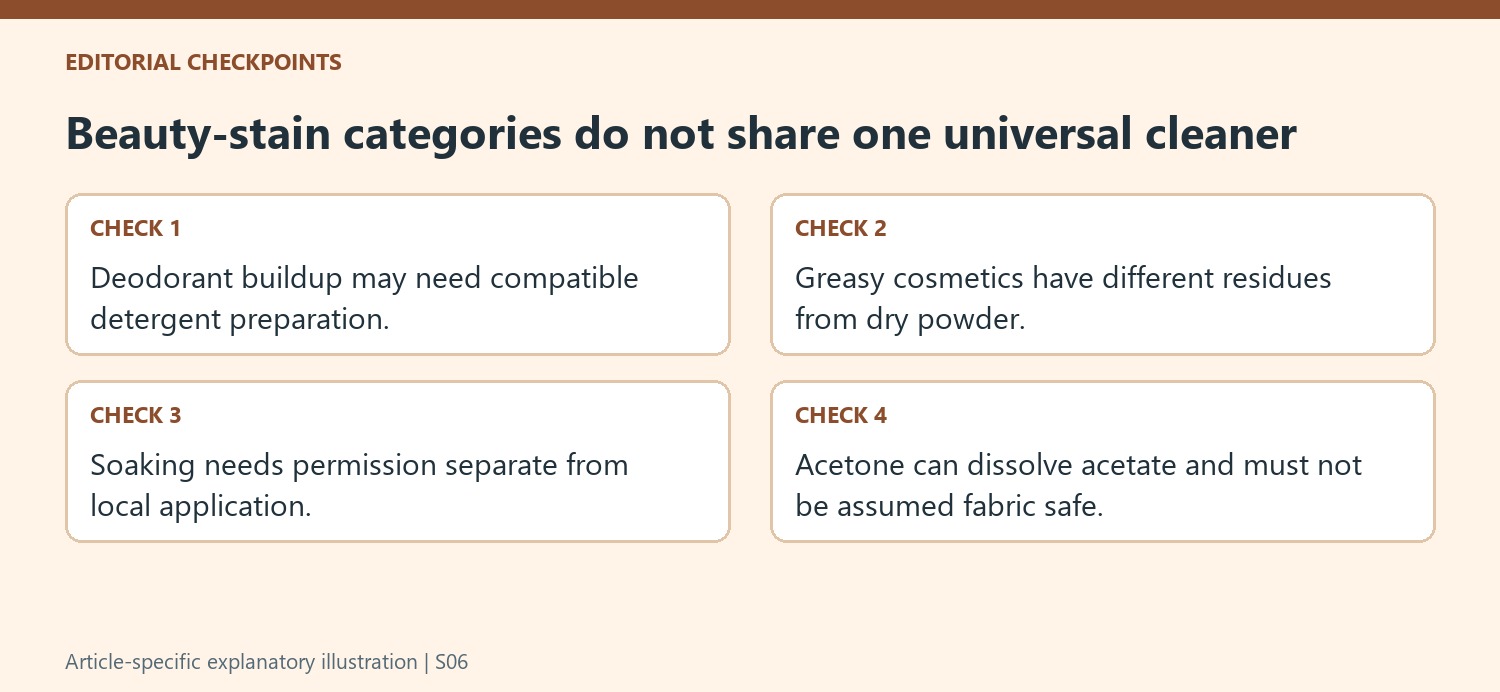
For compatible washable buildup and cosmetic marks, the guide describes suitable liquid detergent before the main wash. Check the selected product's direct-use instructions and the garment's limits, including any restriction on rubbing or immersion. A local application does not establish that an extended warm soak is also permitted, and a soak suited to one item should not be transferred automatically to another. Use the correct concentration and contact period rather than strengthening the mixture because the mark is conspicuous. Then build a load whose items share the allowed process. This keeps the cleaning response specific, with the main-wash dose and settings still chosen for the completed garments rather than assumed from the earlier spot-treatment decision.
A polish-remover suggestion must account for acetate and other restrictions
The accompanying acetate-care guide warns that acetone can dissolve acetate fibers, making nail-polish remover a material-compatibility question before any visible spot is touched. Identify the actual composition, including a lining or trim where relevant, and read the product formulation rather than assuming every remover contains the same ingredients. A hidden test cannot justify a treatment already known to conflict with the material or care instructions. If those details are uncertain, seek appropriate professional advice. The stain may be frustrating, but a stronger bathroom product is not automatically the next logical stage. Keeping polish treatment distinct from detergent-based cosmetic care avoids turning a category guide into a universal solvent instruction for all common everyday beauty-related marks.
References
- How to remove beauty stains. Ariel.
- How to wash acetate. Ariel.