GarmentCare Guide
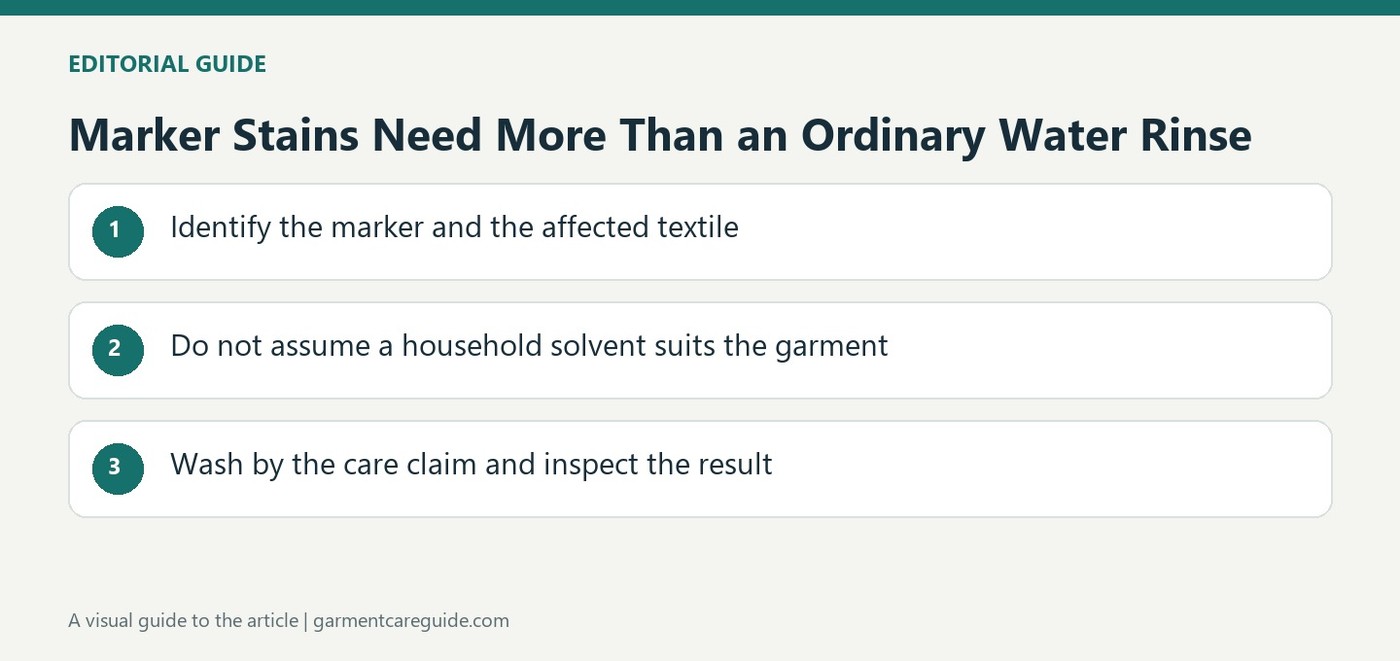
Identify the marker and the affected textile
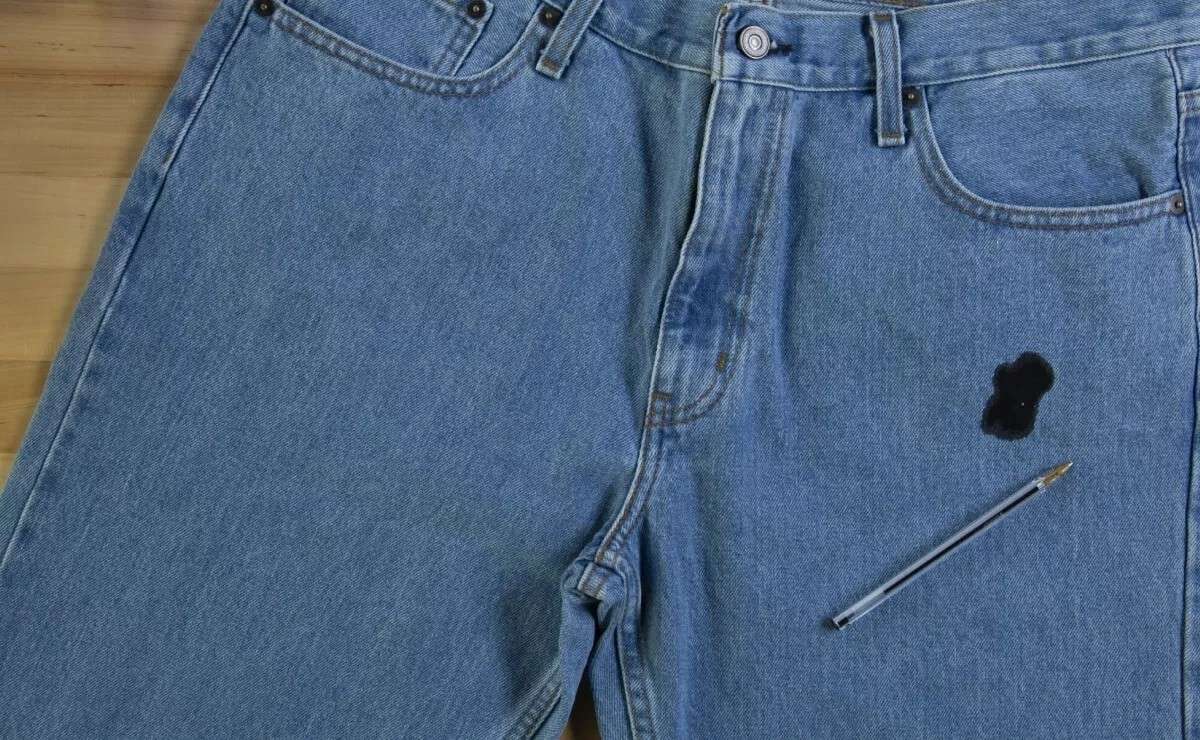
Ariel's marker-stain guide explains that the type of marker, fabric and age of the stain can influence the result. Some marker formulations resist water, so an ordinary rinse may not remove the mark completely. Prompt assessment is useful, but the garment's care claim still controls the available methods. A permanent-marker stain on cotton and one on a delicate lining should not automatically receive the same treatment. Identify the material and seek appropriate advice where the construction or cleaning permission is uncertain.
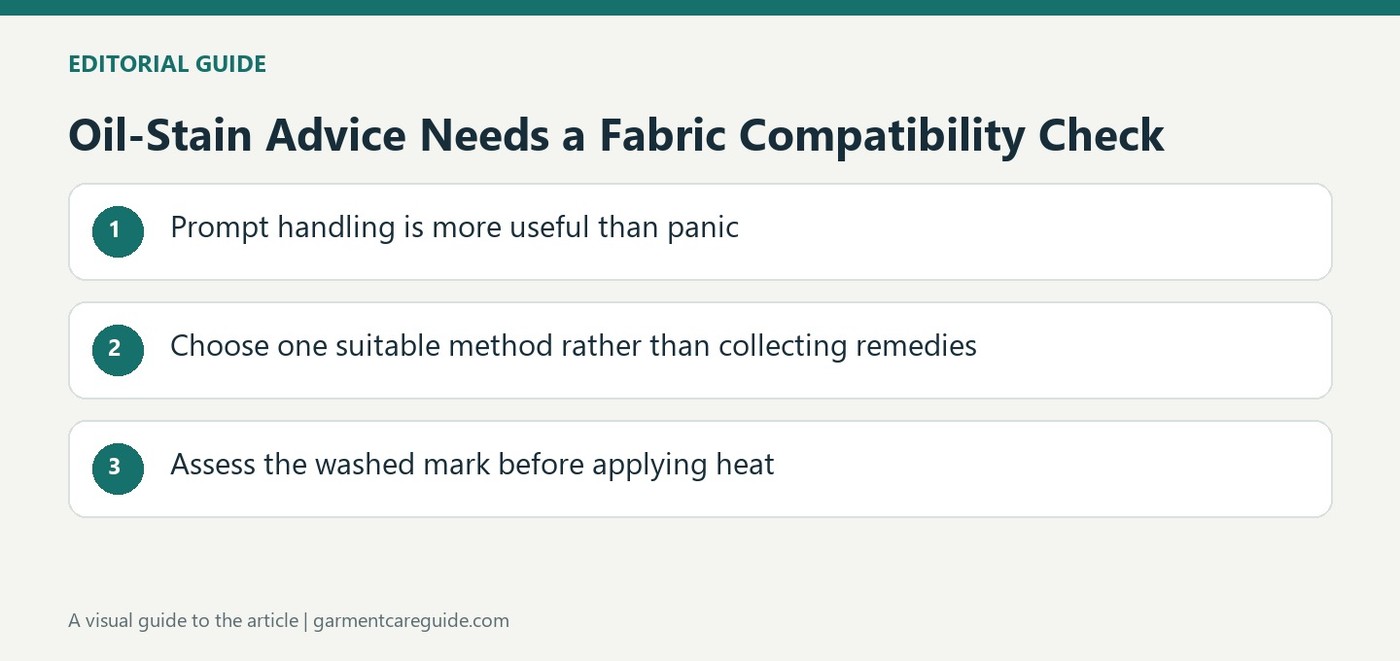
Do not assume a household solvent suits the garment
The source discusses detergent soaking and stronger spot treatments for certain situations, but compatibility needs to be established before using either. In particular, nail-polish remover is not a universal fabric cleaner. Ariel's acetate guide warns that acetone can dissolve acetate fibers and cause irreversible damage. A general stain suggestion should therefore never bypass the item's material restrictions. Use a product intended for the task, follow its directions and check an inconspicuous area where appropriate. Choosing one suitable method is more controlled than repeatedly adding unrelated remedies to the same stain.
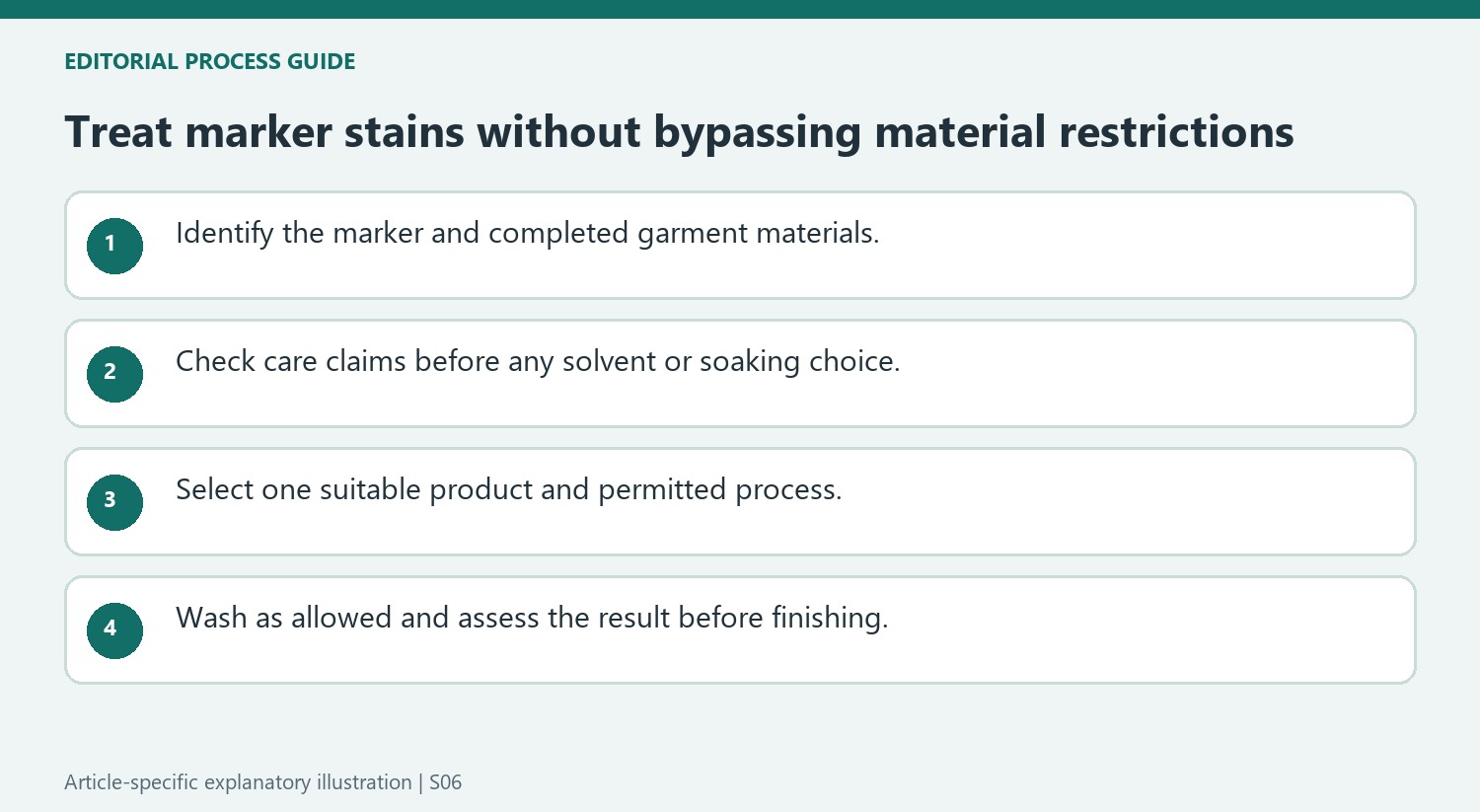
Wash by the care claim and inspect the result
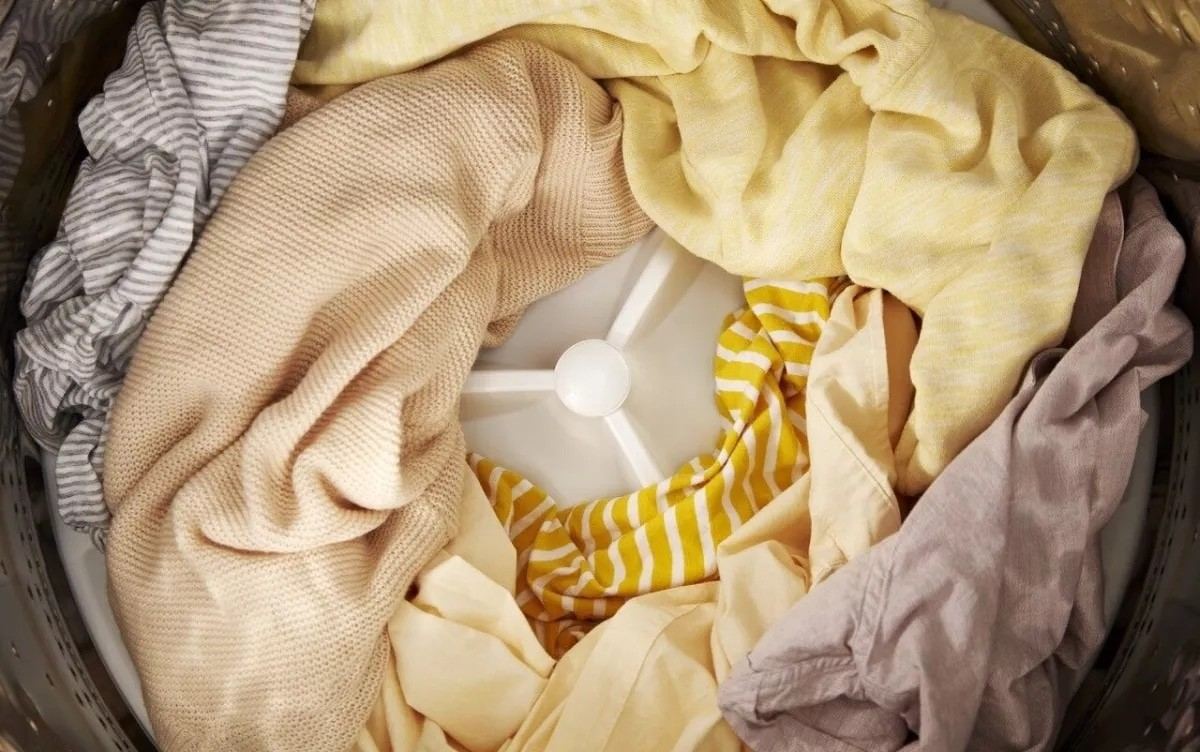
For garments that permit the selected pretreatment and home washing, Ariel recommends a compatible load, correct detergent dosing and the allowed cycle and temperature. Prompt unloading then provides an opportunity to assess the mark. A remaining stain may need another appropriate attempt or professional attention before any heat finishing. The term permanent describes the challenge but does not establish either certain failure or certain removal. A useful routine remains specific: understand the ink, respect the fabric, use a compatible process and judge the actual result instead of relying on a guaranteed-outcome claim.
The marker formulation helps define the cleaning challenge
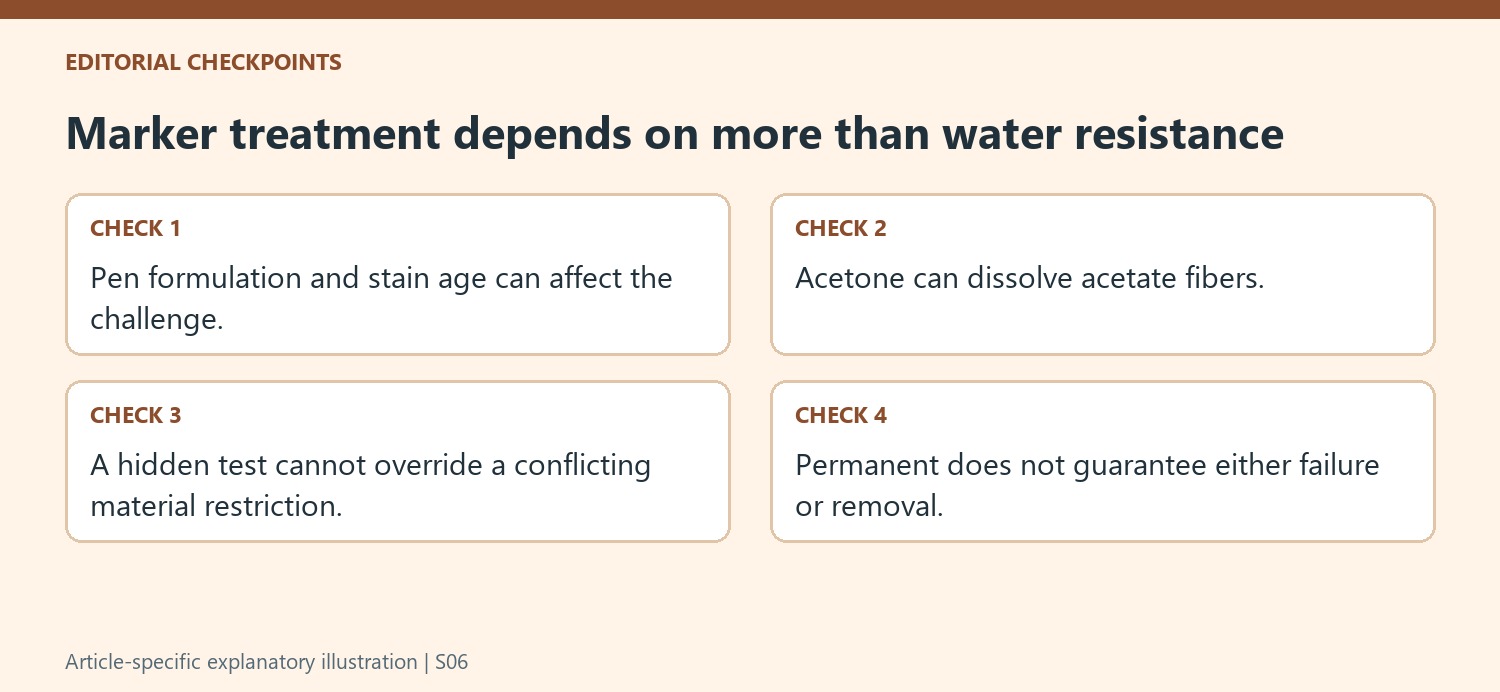
Ariel notes that marker stains can vary with the pen, textile, and time since the mark occurred. Some formulations are designed to resist water, so a plain rinse may not remove the full residue. Use that information to identify the task, not to assume that the strongest household solvent is automatically appropriate. Read the garment's composition and care instructions first. A marker line on sturdy washable clothing and one on a fine lining can need different routes even if the color looks identical. Where the material or permitted process is unclear, seek specific advice. Prompt attention is useful because it allows an informed choice before the stain is simply carried into an ordinary wash without assessment.
Acetone compatibility cannot be inferred from a general solvent suggestion
The accompanying acetate-care reference warns that acetone can dissolve acetate fibers. This is a concrete reason to reject nail-polish remover as a universal marker cleaner. A stain guide's general mention of a spot product does not override the actual material's restrictions, and a garment may contain acetate in a lining even when another fiber forms the visible surface. Read the full information before applying a solvent. A hidden test also cannot authorize a treatment known to conflict with the material or the care claim. Choose one appropriate method with suitable product directions rather than layering several solvents and household remedies in the hope that one eventually changes the mark.
A removal attempt still needs a result-based stopping point
For clothing that permits the selected preparation and home wash, Ariel's sequence continues with compatible loading, correct dosing, the allowed cycle, and prompt unloading. Inspect the mark at that transition. A persistent stain may require further item-specific guidance or a professional assessment before finishing with heat. Neither the word permanent nor a confident product claim establishes the outcome in advance. The actual textile and observed result remain decisive. Avoid increasing soak time, rubbing, or chemical strength without suitable instructions just because the first attempt did not restore the surface. A controlled process leaves room to reassess, while an unsupported escalation may create a second visible problem that is harder to distinguish from the original marker stain.
References
- How to remove marker stains. Ariel.
- How to wash acetate. Ariel.