GarmentCare Guide

An outdoor mark is not a single stain category
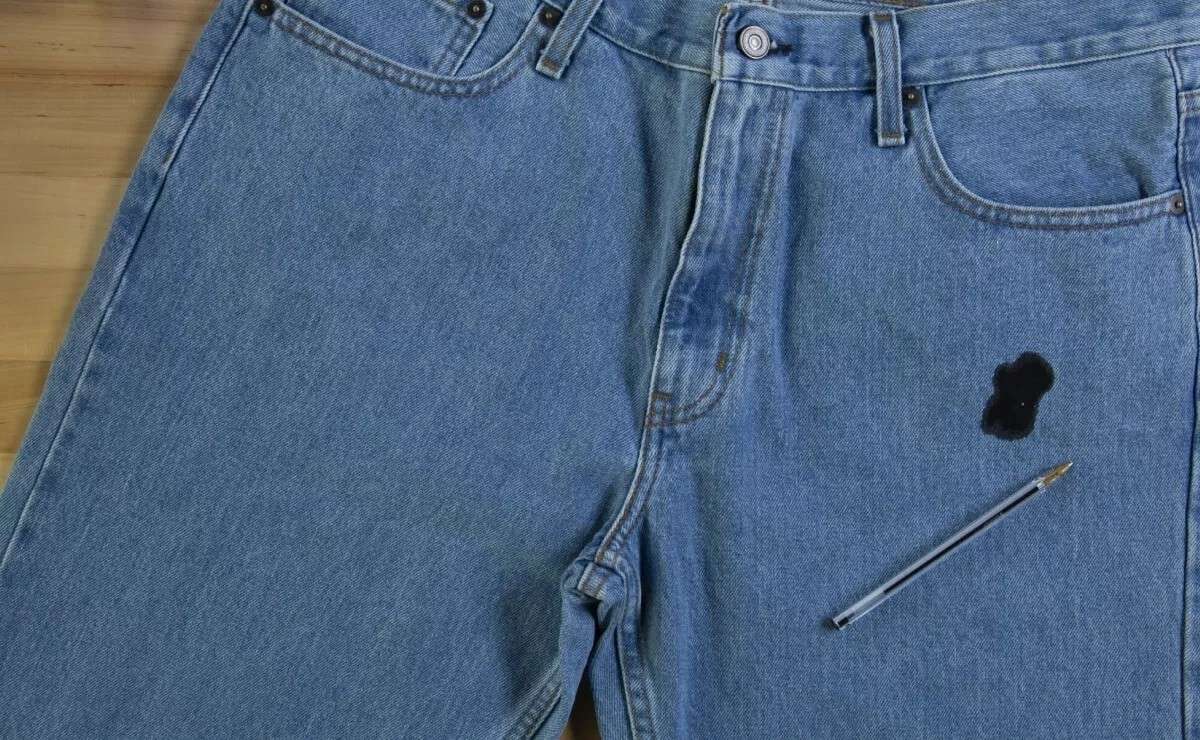
Ariel's outdoor-stain guide covers paint, tar or oil, ordinary collar grime, grass and mud. Those examples show why the location of an accident is less useful than identifying what actually reached the fabric. Soil from gardening and a splash of paint may look similarly dark but require different handling. Read the clothing label before starting, and determine whether the item permits home washing or needs another route. Its construction and surface finish remain relevant even when the stain seems more urgent than the routine care instruction.
Match the first step to the residue
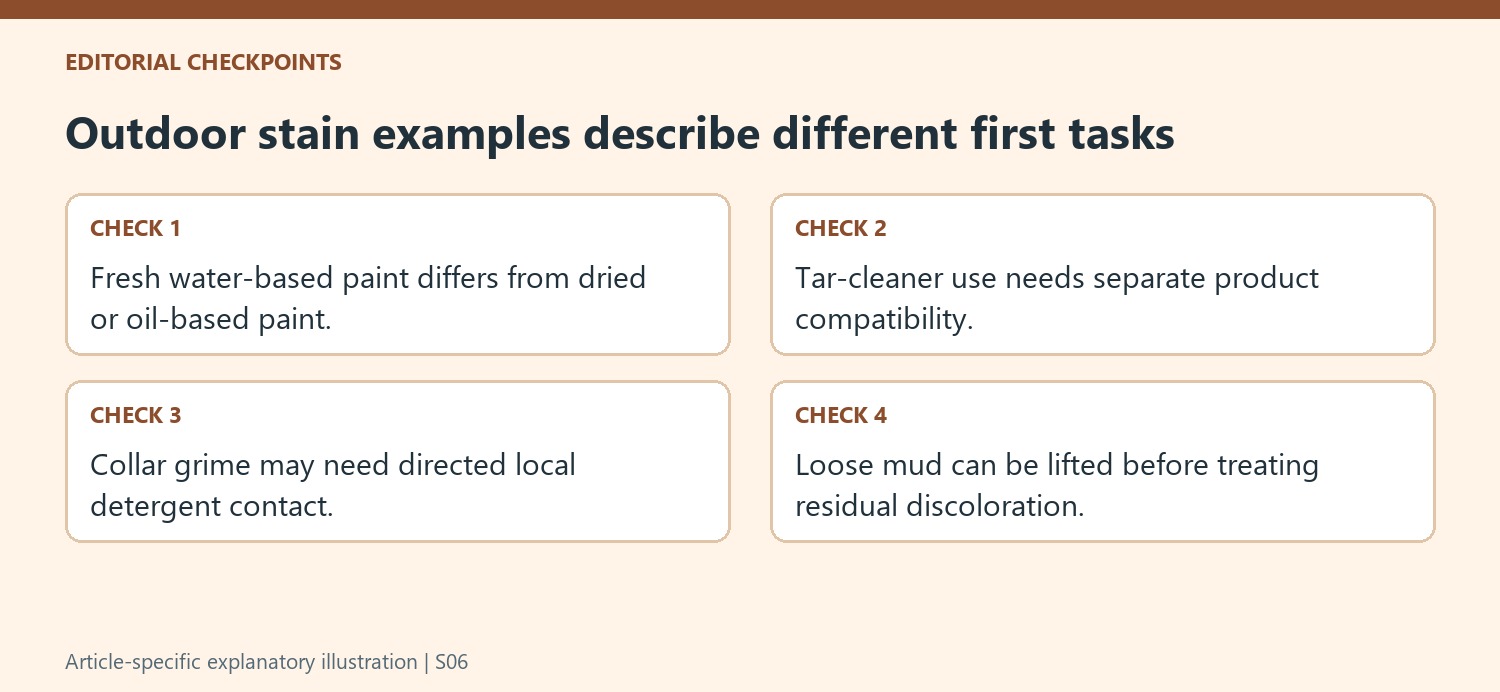
The guide distinguishes fresh water-based paint from dried or oil-based material, while grass and collar grime receive detergent-focused pretreatment. Mud is described as a deposit that can be dried and lifted before the remaining mark is treated. These are alternatives associated with different residues, rather than a sequence to perform on every stained garment. Stronger paint or tar products also need their own compatibility checks and instructions. Do not use a solvent merely because it appears in a general outdoor-cleaning article, especially where the textile or finish is uncertain.
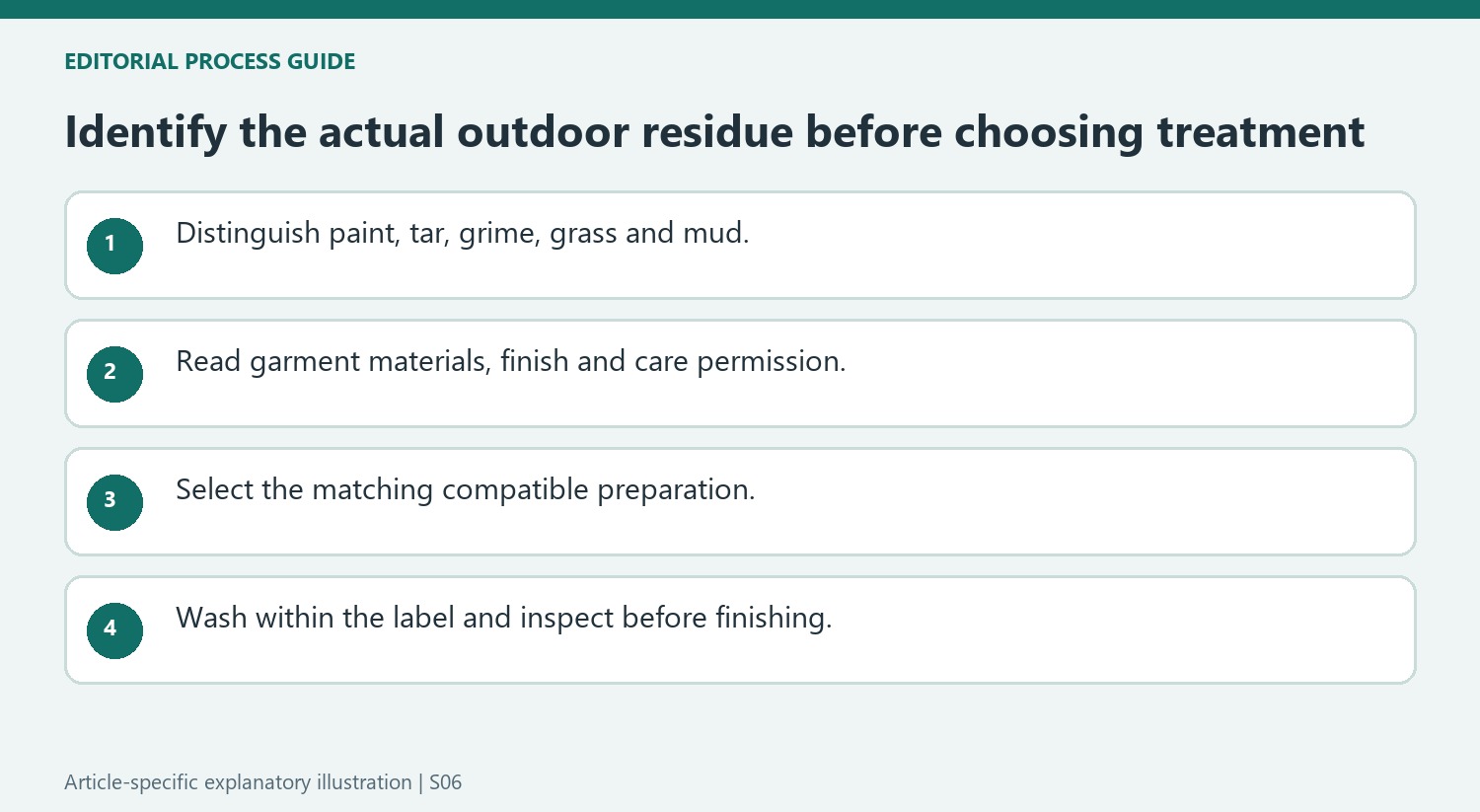
Complete the permitted wash after controlled preparation
For suitable washable items, Ariel recommends an appropriate detergent and the process stated by the care label. Its collar-grime example includes a brief pretreatment period before washing, illustrating how local preparation can be separated from cleaning the full load. Keep any contact time aligned with the actual product directions. Inspect the result before applying further finishing treatment and seek suitable advice for a persistent or unidentified stain. Organizing the task around stain identity, material compatibility and a permitted wash is more precise than assuming all outdoor dirt needs hotter water or heavier scrubbing.
Where the stain happened is less useful than what reached the fabric
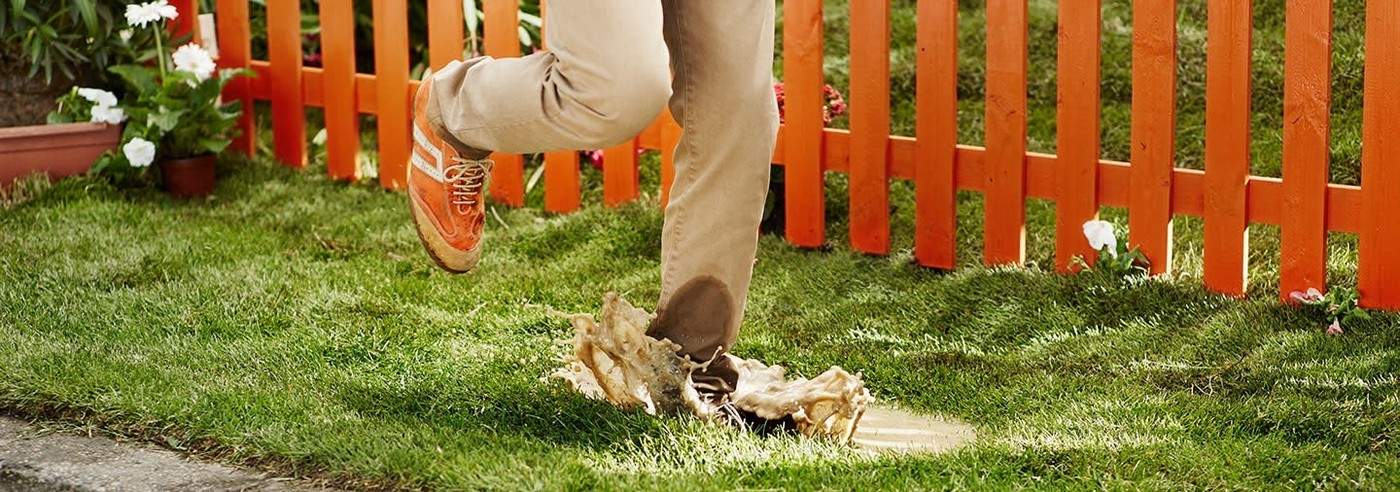
Ariel's outdoor guide ranges from grass and mud to paint and tar, so outdoor is an accident setting rather than a single cleaning category. Identify the substance before selecting a product. A dark collar deposit, a dried paint splash, and a muddy cuff can need different first actions even when all appeared during the same afternoon. Read the garment's care label at the same time, particularly where workwear or outdoor clothing has a special construction or finish. Stain identity helps narrow the possible method, while the completed textile narrows what is permitted. Starting with both avoids assigning every outdoor mark to one hot cycle simply because the source of the dirt was outside.
Paint and tar products need their own compatibility decisions
The source separates fresh water-based paint from dried or oil-based material and discusses stronger products for some residues. Do not transfer those suggestions automatically to an unknown textile or finish. Read the paint or cleaning product directions alongside the garment information and seek suitable advice where either is unclear. A hidden trial may supply limited compatibility information, but it cannot cancel a known material restriction or make every solvent suitable. Keep one defined treatment route rather than combining several outdoor-cleaning examples. The guide's range is useful for identifying different tasks, not for creating a general mixture of products to apply whenever ordinary washing has not immediately changed a dark patch.
Collar grime illustrates the difference between preparation and the main wash
Ariel's daily-grime example uses a directed local detergent contact period before normal permitted washing. That separates the work on a concentrated area from the treatment of the full garment and load. Select a suitable product intended for direct use, keep any rubbing within the surface limits, and follow current timing instructions. Then compare the other clothing before choosing the main-wash dose and program. Promptly inspect the result before further finishing, especially when a residue remains or the substance was not confidently identified. This keeps the practical sequence attached to the actual garment rather than allowing an apparently ordinary dirty collar to bypass the same material, product, and process checks used for more conspicuous outdoor stains.
References
- How to remove outdoor stains. Ariel.