GarmentCare Guide

Remove surplus oil before adding treatment
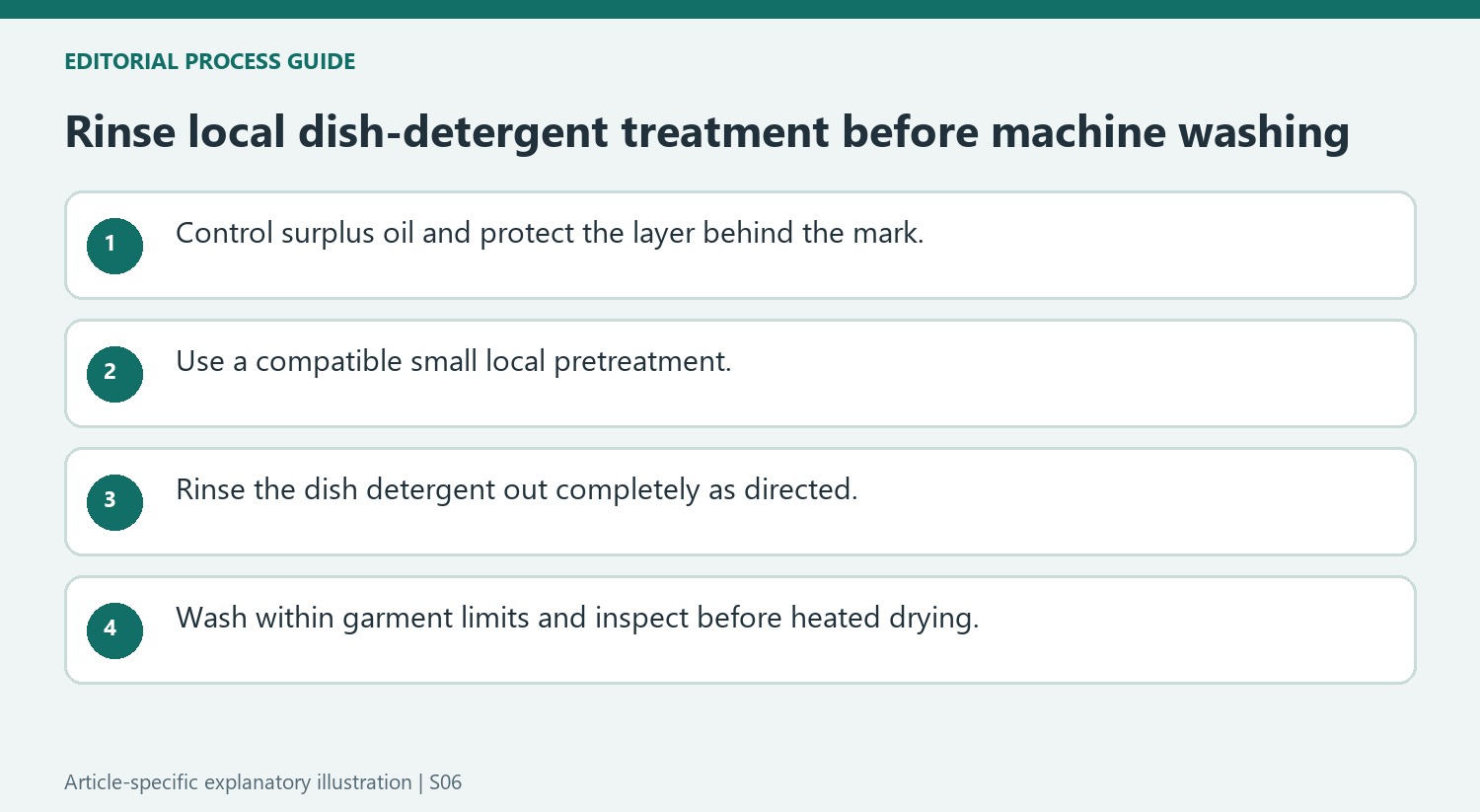
Whirlpool's oil and grease guide begins with taking away excess residue. A paper towel can blot loose oil, while a blunt utensil may help lift suitable thicker material without dragging it across the fabric. The source also suggests placing cardboard behind a stain to reduce transfer to another layer of the garment. Choose handling that fits the textile and its care claim. A general grease-removal method should not be treated as permission to scrape, soak or scrub a delicate surface that requires another form of cleaning.
Keep local dish detergent out of the main wash
For suitable clothing, the guide describes applying a small quantity of liquid dish detergent to the mark and allowing it to work for a directed period. It specifically recommends rinsing that product out completely before putting the garment in the washing machine. This makes the dish detergent a local pretreatment, distinct from the laundry detergent used for the load. Gentle working may be appropriate on sturdy fabrics described in the source, but other materials need more restrained handling or specialist guidance. Follow both garment and product instructions rather than increasing the quantity by guesswork.
Use the allowed wash and avoid premature dryer heat
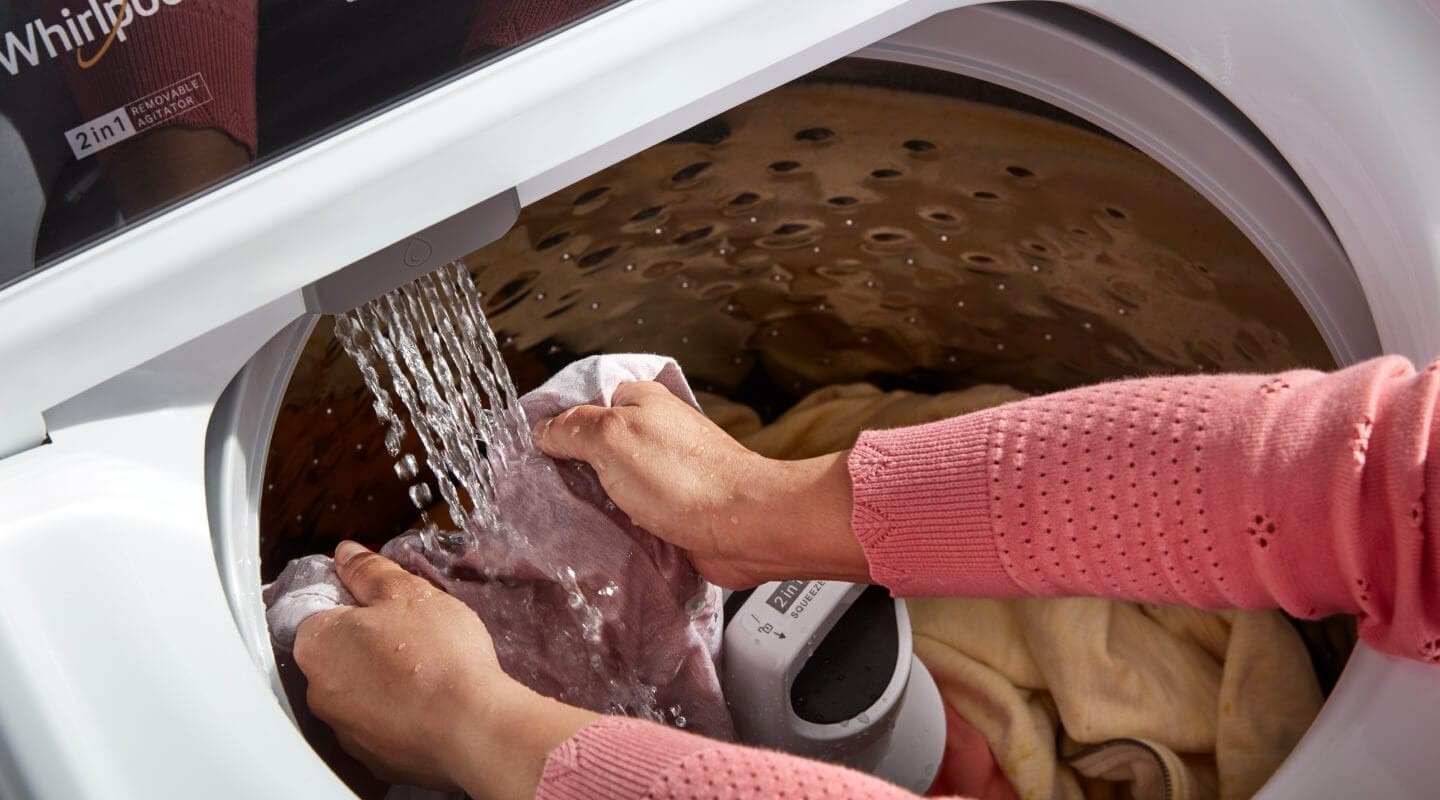
Whirlpool recommends washing at the warmest temperature permitted by the clothing label, with the actual cycle matched to the item. It then advises natural drying while the stain is being assessed, because dryer heat can make a remaining oil patch harder to remove. Check the result before choosing further treatment. The article also notes that success depends on the fabric and origin of the stain, so removal should not be promised. The practical sequence is controlled excess removal, compatible pretreatment, complete rinsing and permitted washing, followed by a deliberate inspection before finishing.
An absorbent backing can limit transfer to another layer
Whirlpool suggests placing cardboard behind an oily mark before local treatment. This provides a barrier between the affected area and another part of the garment while surplus residue is handled. Use it alongside careful blotting or gentle removal appropriate to the fabric, not as permission to scrape a delicate surface. The aim is to control where the existing stain travels. A backing does not establish chemical compatibility or washing permission, so the care claim and product directions still need to be read separately. Preparing the surface before adding a cleaner makes the process more deliberate than working on a folded garment and discovering afterward that oil or treatment has reached the layer underneath.
Complete rinsing is part of the local dish-detergent method
The guide specifically instructs readers to rinse the dishwashing detergent out completely before putting the garment into the washer. Keep that transition in the routine rather than treating it as an optional detail. The dish product is used locally on compatible fabric, while appropriate laundry detergent serves the machine wash. Follow the product directions for amount and contact, and do not use a generous quantity in an attempt to speed up removal. The garment must also permit the proposed rubbing and wet treatment. This separation of roles is useful because a cleaning product's ability to address grease on a small area does not establish that it should be introduced unchanged as the main detergent for a whole load.
A stubborn result depends on more than how hard the area is worked
Whirlpool notes that the stain's origin and the fabric affect whether removal succeeds. Treat that as a reason to assess the result rather than promise that repeating the same action will always restore the item. After the allowed wash, inspect the area and use its permitted natural-drying support while further treatment is considered. Avoid dryer heat on a remaining mark because it can make later cleaning harder. If the method is not helping or the textile is uncertain, seek more appropriate guidance rather than escalating rubbing, concentration, or heat beyond the existing limits. Controlled handling preserves a clearer distinction between a reasonable compatible attempt and an unsupported guarantee of removal.