GarmentCare Guide
Do not judge the spill only by its initial appearance
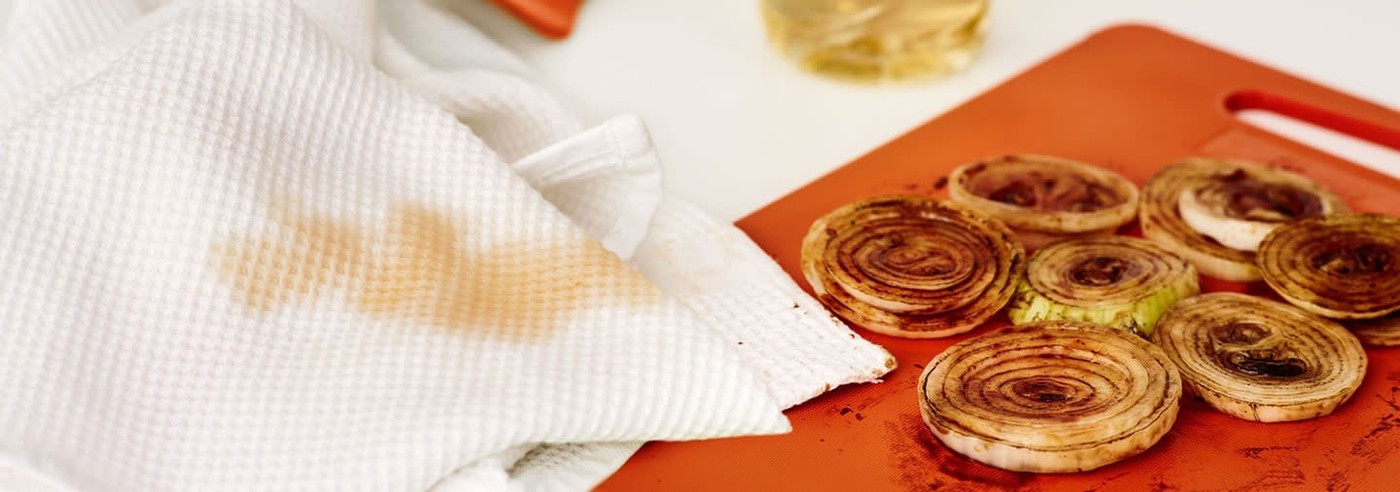
A cooking-oil splash may leave only a faint mark when it first reaches clothing. Tide's guide notes that untreated oil can become more noticeable over time, making prompt attention useful. First identify the garment's care requirements rather than assuming a kitchen stain permits any cleaning method. A washable apron and a delicate blouse can receive the same spill while needing different treatment. The relevant question is how to address that oil on the particular item, with its fabric, finish and care label kept in view.
Use an appropriate small-scale pretreatment
Tide's cooking-oil article describes dish soap as a pretreatment for suitable material before the main wash. Its broader oil-stain guide adds gentle blotting to remove excess oil and recommends checking compatibility before treatment. These steps are useful to distinguish from pouring a dishwashing product into the washing machine. Follow the chosen product's directions, remove or rinse it as instructed and use an appropriate laundry detergent for the actual wash. A pretreatment should remain controlled and local where that is the permitted method, rather than turning into an improvised mixture of household cleaners.
Wash within the label and inspect before finishing
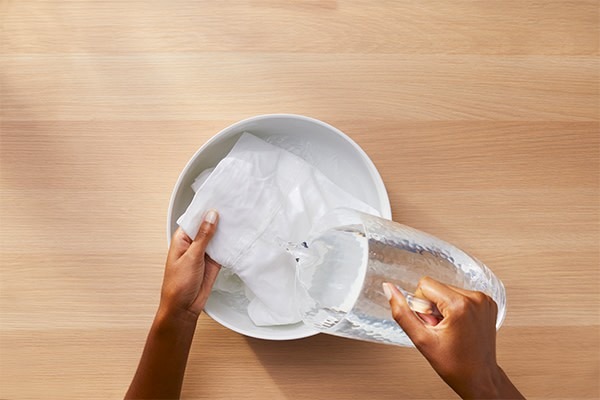
The source directs the main wash according to the garment's care label, with appropriate detergent and dosing. Unload at the end of the cycle and check the stained area. If a greasy patch remains, consider another compatible treatment before using dryer heat, which can make the residue harder to remove. Natural drying also needs the support position specified for the garment. Thinking through the sequence before starting makes it easier to act promptly while retaining the distinction between a stain-removal suggestion and the item's actual permitted care.
A faint splash still deserves a deliberate first response
The source explains that cooking oil can be less noticeable initially and become darker as it remains untreated. Inspect the clothing when the spill occurs rather than using the lack of strong color as evidence that no care is needed. Read the actual garment instructions before deciding how to respond, because the same kitchen oil can reach a sturdy apron or a sensitive blouse. The companion guide's gentle blotting advice helps distinguish immediate excess removal from the later cleaning process. Acting promptly should mean choosing a controlled appropriate response, not bypassing fabric compatibility in a rush to apply the nearest household cleaner to the visible area.
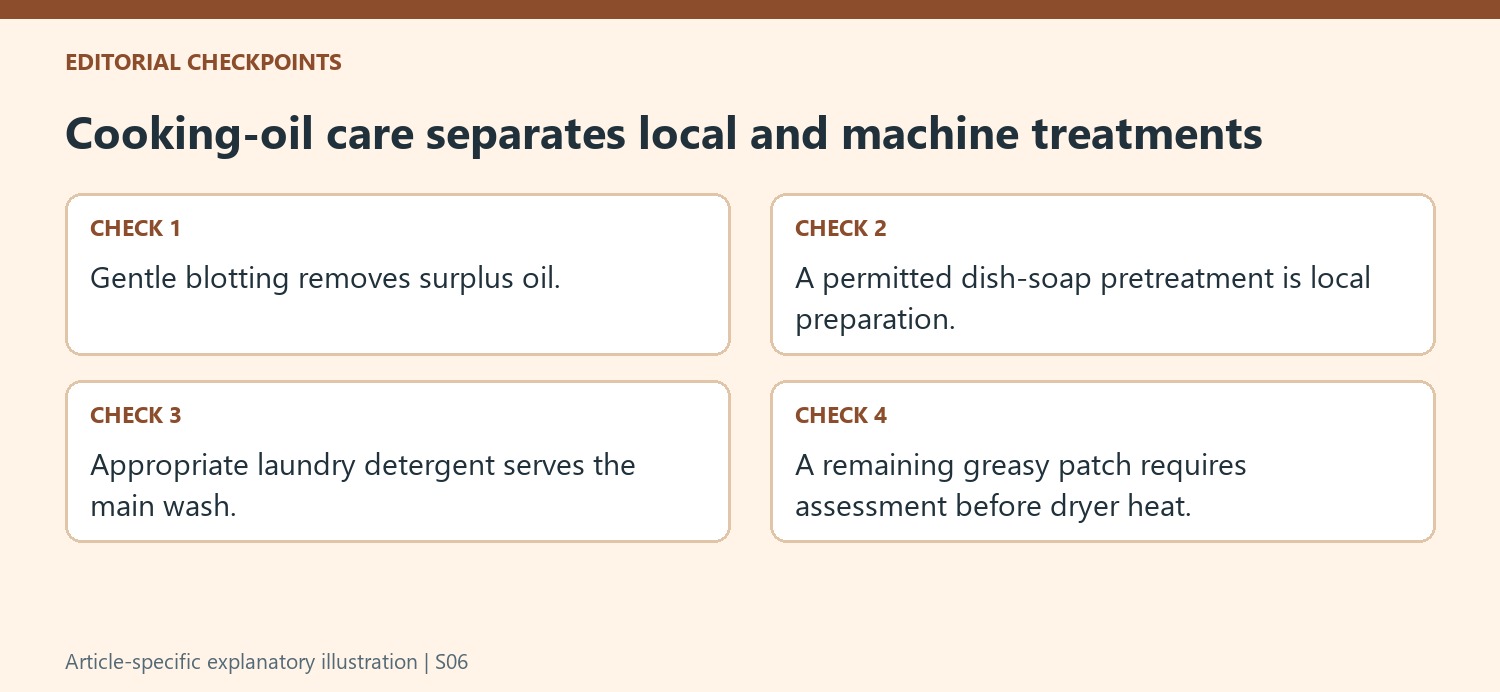
Keep dish-soap pretreatment separate from machine detergent use
Tide describes dish soap as a local preparation for suitable cooking-oil marks, followed by rinsing and the permitted wash. That is different from using a dishwashing product as the detergent in a washing machine. Follow the selected product's directions and remove or rinse the pretreatment as instructed before laundering with an appropriate laundry formulation. The garment must allow the local action and subsequent process. A detergent intended for an allowed wash cannot authorize rubbing on an unsuitable surface, and a successful local treatment does not settle the main-load dose. Keeping the roles separate makes the method easier to apply accurately instead of allowing a small stain-removal suggestion to turn into an improvised whole-load recipe.
Build a checkpoint between washing and finishing
The source advises unloading when the cycle ends and repeating compatible treatment if the stain remains before drying. Use that moment to inspect the actual greasy area, with the garment's care information still available. A residual patch may need another appropriate response rather than immediate heat. The drying route then requires its own check, including any natural support position or tumble restriction. Plan it before washing so time pressure does not encourage an unsuitable shortcut with a wet garment. This gives the routine a clear sequence from prompt attention through permitted cleaning to assessed finishing, while avoiding the assumption that every cooking-oil spill can be solved by the same product amount, cycle, and drying method in every household.
References
- How to Remove Cooking Oil Stains. tide.com.
- How to Get Oil Stains Out of Clothes. tide.com.