GarmentCare Guide

A faint patch can still need attention
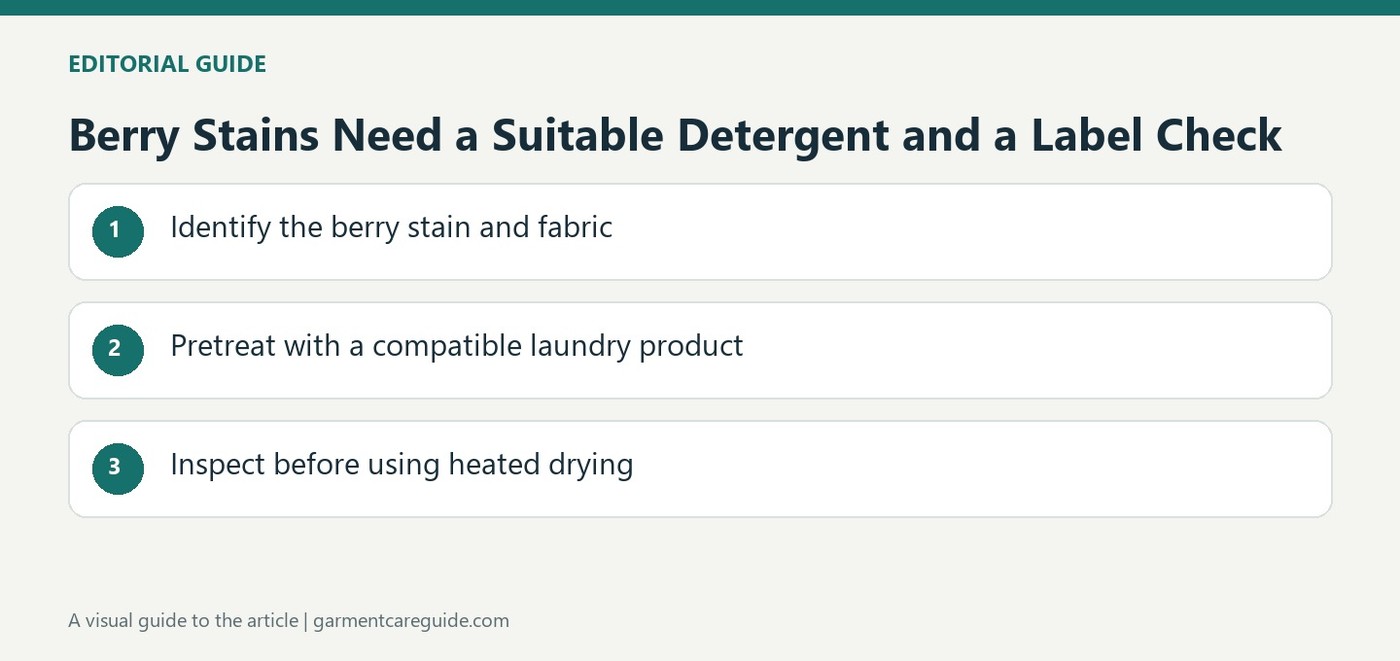
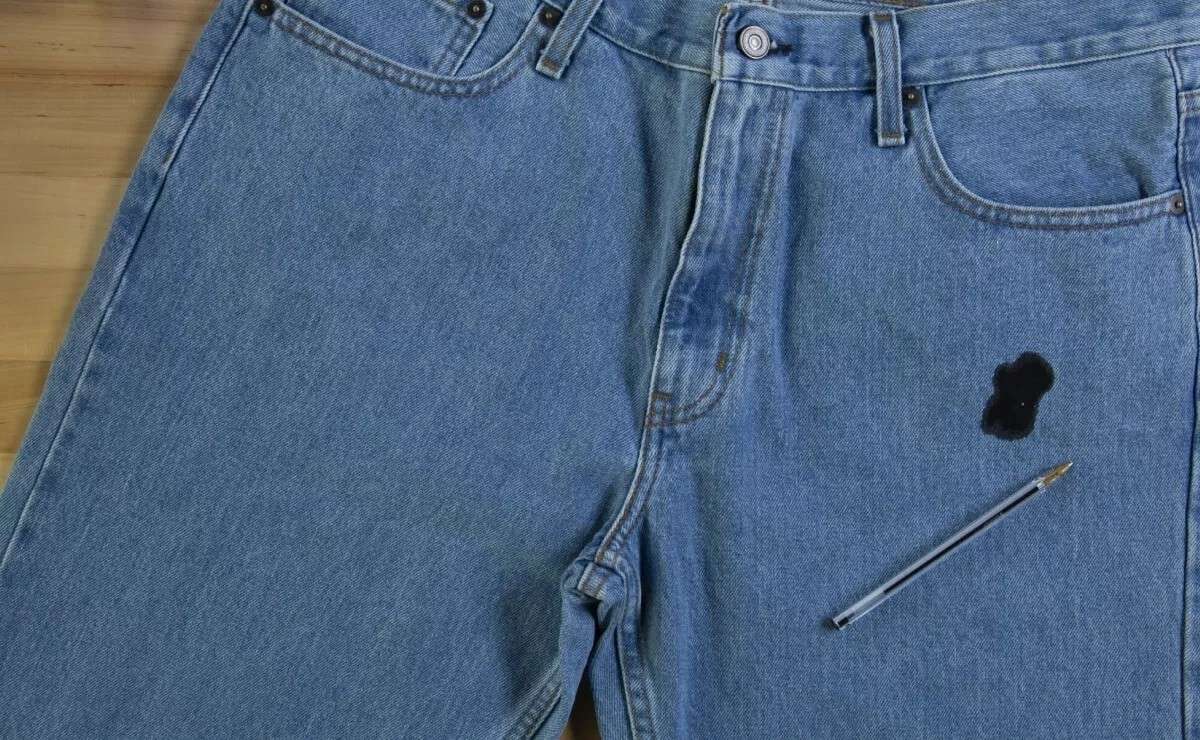
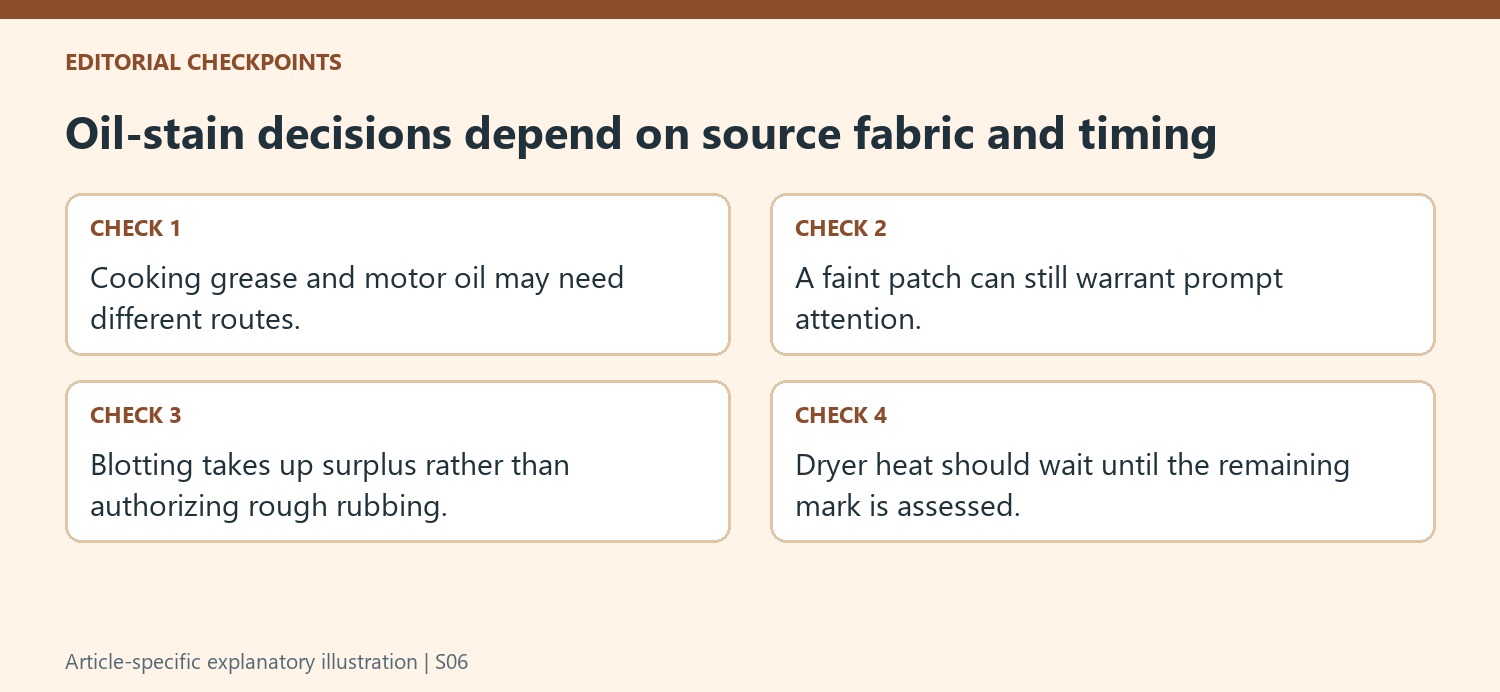
Tide describes oil stains as darker greasy patches that may be less immediately visible than a colored drink spill. That subtle appearance can make them easy to postpone. Assess the mark promptly and identify the source of the oil where possible. Cooking oil and motor oil are not necessarily the same cleaning problem, especially when contaminants are involved. Read the garment's care label before choosing a treatment. The practical objective is to remove the mark within the fabric's limits, rather than using an aggressive product simply because oil is difficult to dissolve in water.
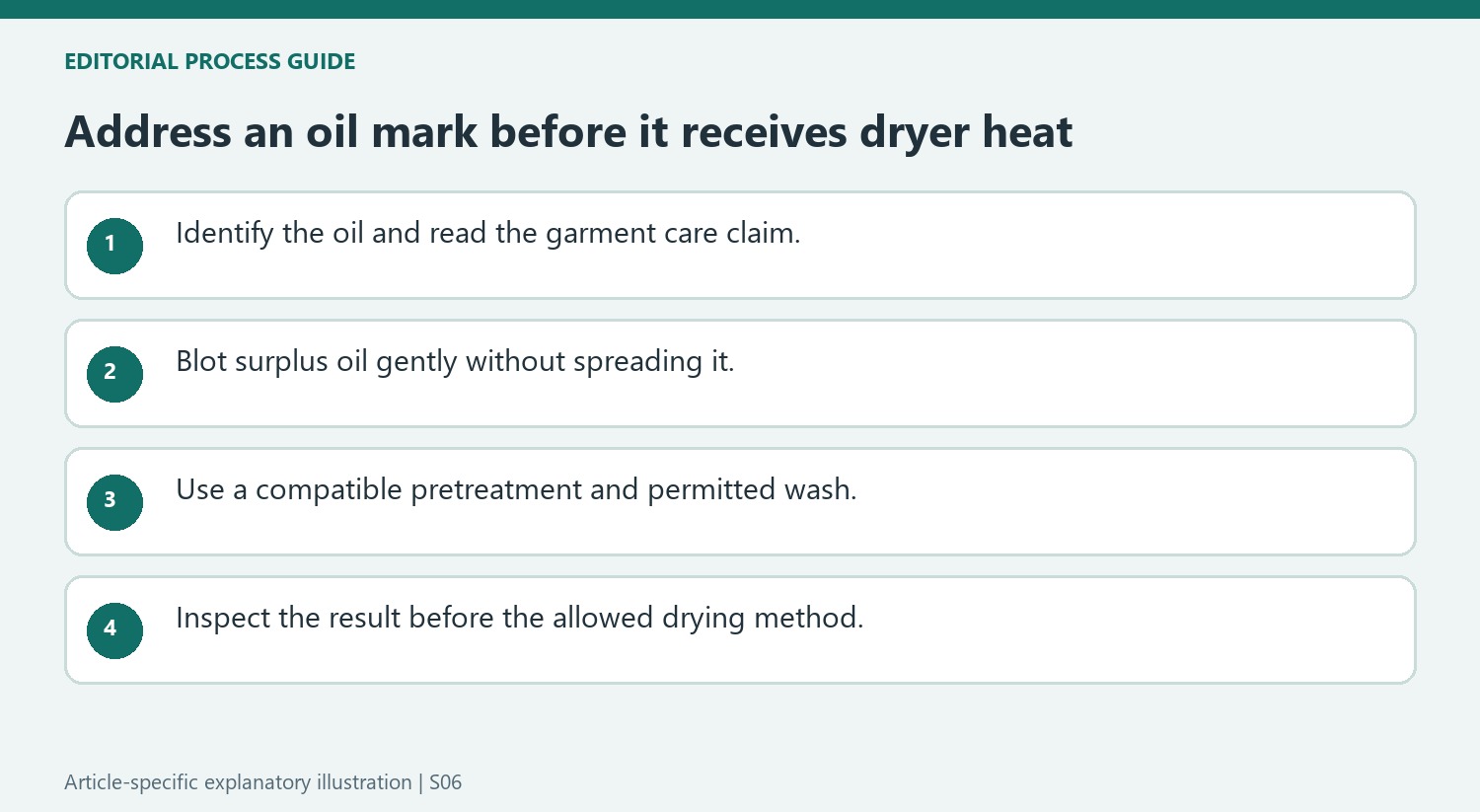
Blot surplus oil before pretreating
The source recommends using tissue or a paper towel to press gently against the stained area and take up excess grease. This separates removal of loose oil from the later washing stage. For suitable cooking-grease marks it describes a small dish-soap pretreatment, while other oil stains may require a compatible detergent-based approach or professional advice. Use the selected product as directed and test compatibility where appropriate. Do not combine unrelated remedies or assume a method suitable for sturdy cotton is appropriate for a delicate or professionally cleaned garment.
Inspect the fabric before using the dryer
After an allowed wash with suitable detergent, Tide advises checking that the oil mark is gone before applying dryer heat. A remaining patch can become harder to remove after heated drying. That makes inspection a useful pause in the routine rather than treating the wash cycle as proof of success. Follow the garment's permitted drying arrangement once the result has been assessed. Prompt blotting, appropriate pretreatment and a controlled wash each address a different part of the problem, while the final check helps avoid making a persistent mark more difficult to treat.
Remove loose oil without driving it across the surface
Tide recommends blotting with tissue or a paper towel to take up excess grease before the main treatment. Use gentle pressure appropriate to the material rather than rubbing vigorously in an attempt to erase the patch at once. The first stage has a limited purpose: remove oil that can be absorbed, leaving the remaining mark for a compatible cleaning method. It does not need to become forceful scrubbing. This is useful because oil may initially appear faint, making it tempting either to ignore it or to overwork a small area once noticed. Prompt, controlled blotting keeps the immediate response proportionate while there is still time to read the garment's care information.
Identify the oil as well as the fabric
The guide distinguishes cooking oil from motor oil and notes that contaminants can make the latter more complicated. Do not assume that every greasy patch has the same composition or responds to a kitchen-stain example. Identify the source where possible and read the actual textile instructions before selecting a product. A professional-cleaning claim or uncertain material may need specialist advice rather than a stronger household mixture. Even within washable clothing, the proposed detergent or localized dish-soap treatment needs compatibility and correct use. The source's alternatives are not a menu to combine indiscriminately. Selecting the route for that oil on that garment is more useful than treating water resistance alone as a reason to try every available solvent or cleaner.
A persistent greasy patch is a reason to reassess before heat
Tide repeatedly places inspection before heated drying because remaining oil can become harder to remove afterward. Look at the treated area after the permitted wash instead of assuming the program's completion proves success. If the mark remains, follow an appropriate further treatment within the product and garment limits. More aggressive heat is not a substitute for that assessment. Once the result has been considered, use the item's permitted drying method and support position. The broader sequence stays clear: absorb surplus oil, identify a compatible treatment, wash with the correct detergent directions, and pause before finishing. Each stage contributes something different, while the final inspection prevents the desire to finish quickly from reducing later stain-removal options.
References
- How to Get Oil Stains Out of Clothes. tide.com.