GarmentCare Guide
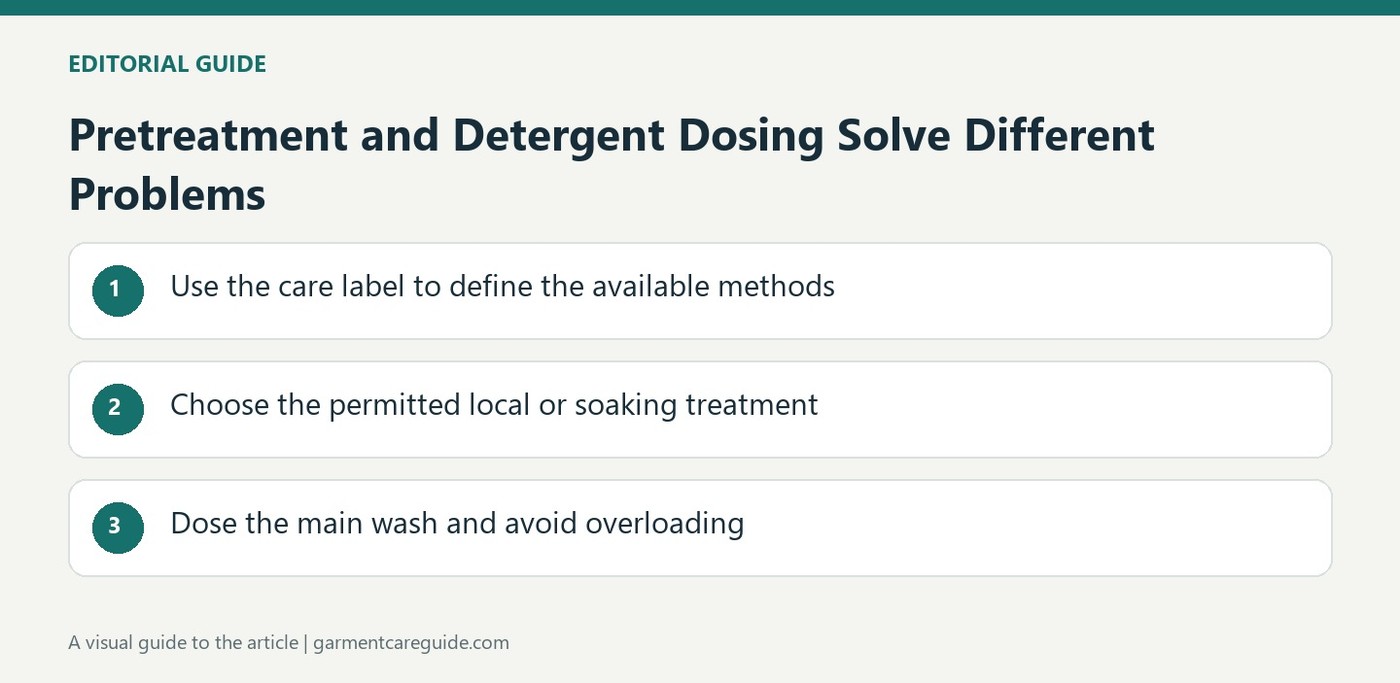
Use the care label to define the available methods
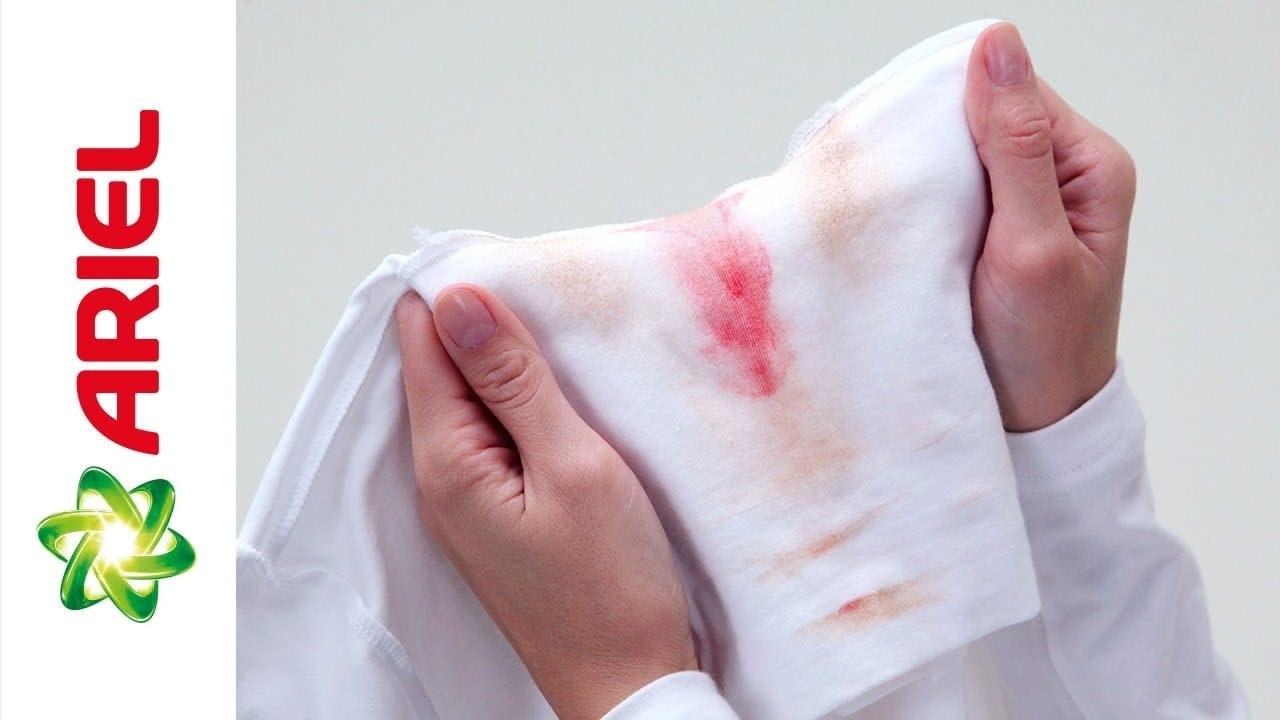
Ariel's stain-removal routine begins with the garment's care information, including what it should not receive and the allowed temperature range. This is a useful boundary before choosing a pretreatment. A visible stain does not make every detergent application or soaking method appropriate. Identify the fabric's requirements and the type of mark, then consult the matching product directions. The guide presents a general sequence rather than a guarantee that one technique removes every stain from every textile in a single wash.
Choose the permitted local or soaking treatment
The source describes a powder-detergent solution for suitable soaking and a direct liquid-detergent application for suitable local treatment. These approaches differ in how the product reaches the stain. Powder needs to be mixed properly into water, while direct treatment requires a formulation intended for that use and a fabric that tolerates it. Gentle working may be suitable in some cases, but it should not override a garment's restrictions on rubbing or wet treatment. Use the relevant contact time and dose rather than improvising a stronger concentration because the mark appears persistent.
Dose the main wash and avoid overloading
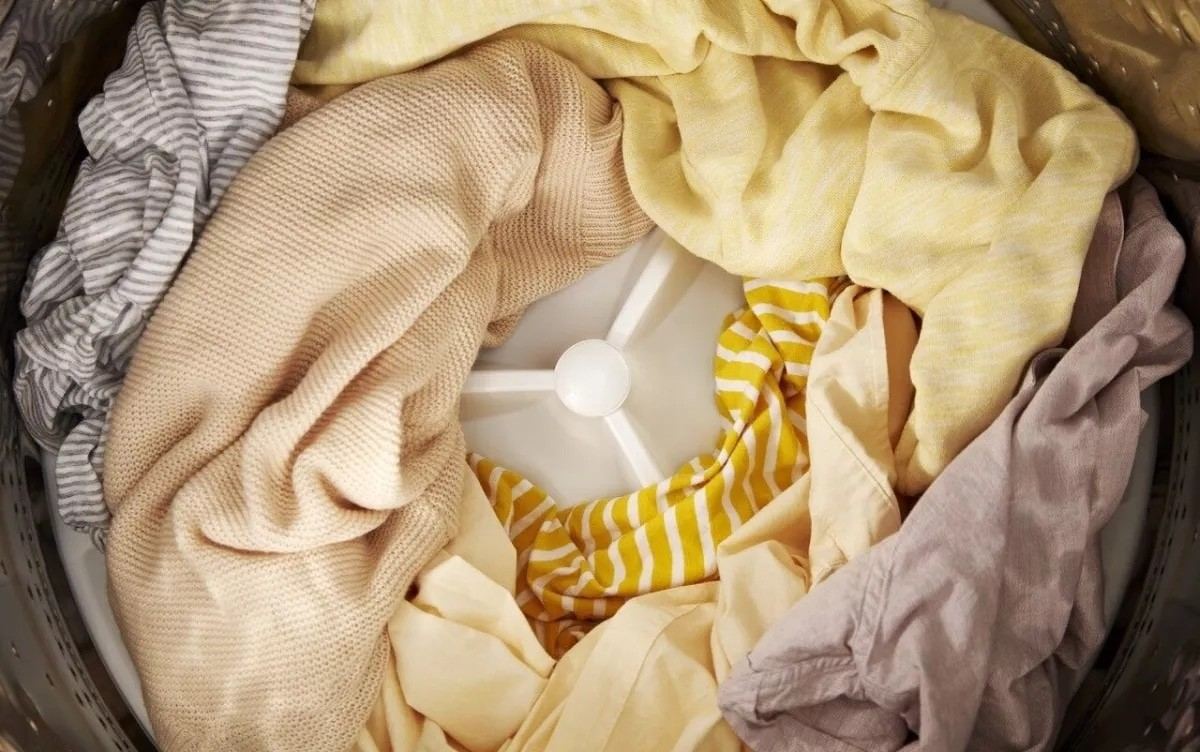
After preparation, Ariel recommends washing the treated item with compatible clothing and leaving adequate room in the drum. The wash dose depends on factors including soil, load size and water hardness, as described on the product pack. Pretreatment does not remove the need to consider the full load's requirements, and a larger dose is not an automatic improvement. Unload promptly when the cycle ends and inspect the result before finishing the garment. Keeping pretreatment, load preparation and wash dosing as distinct decisions makes the routine easier to apply accurately.
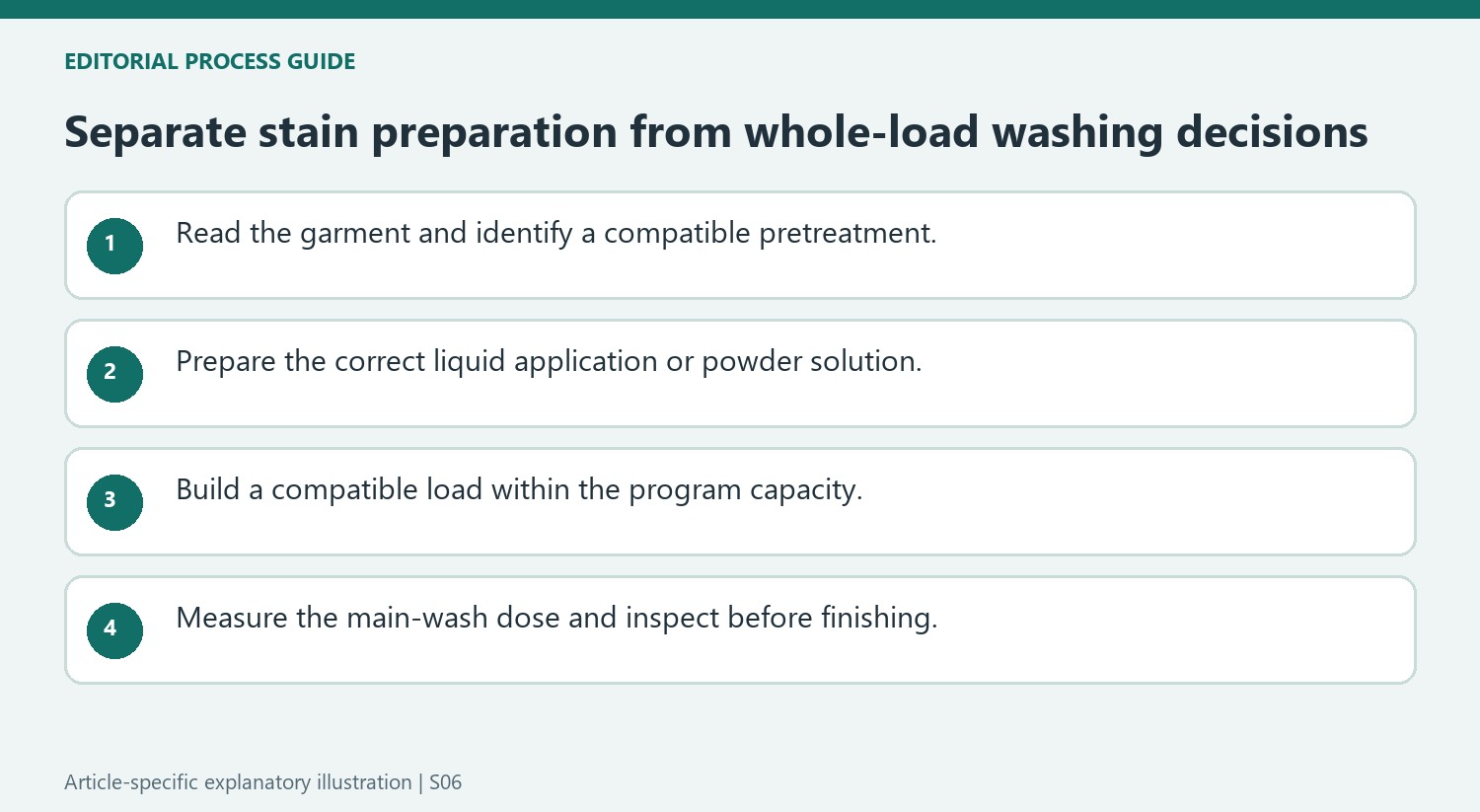
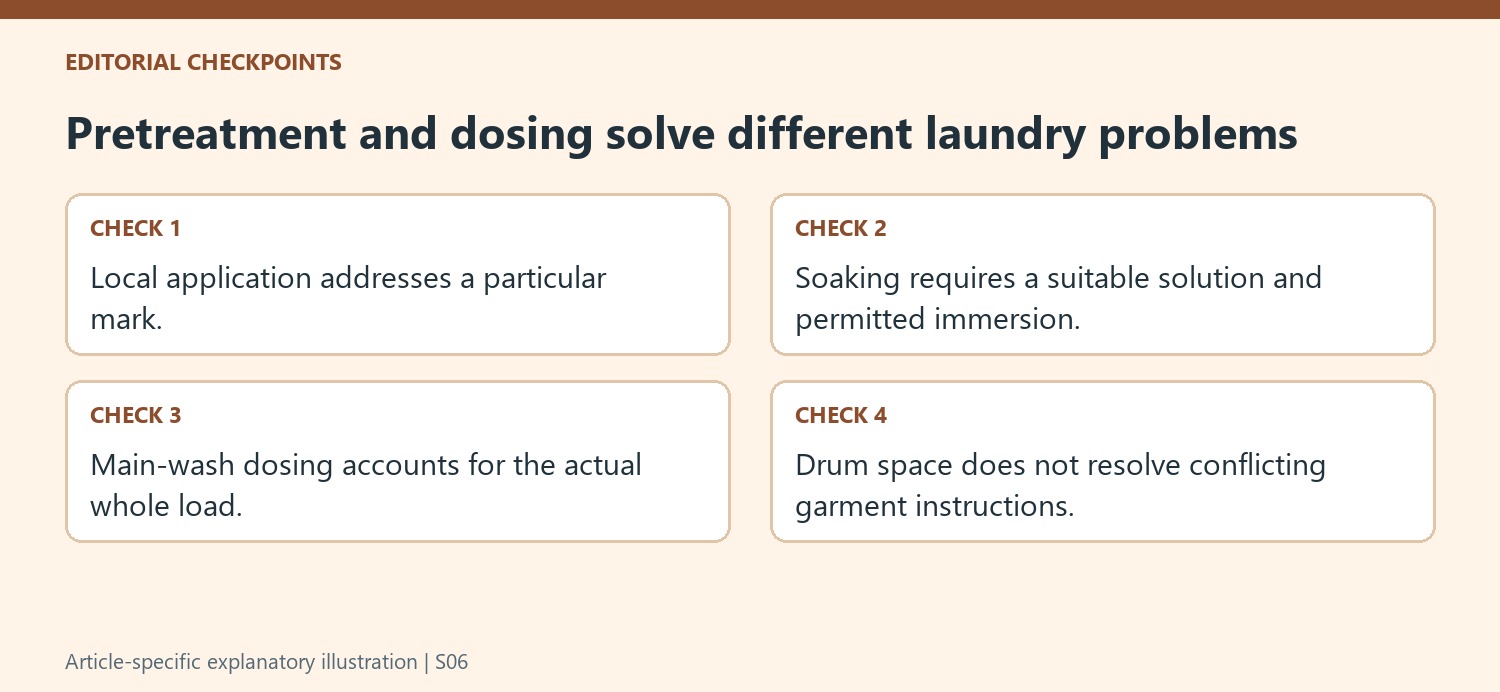
A local stain treatment and the full-load dose have different jobs
Ariel separates pretreatment from the later detergent dose for the washer. The first addresses a particular mark by a suitable direct application or soaking method. The second is chosen for the compatible load, taking account of the product directions and relevant factors such as size, soil, and water hardness. Do not assume that treating one spot settles the amount needed for everything else, or that a difficult mark justifies an unrestricted increase in both stages. Read the current pack and choose a method intended for the actual product form. This makes the distinction practical: a stain-focused preparation can remain controlled while the main wash receives the appropriate measured treatment for the whole load.
Choose the preparation route before the item is wet
The source describes different approaches for powder and liquid. A powder intended for soaking must be mixed into an appropriate solution, while a liquid intended for direct treatment can be applied to a suitable mark according to its directions. These methods require different handling and cannot be interchanged simply by using the same nominal amount. Confirm that the garment allows the proposed wet treatment, chemical exposure, and any rubbing. If the fabric is sensitive or the instruction excludes home cleaning, consult relevant guidance before beginning. Preparing the allowed route first avoids the temptation to improvise stronger concentration or force once the garment is already wet and the stain has not immediately changed.
Adequate loading space does not remove care incompatibilities
Ariel cautions against overloading after pretreatment, but spare drum space is not the only requirement for adding more clothing. Compare the other items' colors, construction, and permitted settings with the treated garment. A delicate piece still needs its allowed process even if its stain has received attention beforehand. Follow the washer's own capacity guidance for the chosen program, then use the directed main-wash dose. At the end, unload promptly and assess the mark before finishing. This links the three decisions without collapsing them into one: an appropriate pretreatment, a compatible load of suitable size, and a correct wash dose each solve a separate part of the task and remain subject to the same garment limits.
References
- Ariel's stain removal efficacy. Ariel.