GarmentCare Guide

Describe the mark before reaching for a product
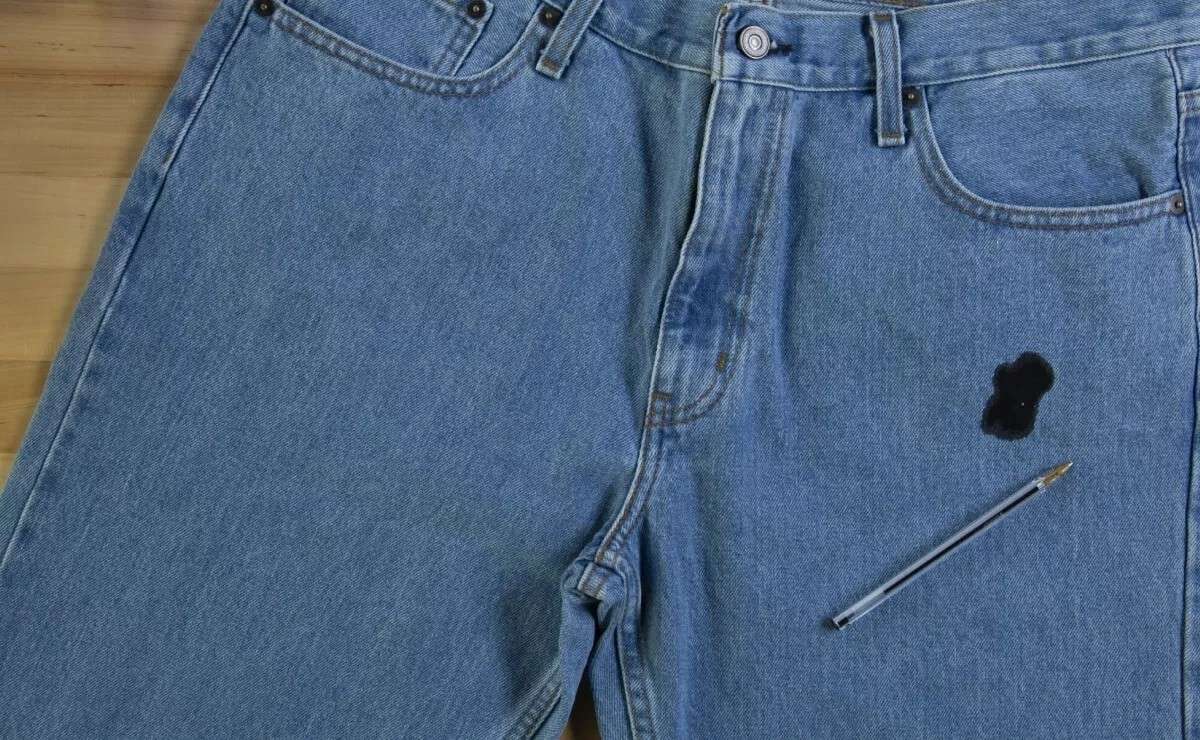
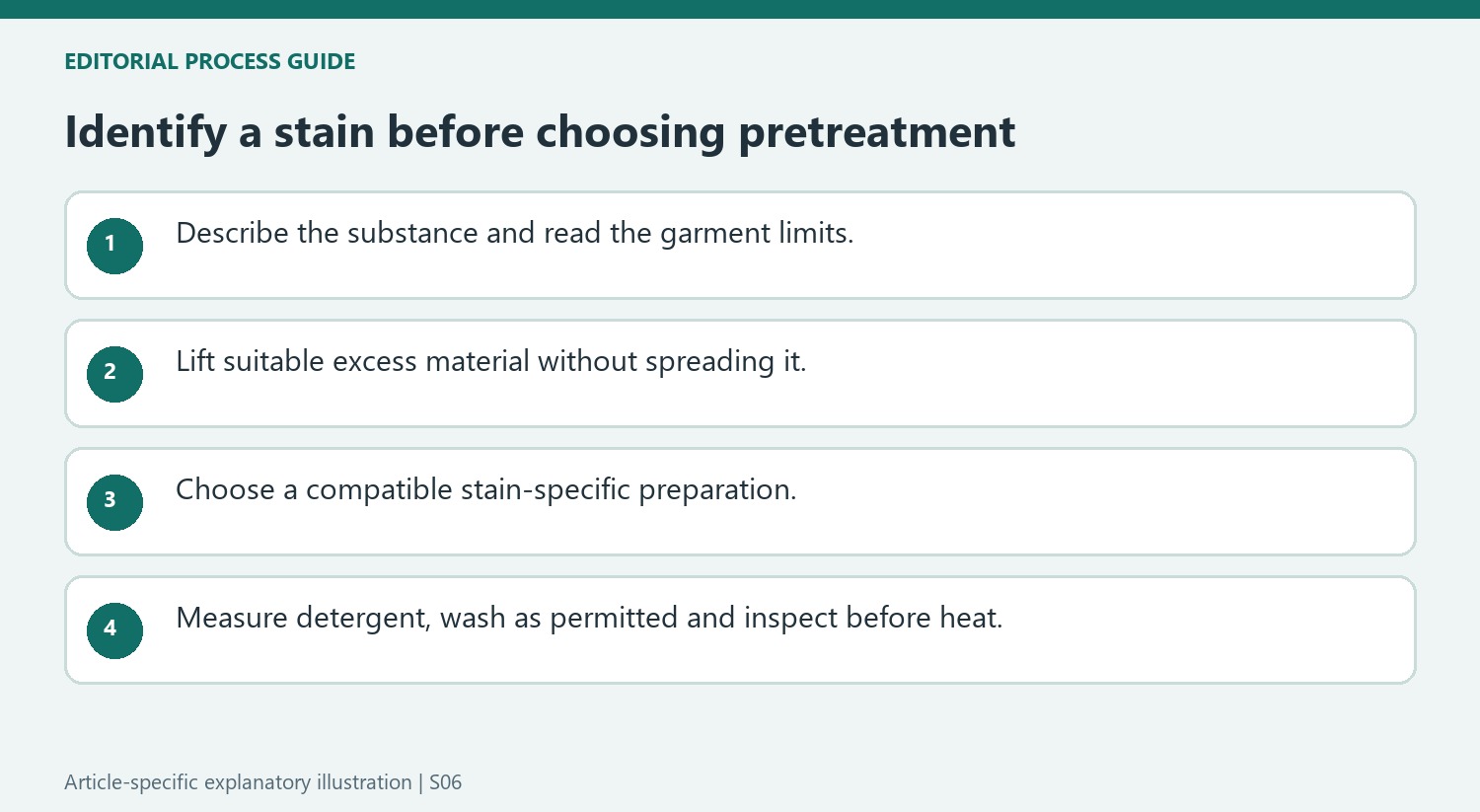
Tide's stain-removal guide begins by distinguishing types of stains. Oil, body soil and clay or dirt can call for different pretreatment approaches, even when they create similarly dark marks on clothing. Identify the substance and read the garment's care label before choosing a method. The cleaning task has two parts: what may loosen the stain and what the finished fabric can tolerate. A method aimed at grease may not suit another stain, while a delicate surface can place limits on rubbing, soaking or the product itself.
Remove excess material without spreading it
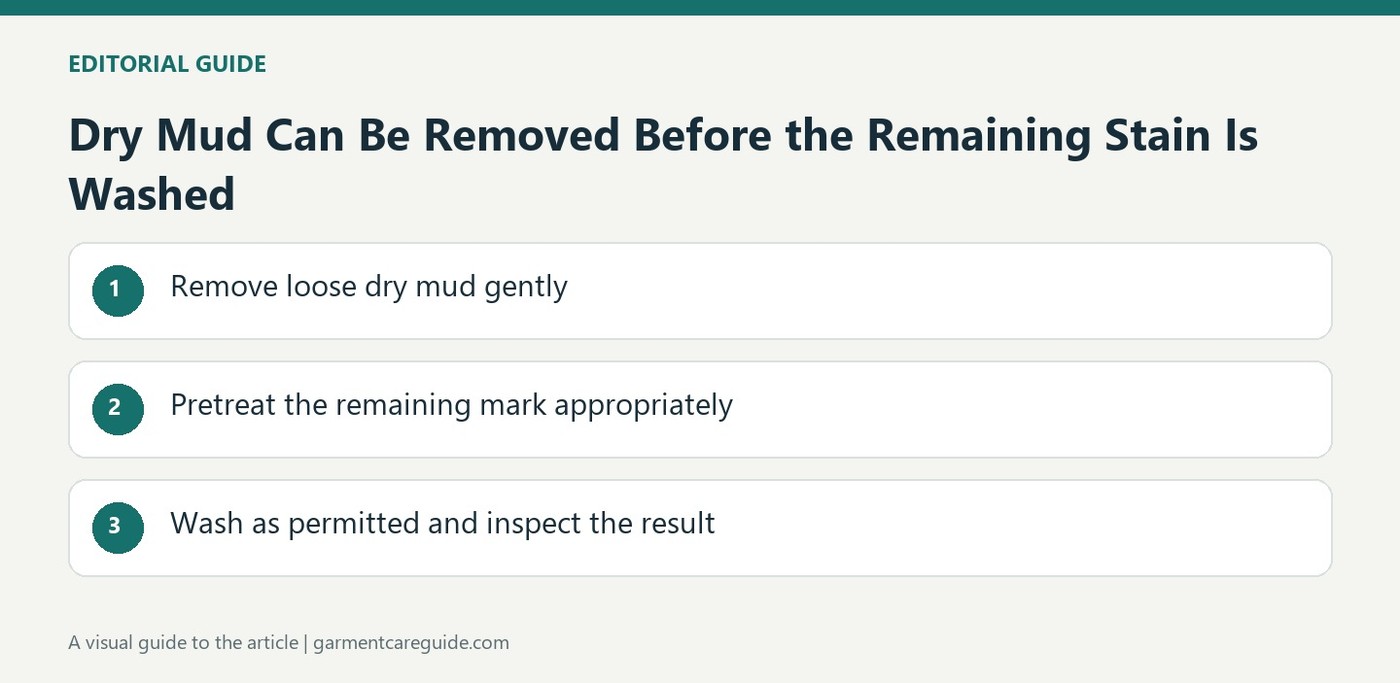
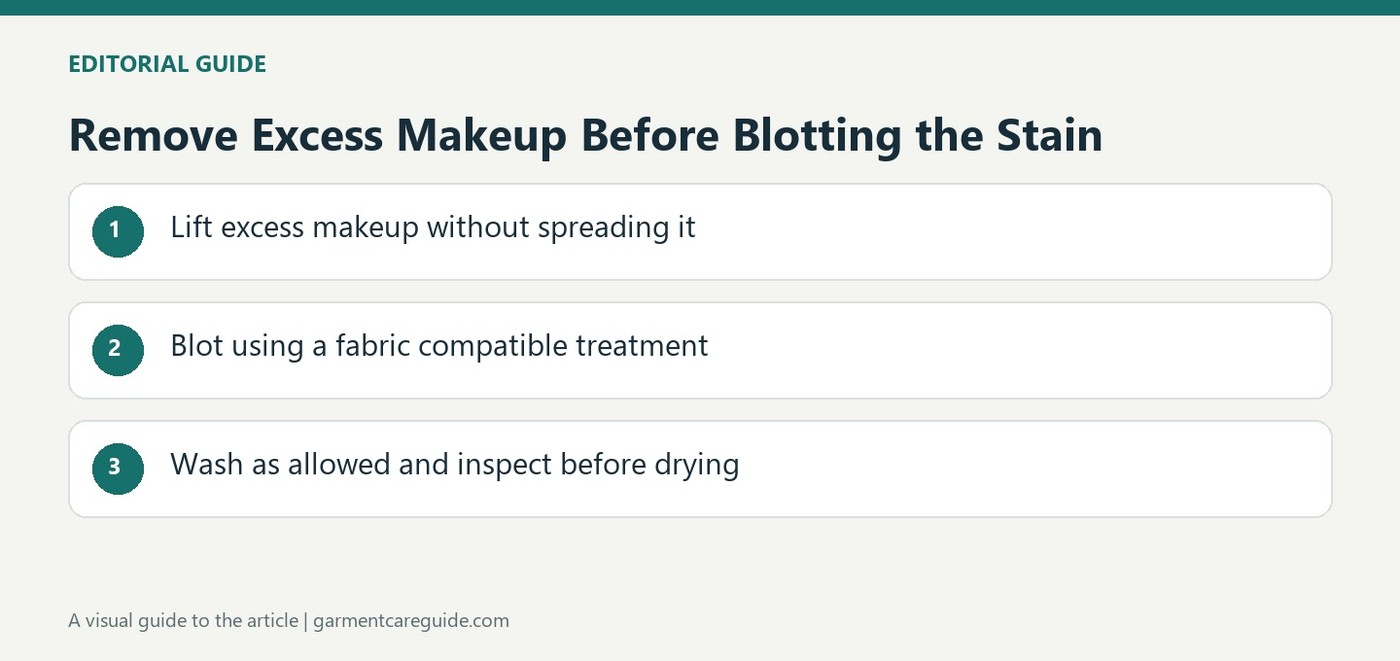
The source recommends taking away surplus stain material before pretreatment, using an appropriate tool such as a paper towel or a blunt utensil depending on the residue. Choose gentle handling suited to the fabric. Its subsequent methods vary: some marks use detergent pretreatment, others a permitted soaking solution or a cold rinse. These are alternatives, not a recipe to combine all available household cleaners. Follow the selected product's instructions and avoid assuming that a brush is suitable for every garment merely because it appears in a general stain guide.
Measure detergent and check the result before heat
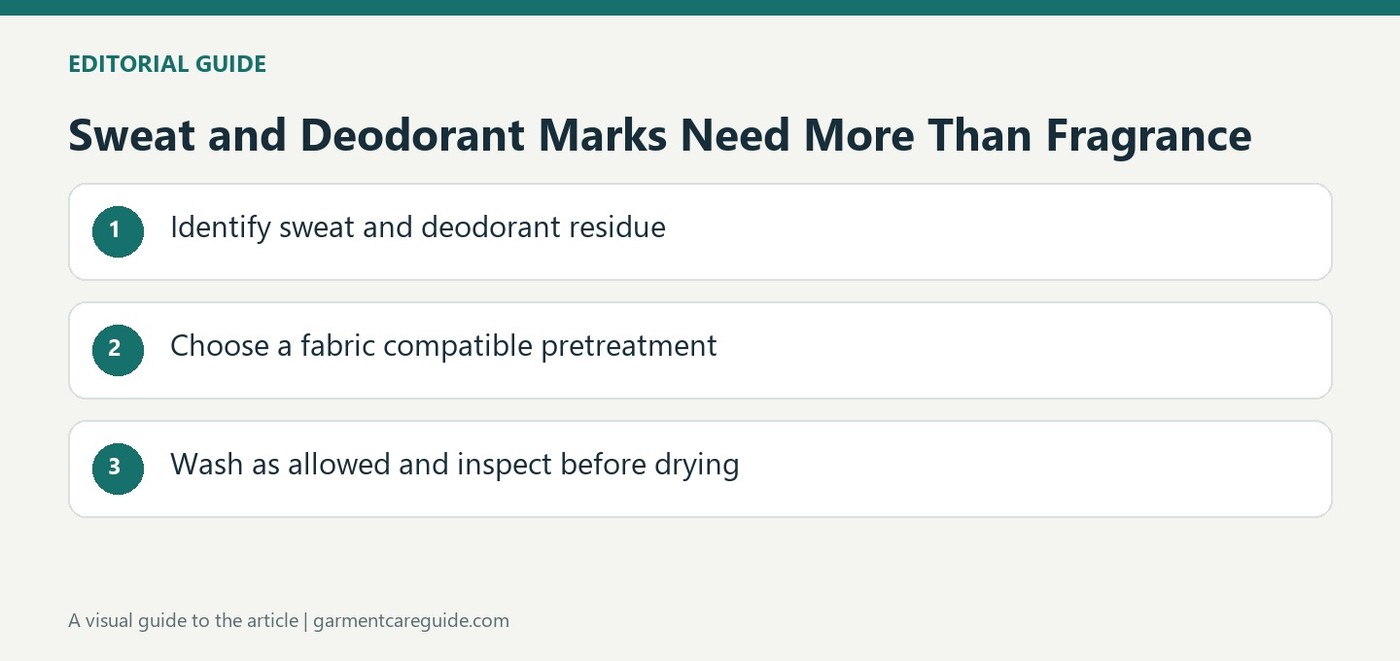
Tide advises dosing according to the pack and load, then choosing the washing temperature and cycle from the care label. The final checkpoint comes before drying: inspect the garment and keep a remaining stain from receiving dryer heat while an appropriate further treatment is considered. Drying is therefore part of the stain-removal decision, rather than an automatic consequence of the washer finishing. The useful routine is identification, controlled excess removal, compatible pretreatment and permitted washing, followed by an assessment of the actual result before the item is finished.
Identify both the substance and the surface before acting
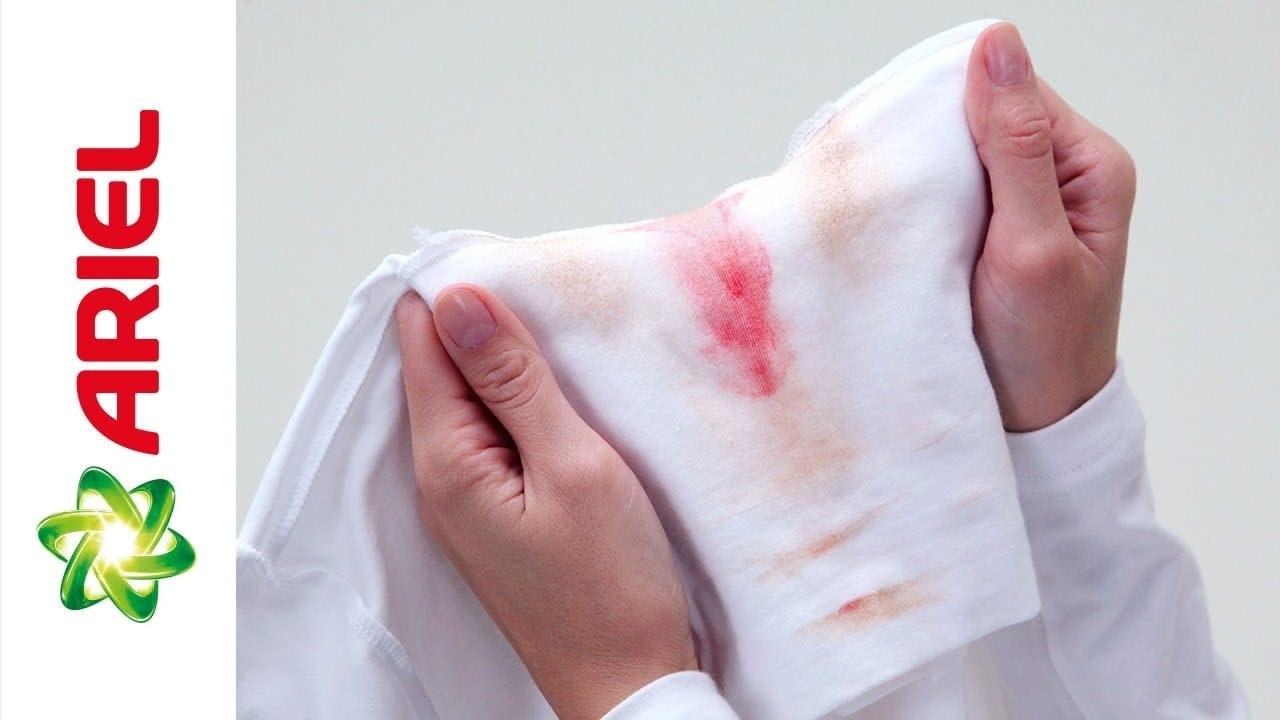
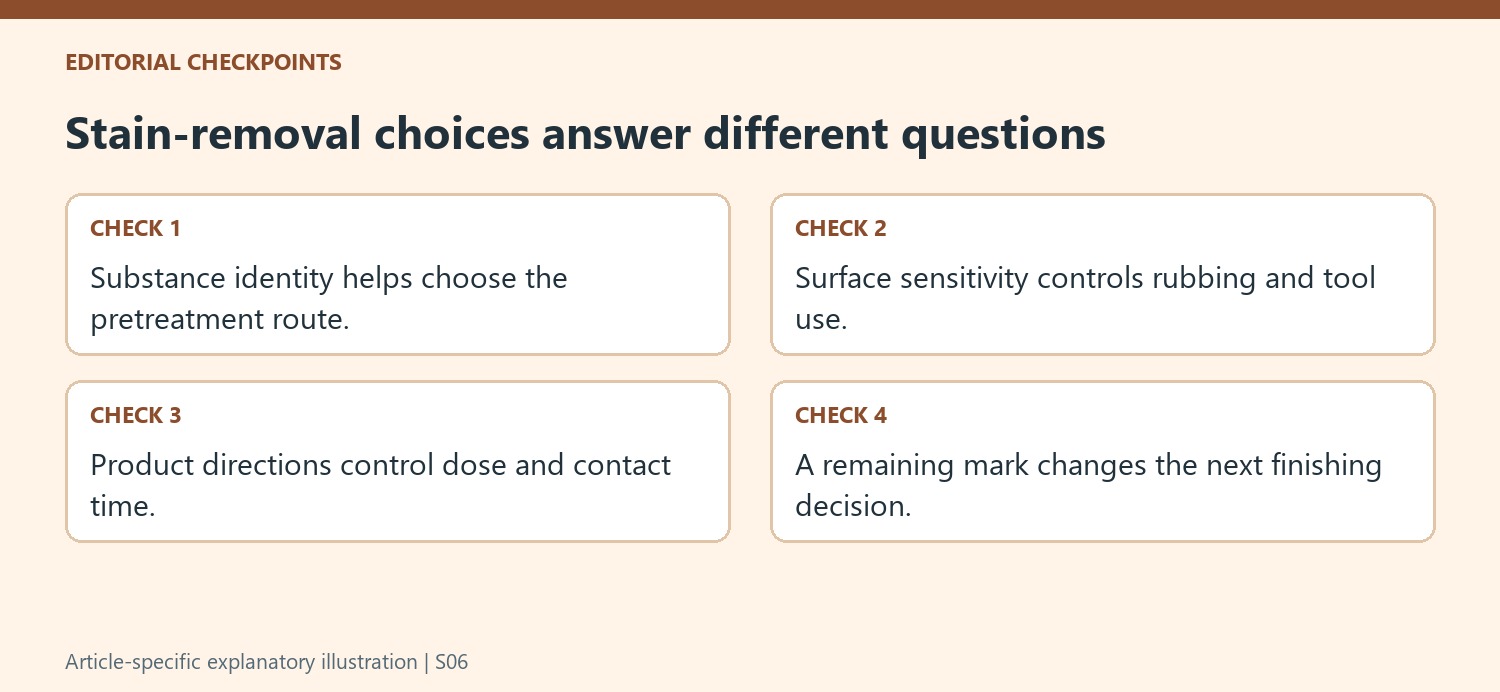
Tide distinguishes oily residues, body soil, clay or dirt, and other marks because they can need different preparation. Describe what caused the stain where possible, then identify what the garment can tolerate. The same dark patch could come from grease or ground-in dirt, while the same substance can land on a sturdy cotton item or a sensitive finished surface. A useful method needs to fit both sides of that pairing. If the stain is unknown, avoid treating every possibility in succession with whatever product is nearby. Consult appropriate guidance and read the product's permitted uses. The objective is a deliberate treatment choice, not simply the strongest available action against the darkest part of the fabric.
Excess removal should not become rough scraping
The source suggests removing surplus material before pretreatment, using tools appropriate to the residue. Choose a gentle approach that lifts what can be removed without pushing it farther into the surface or abrading the garment. A paper towel, blunt utensil, and brush perform different actions and should not be treated as interchangeable options for every textile. Check the garment's restrictions before rubbing or brushing, particularly on a fine finish. Once excess material is removed, select a compatible pretreatment for the identified stain. This gives the first stage a limited purpose: reduce removable residue so the next treatment can address what remains, without creating a second problem through forceful mechanical handling.
Pretreatment alternatives should not become a mixture of cleaners
Tide's overview includes detergent application, soaking, and cold rinsing for different categories. Read these as choices tied to the stain and fabric, not instructions to combine every method or chemical in one bowl. Follow the selected product's dosing and contact-time directions and keep the permitted main wash separate from the local preparation. Then examine the actual result before drying. A persistent mark may need another compatible treatment, while dryer heat can make later removal harder. This final inspection completes the same reasoning that began with identification: determine what is present, choose an allowed response, carry it out correctly, and assess the outcome before committing the garment to a finishing process that may reduce later options.
References
- How to remove stains. tide.com.