GarmentCare Guide
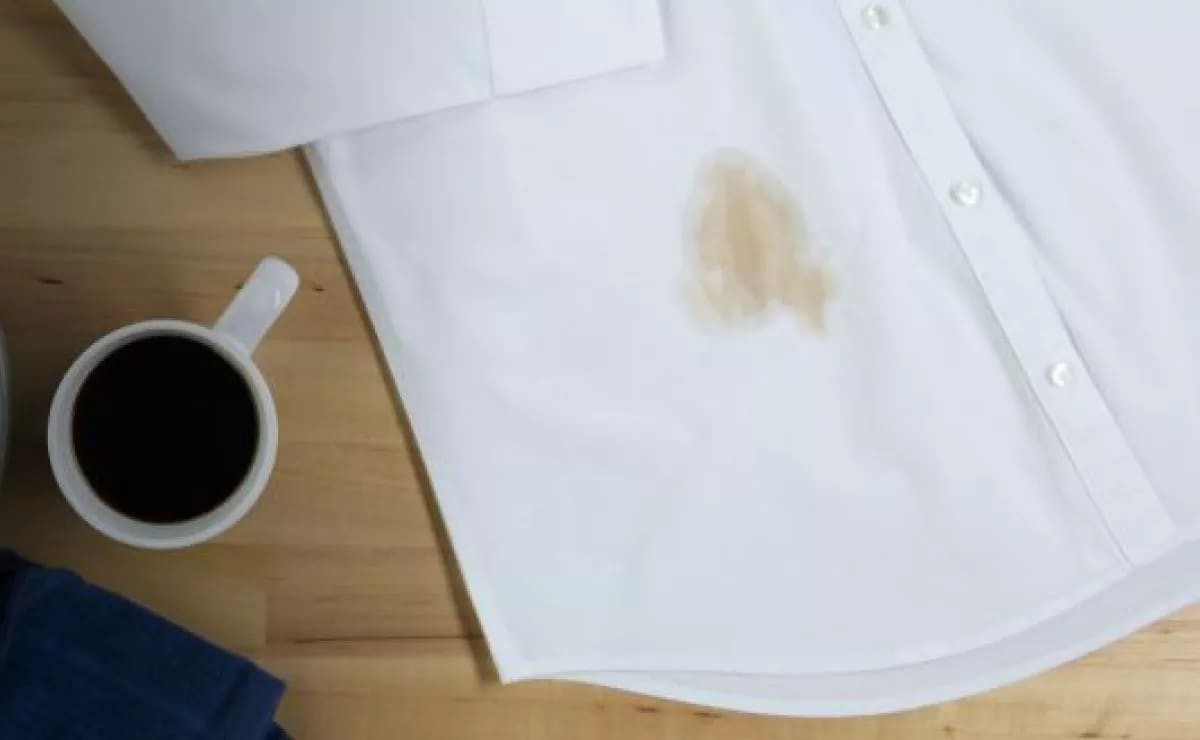
A single drink can land on different textiles
Maytag's coffee-stain guide separates its advice for materials such as cotton and polyester from its approach to more sensitive fabrics. That organization is useful because stain identity alone does not determine the cleaning method. Read the garment's care label before deciding whether to rinse, soak or machine wash it. Its fibers, dyes and construction can limit the allowed treatment. A white color or a familiar clothing category should not be treated as permission for bleach, enzymes or maximum heat without checking the actual item.
Choose a compatible pretreatment rather than combining them
For suitable sturdy washable fabrics, Maytag describes cold rinsing followed by a small amount of appropriate enzyme detergent before washing. Its sensitive-fabric approach instead discusses a mild detergent solution and gentle handling. Those are alternatives to select according to compatibility, not stages to apply indiscriminately to the same garment. Wool, for example, needs a detergent suitable for that fiber rather than an assumption that every stain-focused formulation can be used. Keep any product's contact time and dose within its directions, with the care label controlling the allowed washing process.

Work carefully and inspect before drying
Maytag recommends working from the outside of a mark inward to help avoid spreading it. After the permitted wash, inspect the area and repeat a compatible treatment if necessary before applying dryer heat. The guide emphasizes that a remaining coffee stain can become harder to remove after heated drying. Choose the natural drying position or approved machine setting appropriate to the garment once the result has been assessed. This makes the method a sequence of material-aware decisions, rather than a universal claim that every coffee mark can be removed with one detergent and one wash temperature.
Choose between material-specific routes instead of stacking them
Maytag separates a cold-rinse and enzyme-detergent approach for suitable washable fabrics from a mild-solution approach for more sensitive materials. Those routes are alternatives to evaluate against the actual garment. Do not apply every listed method in succession merely because they appear on the same page. Read the care label and product suitability first, particularly for fibers such as wool that need an appropriate detergent. A sensitive-skin or gentle fragrance description does not alone establish textile compatibility. The completed item's dyes, finishes, and construction also remain relevant. Selecting one supported route is more controlled than combining several household stain ideas whose individual compatibility has not been established for the garment carrying the coffee mark.
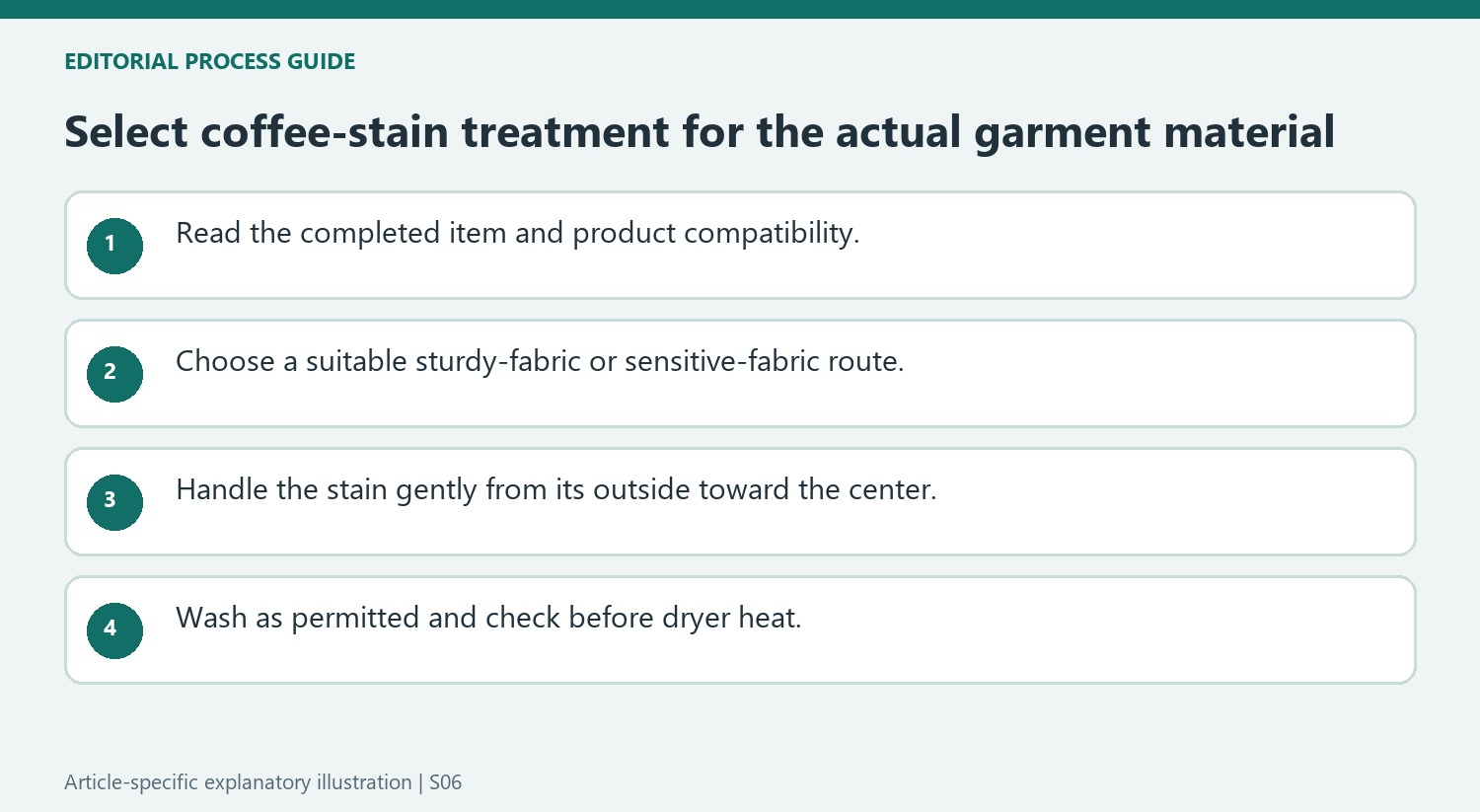
Control the direction and force of local handling
The guide recommends working from the outside of a stain toward the center and avoiding rubbing the mark further into the fabric. Use gentle handling suited to the surface when removing excess liquid or applying a permitted product. The aim is to address the affected area without spreading the visible boundary or creating mechanical damage. A broad fabric category such as a shirt does not establish that brushing or strong rubbing is acceptable. Follow both garment limits and the selected treatment directions, then proceed to the allowed wash. This keeps the local action proportional to the task instead of treating increased force as a universal response whenever a coffee stain seems slow to change.
Bleach suitability needs a check of its own
Maytag mentions chlorine and oxygen bleaching options in different parts of its guidance, with fabric suitability important to their use. Do not infer permission from whiteness or from an oxygen product being described as generally color compatible. Read the garment's bleaching symbol and the actual product directions before adding either type. If the treatment is not permitted, choose an appropriate alternative route rather than assuming a smaller amount removes the conflict. After washing, inspect the mark before dryer heat and repeat only compatible treatment where appropriate. This separates chemical permission from washing permission and from the final drying decision, keeping a stain-focused routine from overriding the limits that still apply to the completed article.