GarmentCare Guide
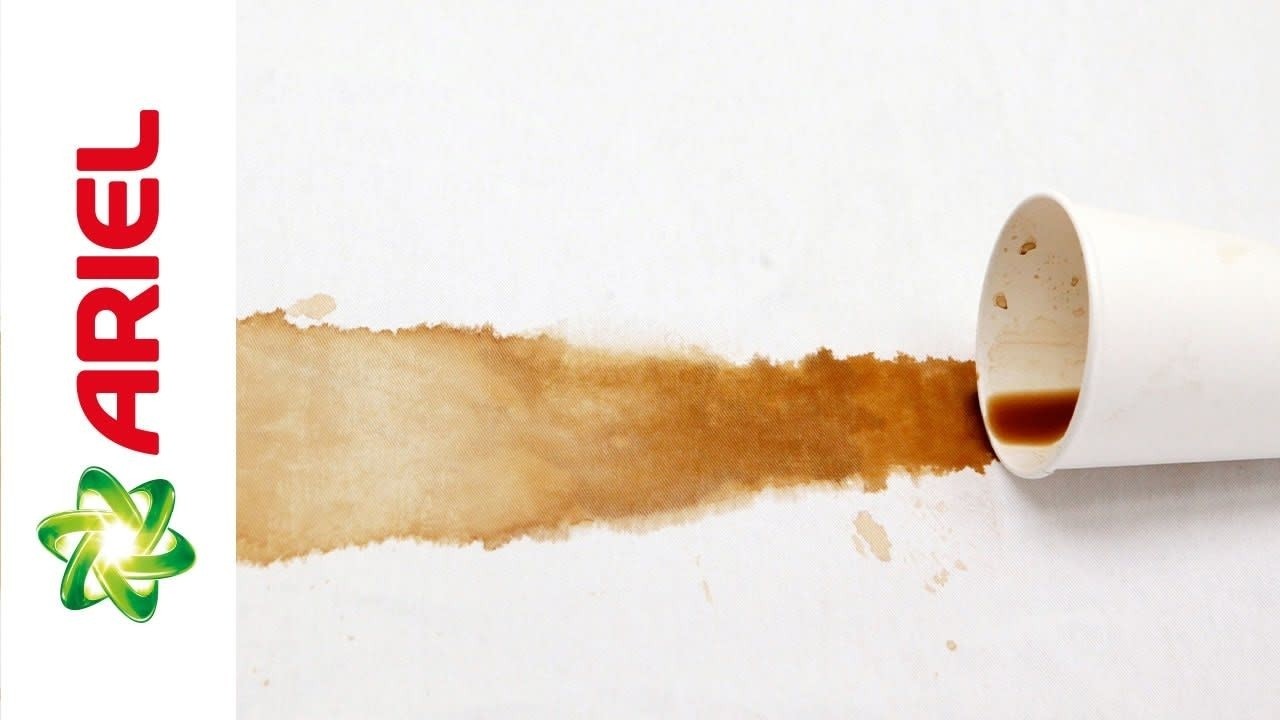
The stain and fabric both influence treatment
Ariel identifies coffee and tea as stains that can benefit from pretreatment, especially when they have not been addressed promptly. Its guide uses a powder-detergent soaking routine for suitable clothing. Before adopting that method, read the garment label and the detergent instructions. A detergent containing bleaching ingredients is not appropriate for every fiber, finish or dye. The existence of a drink stain does not override those restrictions. Confirm that both soaking and the selected product are permitted for the particular item before preparing a treatment bath.
Dissolve the product before adding the garment
The source describes mixing powder into water until dissolved, then immersing suitable stained garments for the directed treatment period. Product formulations and doses differ, so use the current pack directions rather than treating a generic scoop size as universal. Keep the water within the garment's allowed temperature range. An appropriate soak prepares the stain for washing; it is not a reason to use forceful twisting on a fabric that cannot tolerate it. Remove surplus solution in a way consistent with the material's care instructions before transferring the item to a compatible load.
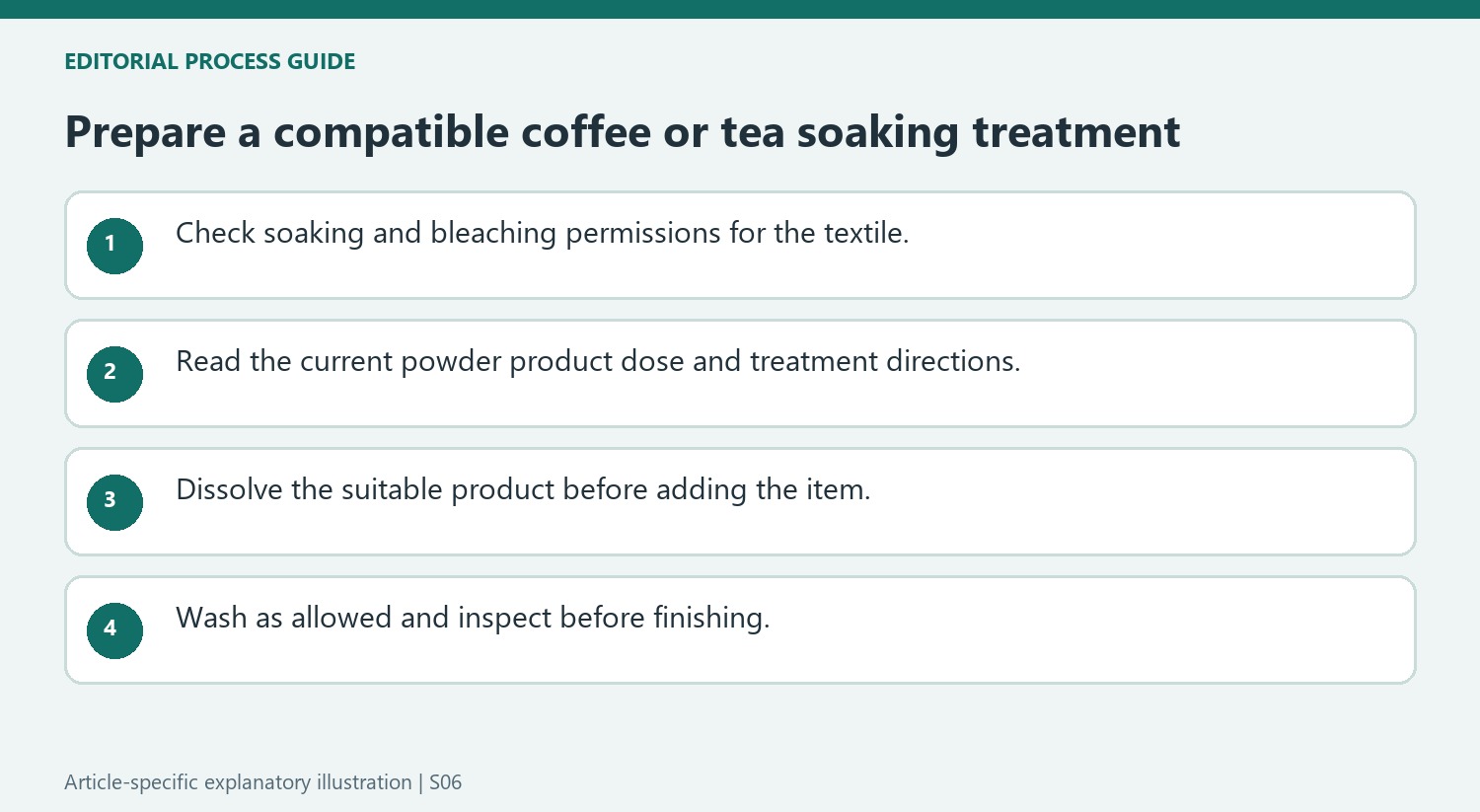
Complete the wash and assess the result
Ariel then recommends the normal permitted wash, with correct detergent dosing and prompt unloading. Check the treated area before deciding on the next finishing step, particularly where heat could make a persistent mark harder to remove. If the item needs hand washing or professional cleaning, use the relevant route instead of forcing it into the soaking-and-machine-wash example. The guide's useful sequence is preparation, appropriate pretreatment and allowed cleaning. Keeping those stages tied to the garment makes the method more precise than assuming every coffee or tea spill calls for the same warm bath and powder product.
The proposed powder treatment includes a chemical compatibility question
Ariel describes coffee and tea as stains that can respond to its powder-detergent pretreatment, but notes a formulation containing bleaching ingredients. That detail makes product suitability important before any water is prepared. Check the garment's bleaching and washing instructions and the detergent's stated uses. A stain that may respond to a chemical action does not establish that every dyed or delicate textile can tolerate the same product. Keep those two questions separate. If the proposed soak conflicts with the garment's restrictions, use relevant item-specific guidance instead of weakening or extending an unsuitable mixture by guesswork. The source's method is an example for compatible washable clothing, not a universal bath for every fabric carrying a drink mark.
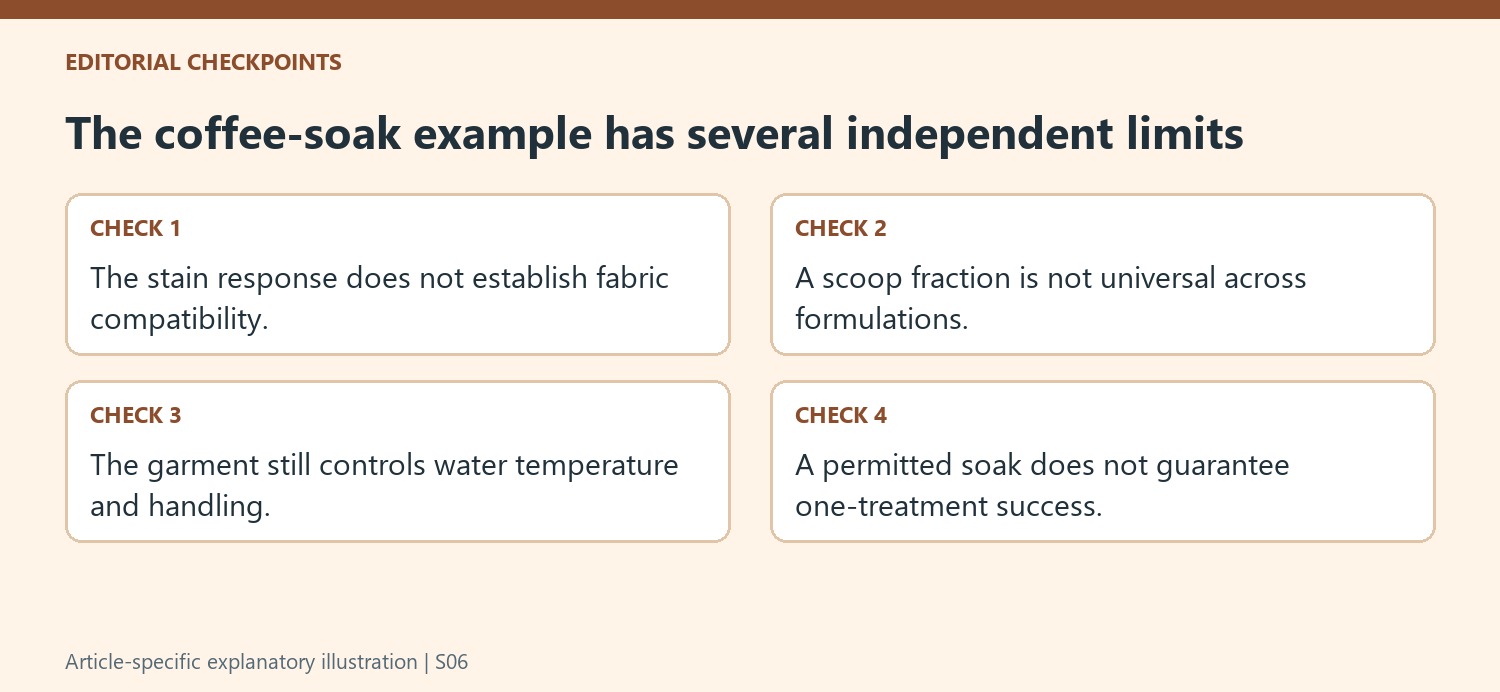
Dissolution and dosing belong before the item enters the bath
The guide mixes the powder into water before adding suitable stained clothing. Follow the current product directions for the concentration, treatment period, and appropriate water conditions rather than treating a generic scoop fraction as a fixed unit across formulations. Keep the water within the actual garment's limits. Fully preparing a compatible solution first makes the intended treatment clearer than adding powder directly onto an already submerged delicate item. Do not assume that a longer soak compensates safely for uncertainty about dose. When the treatment is complete, remove surplus solution using handling appropriate to the material; a general instruction to wring cannot override a garment's restriction against twisting. The bath and the transfer both need to suit the same textile.
A compatible soak is preparation rather than a guaranteed result
Ariel follows pretreatment with the garment's ordinary permitted wash and correct detergent dosing. Read the sequence as a process to assess, not as proof that every coffee or tea stain will disappear in one attempt. Unload promptly and examine the area before finishing. A remaining mark may need further compatible advice, especially before any heat that could make subsequent removal more difficult. The garment's drying method remains relevant regardless of how successful the soaking stage appears. This gives the routine continuity: select a suitable product, prepare the permitted treatment, wash correctly, and inspect the actual outcome. None of those stages should be skipped because the preceding one sounded particularly effective in a general stain guide.