GarmentCare Guide
A broad fiber family appears in varied garments
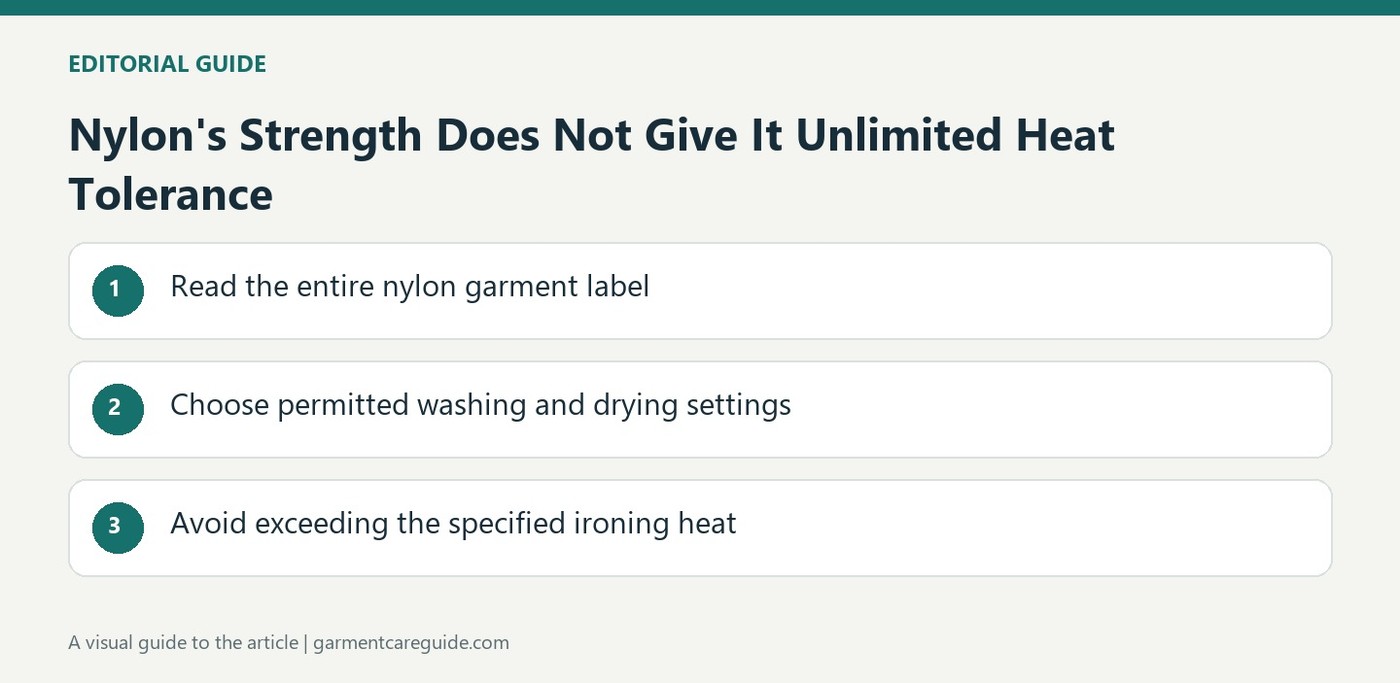
Nylon belongs to the polyamide family and appears in many types of clothing, including hosiery, blouses, underwear and some outerwear. Ariel's fabric guide also notes that nylon is often blended with elastane. These uses involve different constructions and care needs, so a reputation for fiber strength should not be treated as a complete laundry instruction. Read the finished garment's care label before choosing the treatment. A sturdy-looking nylon item and a fine nylon garment may not permit the same washing action, temperature or drying method.
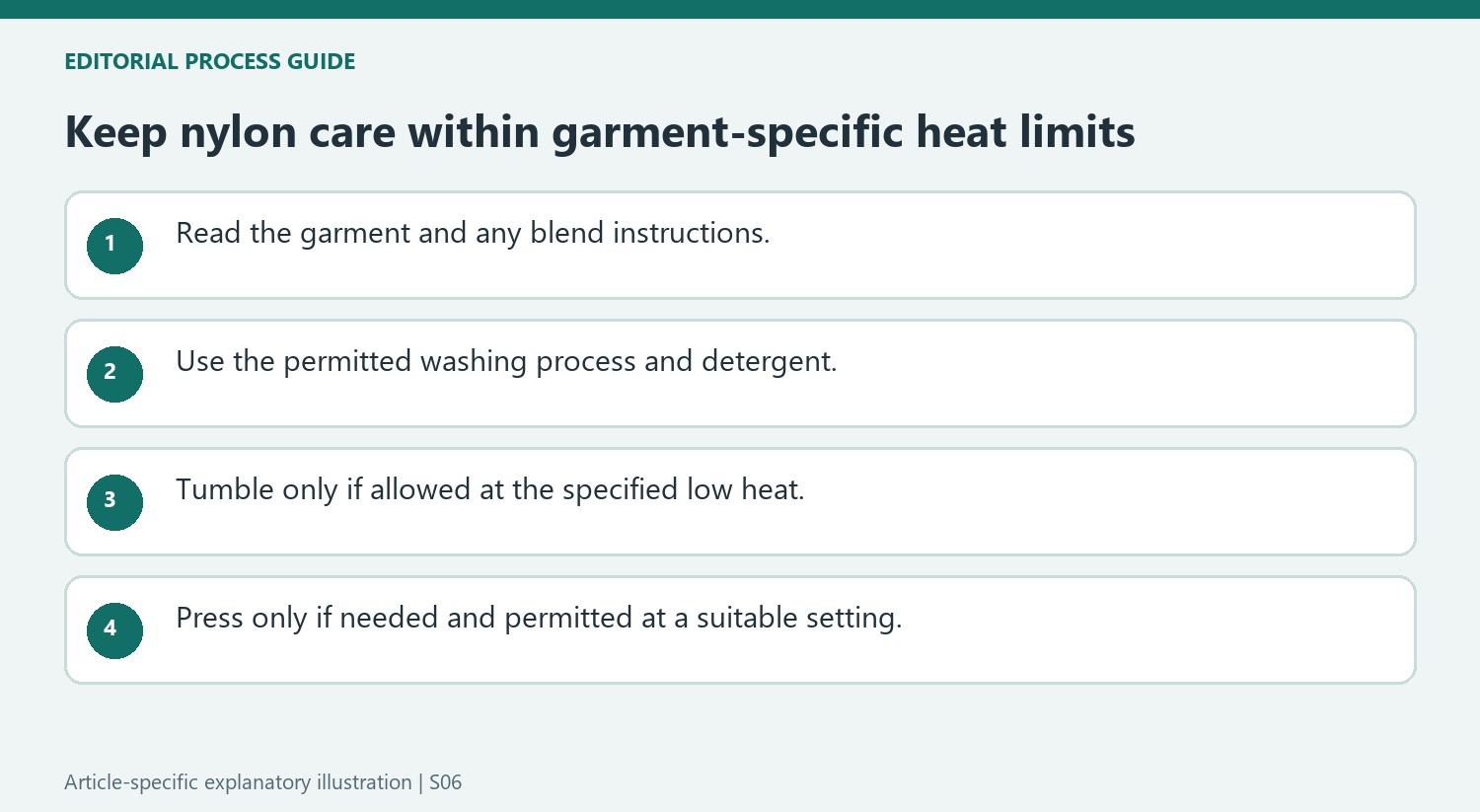
Wash only by the method the item permits
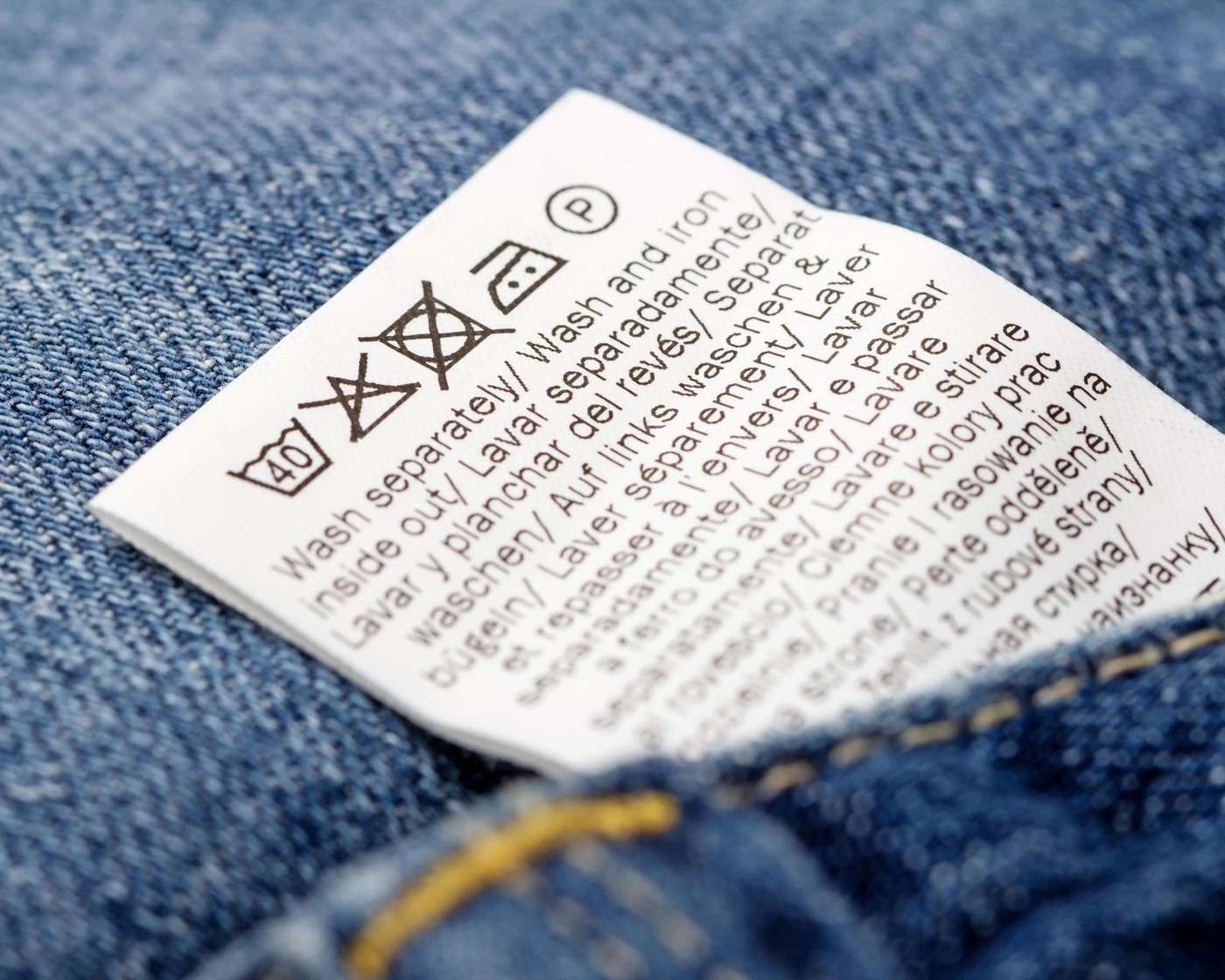
Ariel recommends checking the label because nylon garments can contain other fibers. Where machine washing is allowed, select the permitted cycle and water temperature, then use a suitable detergent according to its directions. The blend and garment details remain relevant throughout that decision. Do not assume a setting suitable for one synthetic item can be copied to another without checking. Sorting by compatible care requirements helps keep delicate nylon structures out of loads whose weight or mechanical treatment would be unsuitable, even when the colors appear to match.
Control dryer and iron heat separately
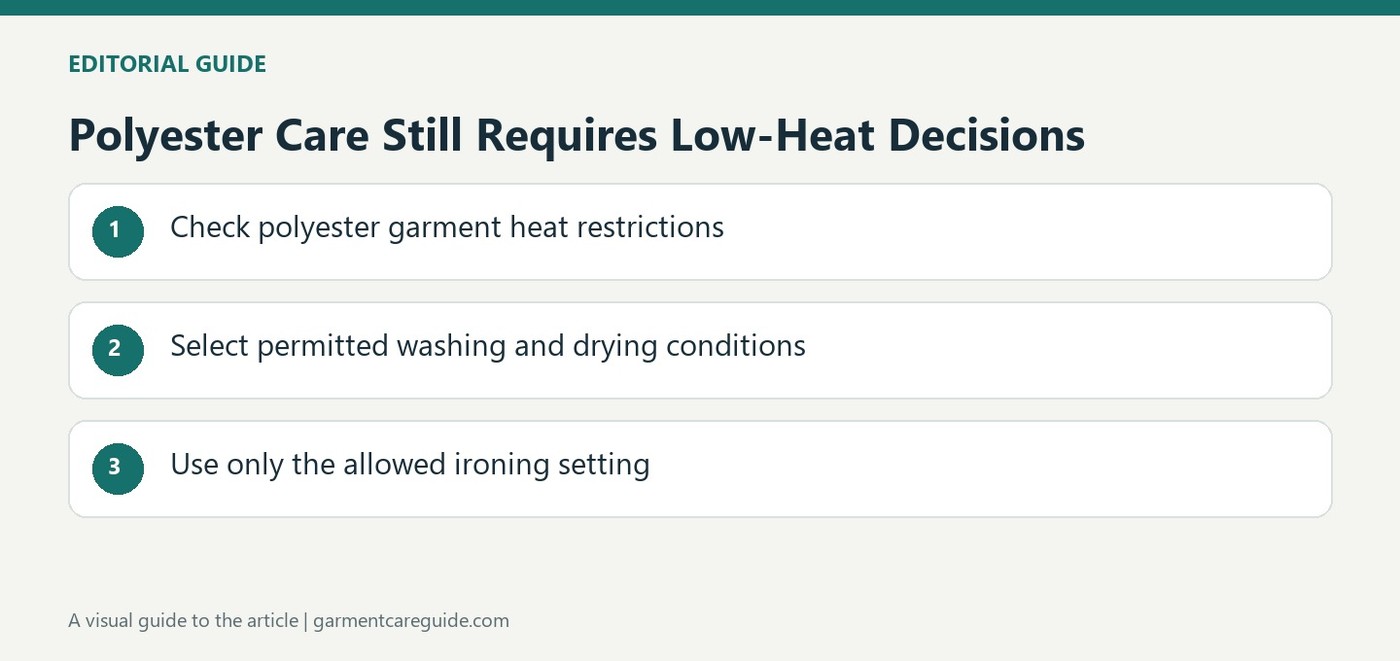
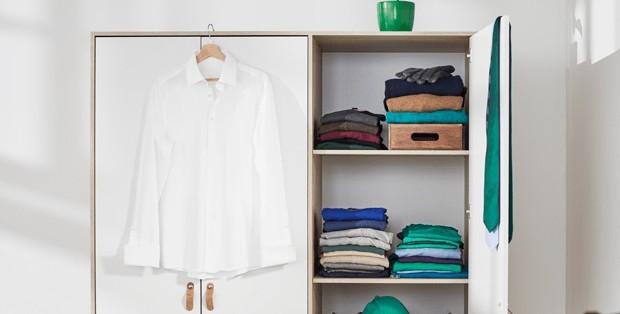
For nylon clothing that permits tumble drying, the source recommends a low-temperature setting. Ironing needs its own permission and a low setting because high temperatures can damage or melt nylon. This provides a clear example of why durable does not mean resistant to every form of heat. Check the iron symbol rather than inferring it from washing permission. Ariel also recommends cool, dry storage away from direct sunlight, with folding or hanging selected for the garment. A consistent routine keeps the material's heat sensitivity in view after the wash has ended.
Separate fiber strength from the completed article's limits
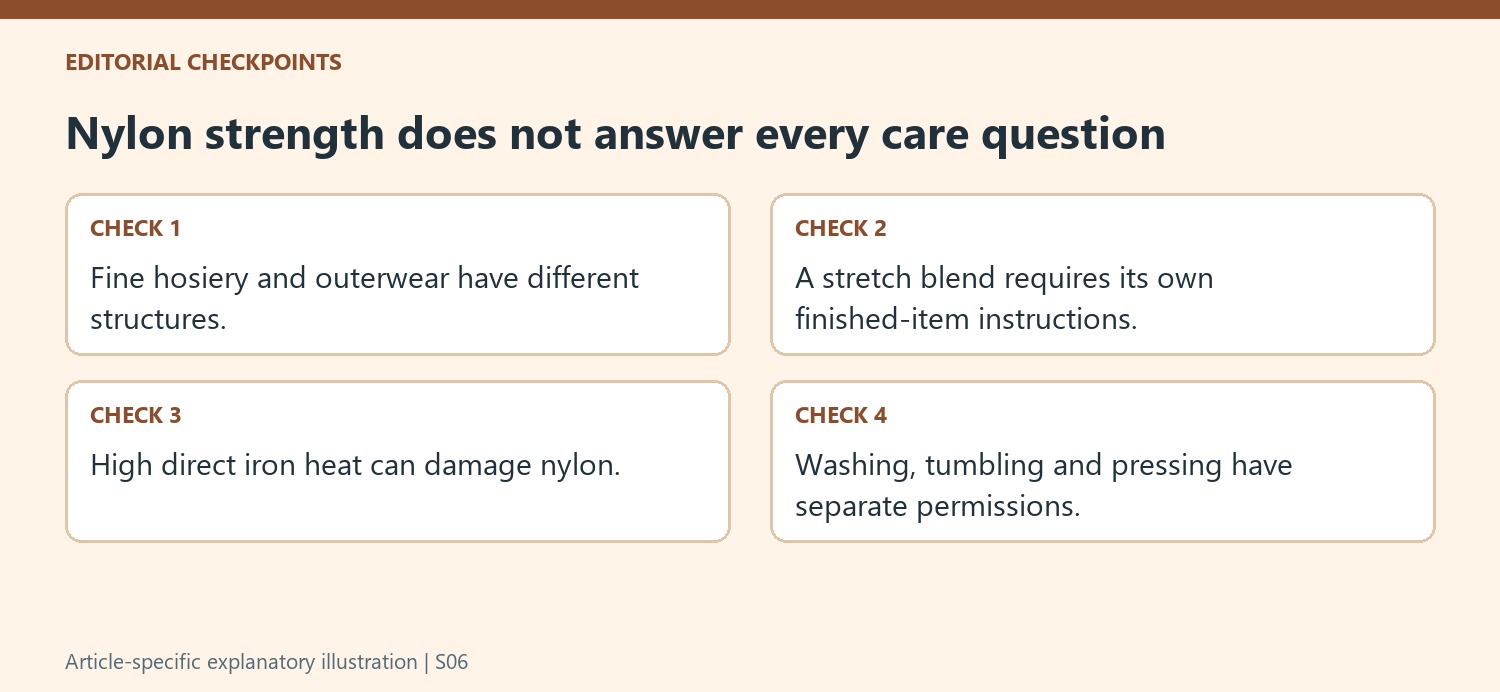
Ariel describes nylon as strong and abrasion resistant, while listing it across fine hosiery, lingerie, shirts, and rainwear. Those examples involve very different structures. A general statement about fiber strength cannot establish that a fine knit and an outer garment tolerate the same mechanical treatment. Read the actual care claim and consider any blend, fasteners, or construction details before creating a load. This is especially useful when sorting by color, because two dark nylon items can still require different handling. The fiber family explains a material category, while the garment information identifies what the finished product permits. Keeping those roles distinct prevents durability language from being mistaken for unlimited washing or drying tolerance.
Dryer heat and iron heat are separate decisions
The source recommends low-temperature tumbling where the garment permits that route and separately cautions that high iron temperatures can damage or melt nylon. Do not infer the iron setting from a wash temperature or from successful use of a dryer. Each process applies heat differently and has its own care instruction. Before pressing, decide whether crease removal is needed and allowed, then read the relevant low-heat requirement on the item. Likewise, permission to machine wash does not establish tumble permission. These checks are important even for clothing that feels sturdy, because resistance to ordinary wear does not remove the material's sensitivity to an unsuitable finishing treatment or to an excessive direct heat setting.
Account for elastane and other components throughout care
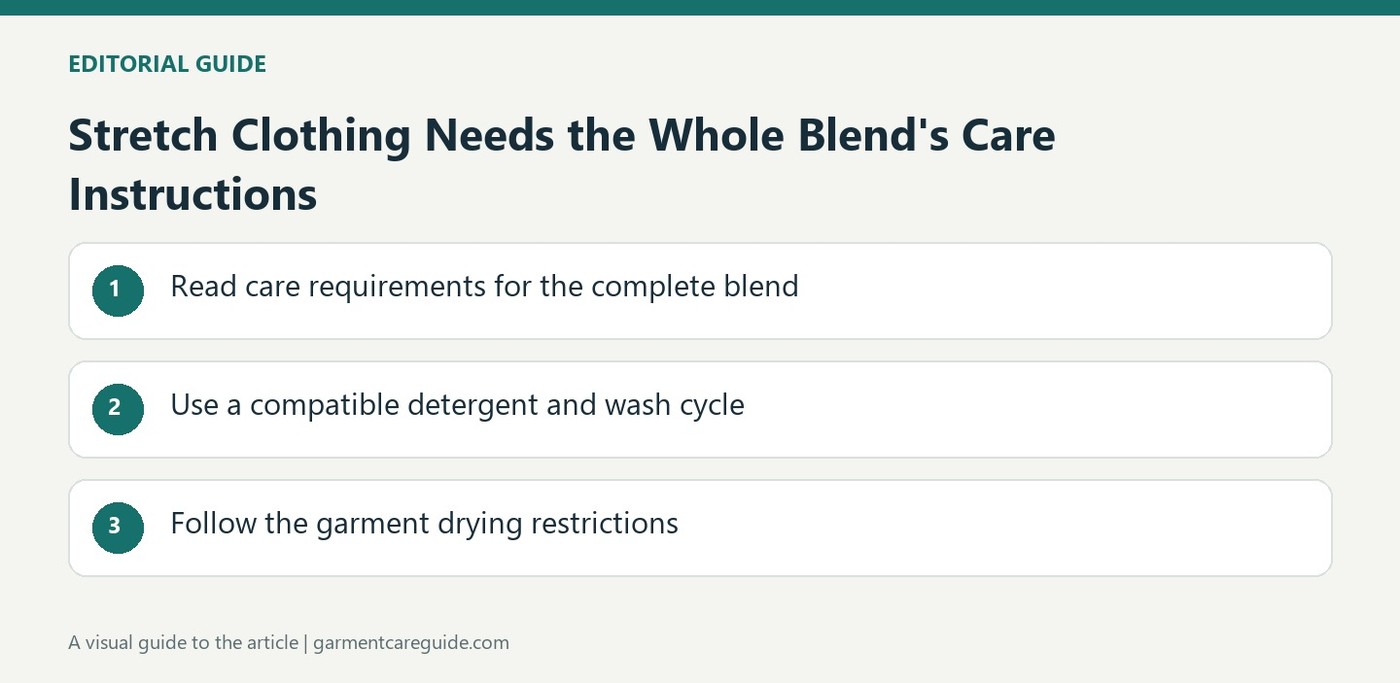
Nylon is often combined with elastane, according to the guide, making a composition label useful context for garments designed to stretch. The finished article can also contain other materials and details, so choose detergent, optional treatments, and appliance settings from its actual care instructions. Do not copy a routine from an unrelated synthetic garment simply because both contain nylon. After permitted cleaning, follow the separate drying directions and use the source's cool, dry storage approach away from direct sunlight. Whether the item is folded or hung depends on the garment itself. The full sequence should remain attached to that particular product, with no stage relying solely on a broad claim about the nylon family.
References
- How to wash nylon. Ariel.