GarmentCare Guide
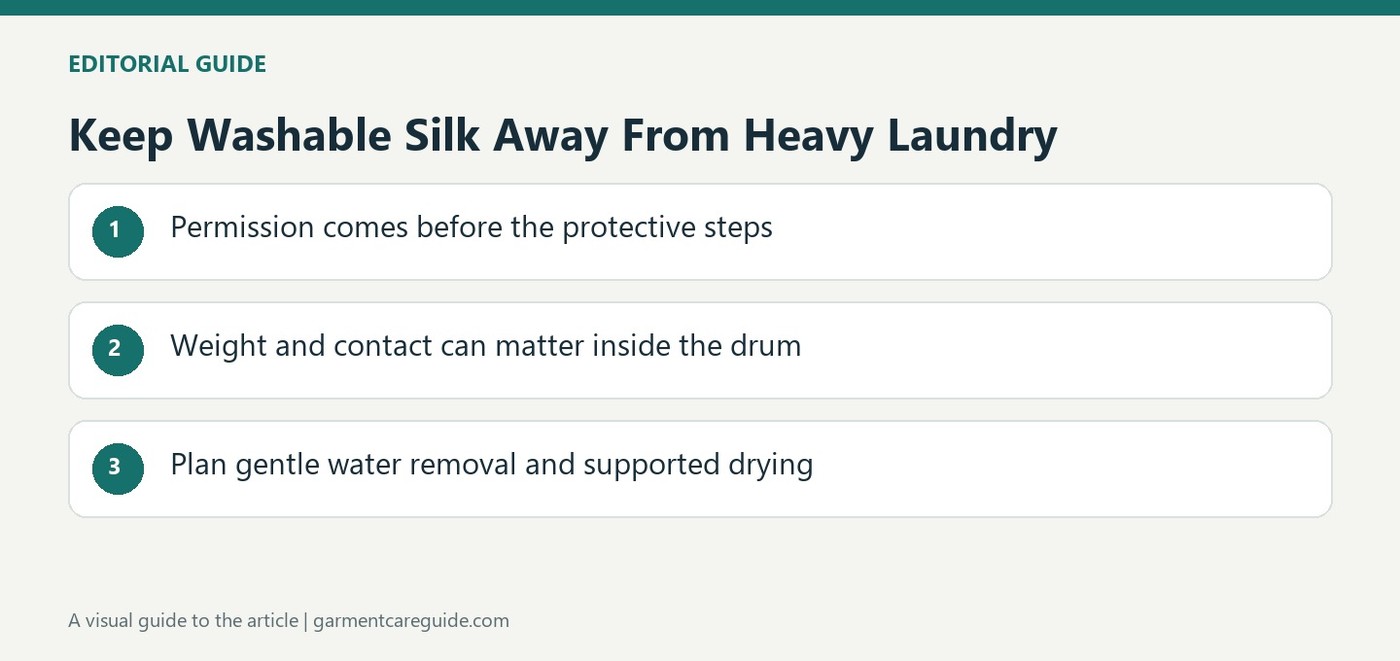
Permission comes before the protective steps
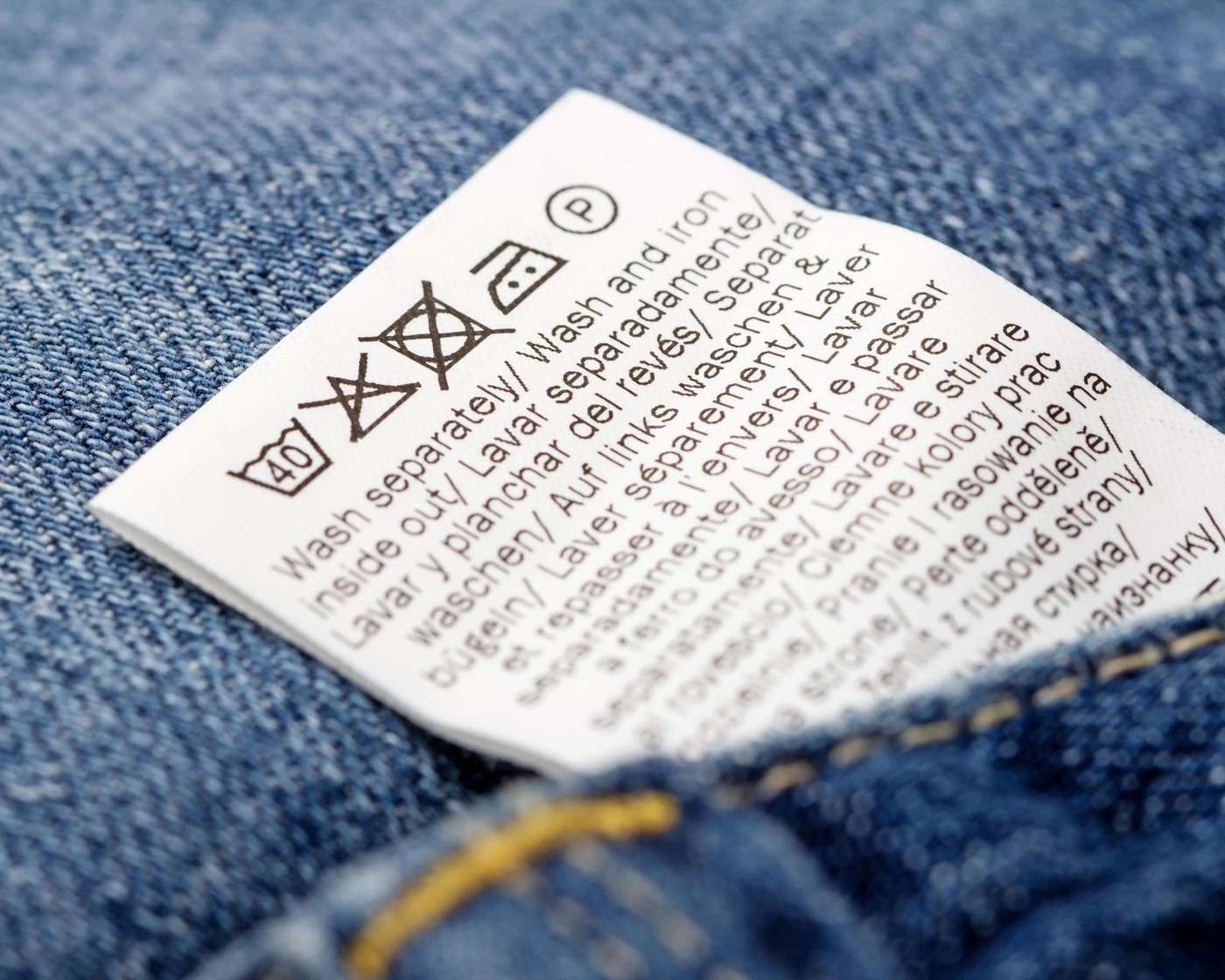
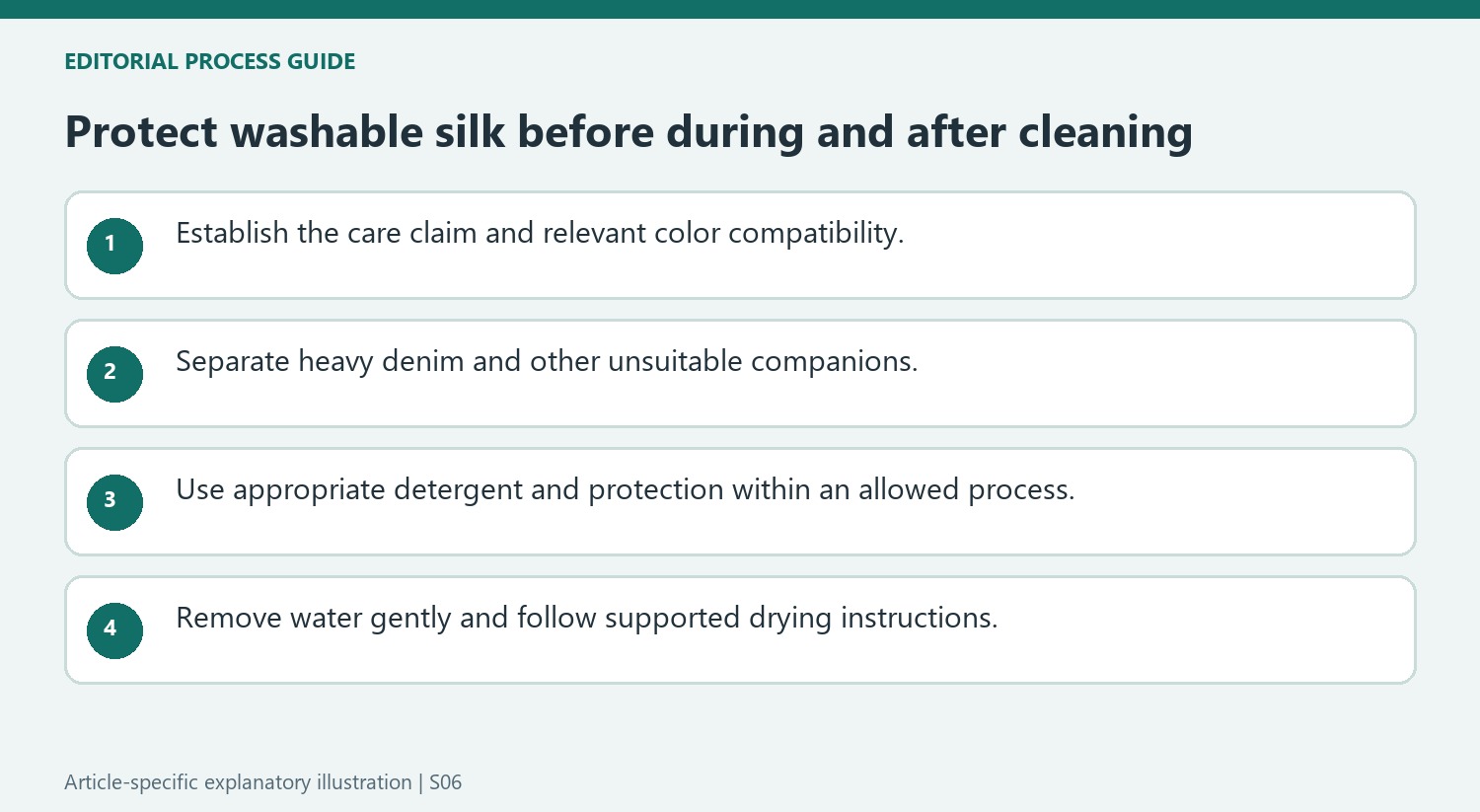
Tide's guide to delicate fabrics begins with reading the garment's care label. That instruction matters before considering a cold program or a mesh bag. Silk garments can differ in dye stability, construction and finishing, so the treatment must be allowed for the finished item. Ariel's complementary silk guide also distinguishes a dry-clean-only claim and recommends checking colorfastness on a hidden seam where appropriate. These sources support a sequence in which permission and compatibility are established first, rather than assuming that a gentle-looking machine setting makes any silk piece washable.
Weight and contact can matter inside the drum
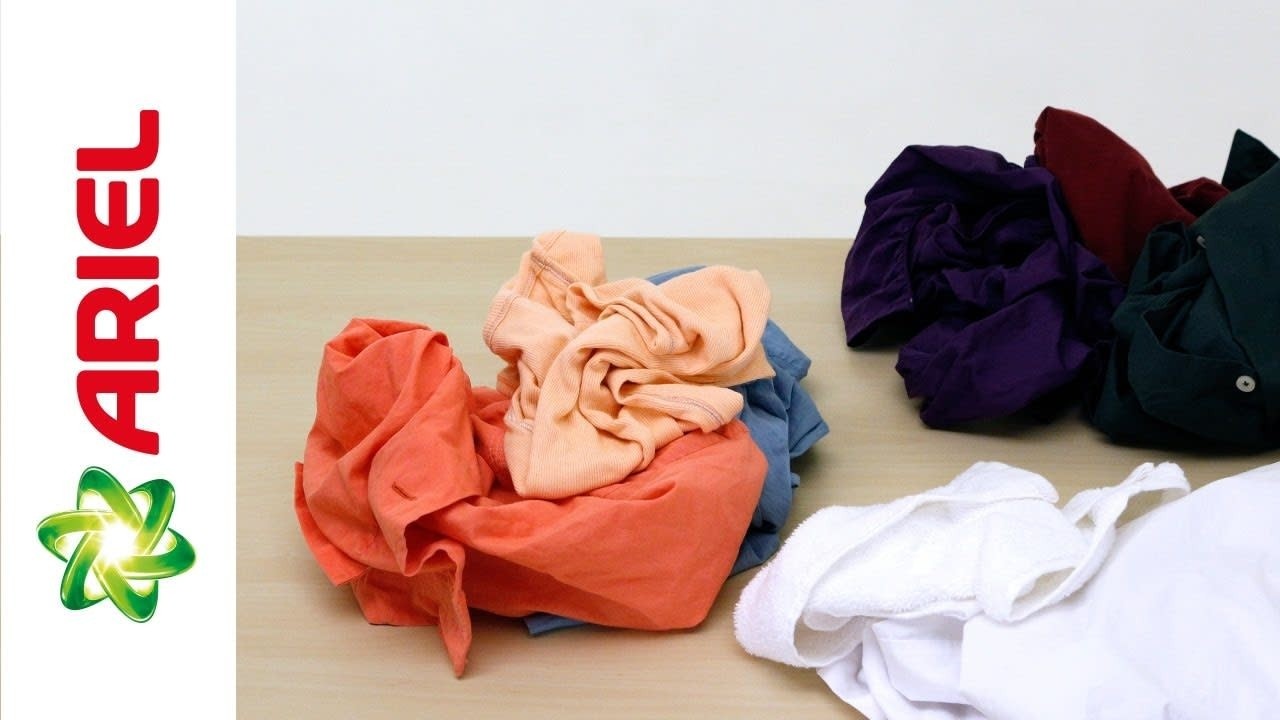
For approved machine-washable delicates, Tide recommends separating silk and lace from heavy items such as jeans. Heavier clothing can create unsuitable contact and stress for fine fabrics. A mesh garment bag offers additional protection against snagging, but it is one part of a compatible load. Choose the permitted cold or gentle treatment and use a suitable detergent as directed. The same color does not make a silk blouse compatible with heavy denim, and a bag should not be used to justify that combination without regard to the garments' different requirements.
Plan gentle water removal and supported drying
Ariel's silk-care instructions emphasize avoiding twisting or wringing after rinsing. An absorbent towel can take up excess moisture before a washable item is laid out in its permitted drying position. This extends protection beyond the drum: rough water removal or an unsuitable drying method can undermine an otherwise careful wash. Check any ironing permission separately, including heat and steam restrictions. A useful delicate-care routine therefore combines a readable label, compatible load, suitable detergent and deliberate finishing, with each protective step supporting an allowed method rather than replacing the need for one.
Treat heavy denim as an unsuitable companion for fine structures
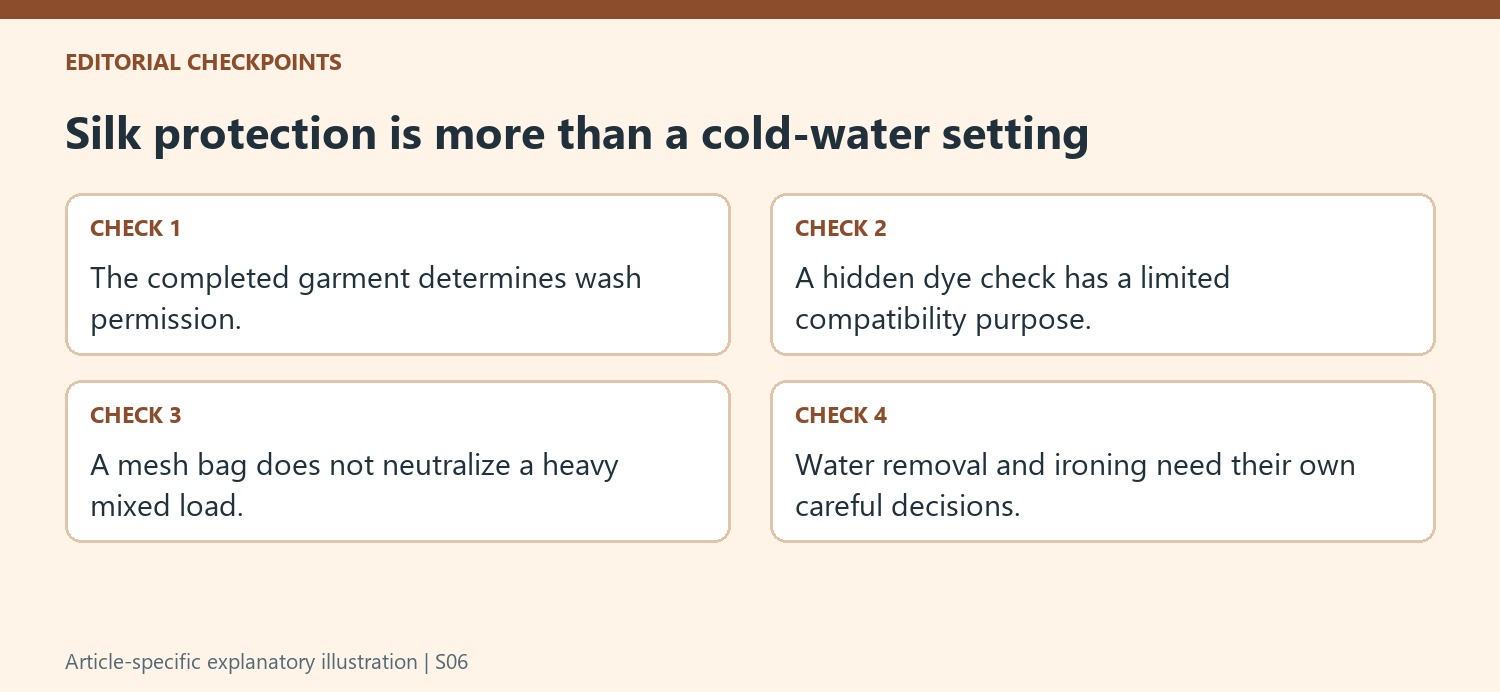
Tide's warning about combining silk or lace with jeans concerns contact and movement inside the load, not just color transfer. A heavy garment can create stress for a fine textile even when their shades match. Compare weight and construction after reading the care labels, and exclude incompatible pieces before choosing the program. A mesh bag may reduce some snagging exposure for approved machine-washable delicates, but it does not turn every heavy mixed load into a suitable environment. The load must already share an allowed process. This distinction gives the sorting step a clear purpose: reduce avoidable mechanical conflicts rather than relying on an accessory to solve a mismatch that should have been addressed beforehand.
Resolve the washing route before selecting the detergent
The primary guide places care-label reading first, while Ariel's silk advice adds attention to dry-clean-only claims and color stability where testing is appropriate. Read these conditions before deciding that a cold machine setting or gentle detergent is sufficient. A suitable product cannot authorize an excluded process, and a hidden color check answers only the response to that limited treatment. Once the route is established, follow the product's compatibility and dosing directions within it. If the care claim is unclear or the dye response raises uncertainty, obtain garment-specific advice rather than extending a general silk example. This keeps the method based on the completed blouse or dress, including its details, instead of the fiber name alone.
Prepare the post-wash handling before the silk becomes wet
Ariel's advice avoids wringing and uses absorbent towels to take up excess moisture before appropriate supported drying. Have those materials ready before cleaning begins. That preparation reduces the temptation to twist the fabric or leave it suspended while searching for a space. Continue to follow the actual garment's drying instruction rather than assuming every washable silk item needs an identical arrangement. Ironing, if needed, then requires a separate permission and suitable heat or steam limits. These stages matter because protection in the washer is only part of the task. Gentle water removal and deliberate finishing carry the same care through to the point where the textile is dry and ready for storage or wear.
References
- How to Wash Delicate Fabrics Like Silk Safely and Effectively. tide.com.
- How to Wash and Care for Silk Clothes. ariel.co.uk.