GarmentCare Guide
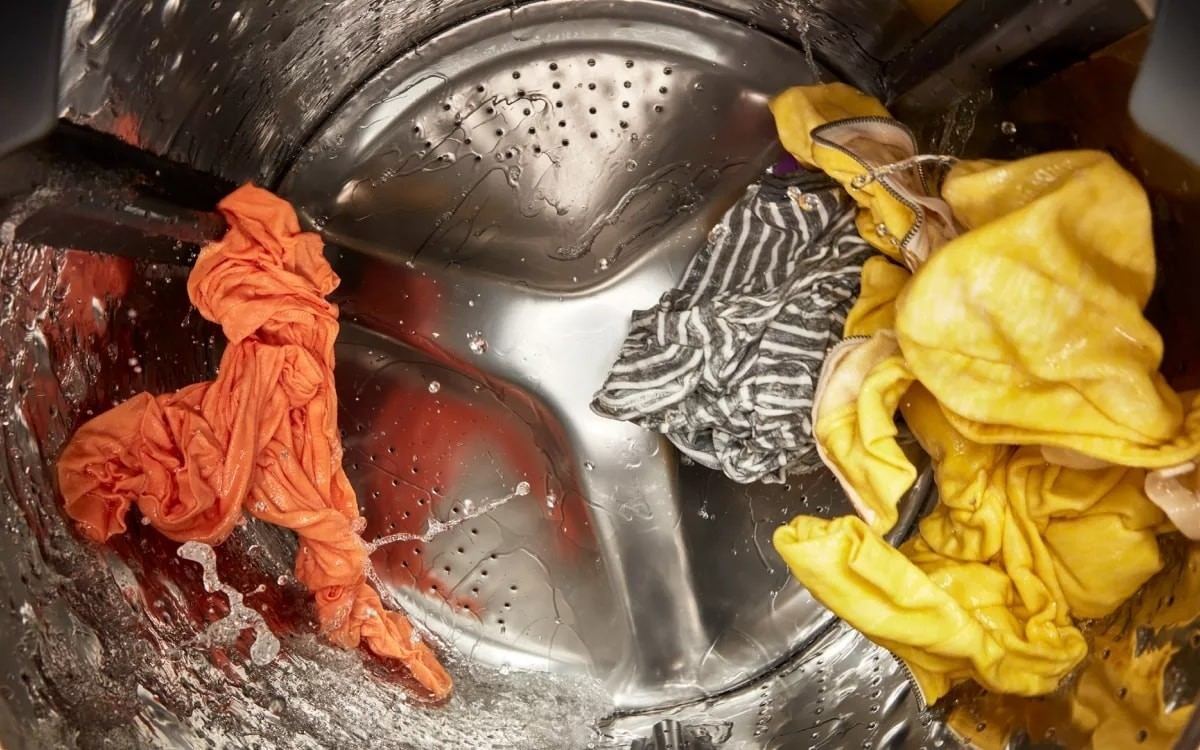
Some materials need closer heat control
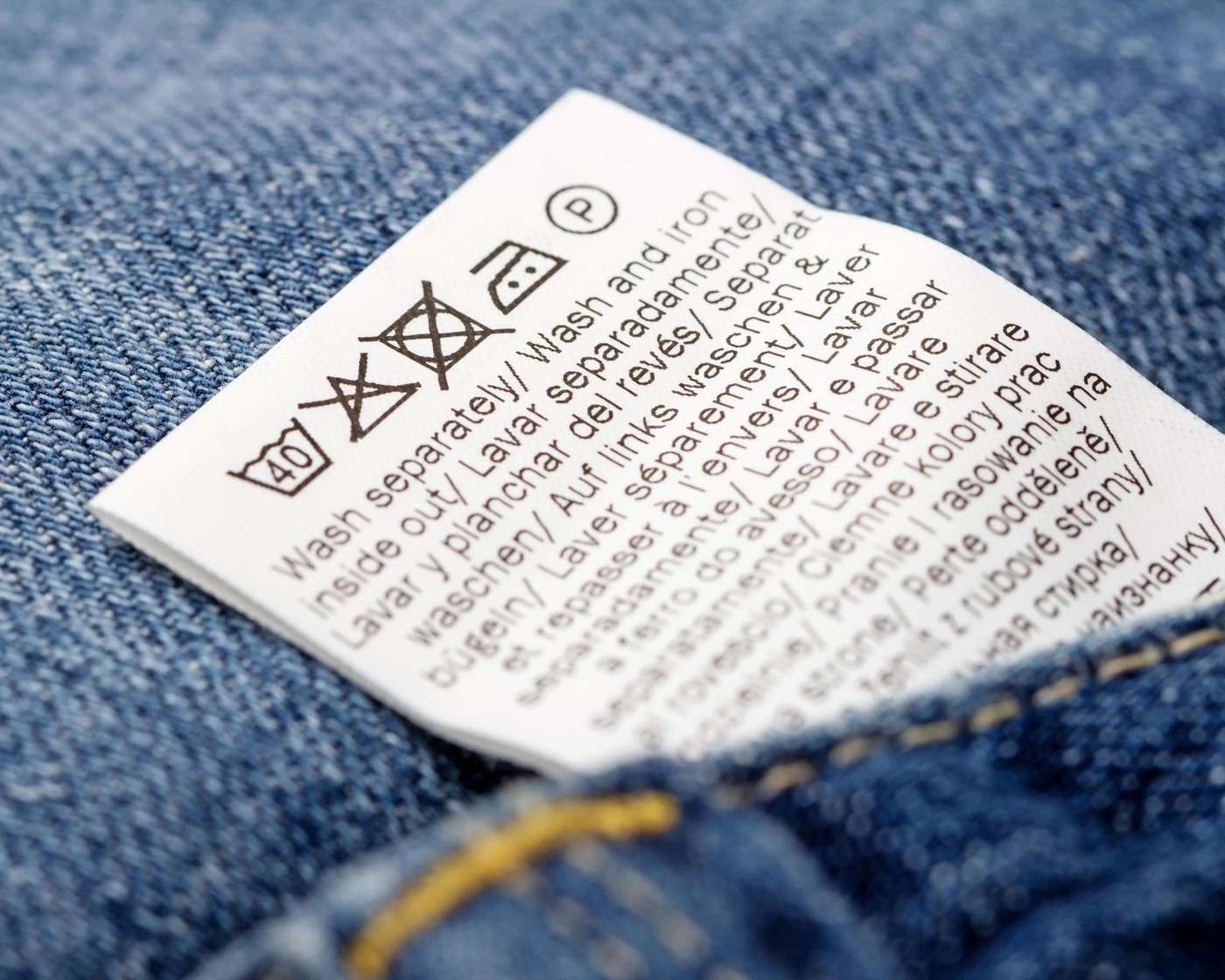
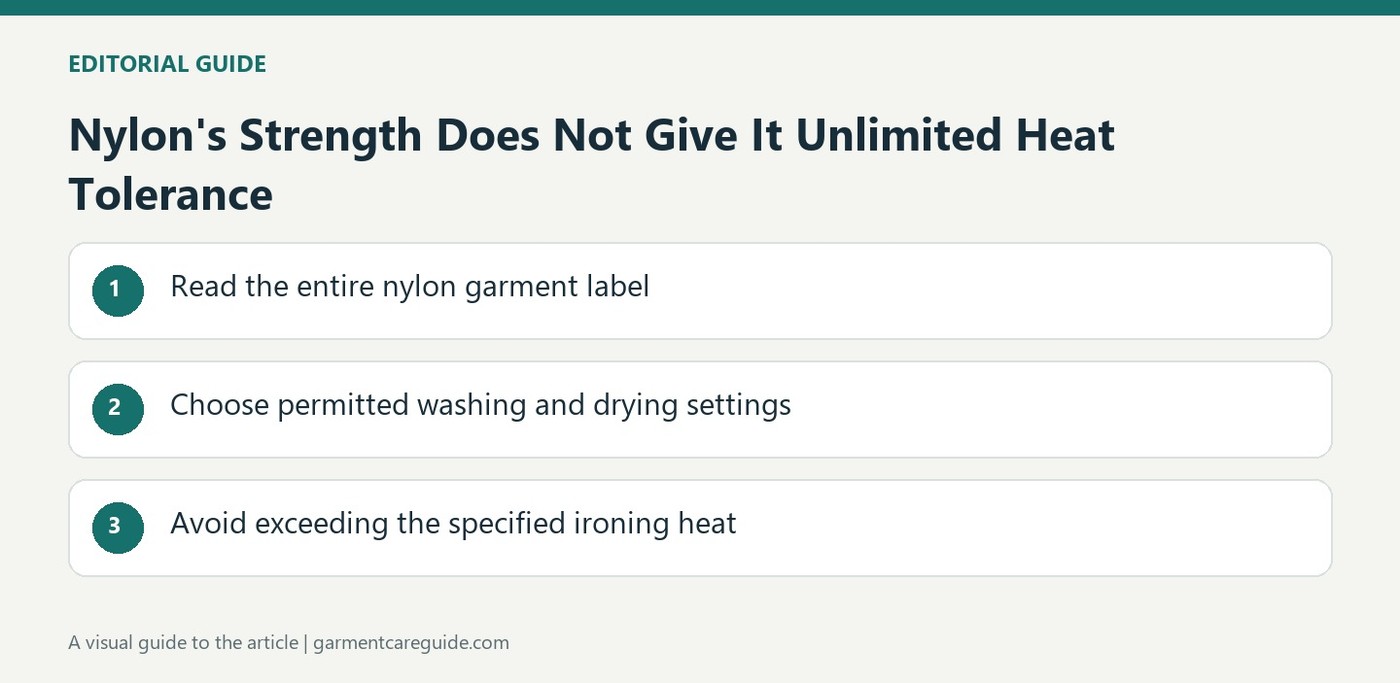
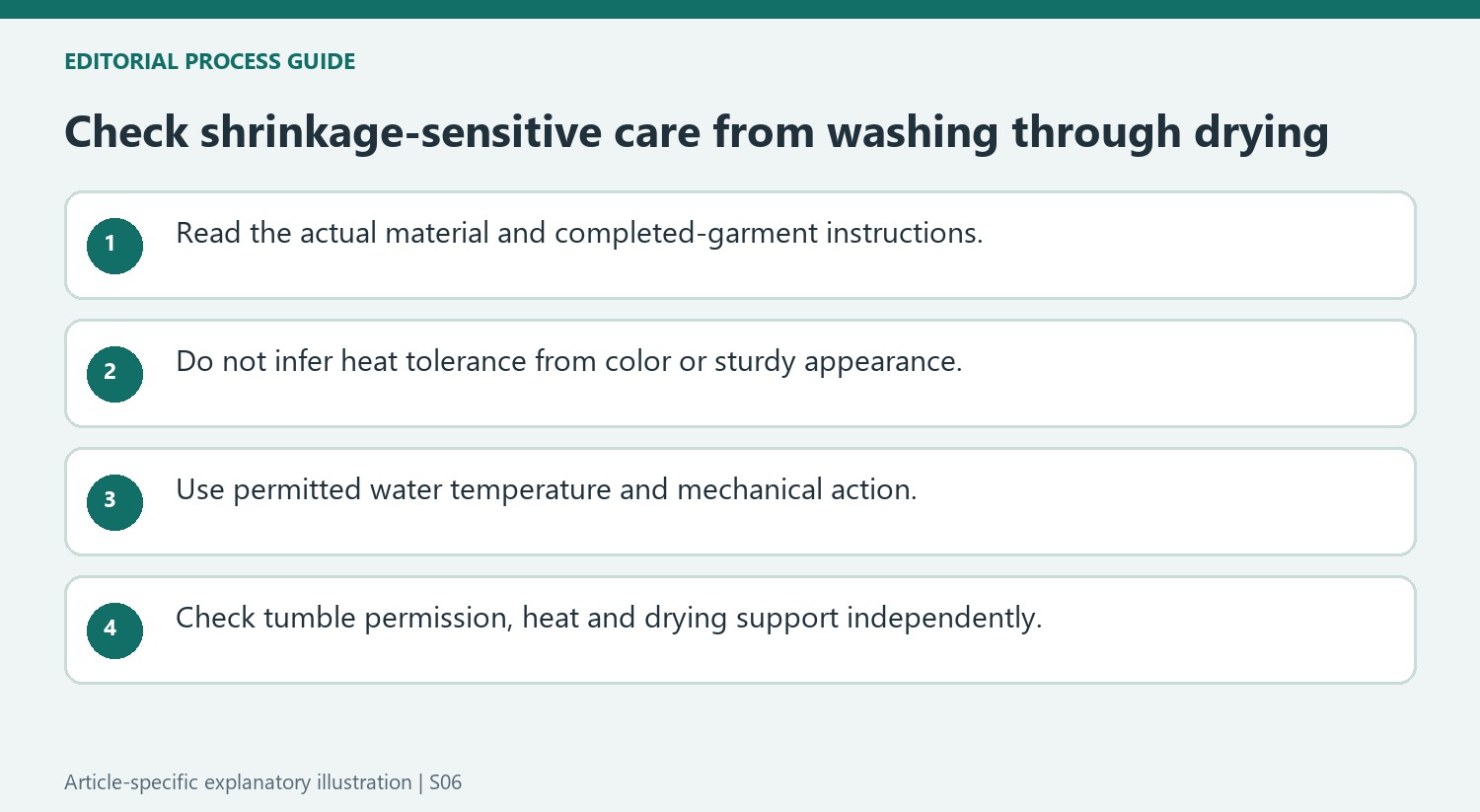
Whirlpool's shrinkage guide identifies natural-fiber fabrics such as wool, cotton, linen and silk as materials that can be susceptible to dimensional change during unsuitable laundry treatment. This does not establish that every item made from those fibers will react identically. The finished garment's care label remains the starting point, including limits that may reflect its construction or processing. Read it before deciding that a hot wash is necessary or that a sturdy appearance means the item will retain its size under any conditions.
Color does not determine shrink resistance
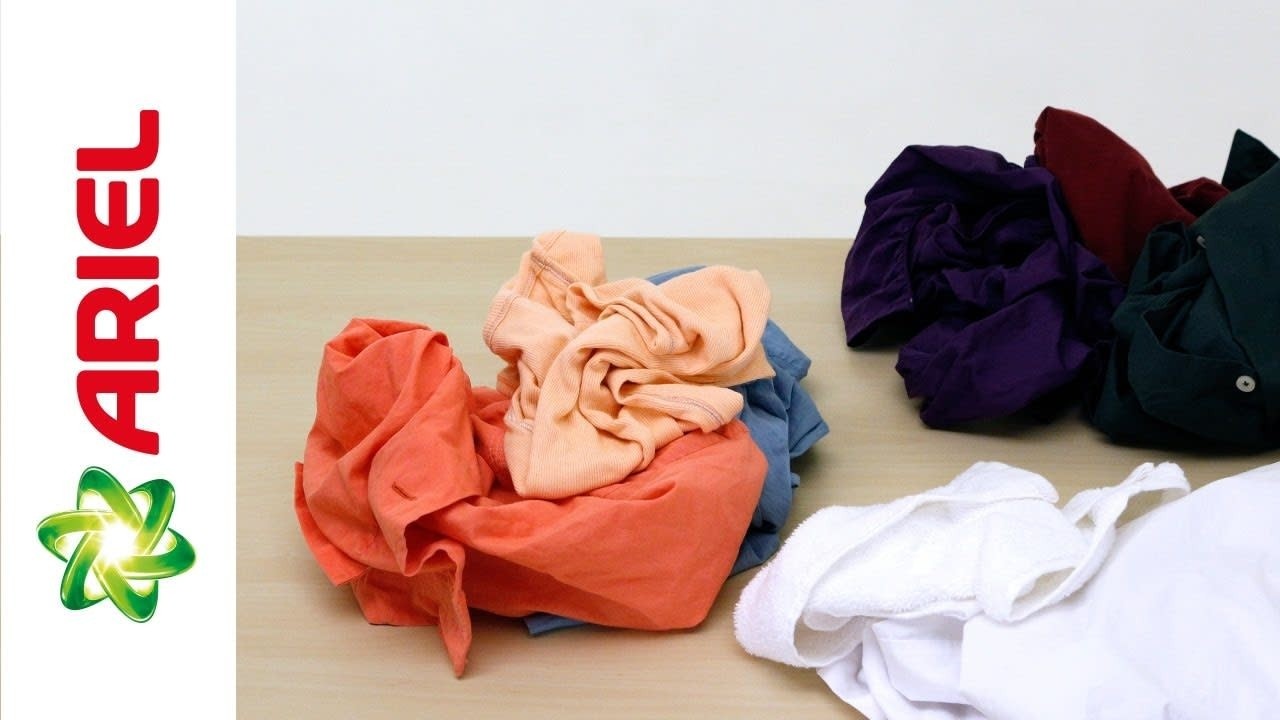
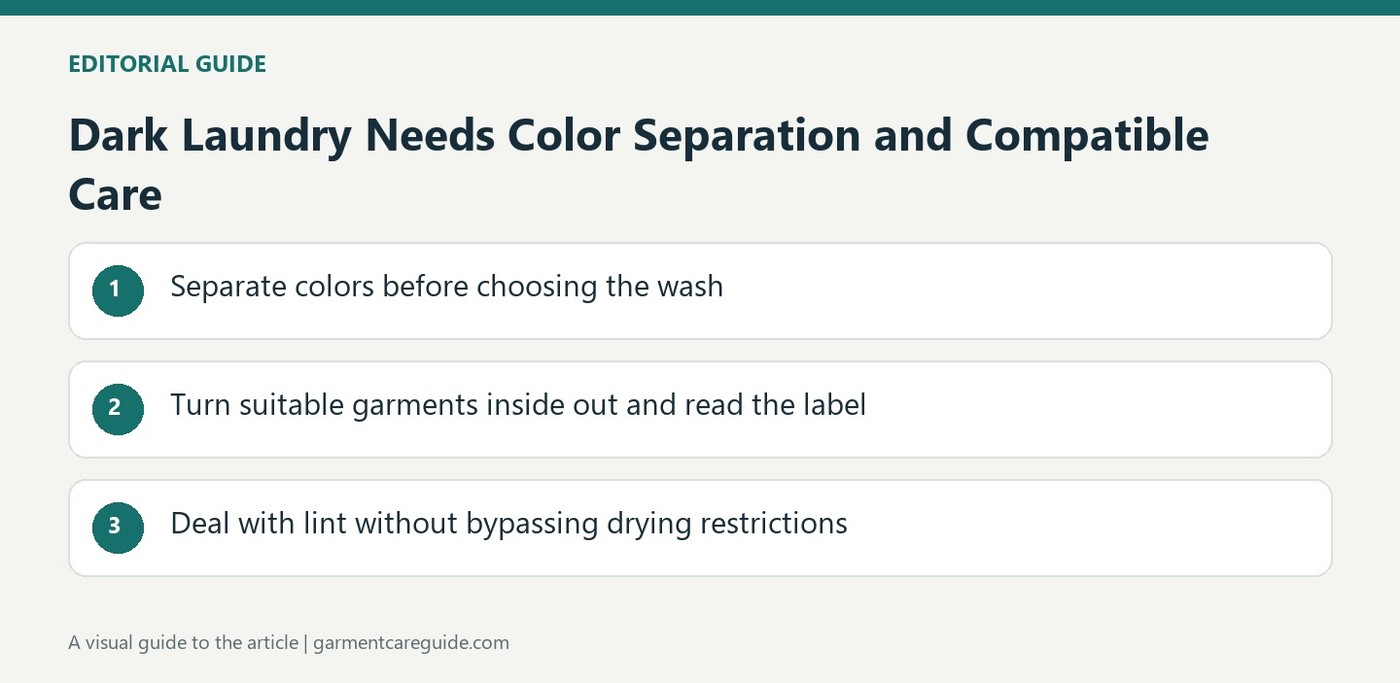
The source separately discusses jeans, brights, darks and whites, noting that fabric composition influences shrinkage while heat can also affect color. A white item can therefore still need a cooler treatment, and a dark garment needs more consideration than simply separating it from lights. Select a permitted temperature and cycle for the actual load. Where cold washing is suitable, combine it with appropriate detergent and settings. A lower temperature is one part of the plan rather than a complete description of the mechanical treatment the clothing will receive.
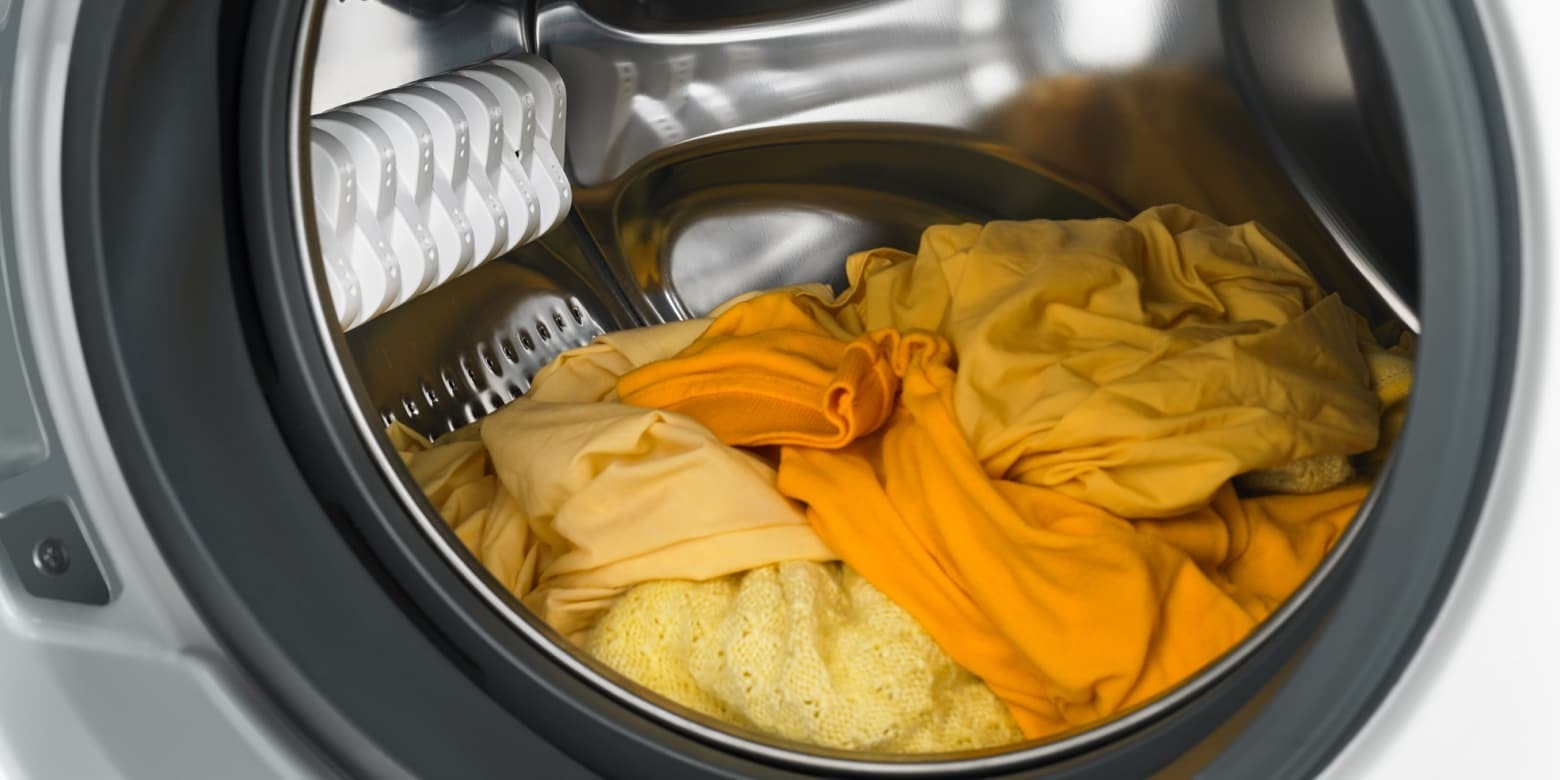
Check the dryer before transferring the load
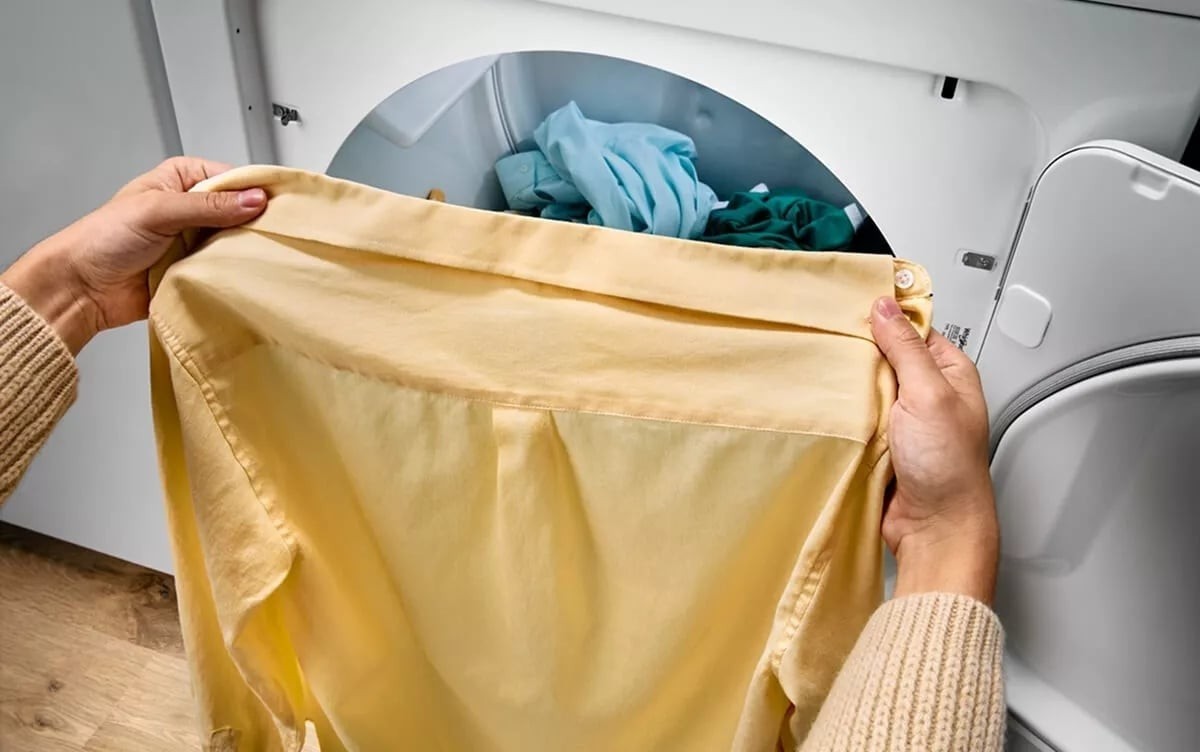
Whirlpool also highlights heat and friction during drying. A carefully chosen wash can be followed by an unsuitable dryer setting if the drying label is ignored. Use low heat, no heat or natural drying only where the item permits the corresponding process. A no-heat cycle remains tumbling, while flat or line drying changes the garment's support and movement. Keeping those distinctions in view makes shrinkage prevention a sequence of care decisions. Follow the label from washing through drying, rather than expecting one cool-water choice to protect a garment against every later treatment.
Do not infer dimensional stability from a color group
Whirlpool discusses bright, dark, and white laundry separately, but identifies material as central to shrinkage susceptibility. Color can affect sorting and concerns about fading without describing how the fabric will respond dimensionally. A white garment may still need a restrained temperature, while a dark item needs attention to construction and blend as well as dye. Read each care claim before creating a group. This prevents a general belief that whites need heat or darks only need color separation from becoming the entire routine. The proposed water setting, mechanical action, and drying method must suit every piece in the load, regardless of how clearly the clothes fit into a visual sorting category.
A single cool wash cannot govern the later drying stage
The source identifies friction and heat in drying as further concerns for susceptible fabrics. A garment can therefore receive an appropriate cold wash and still be subjected to unsuitable treatment afterward. Read the drying instruction before transferring it, including whether tumbling itself is allowed. No heat describes the thermal condition of a dryer program, while the drum still moves the clothing. Flat drying and line drying change support as well as heat exposure, so they should not be used interchangeably without regard to the item's instructions. The useful prevention strategy follows the entire care sequence instead of expecting a low water-temperature choice to neutralize every later process in the laundry room.
An unfamiliar or unlabeled piece needs more than a fiber guess
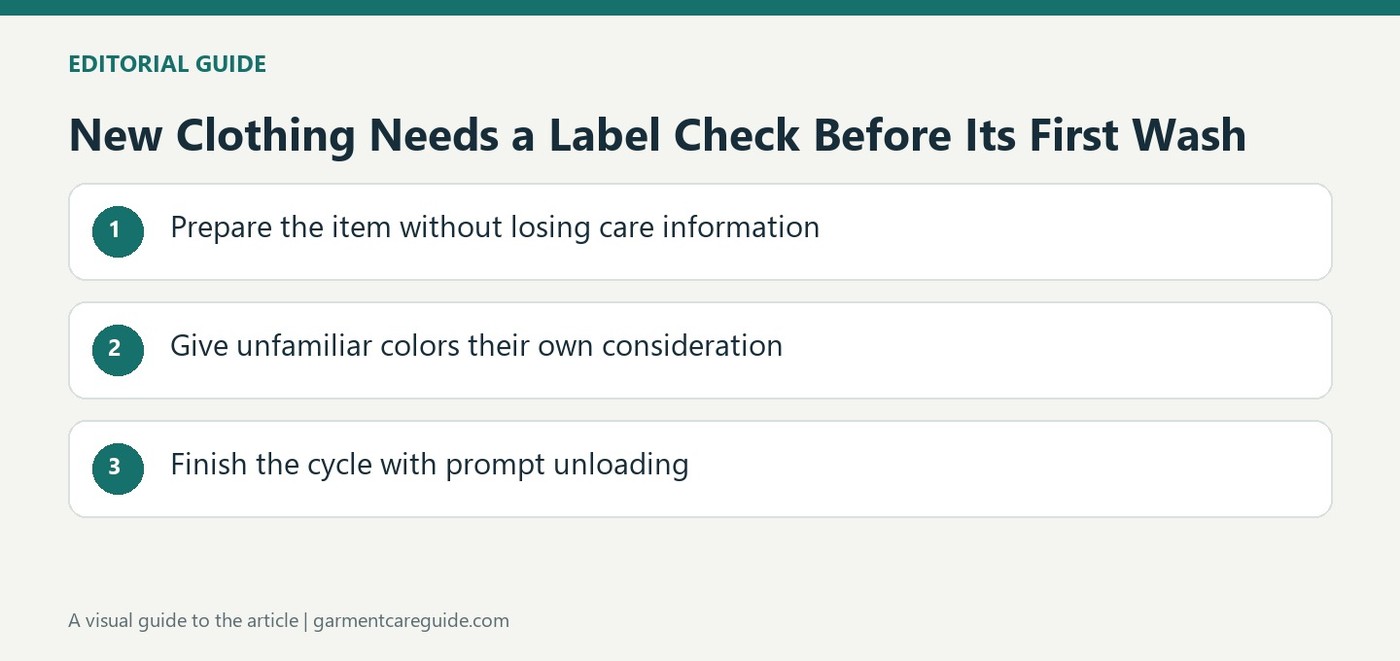
Whirlpool presents its material overview as general guidance and repeatedly directs readers to care labels. For a handmade or vintage garment without readable instructions, the overview cannot identify every construction detail or prior treatment that affects care. Seek appropriate maker or textile-care advice rather than turning a broad natural-fiber list into a guaranteed recipe. The same caution applies to claims about how quickly shrinkage can occur: an outcome described for some materials does not predict an exact response for every finished item. Establish a suitable method before cleaning, then avoid improvising stronger heat because an earlier cycle happened to leave the garment apparently unchanged. Previous success does not supply missing treatment instructions for future use.
References
- Does Hot Water Shrink Clothes? | Whirlpool. Whirlpool.