GarmentCare Guide
Protection depends on what is being cleaned
Tide's guide to delicate items uses lingerie, silk blouses and sheepskin boots to show why appearance alone does not determine care. These products can all seem sensitive, yet their permitted cleaning methods are different. Start with the item's label and relevant manufacturer instructions. A method suitable for one example should not be extended to the others merely because they all fit the broad word delicate. The practical question is what the actual material and construction allow, then what protection helps within that permitted treatment.
Mesh bags help suitable lingerie during washing
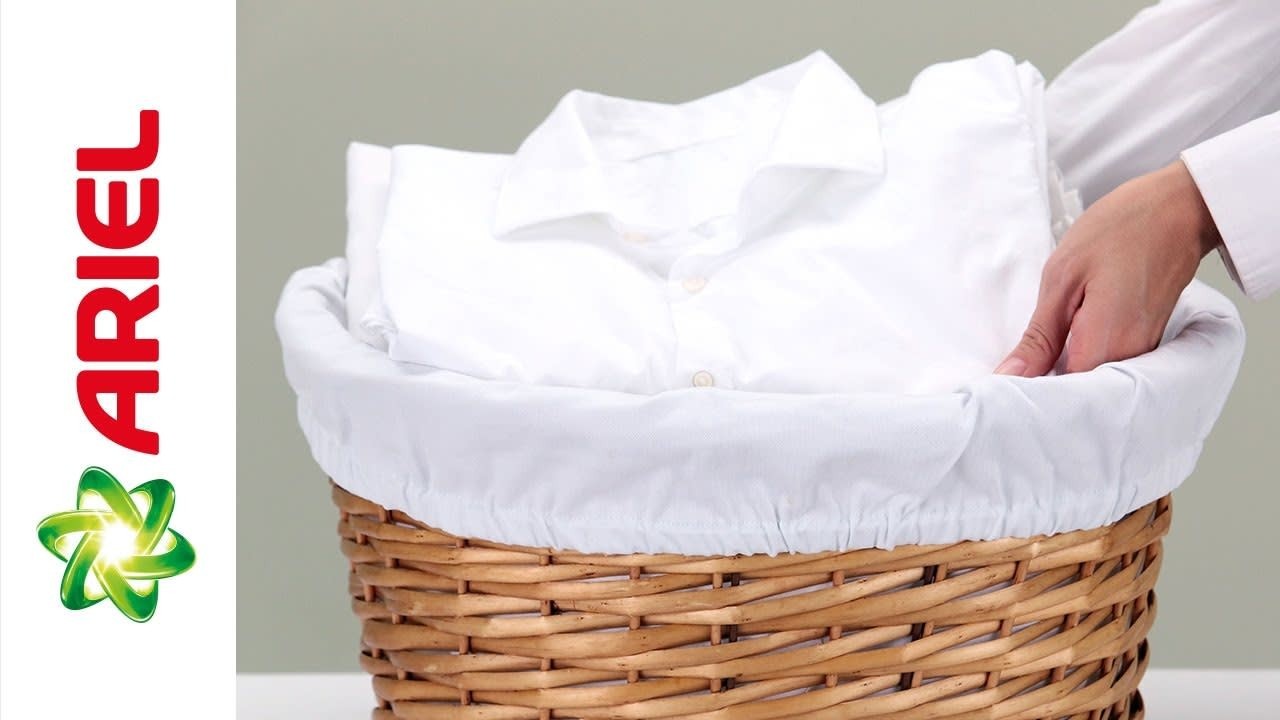
The source explains that lace and lingerie can tangle, stretch or rub against other clothing when placed loosely into a washer. For appropriate machine-washable pieces, it recommends a mesh bag and careful drying afterward. The bag reduces exposure to some forms of contact, but it does not override a hand-wash-only or other restrictive label. Silk is discussed separately, with a gentle manual routine for items whose instructions allow it. Keep detergent, water temperature and drying support aligned with the garment's care claim rather than assuming every fine fabric can follow the lingerie method.
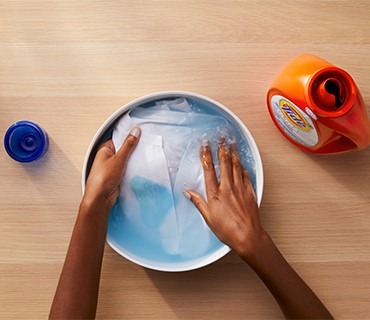
Sheepskin boots are a different cleaning task
Tide warns against putting sheepskin boots into the washing machine and describes localized care using a suitable sheepskin cleaner instead. Its routine avoids soaking the material and supports the boots' shape while they dry. This example makes the limits of a generic delicate cycle clear: a gentler washer setting does not automatically make footwear suitable for immersion and tumbling. Use product-specific guidance before cleaning an unfamiliar item. By separating garments and footwear according to their actual instructions, the routine becomes more precise than simply assigning every valuable or soft object to the same gentle program.
A broad delicate category contains different cleaning mechanisms
Tide compares lingerie, silk, and sheepskin footwear to show why a gentle reputation is too broad to establish one routine. Lingerie may need protection from tangling or surface abrasion, a silk blouse may require a permitted manual process, and boots may call for controlled localized cleaning rather than immersion. Start by identifying the actual item and its maker's instructions. Then determine which concern the recommended protection addresses. A laundry bag, a mild detergent, and a footwear cleaner solve different problems and are not interchangeable signs that the same treatment will be safe. Reading the examples this way makes the advice more useful than assigning everything soft, expensive, or easily marked to a single delicate cycle.
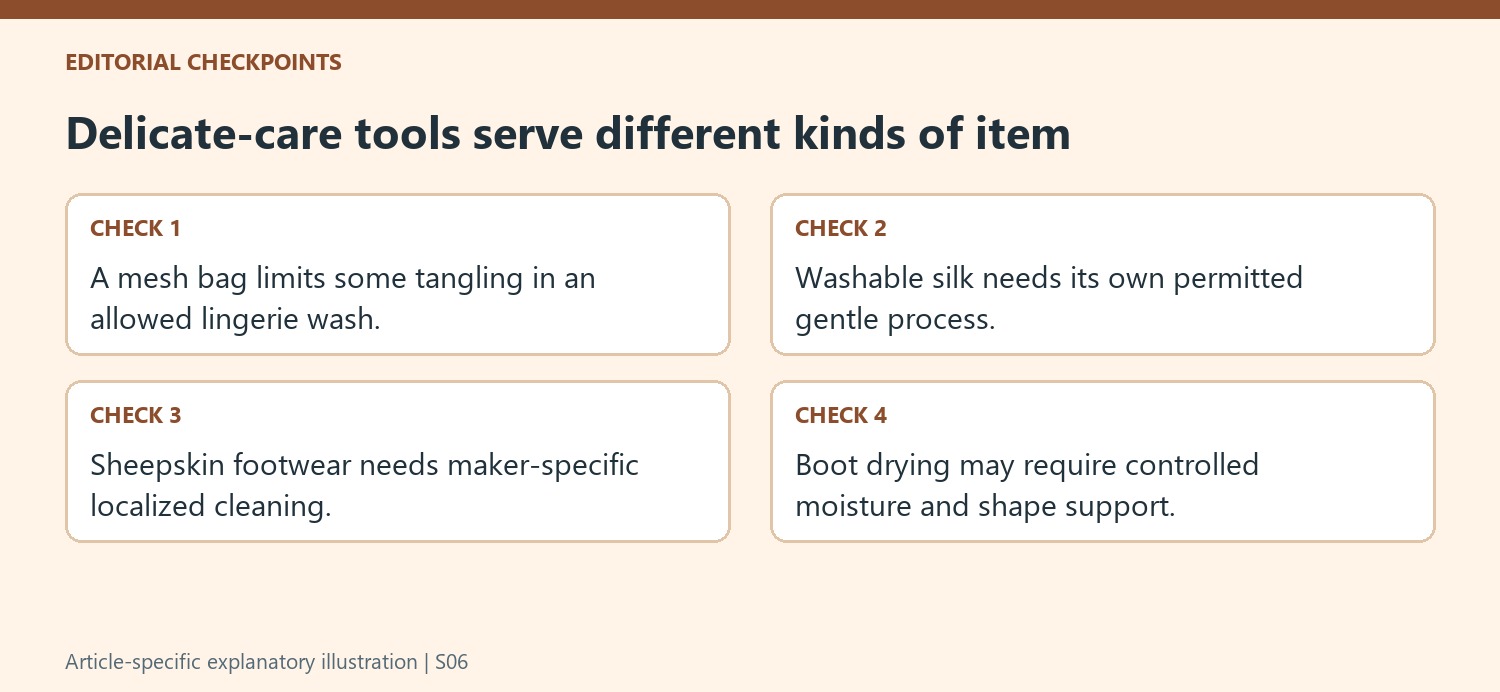
A laundry bag does not remove every exposure in a washer
For suitable lingerie, the source uses a mesh bag to limit tangling and rubbing. The garment still receives the selected water, detergent, and movement, so the rest of the routine must be permitted independently. Confirm machine-wash permission before relying on the bag and choose compatible neighboring items. A restricted silk garment cannot be included solely because the same accessory is available. Likewise, a fine appearance is not enough to select a detergent without checking suitability and dose. The bag is one handling tool within a complete process, rather than a protective enclosure that makes the surrounding cycle irrelevant to the material or construction inside it.
Localized boot cleaning needs controlled moisture and shape support
The footwear example is particularly different from ordinary laundering. Tide describes using a lightly dampened sponge and suitable sheepskin cleaner, avoiding a soaking-wet condition and supporting the boot with paper while it dries. Follow the actual footwear maker's guidance and the cleaner's directions before applying that approach. The target is limited surface care with controlled moisture, not a miniature machine wash performed by hand. Once dry, the source discusses light brushing of the surface with an appropriate suede brush. This sequence has a different purpose and set of materials from washing lingerie. Keeping footwear separate prevents a gentler appliance setting from being mistaken for approval to immerse a product that needs a much more localized treatment.