GarmentCare Guide

Freezing is not a replacement for cleaning
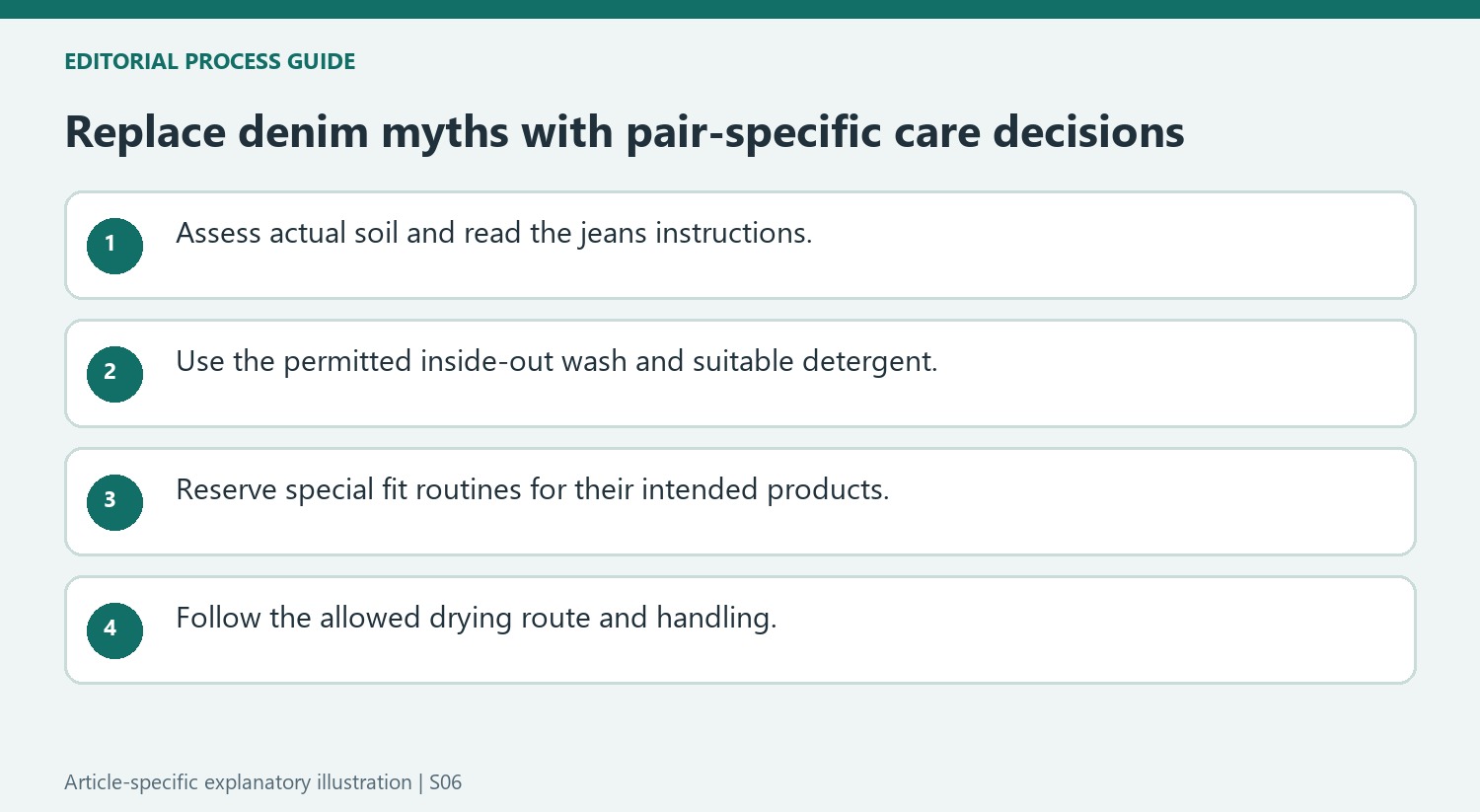
Ariel's denim guide addresses the idea that putting jeans in a freezer substitutes for washing. It rejects that shortcut as a reliable way to clean the garment. Freezing also does not remove visible soil or a stain in the same way as a suitable cleaning process. Assess the condition of the jeans and read their care instructions instead of following a routine simply because it circulates as a denim-preservation trick. The useful goal is an appropriate cleaning decision, rather than avoiding water regardless of the item's actual needs.
Use a suitable wash when cleaning is required
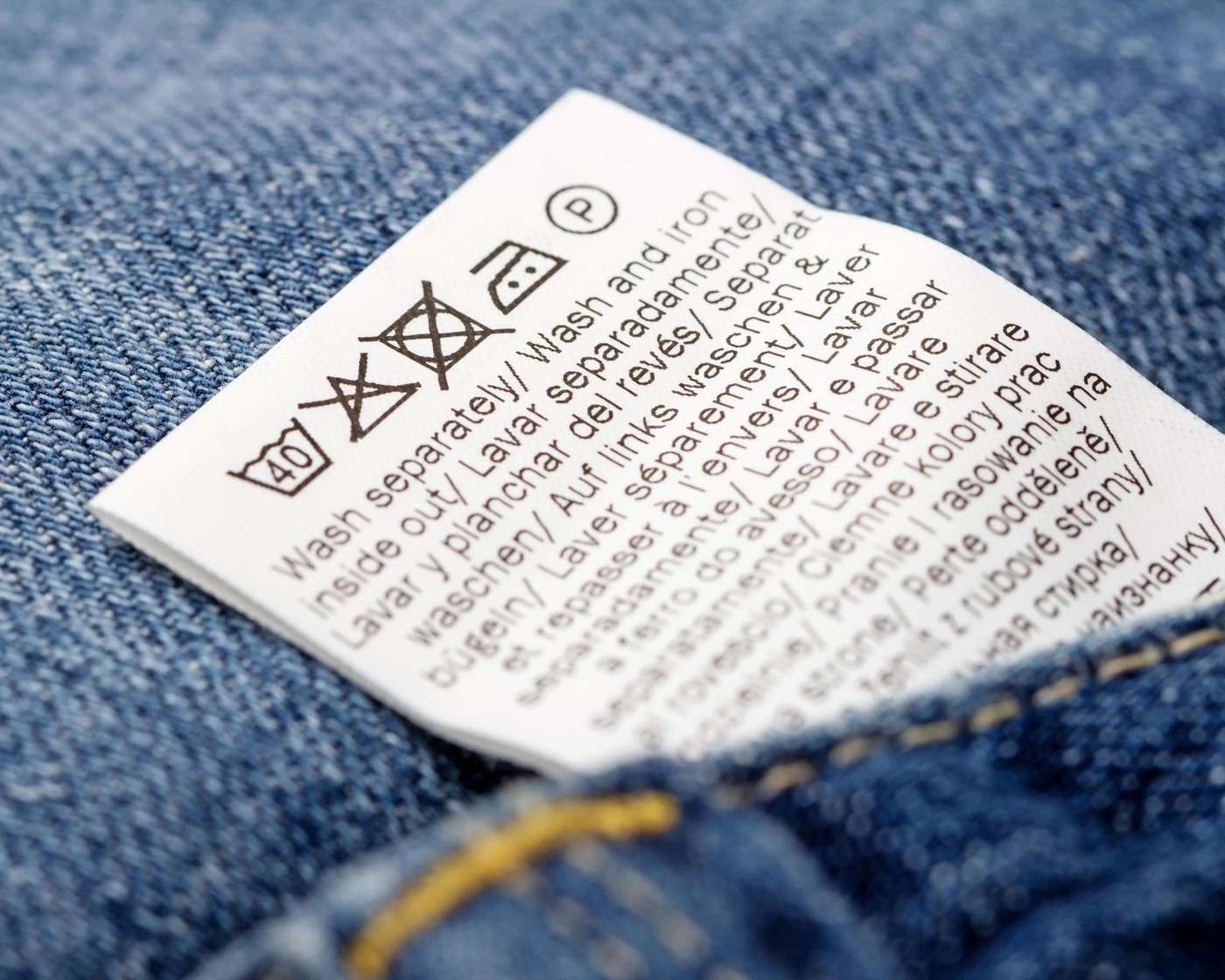
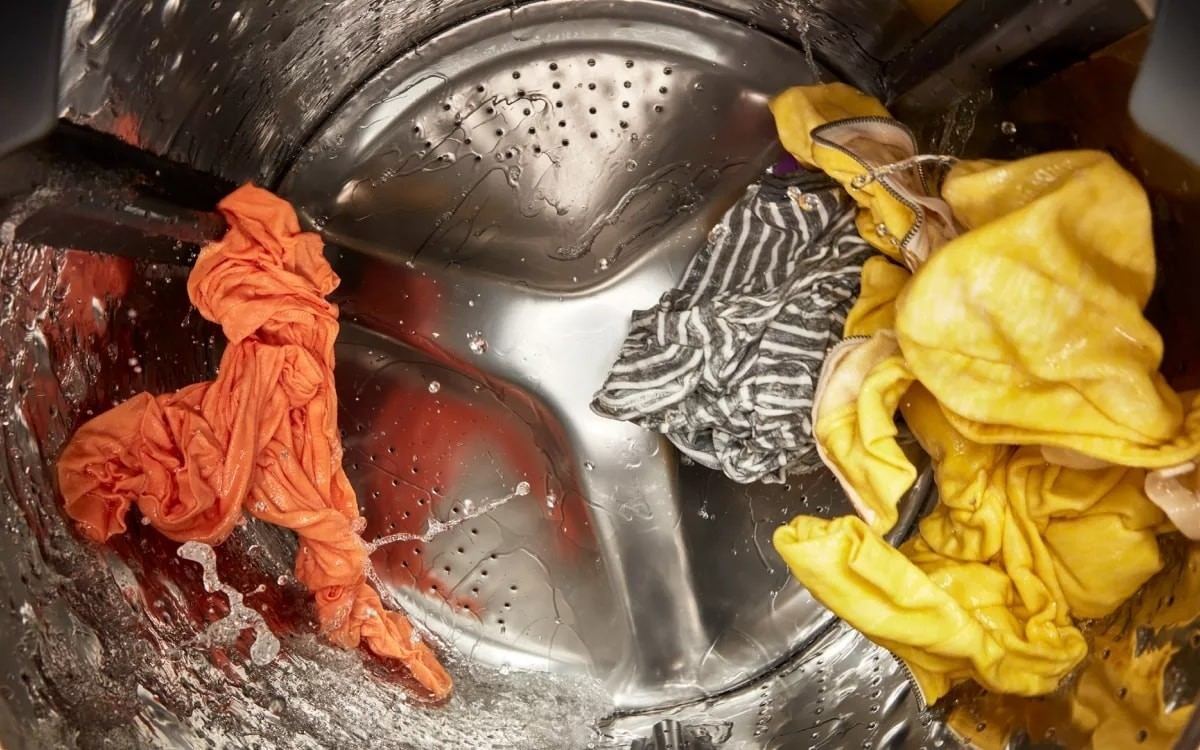
The source recommends turning jeans inside out and using cold water with an appropriate detergent for colored clothing, within the product's care limits. Its advice to wash sparingly should be understood alongside actual wear and soiling, rather than as a fixed schedule for every pair. Denim can vary in color, finish and stretch content, so a successful routine for one pair does not establish the right treatment for another. Check the label and detergent directions before selecting the cycle, especially for a new or unfamiliar product.
Drying and fit claims remain product specific
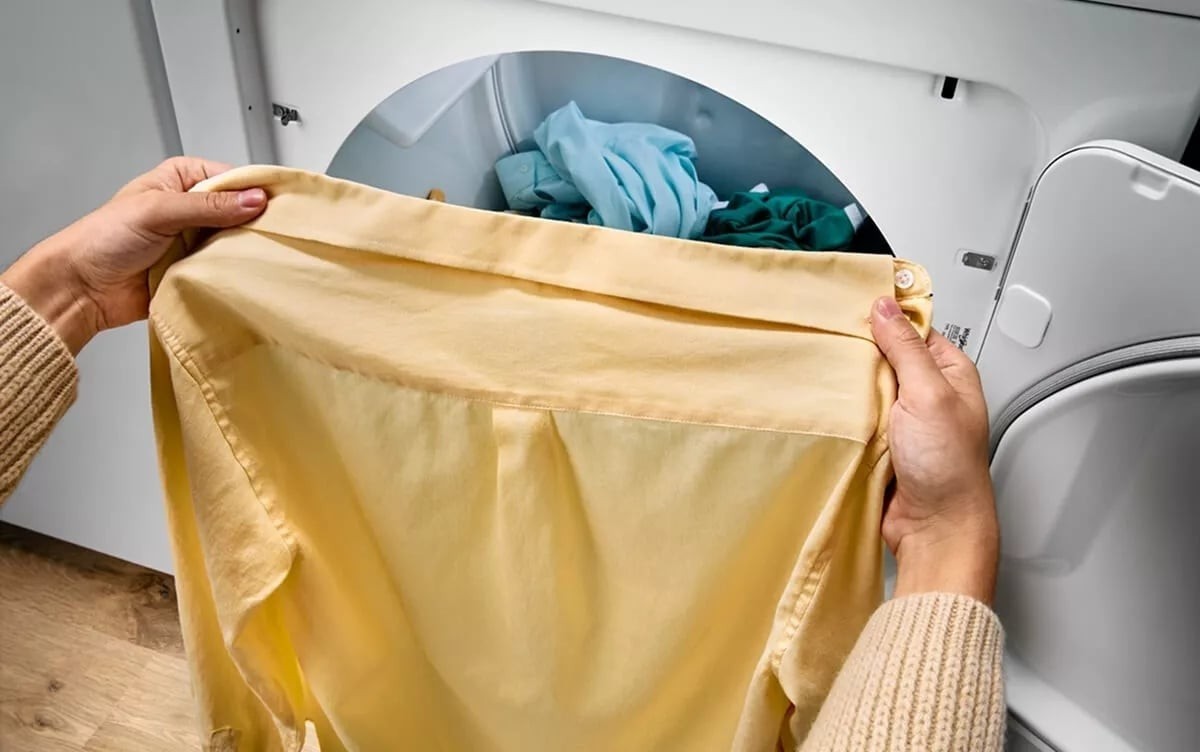
Ariel notes that some jeans permit tumble drying and advises checking the care symbols rather than treating the dryer as always allowed or always forbidden. Its discussion of bathtub soaking likewise distinguishes particular shrink-to-fit products from ordinary jeans. Instructions intended for a specialized product should not be applied to the entire wardrobe. Natural drying can be arranged where appropriate, with the garment supported according to its directions. These distinctions keep denim care tied to the actual pair, including its construction and treatment claims, instead of letting a general myth determine how every item is washed or reshaped.
Assess cleaning needs rather than adopting a denim ritual
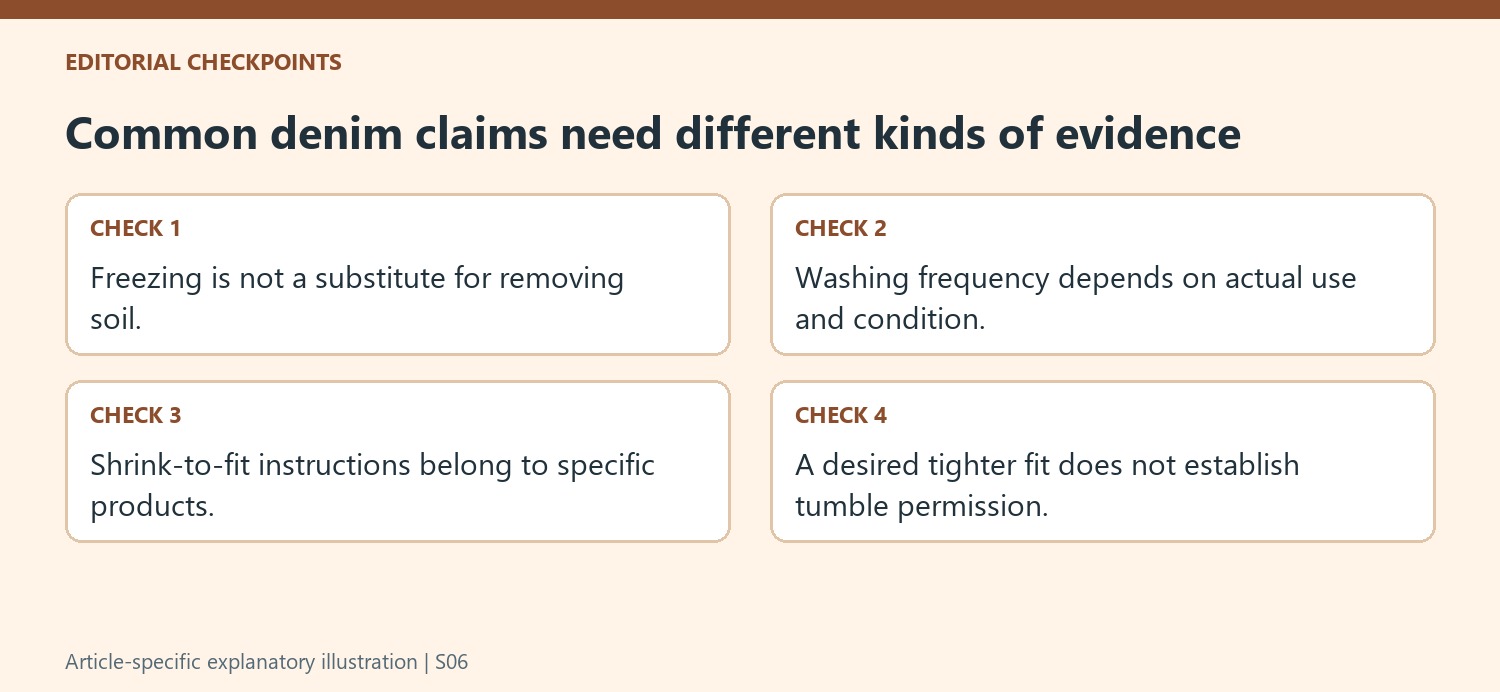
Ariel's discussion rejects freezing as a substitute for a suitable cleaning process. The practical distinction is straightforward: placing jeans in a freezer does not remove accumulated dirt or treat a visible mark in the way an appropriate wash can. Inspect the pair's actual condition and read its instructions before deciding what attention it needs. Advice to wash sparingly should be considered alongside wear, soil, and the product's intended care, not converted into an absolute refusal to clean. This keeps the decision focused on the garment rather than on preserving a ritual. A pair with stretch content, an unusual finish, or unfamiliar dye may need a different permitted routine from another pair that looks similarly blue.
Shrink-to-fit guidance belongs to the product designed for it
The source distinguishes ordinary denim from a specialized product whose manufacturer describes a particular shrinking-and-fitting routine. That distinction matters more than the popularity of bathtub advice. Do not transfer instructions for one engineered fit process to unrelated jeans, especially where their care claims differ. Read the maker's information for the exact pair before considering any deliberate reshaping approach. A desire for a tighter fit does not establish that heat or prolonged wet handling will produce a controlled result. The article's broader lesson is to connect a claim with its intended product rather than treating a memorable anecdote as a universal way to improve every pair of jeans in a wardrobe.
Tumble permission and the desired fit are separate questions
Ariel notes that some jeans permit tumble drying, but that does not mean the appliance is always available as a fit-adjustment tool. Start with the drying symbols and the manufacturer's directions for the actual pair. Where tumbling is permitted, use the specified treatment and handling rather than assuming a hotter or longer cycle will improve shape. Where natural drying is appropriate, arrange the garment in its allowed position. The source also discusses removing suitable jeans slightly damp to limit unwanted creasing. Treat that as part of a permitted sequence, not a shortcut around drying restrictions. Denim care remains product specific from inside-out washing through the final method used to return the garment to wear.