GarmentCare Guide

Separate items by both care and shade
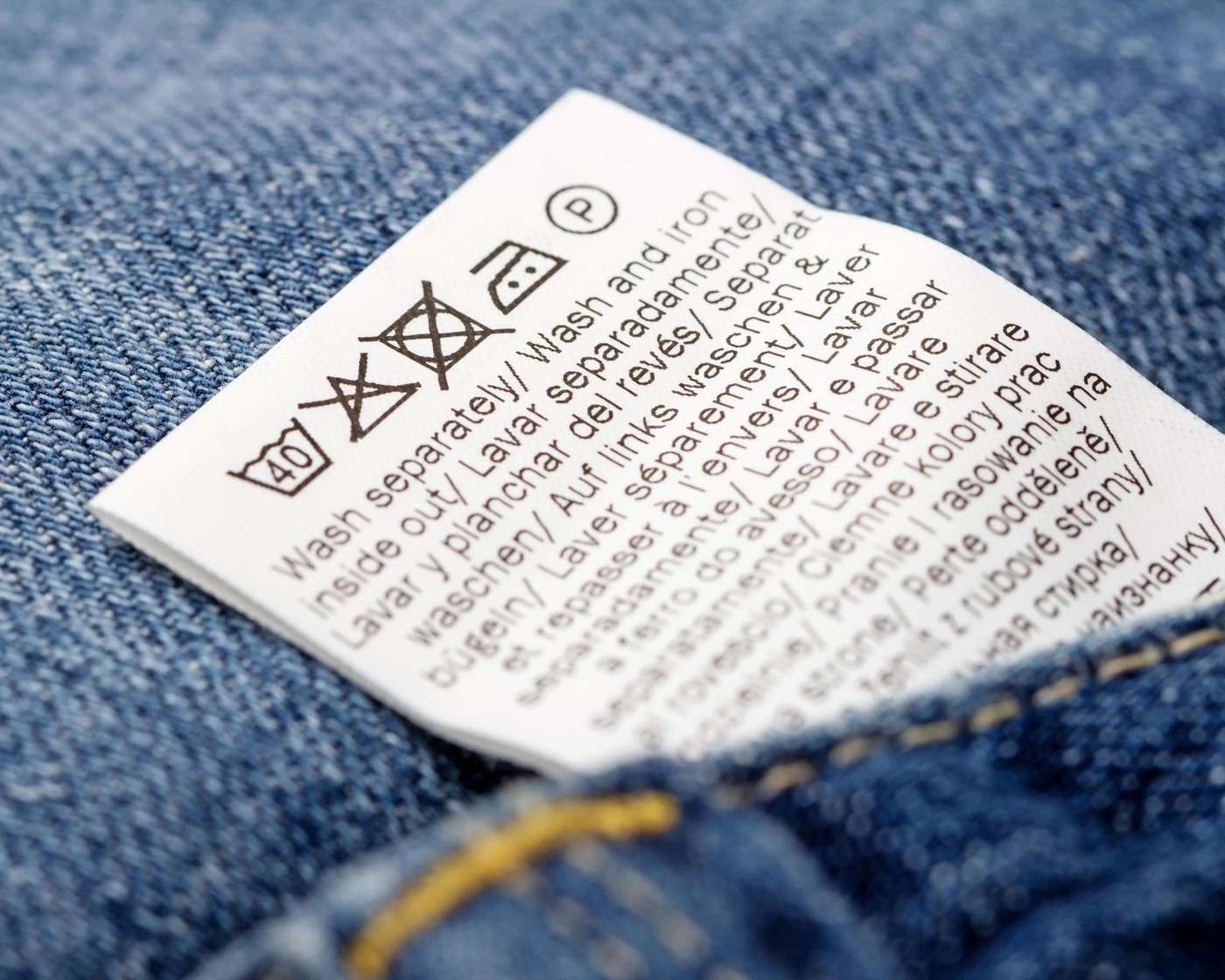
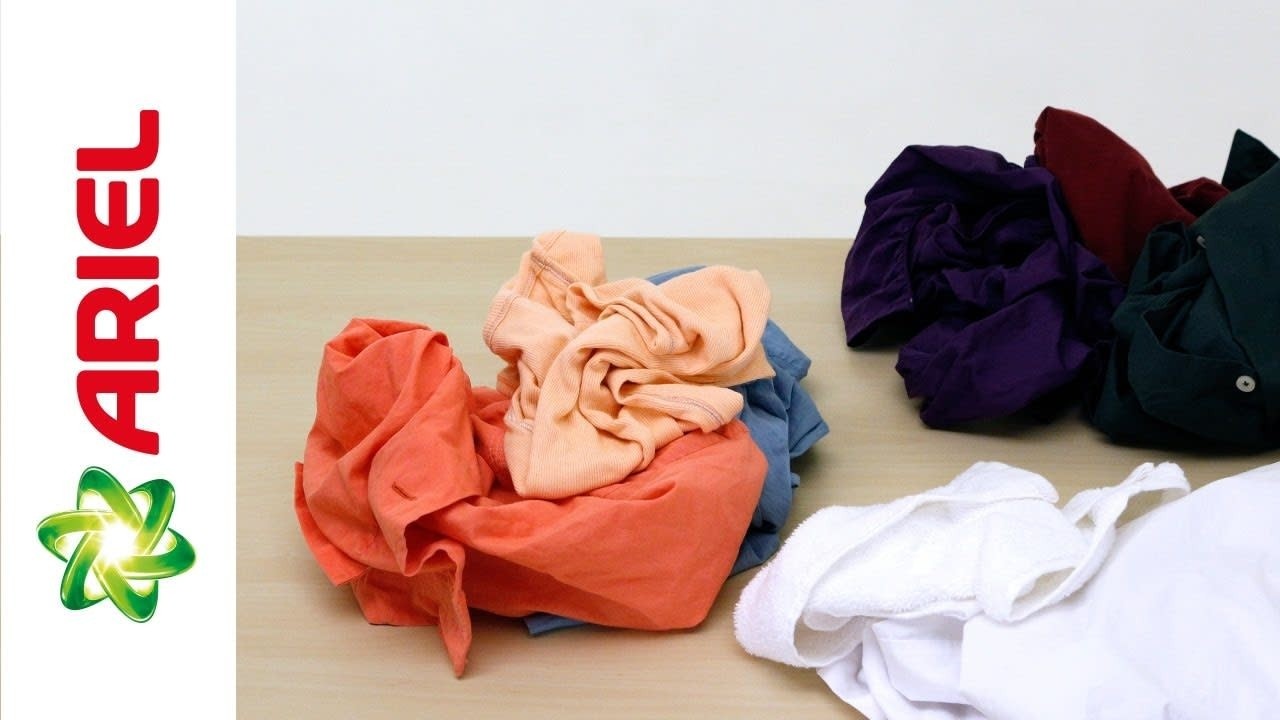
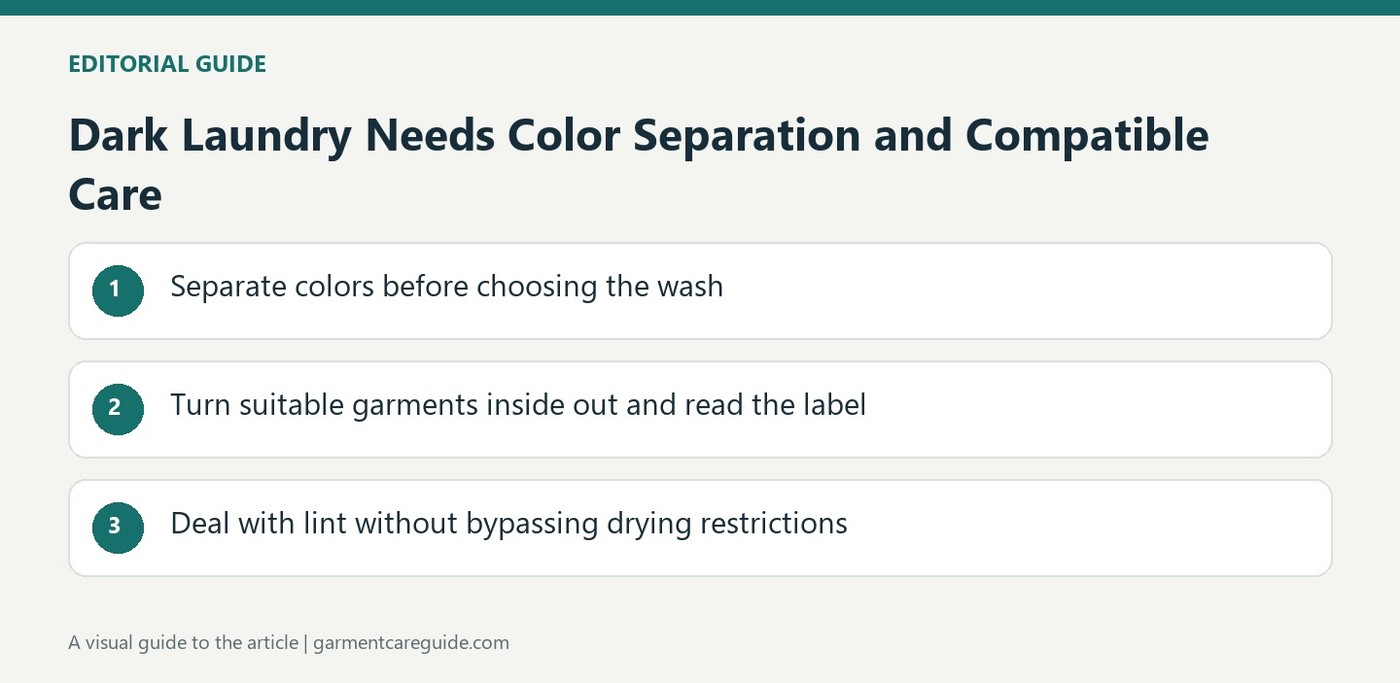
Ariel's guide to limiting fading begins with reading care labels and setting aside items that require hand washing or professional cleaning. It then groups compatible colors separately from whites and lighter clothing. Those steps address different risks: care sorting determines the permitted treatment, while color sorting helps manage dye transfer. A brightly colored delicate item should not join a heavier load simply because its shade fits. Build a group whose labels allow the same temperature and washing process before considering whether it is large enough for an efficient load.
Reduce unnecessary mechanical treatment
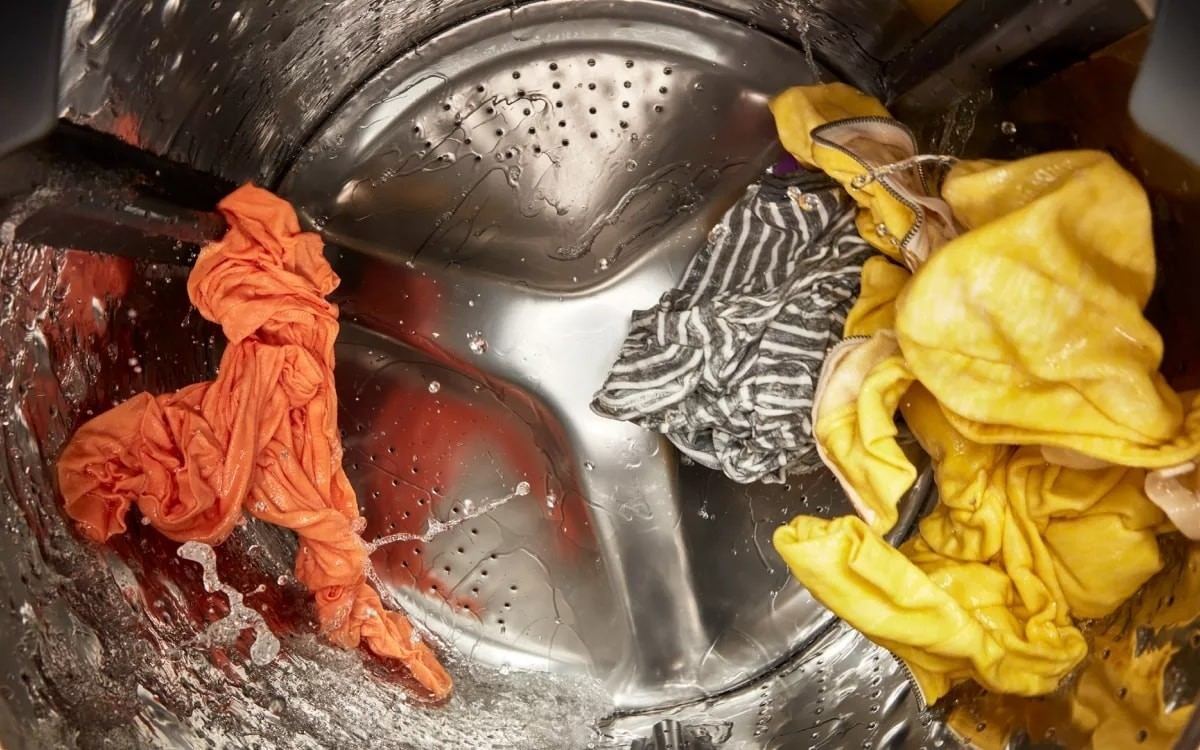
The source recommends turning suitable colored garments inside out and using an appropriate gentle process. It also cautions against overfilling the washer, which can interfere with cleaning. Cooler washing is discussed alongside detergent formulated for those conditions. Use those ideas within each garment's restrictions instead of treating low temperature as permission for unrestricted agitation. Stains may require pretreatment, but any applied product must be compatible with the fabric and used as directed. The objective is controlled cleaning, rather than adding more heat, friction or detergent than the item needs.
Do not leave wet colors sitting together
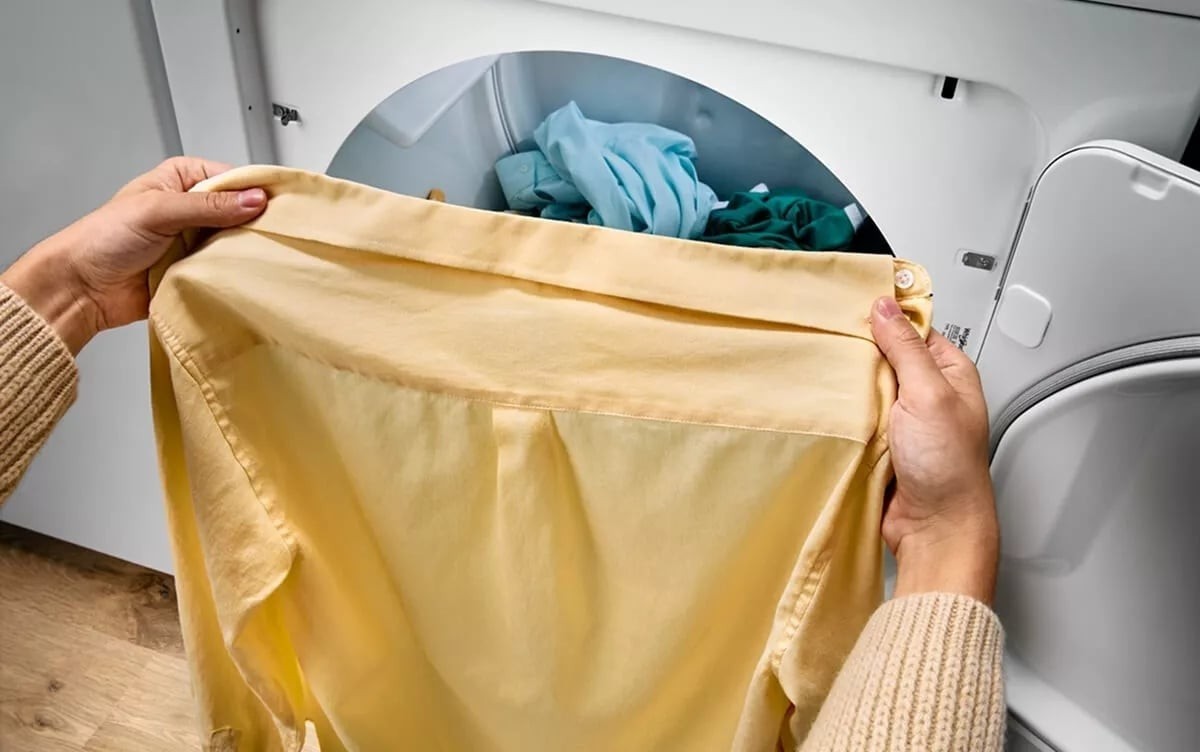
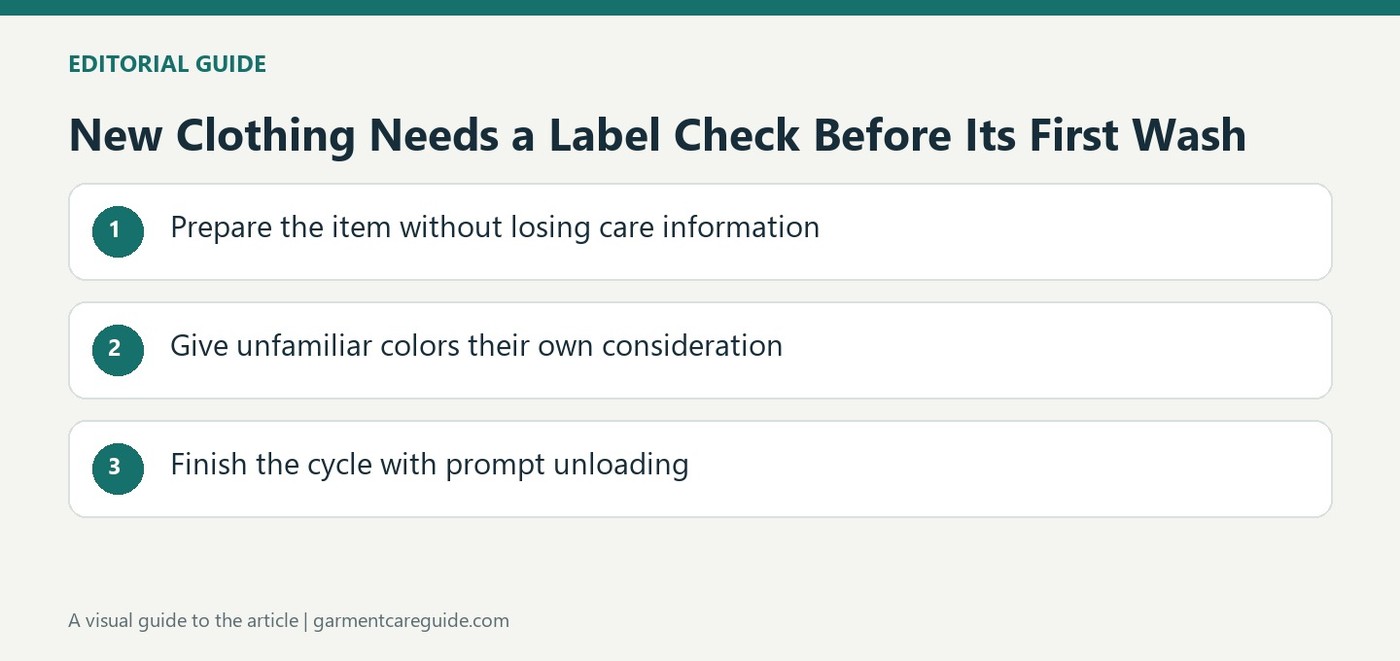
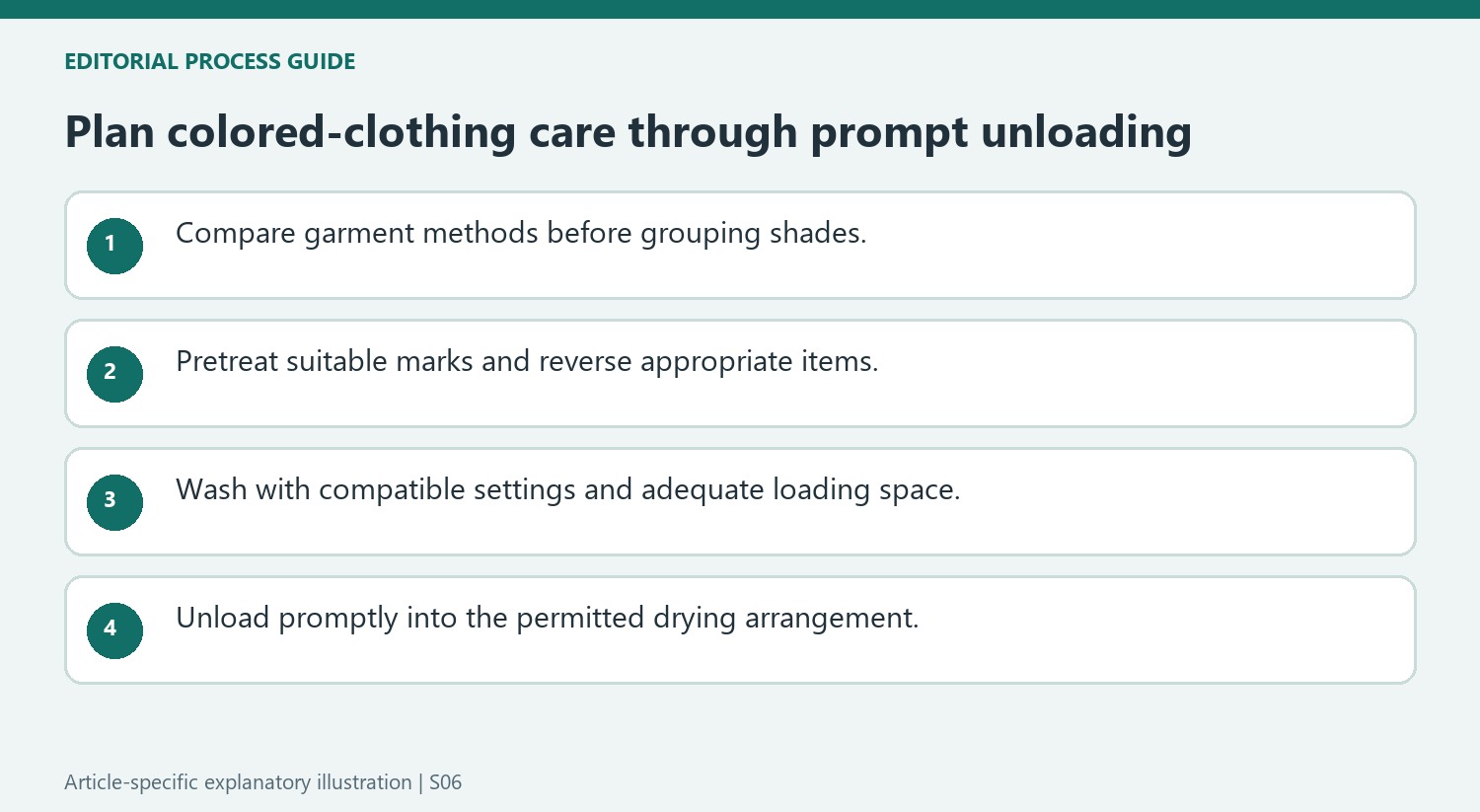
Ariel recommends removing clothing when the wash finishes because dyes can transfer while garments remain damp together. This makes unloading part of the care routine, not merely a convenience after the main work is done. Plan the permitted drying arrangement before starting the machine so the load can be dealt with promptly. The guide discusses line or rack drying as an alternative to tumble drying, subject to the individual labels. Keeping the full sequence in mind helps protect color from sorting through the final drying stage, while avoiding the assumption that one preparation trick can prevent every cause of fading.
Arrange unloading before pressing the start button
Prompt removal is one of the guide's specific color-care steps because damp colored pieces can transfer dye while sitting together. Make room for the permitted drying arrangement before the wash begins, particularly where items need flat support or separate handling. This turns unloading into a planned part of fabric care instead of an optional chore after the cleaning is finished. It also avoids a common mismatch: carefully sorting colors and selecting a gentle wash, then leaving the wet load compressed in the drum. The source does not make prompt unloading a guarantee against every fading mechanism, but it identifies an avoidable exposure that remains after the machine has completed its main work.
Treat inside-out preparation as additional care rather than a promise
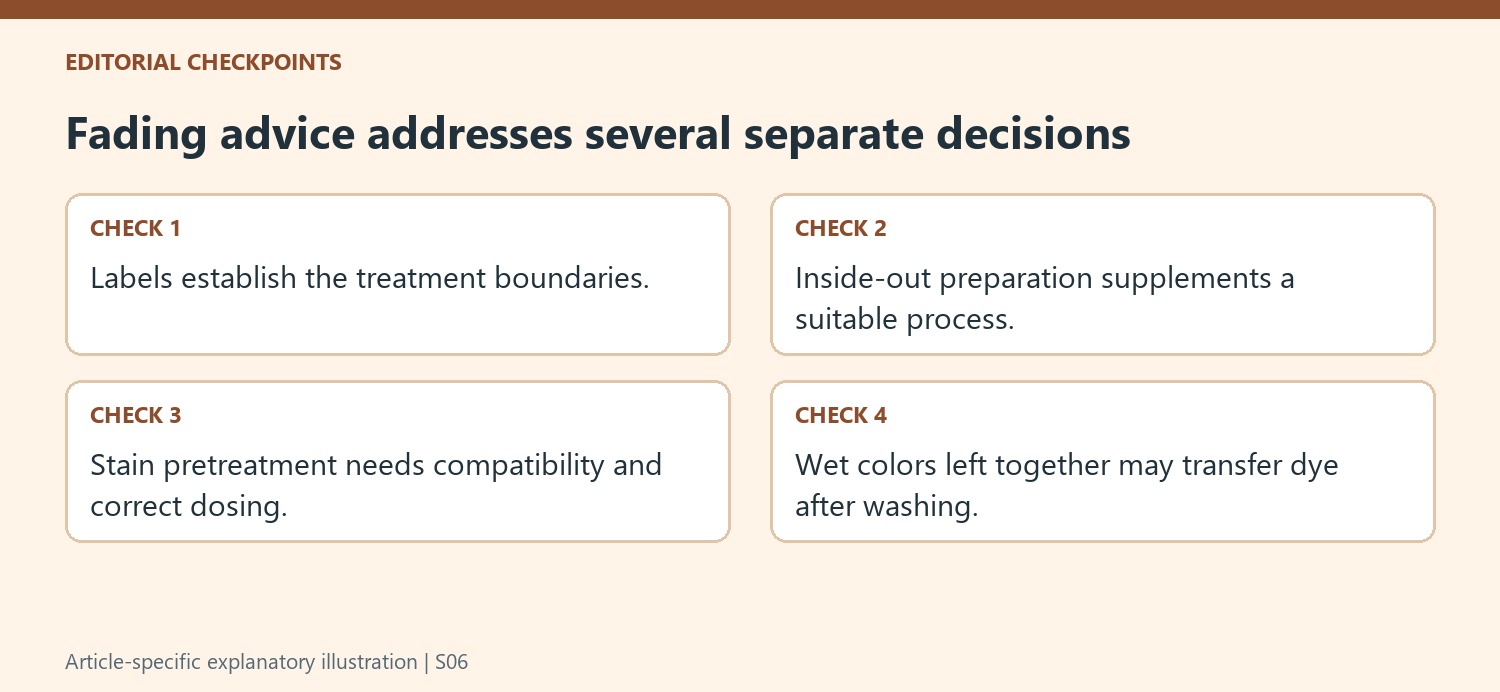
Ariel recommends reversing suitable colored garments before washing and combines that advice with label reading, compatible sorting, and controlled action. Read the measures together. An inside-out surface does not prove that no dye will transfer, nor does it authorize an unsuitable program. Compare the fabrics and permitted methods of all pieces in the group before loading. A brightly colored delicate article may belong apart from heavier clothing in a similar shade. The same care applies to optional conditioner or stain preparation: confirm suitability and follow the relevant product directions. The outcome depends on a coherent routine, not on expecting one easy preparation step to prevent every possible source of color change.
Separate a stain problem from the allowed wash intensity
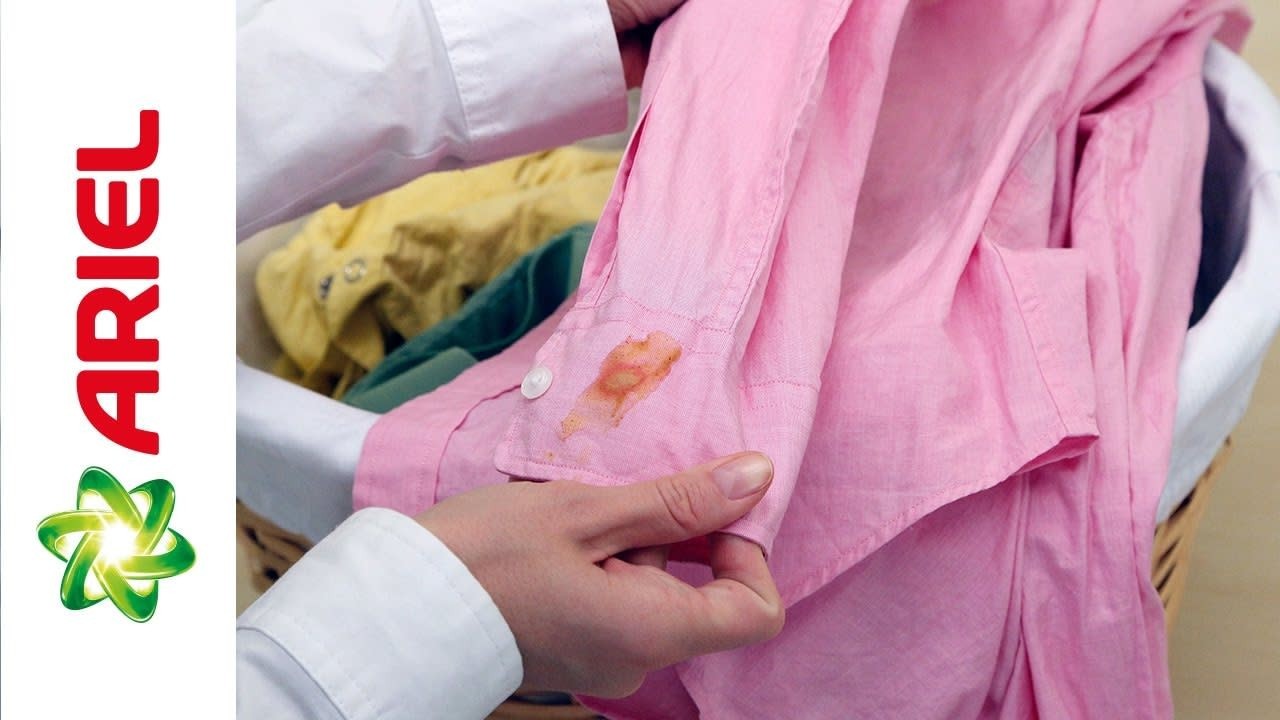
A visible stain on a colored garment may need compatible pretreatment, but it is not permission to increase temperature, movement, or detergent without limit. The source discusses both pretreatment and gentle washing, showing that these are related but distinct decisions. Identify the material and mark, choose an appropriate product, and use the directed amount within the clothing restrictions. Then select the allowed program for the actual load. Avoid overfilling the washer in an attempt to combine too many different needs at once. After washing, reassess each garment's drying instruction rather than transferring the whole color group automatically into a single dryer cycle. This keeps the stain response aligned with the garment through the final stage.