GarmentCare Guide
Identify susceptible items before starting the machine
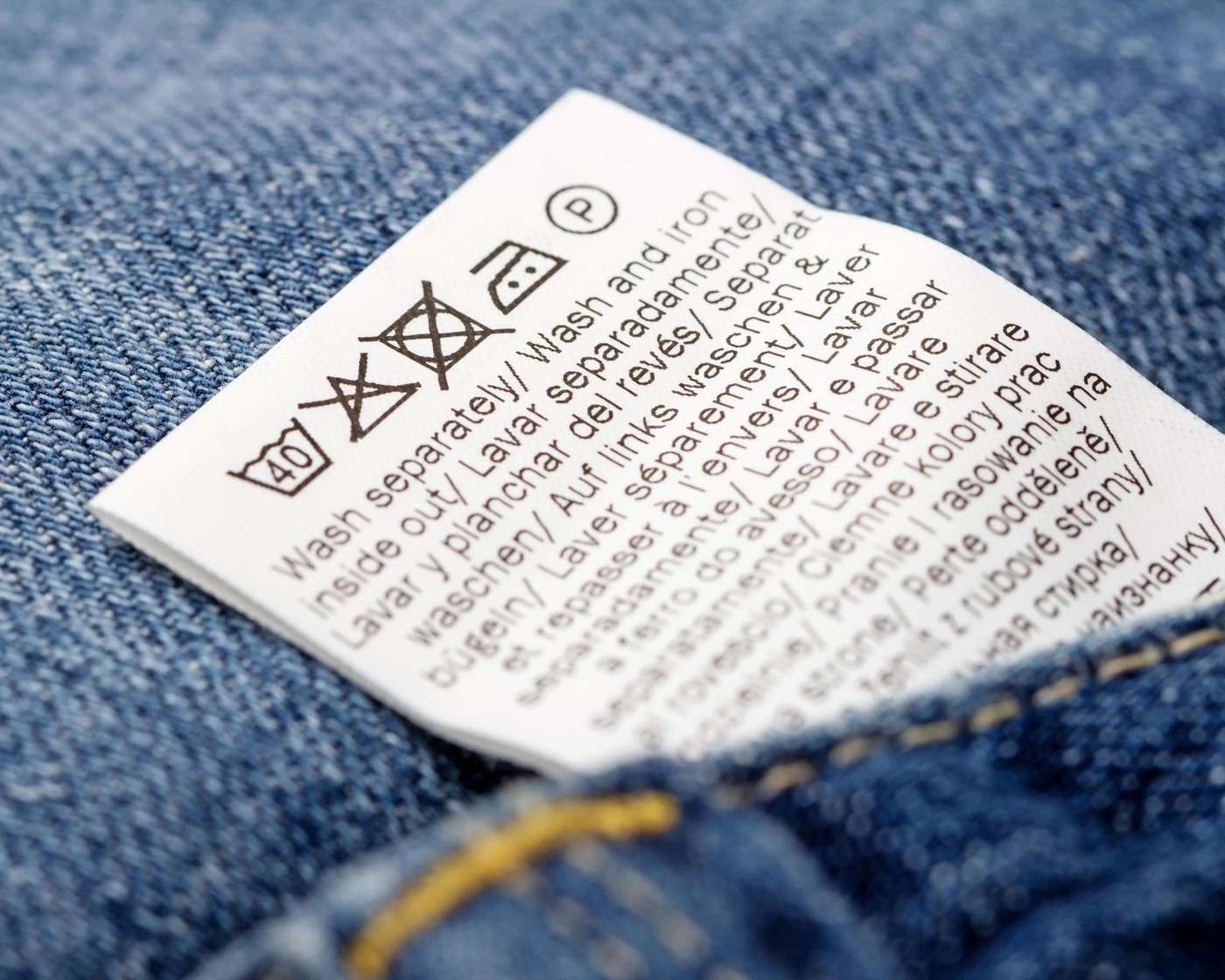
Maytag's guide to reducing shrinkage emphasizes fabric type and heat as important considerations. Its first practical step is reading care tags and separating items according to their permitted treatment. This prevents a garment needing gentle conditions from joining a load simply because its color matches. A wool sweater, cotton top and durable household textile can require different processes even when all appear washable. Use the instructions for each finished item rather than treating a broad material category as proof that every garment has the same dimensional stability.
Cooler washing still needs the right cycle
The source discusses cold water and delicate programs as options for suitable clothing. Temperature and movement should be considered separately: a cool normal cycle is not automatically equivalent to an allowed gentle process. Check the washer manual to understand its settings, then keep those settings within the clothing label. Manual or professional cleaning may be appropriate where the item calls for it. A missing label should prompt further identification or advice, rather than an assumption that any method named gentle must be safe for an unfamiliar garment.

Drying is part of the same prevention plan
Maytag recommends lower-heat or natural drying approaches where permitted, helping avoid unnecessary thermal treatment after washing. Read the drying symbols before selecting an air-only or low-heat cycle because tumbling itself may be restricted. Likewise, a garment that needs flat drying should not automatically be suspended by its wet weight. Arrange the correct support before washing so the last stage is not improvised. This approach connects sorting, wash settings and drying choices, reducing the chance that care taken during one stage is undermined by an incompatible process immediately afterward.
Sort susceptible garments before deciding on a shared program
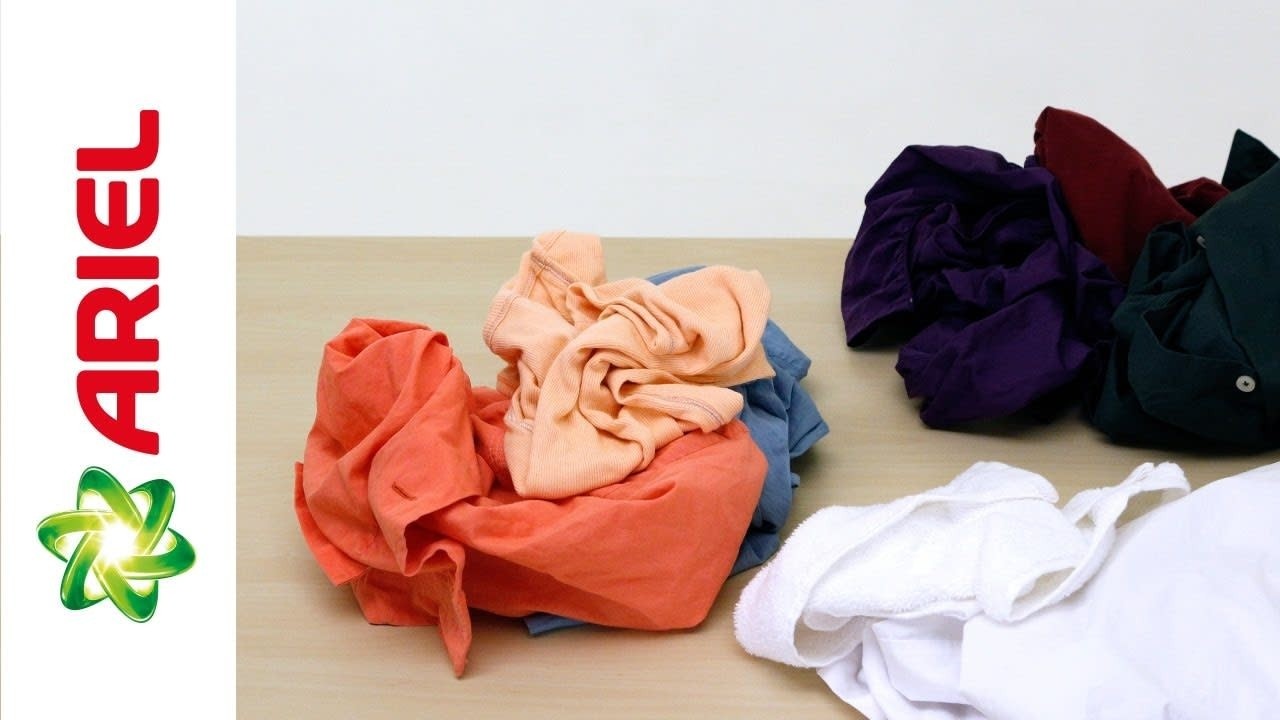
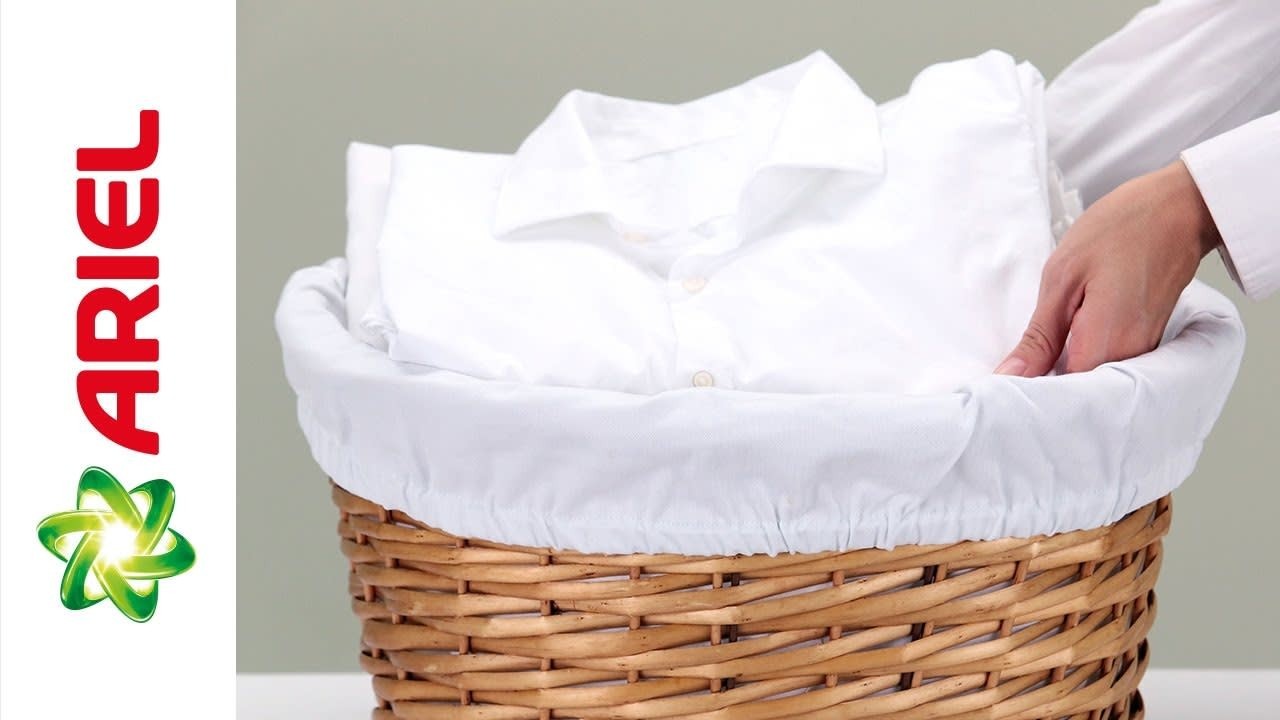
Maytag begins its practical sequence with care-tag reading and separation by treatment needs. This matters because shrinkage prevention is not only a question asked at the machine controls. A delicate item placed in a sturdier load may be overlooked once the routine is underway. Read the actual instructions while the garments are still dry and accessible, then set aside pieces whose permitted route differs. Fiber names identify a possible concern but do not establish identical behavior for every finished product. A cotton top and a cotton household textile can differ in processing and construction. Build the group from compatible care claims rather than assuming a shared material name supplies one safe program for all of them.
Understand the machine instead of selecting a reassuring label
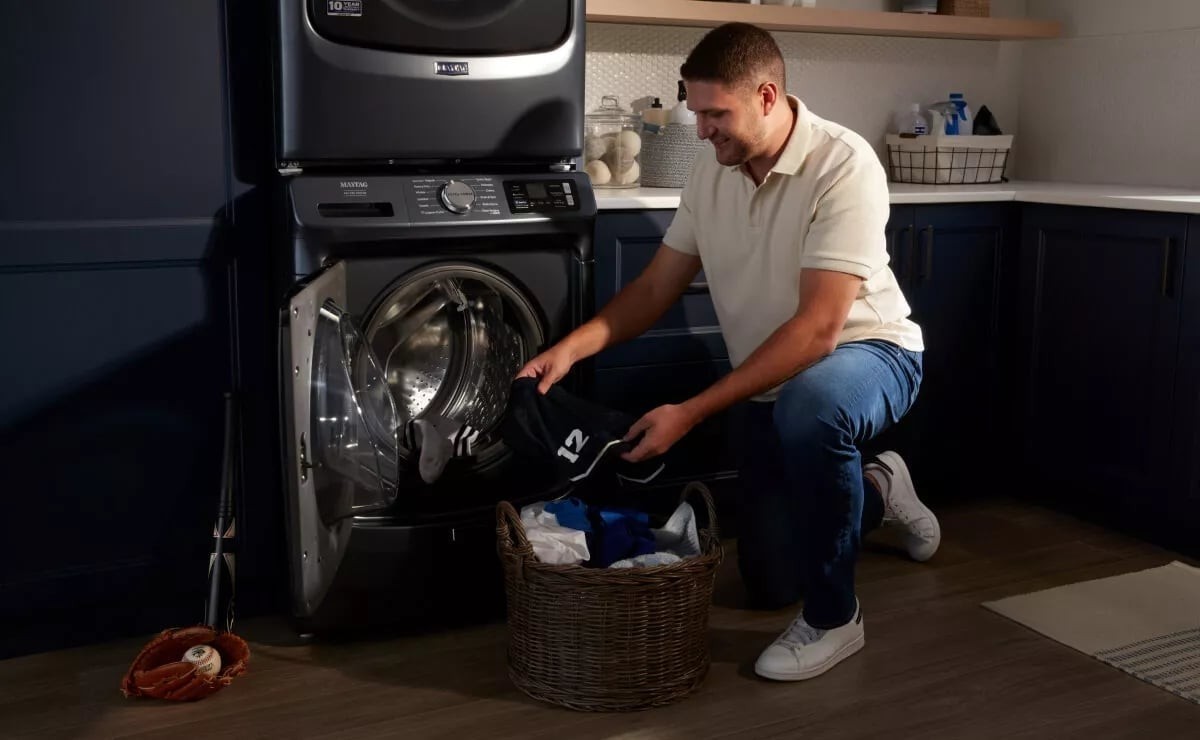
The source recommends becoming familiar with the washer's settings and discusses cold water and delicate cycles for suitable items. Read the appliance manual to understand the actual temperature, movement, spin, and load conditions. A cycle called gentle does not independently establish that an unlabeled garment can be washed in it, and cold water does not remove all mechanical exposure. Where instructions are missing, seek identification or appropriate care advice instead of using the program name as a substitute claim. The same applies to hand washing and professional cleaning: these are distinct methods to select for an item that permits them, not automatic fallback routes whose suitability can be inferred merely from concern about shrinkage.
Choose drying support alongside the heat setting
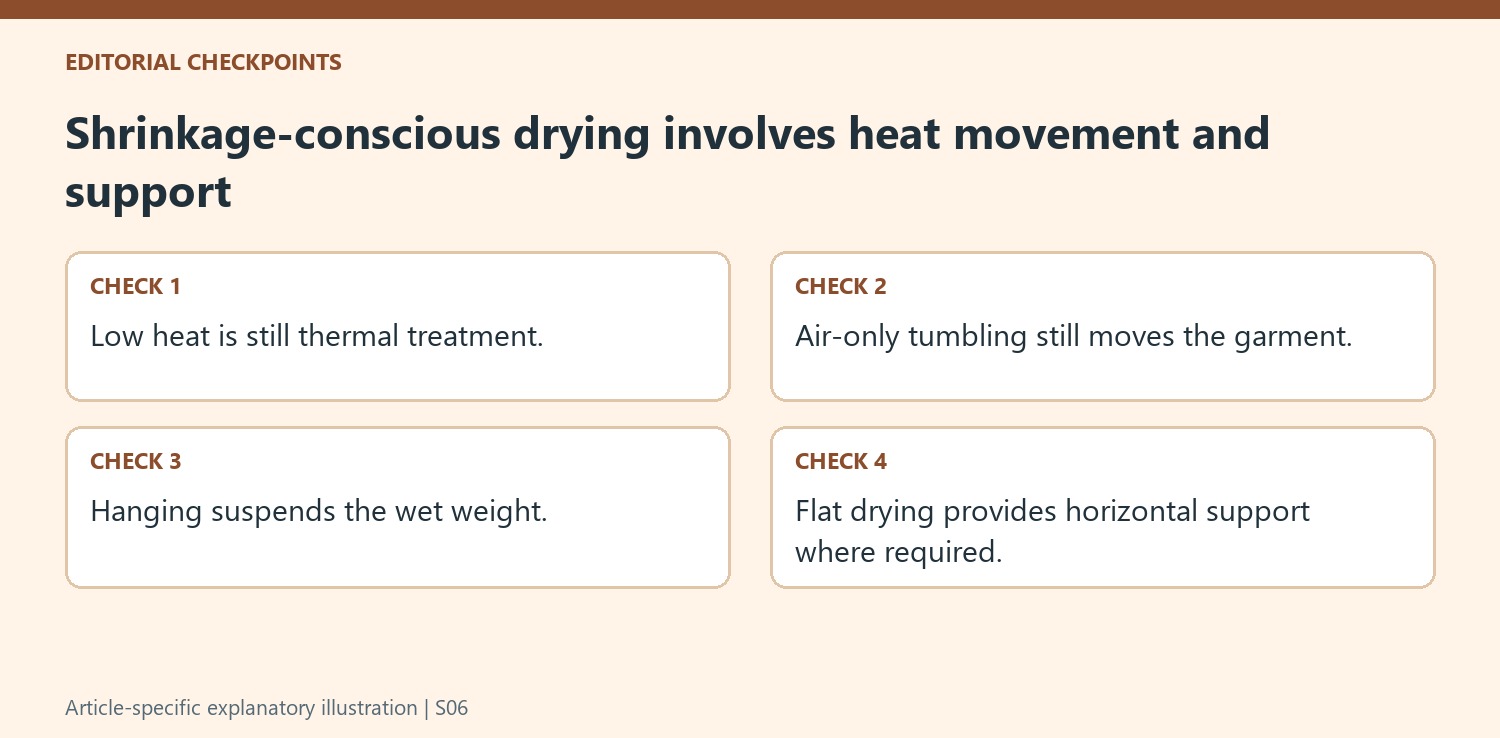
Maytag's discussion includes lower heat, air-only tumbling, and natural drying, but those alternatives still need to fit the garment's separate drying instruction. No heat reduces thermal input without removing drum motion. Hanging removes tumbling while suspending the item's wet weight. Flat drying provides a different support arrangement again. Decide which combination is permitted before cleaning and prepare the required space. This prevents an otherwise careful cold wash from ending with a convenient but unsuitable drying choice. Also avoid reading prevention advice as a promise that any material can be made dimensionally stable by selecting the lowest available setting. The practical aim is to keep every stage inside the actual garment's permitted treatment, with both heat and handling considered.