GarmentCare Guide
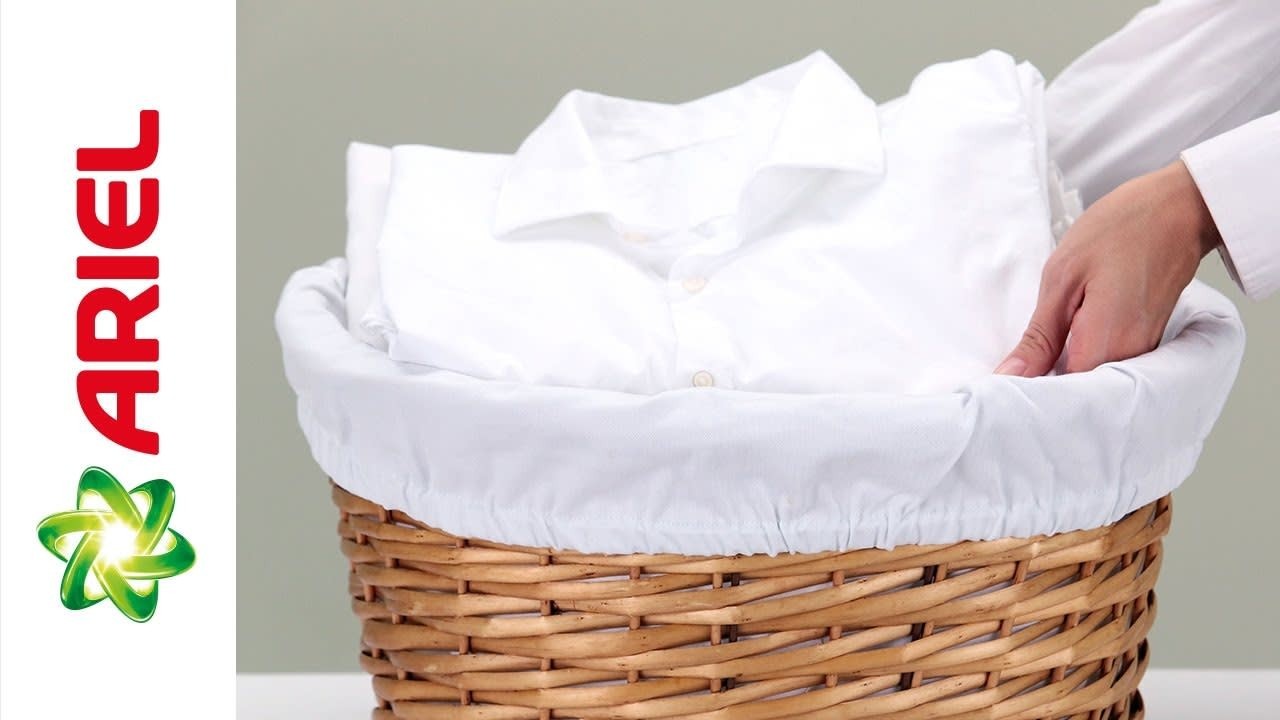
White is a color group, not a care instruction
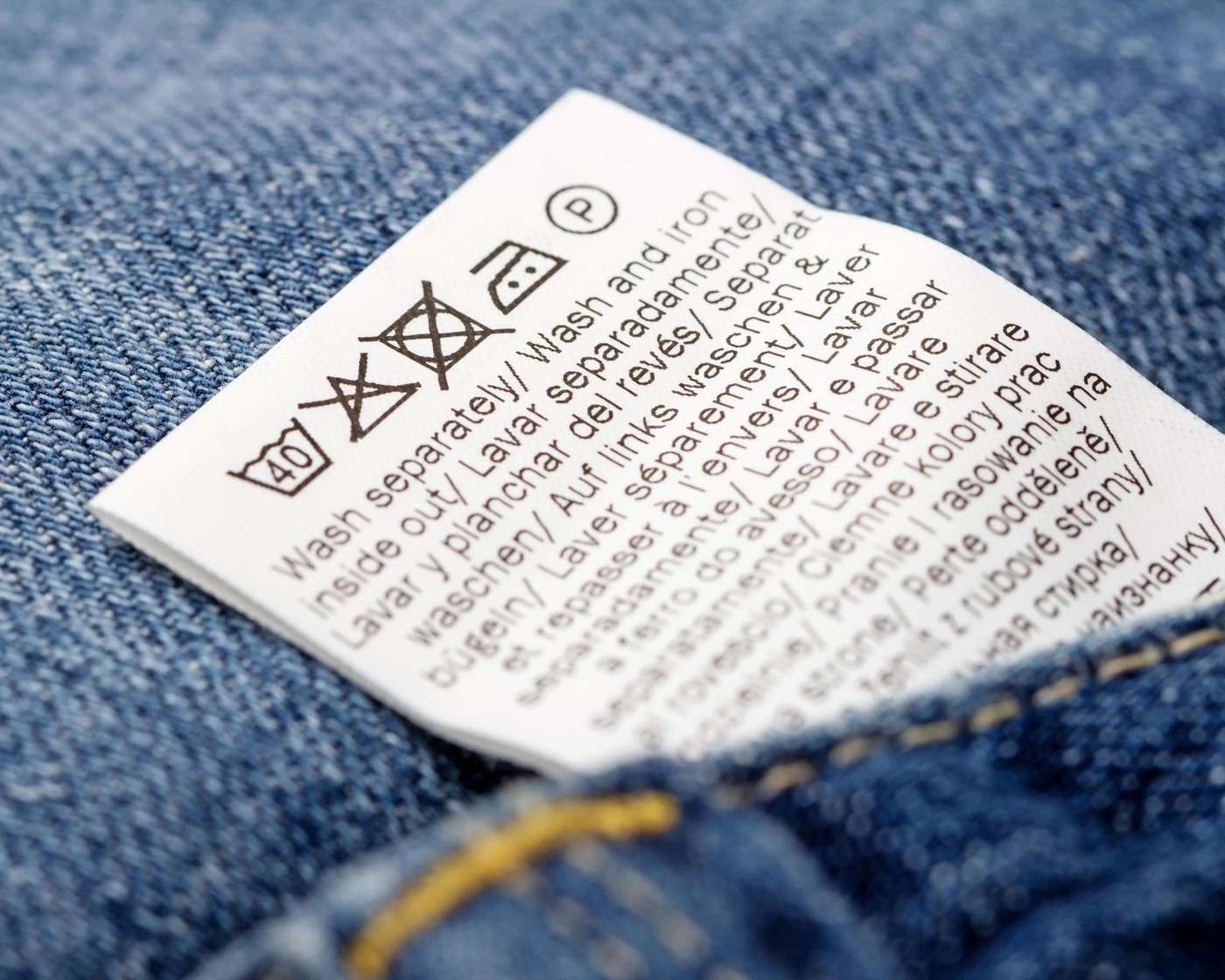
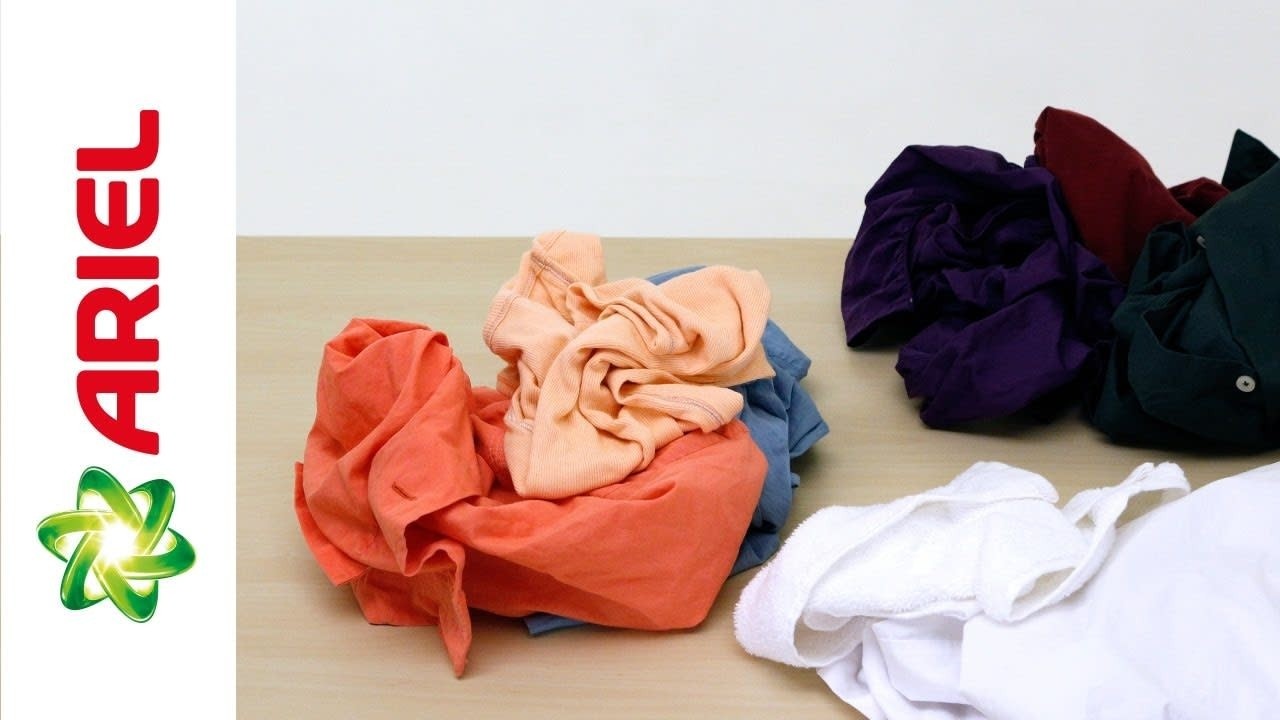
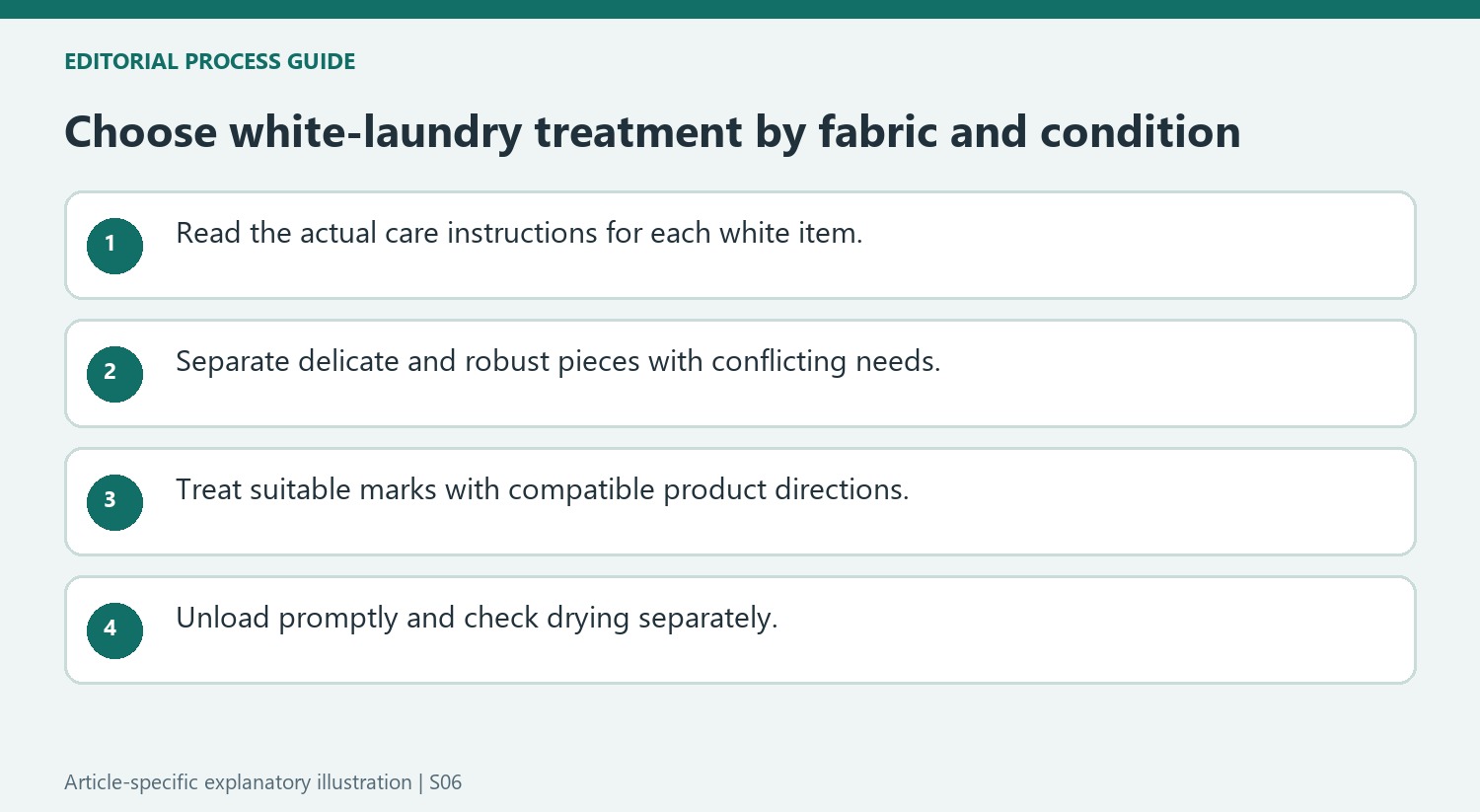
Ariel's guide to white laundry distinguishes everyday robust items from delicate blouses, underwear and other sensitive pieces. That difference should be established before choosing temperature or stain treatment. Read the care label for machine-wash permission, heat limits and drying instructions. A white garment does not automatically allow a hot wash, bleach or intensive agitation. Sorting whites can reduce unwanted color transfer, but it still leaves the question of whether those garments share compatible care requirements and levels of soil.
Treat stains within the item's allowed process
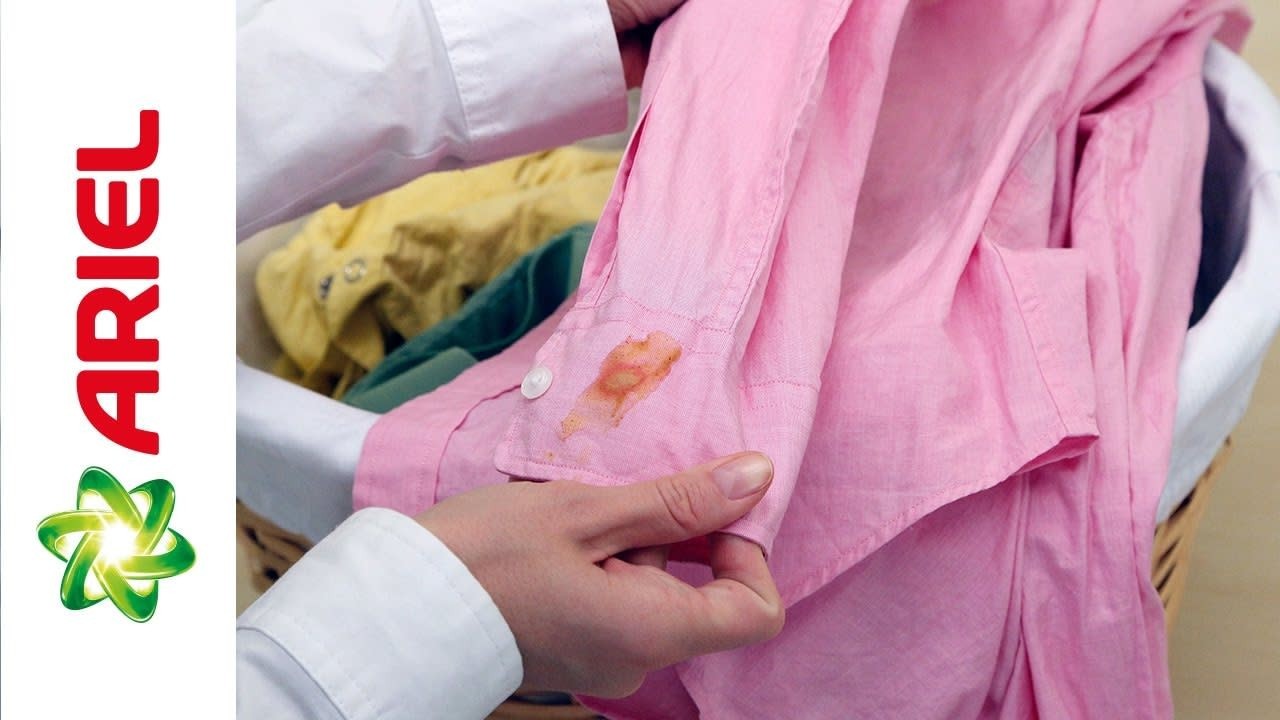
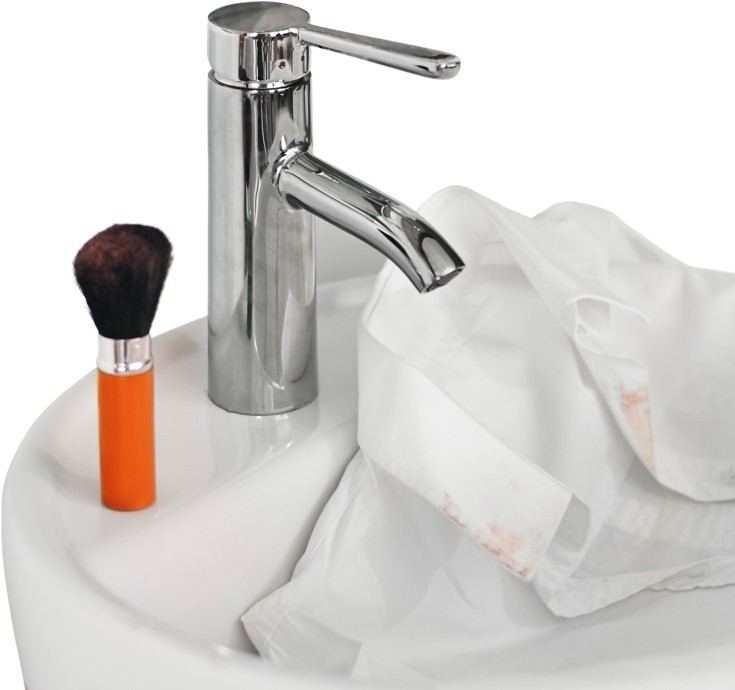
For suitable washable whites, the source describes detergent soaking and then washing with compatible items. The product directions and garment claim should govern whether soaking is appropriate and how it is performed. Delicate whites require a separate decision, including hand washing when the label says hand wash only. A gentle machine program is an option only for approved items. Do not use the desire for a brighter result as a reason to exceed the stated temperature or introduce an incompatible bleaching product. Persistent stains may need specific guidance instead of a stronger version of the same routine.
Drying permission remains separate from washing
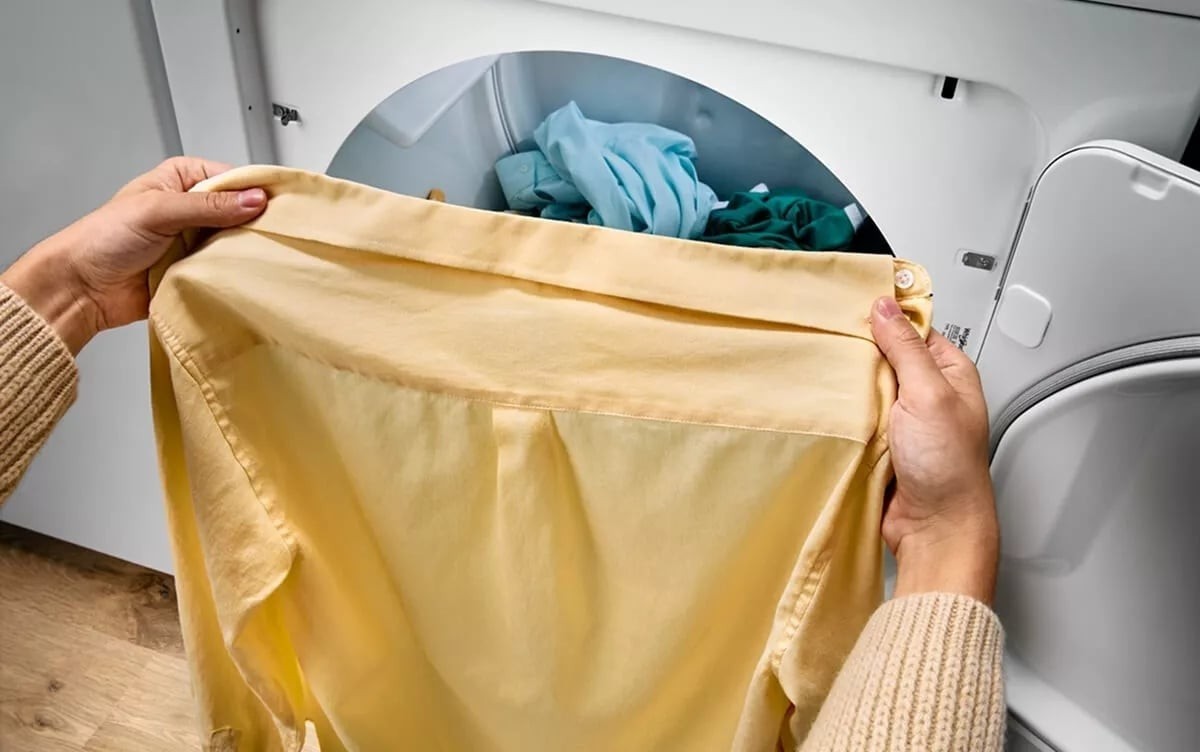
Ariel advises checking drying directions as part of caring for delicate white clothing. Low heat can be relevant where machine drying is allowed, while other items need natural drying. Robust towels and lightweight garments may also benefit from separate finishing because of their different weight and lint behavior. The guide recommends prompt unloading at the end of the wash. Preparing the drying arrangement beforehand makes that easier. The useful routine combines color separation, compatible care, appropriate stain handling and permitted drying, preserving the distinction between a garment being white and it being able to tolerate a severe laundry process.
Separate a wish for brightness from the permitted treatment
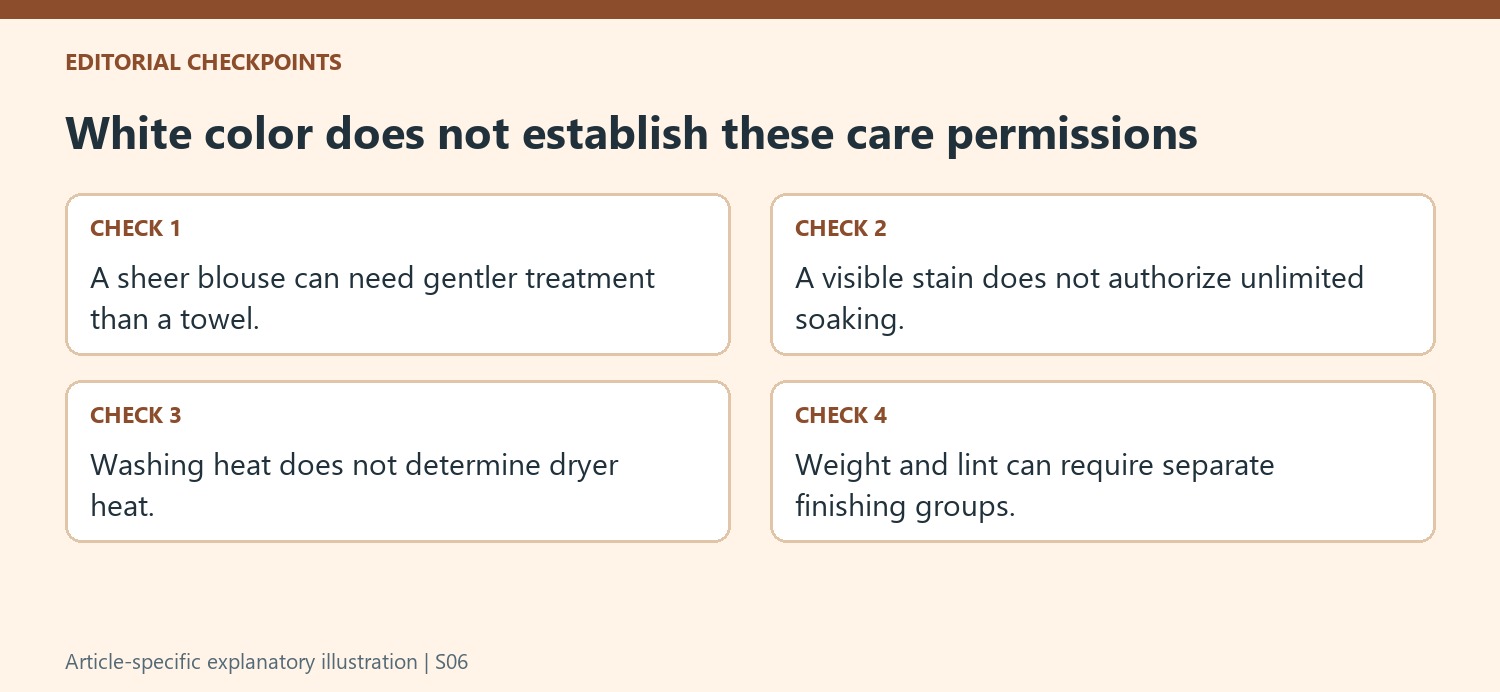
Ariel's white-laundry guide includes both sturdy items and delicate garments, so brightness cannot define a single cleaning method. Read the finished article's label before choosing heat, movement, or an added whitening treatment. A sheer white blouse does not inherit the tolerance of a white towel merely because both need freshening. The same caution applies to a visibly greyed item: the appearance identifies a problem but does not authorize any product or temperature proposed to solve it. Establish the material and allowed process first, then select compatible guidance for the mark or discoloration. This makes the desire for a brighter result a reason to plan carefully rather than a reason to bypass existing restrictions.
A soaking example needs both fabric and product checks
The source describes soaking suitable whites before a wash, but the permitted garment treatment and the chosen product's directions still govern the details. Check whether immersion and the proposed solution are appropriate, then follow the directed amount and duration. Do not extend a treatment automatically because a stain remains visible, and do not assume a strong mixture is safer on a garment just because it lacks colored dye. Delicate construction, finishes, and blends remain relevant. After preparation, combine the piece only with clothing sharing a compatible wash route. This separates the stain's needs from the rest of the load and avoids subjecting lightly soiled whites to a treatment selected for one more difficult article.
Washing tolerance does not establish drying tolerance
A white textile that permits a warm or hot wash still needs its own drying instruction checked. Tumble heat and mechanical movement are a different process, while natural drying may require a particular support position. Ariel's discussion of towels and sheets also makes lint and weight relevant during finishing. Consider whether pieces that shared a wash should be separated before drying, especially where a heavy lint-giving towel sits alongside a light garment. Unload promptly so the intended arrangement can begin without delay. Any remaining stain deserves assessment before heat is applied. The final routine then respects color, construction, condition, and each stage of treatment instead of using whiteness as a substitute for all four.