GarmentCare Guide
The label decides whether the machine is suitable
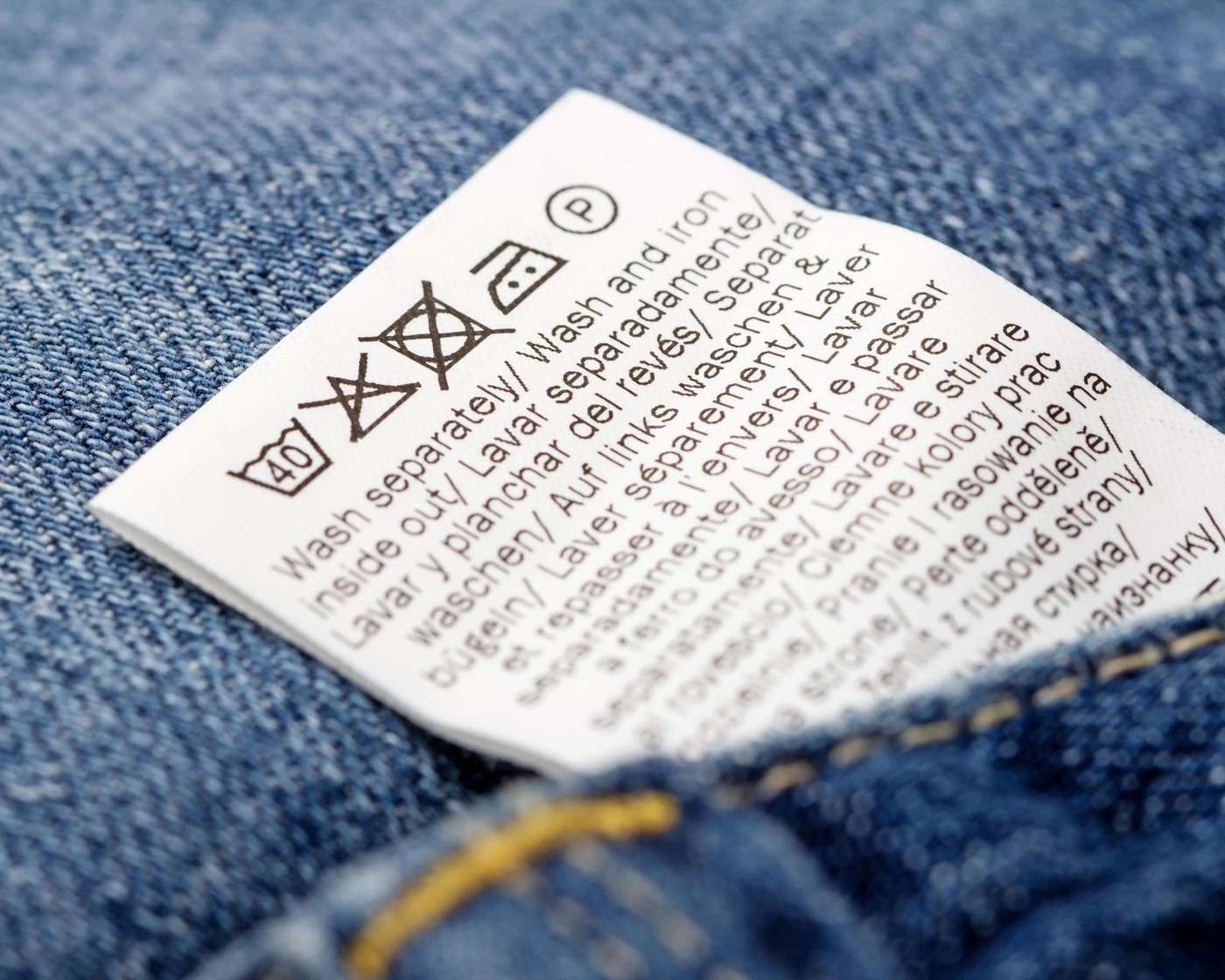
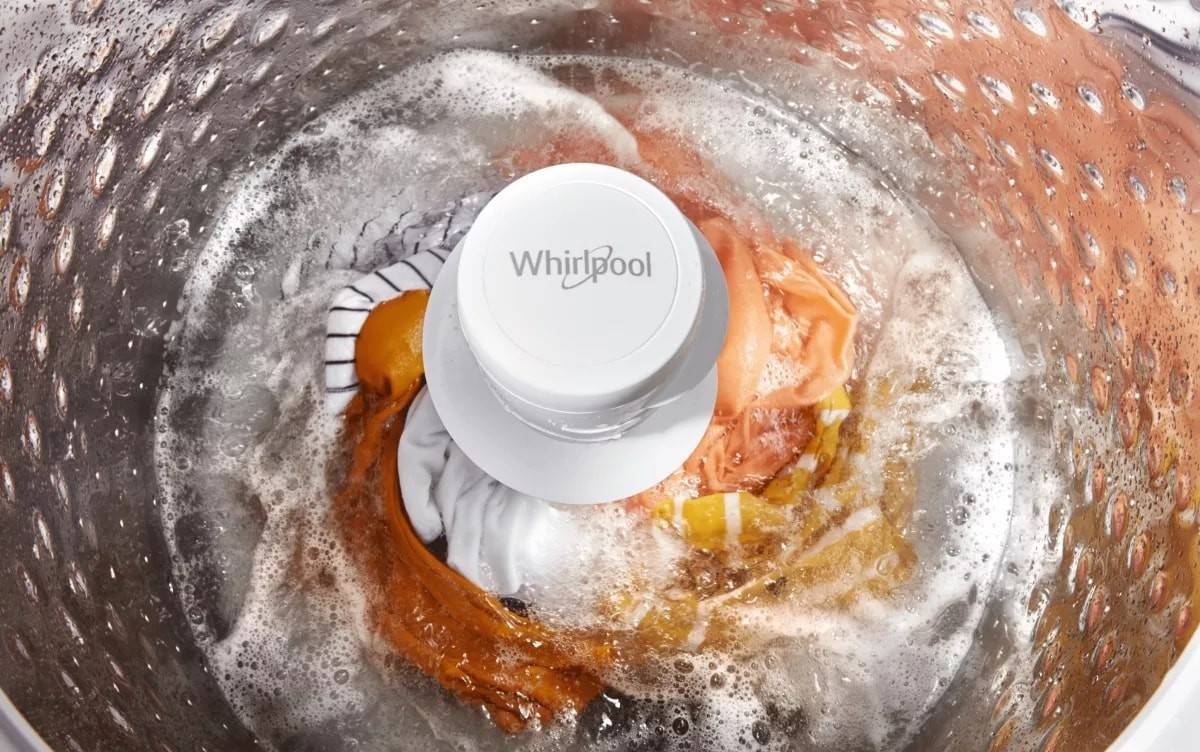
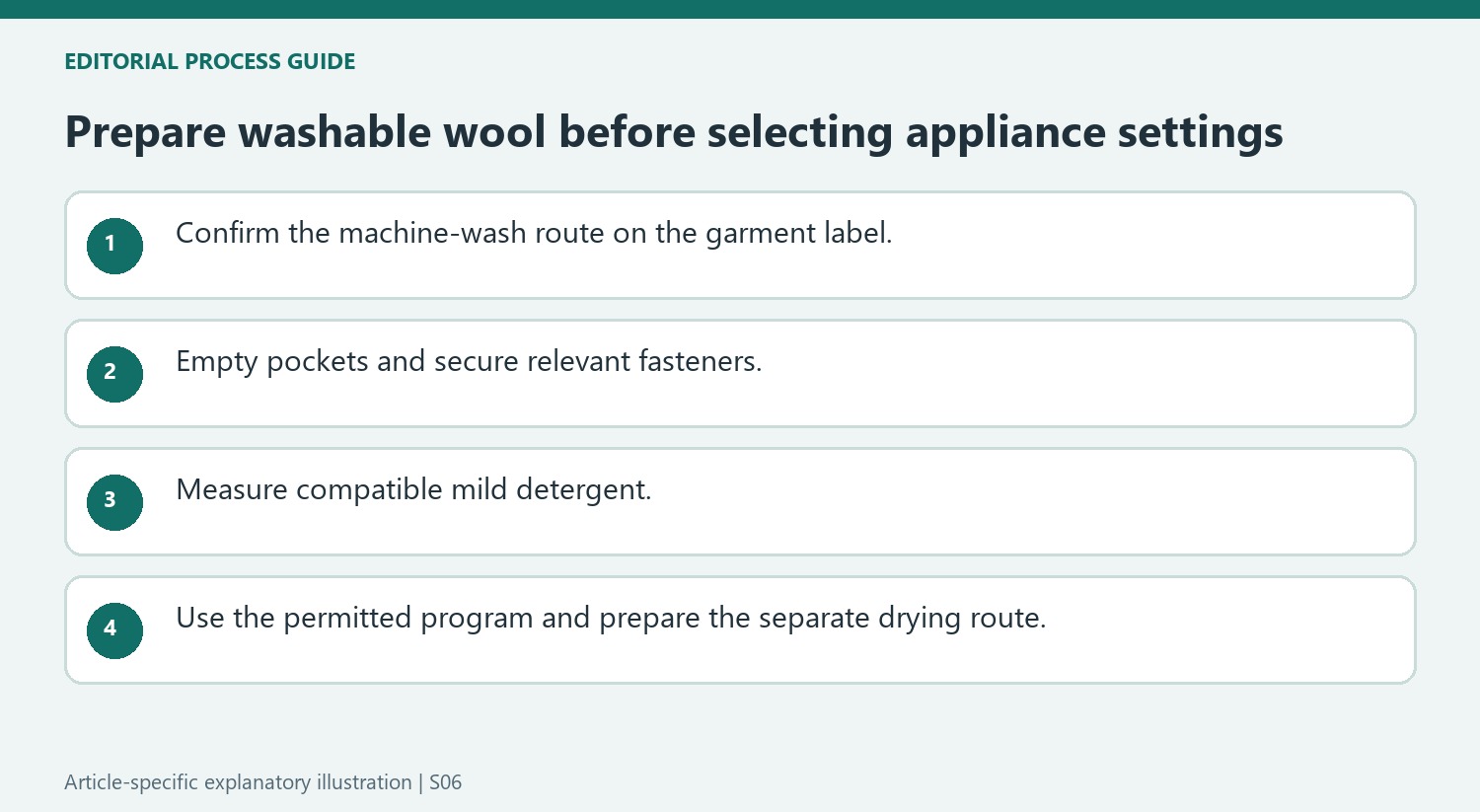
Whirlpool's wool guide discusses both machine and hand washing, but directs readers to the care label before beginning. That condition matters because the word wool covers garments with different weights, constructions and treatment claims. Identify the allowed method and any restrictions before selecting a cycle. If the item has no readable care information, seek appropriate advice instead of assuming the gentlest available setting must be suitable. A general how-to article can help explain a permitted process, while the finished garment determines whether that process should be attempted.
Pockets and fasteners belong in the preparation
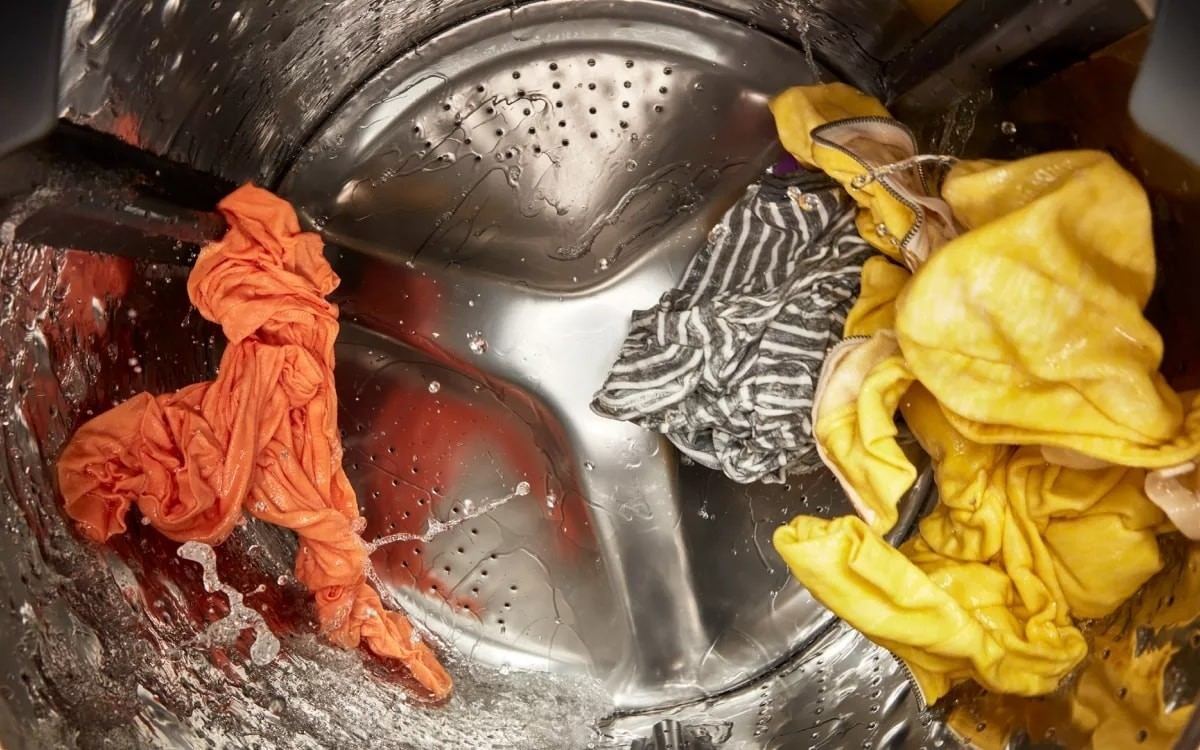
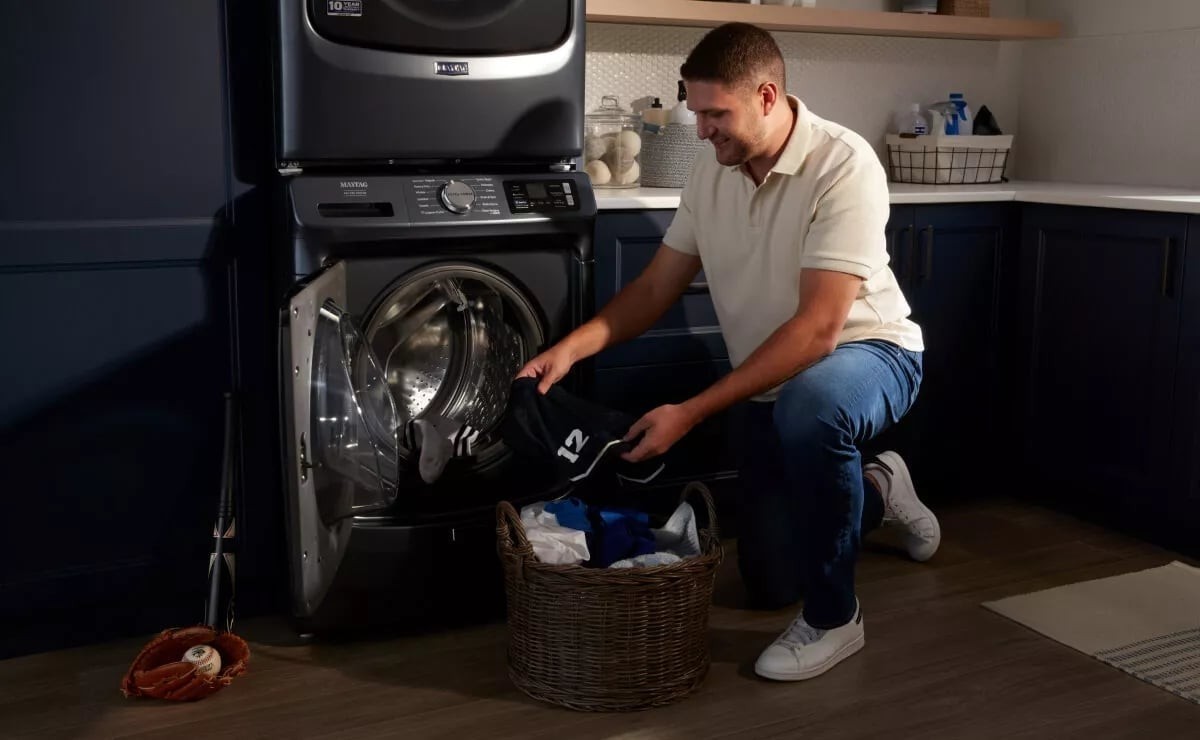
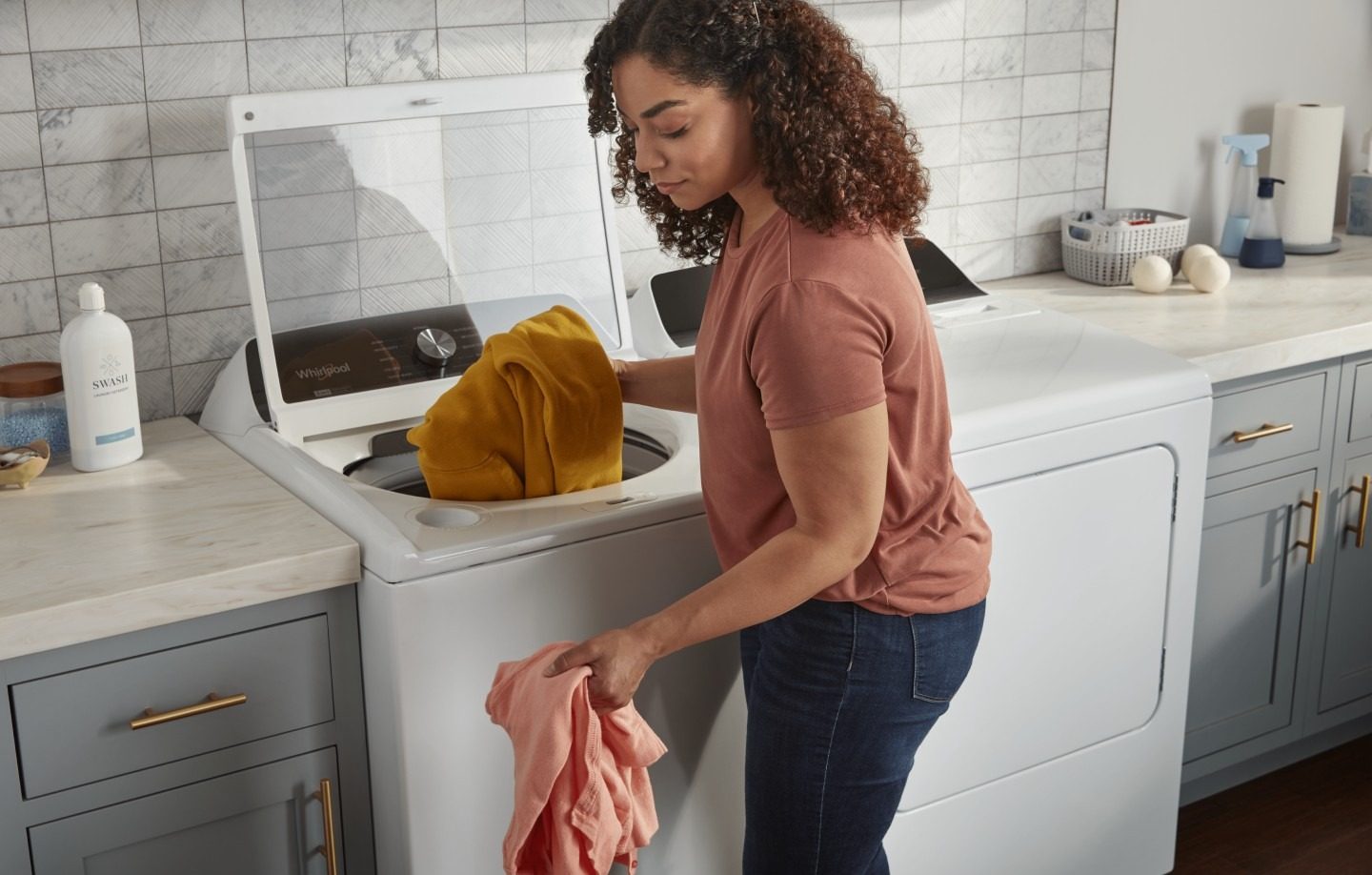
For suitable machine-washable items, Whirlpool recommends emptying pockets and fastening zippers or buttons before loading. This helps avoid unnecessary snagging and other problems during movement. Add a mild detergent according to its directions, then select the appropriate wool program or another allowed gentle treatment identified by the appliance instructions. Cold water can be relevant, but the temperature choice must remain within the care claim. Preparing the item and understanding the program are separate steps; neither should be skipped merely because the garment is being washed on a cycle named delicate.
Choose drying from the garment's own instructions
The source discusses natural and machine drying routes for wool, making a further label check necessary. Weight alone should not be used to infer permission for heated tumbling. Follow the actual item's drying claim, including any restrictions on heat or the required support position. When hand washing is the permitted route, Whirlpool describes gentle handling and thorough rinsing, followed by pressing out water. Planning washing and drying together reduces improvisation with a heavy wet garment. It also keeps general appliance guidance tied to the specific wool product rather than turning it into an unrestricted fiber-wide rule.
Check fasteners and pockets as a separate preparation task
Whirlpool recommends emptying pockets and securing zippers or buttons on suitable machine-washable wool before loading. This work should happen after confirming the washing permission and before choosing a cycle. Loose pocket contents and exposed hardware introduce handling problems that a mild detergent cannot address. Equally, careful fastening does not authorize a process excluded by the garment label. Read these as complementary checks. Identify the allowed route, prepare the actual item, and then select the program. The sequence is especially useful with wool clothing that has details beyond a plain knit surface, because the finished article contains components whose interaction with the load matters as well as its fiber content.
Read program descriptions rather than relying on a familiar name
The source suggests a wool setting where available and discusses gentle alternatives, with the item's own care claim governing suitability. Appliance names alone are incomplete descriptions. Consult the machine instructions to understand the available temperature and movement before treating a program as equivalent to one used successfully elsewhere. Measure a mild compatible detergent according to its manufacturer guidance instead of increasing the dose because wool feels difficult to clean. If the proposed routine cannot be reconciled with the label, obtain appropriate advice. The general guide supplies a framework for a permitted process; it does not establish that every wool garment belongs in any machine offering a delicate option.
Weight cannot settle the dryer question
A heavy wool item can be inconvenient to dry, but its weight is not permission to expose it to a heated tumbling process. Whirlpool's drying discussion includes an explicit label check, and that remains the decisive step. Read the separate drying instruction before planning where the garment will go after rinsing and water removal. For an item requiring flat natural drying, prepare appropriate support instead of selecting a dryer merely for speed. For a permitted machine-drying route, follow the actual garment and appliance limits. The same principle applies to older or unfamiliar pieces: thickness and appearance offer context, while the supplied care information determines which treatment can properly form part of their routine.
References
- How to Wash and Dry Wool | Whirlpool. Whirlpool.