GarmentCare Guide

Read the blend and its care claim
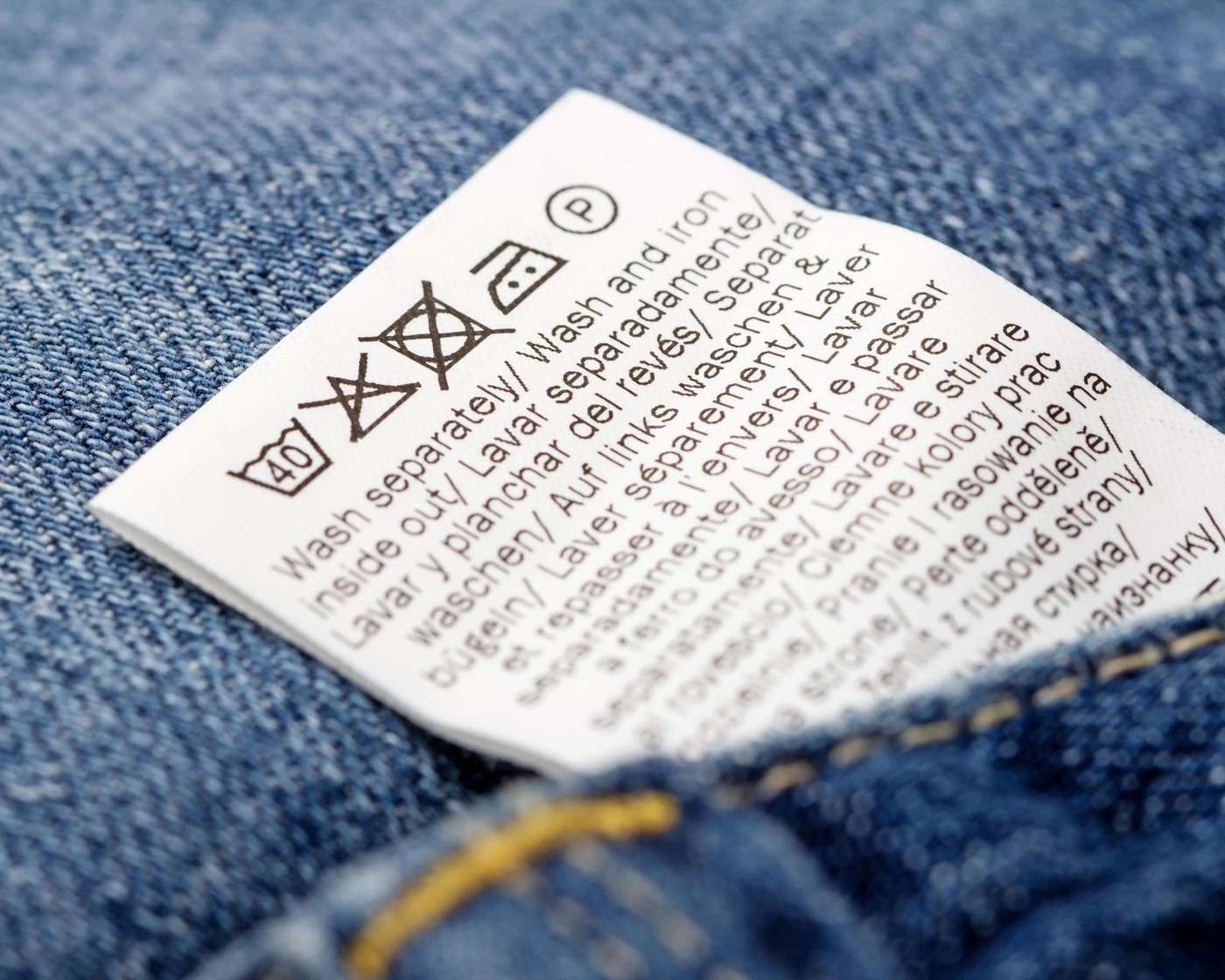
Cashmere is an animal fiber commonly used in sweaters, cardigans and scarves. Ariel's guide notes that it may be blended with other materials, with composition listed on the label. A blend description gives useful context but does not replace the garment's washing instructions. Some items allow hand washing, while certain products permit machine treatment. Check the actual claim before choosing either route. A fine appearance or a high cashmere percentage should not be used as a substitute for the information supplied with the finished garment.
Keep permitted washing cool and controlled
For hand-washable cashmere, the source recommends water no warmer than 30 degrees Celsius and a detergent intended for wool and silk. Work the water through the item gently without twisting or wringing it. Machine washing also requires permission, with the relevant cool or wool program and the garment's restrictions governing the settings. Ariel suggests a mesh bag for suitable machine-washable pieces. This provides protection within an allowed routine, rather than making the washing method appropriate for any item. Detergent and dosing directions remain part of the same decision.

Support the shape while moisture leaves
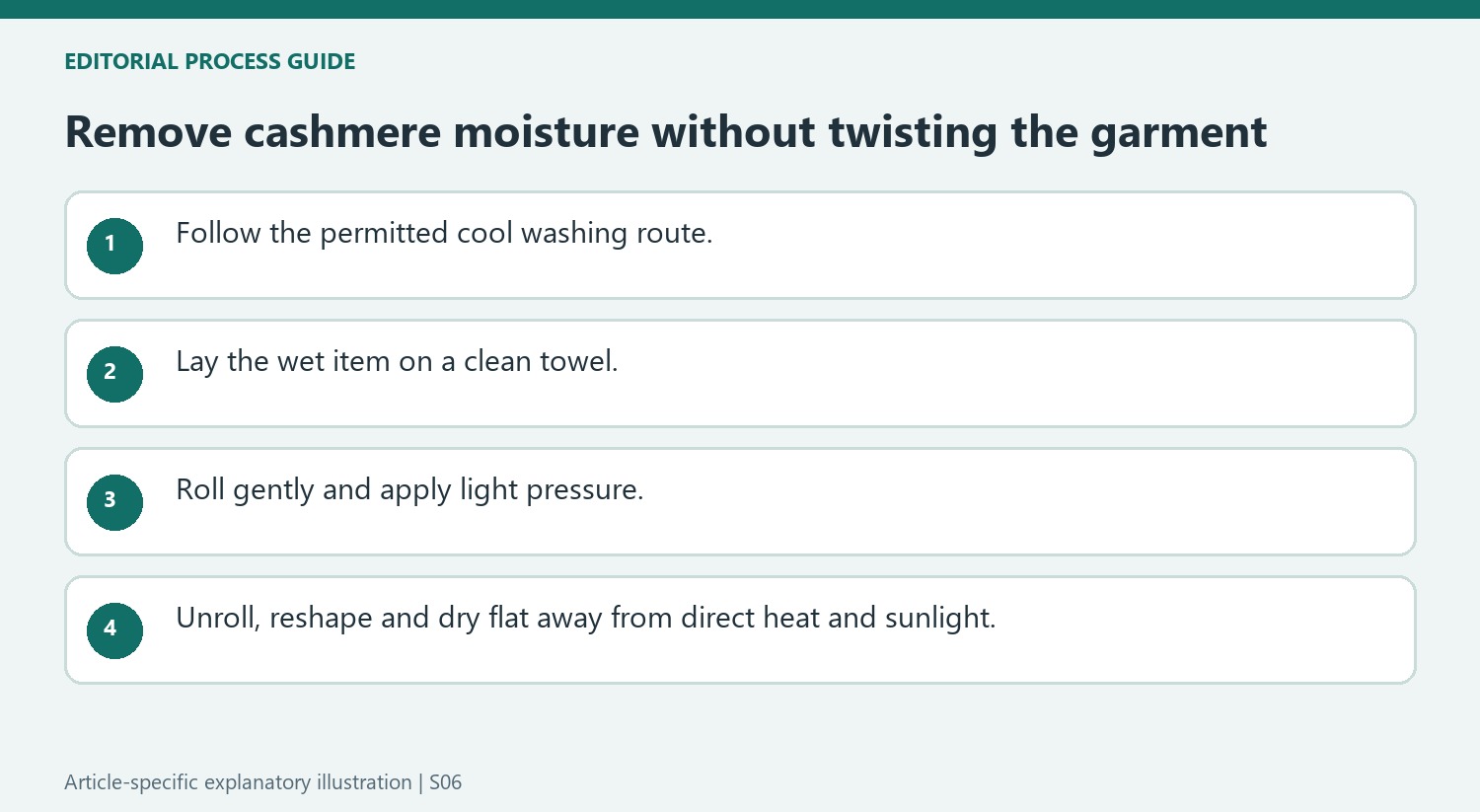
Ariel advises natural drying for cashmere rather than tumble drying. Its routine uses a towel to take up excess water: gently roll and press, then unroll, reshape and leave the garment flat. Keep it away from radiators and direct sunlight. Ironing is best limited to what the care claim permits, with low heat and a pressing cloth where appropriate. The guide also recommends avoiding rough accessories that may snag or pill the surface. These steps connect cleaning to everyday handling, helping keep a delicate garment's treatment consistent before, during and after washing.
Prepare towel-assisted drying before cleaning begins
Cashmere's drying sequence is easier to follow when the towel and flat space are ready before the garment is wet. Ariel describes laying the item on a towel, rolling gently, applying light pressure, and then unrolling and reshaping it. The towel takes up moisture while the garment avoids the twisting associated with wringing. Prepare enough room to support the item during the next stage instead of leaving it suspended while looking for a surface. The source also excludes nearby radiators and direct sunlight from this general drying routine. These are practical arrangements to make alongside selecting the permitted washing method, rather than decisions to postpone until the garment is already heavy with water.
A mesh bag belongs within a permitted machine routine
The guide suggests a mesh bag for suitable machine-washable cashmere and combines it with a cool or wool program. Read the conditions together. The bag provides an additional handling measure; it does not convert a hand-wash-only or otherwise restricted item into machine-washable clothing. The detergent also needs to suit the particular garment and follow its dosing directions. Where hand washing is allowed, the source uses gentle movement of water through the fabric rather than twisting. These are different routes selected by the actual care claim. Neither a protective accessory nor a familiar wool-cycle name should replace that initial decision about which treatment the completed garment permits.
Reduce avoidable rough contact between washes
Ariel's everyday-care suggestions include keeping cashmere away from rough clothing or accessories that may snag the surface or encourage pilling. That advice broadens care beyond the wash itself. Consider what the garment rubs against during wear and how it is handled when removed. Give attention to clean, dry storage after the permitted drying sequence, rather than storing the piece while residual dampness remains. If pressing is necessary and allowed, the source adds a clean iron, low setting, inside-out handling, and a pressing cloth. Those precautions are conditional finishing advice, not a reason to iron every item. The useful routine responds to the actual garment's needs from wear through cleaning and eventual storage. Keep the label available when planning each of these stages.
References
- How to wash cashmere. Ariel.