GarmentCare Guide

Read the bedding label before selecting heat
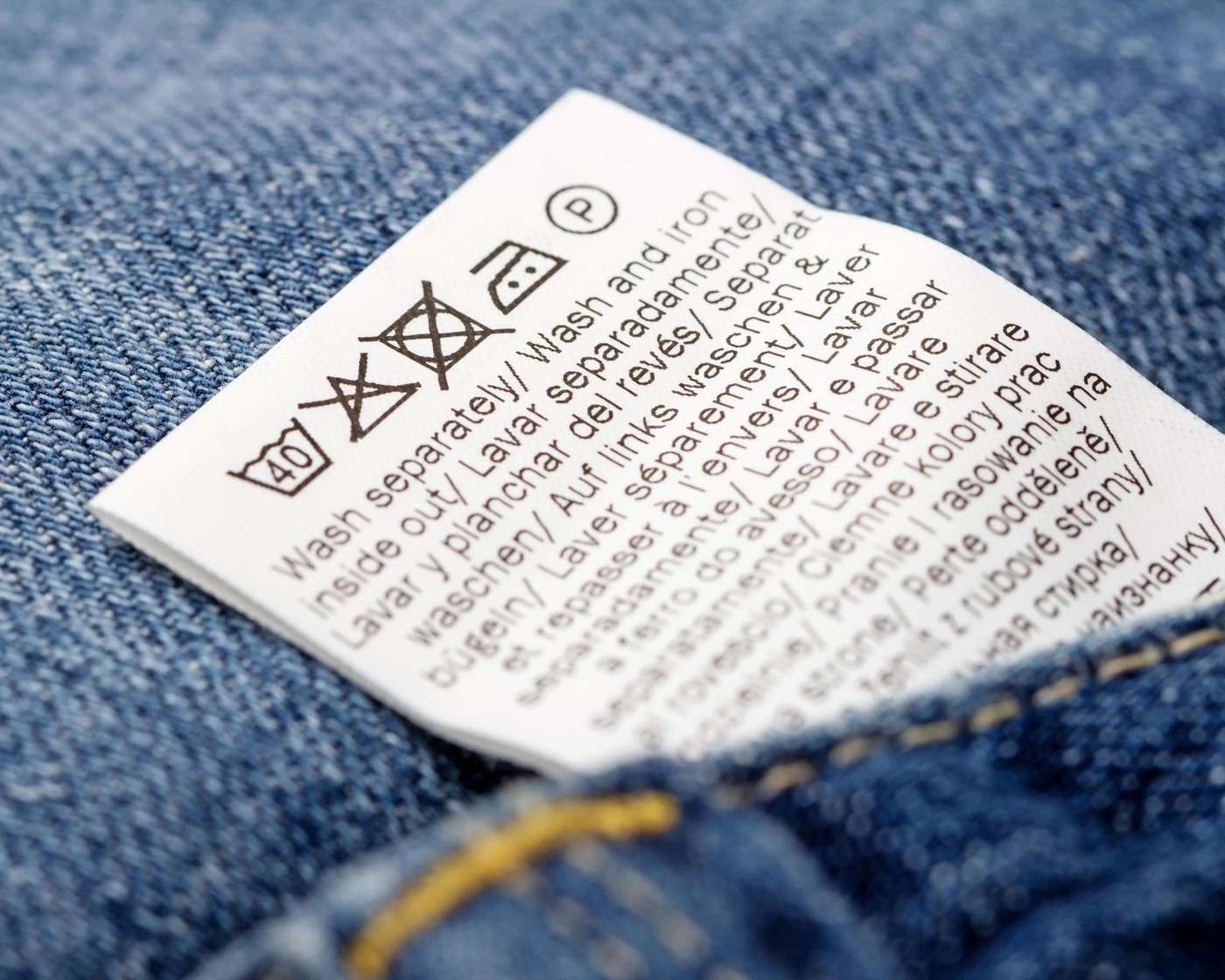
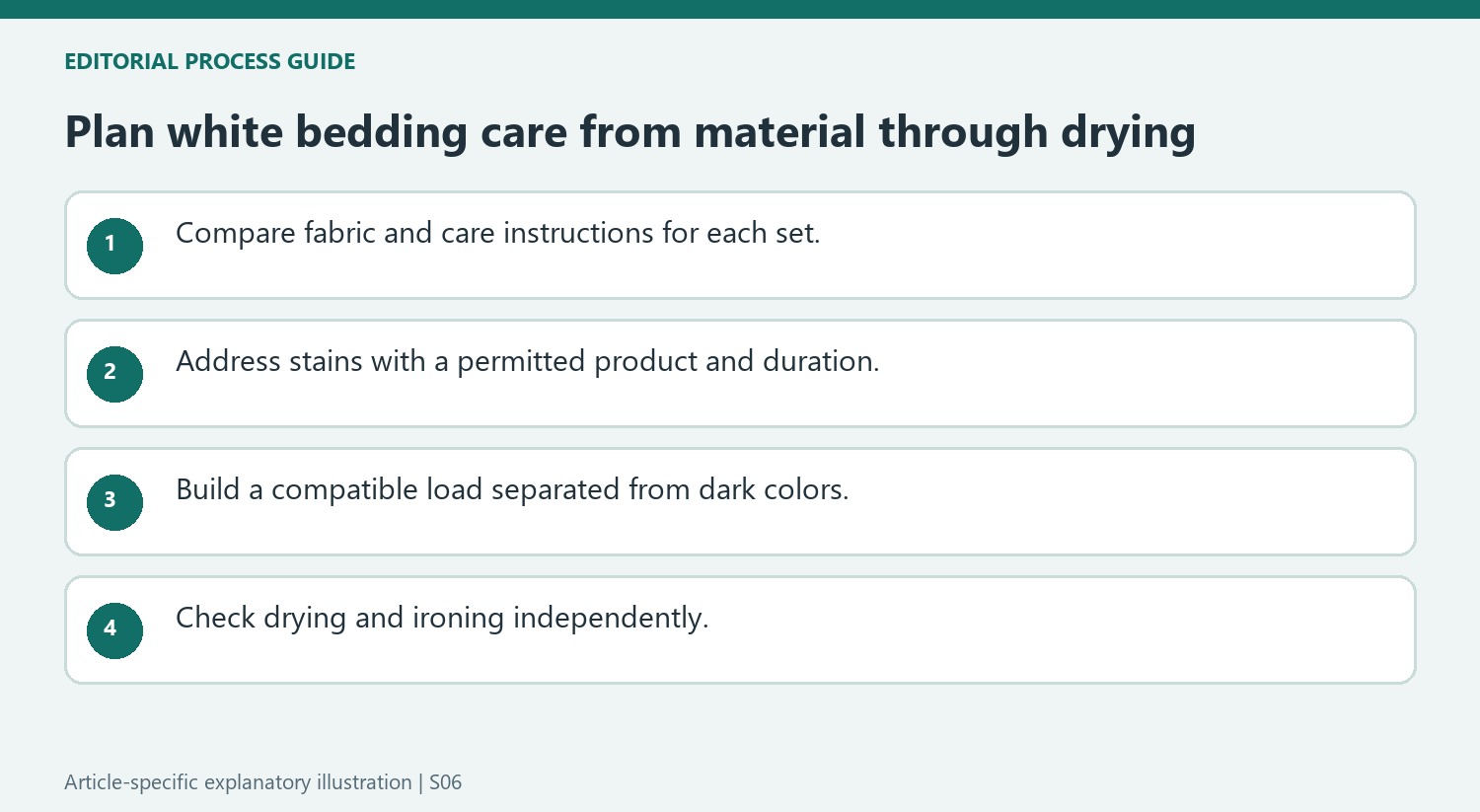
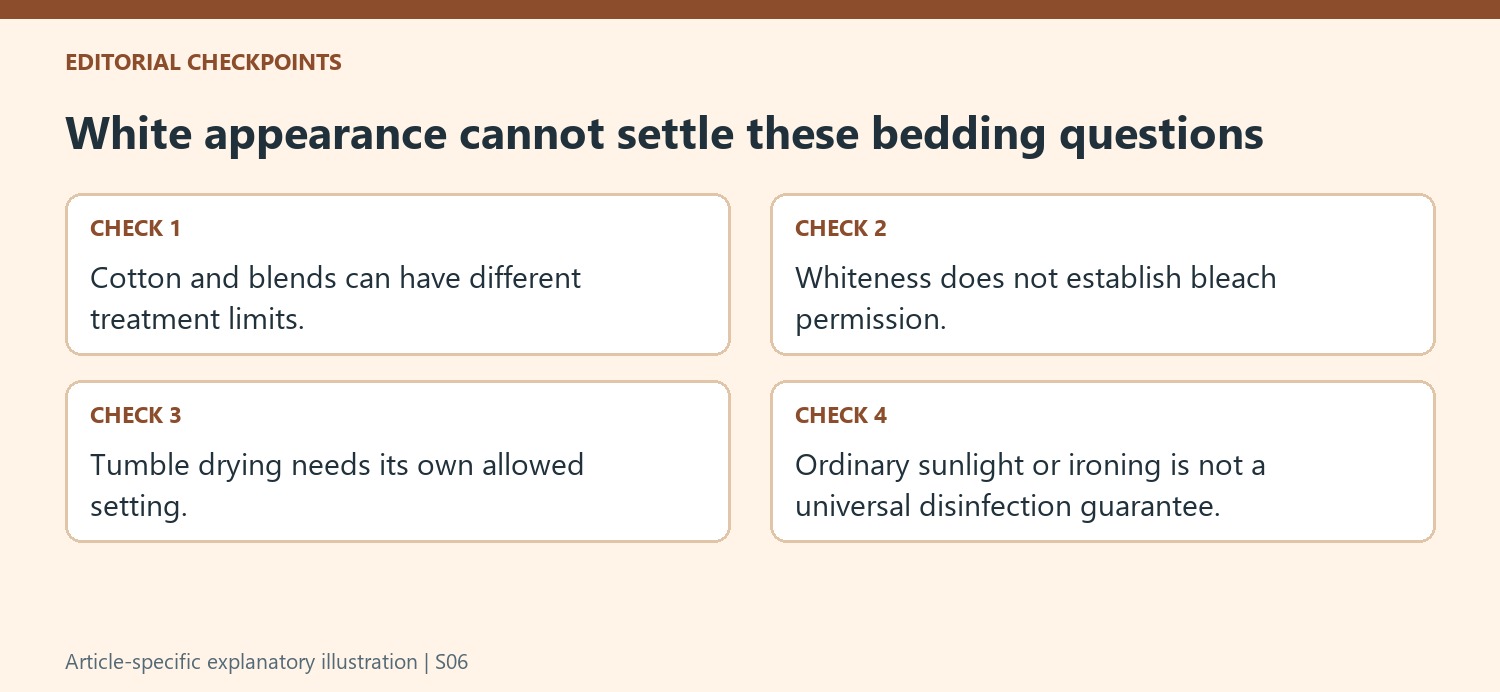
Ariel's bed-linen guide begins with the care instructions because specialty fabrics and blends can need different treatment. The color white does not establish the safe wash temperature or whether a sheet can be machine dried. Identify the material and read the actual limits for the set. The source distinguishes cotton from polyester blends when discussing temperatures, illustrating why a single hot-wash rule is insufficient. Choose the permitted method for the finished bedding rather than borrowing the routine used for another set that happens to look similar.
Address marks before building the load
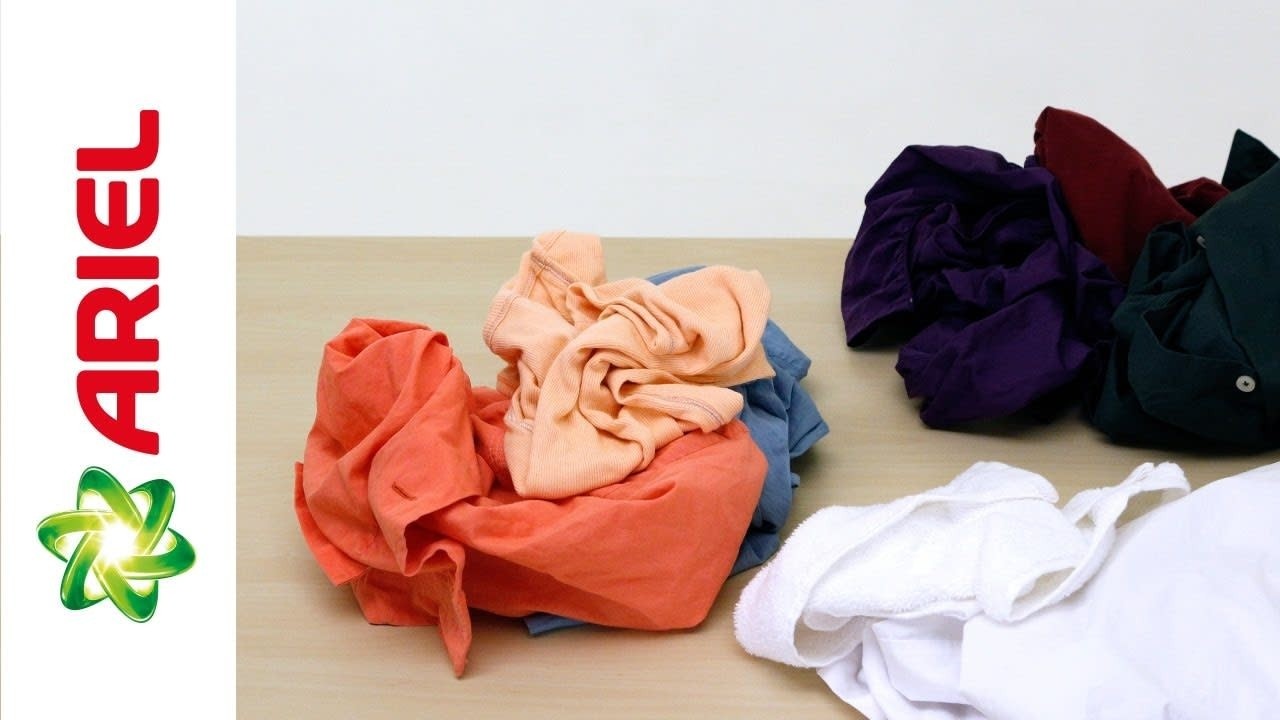
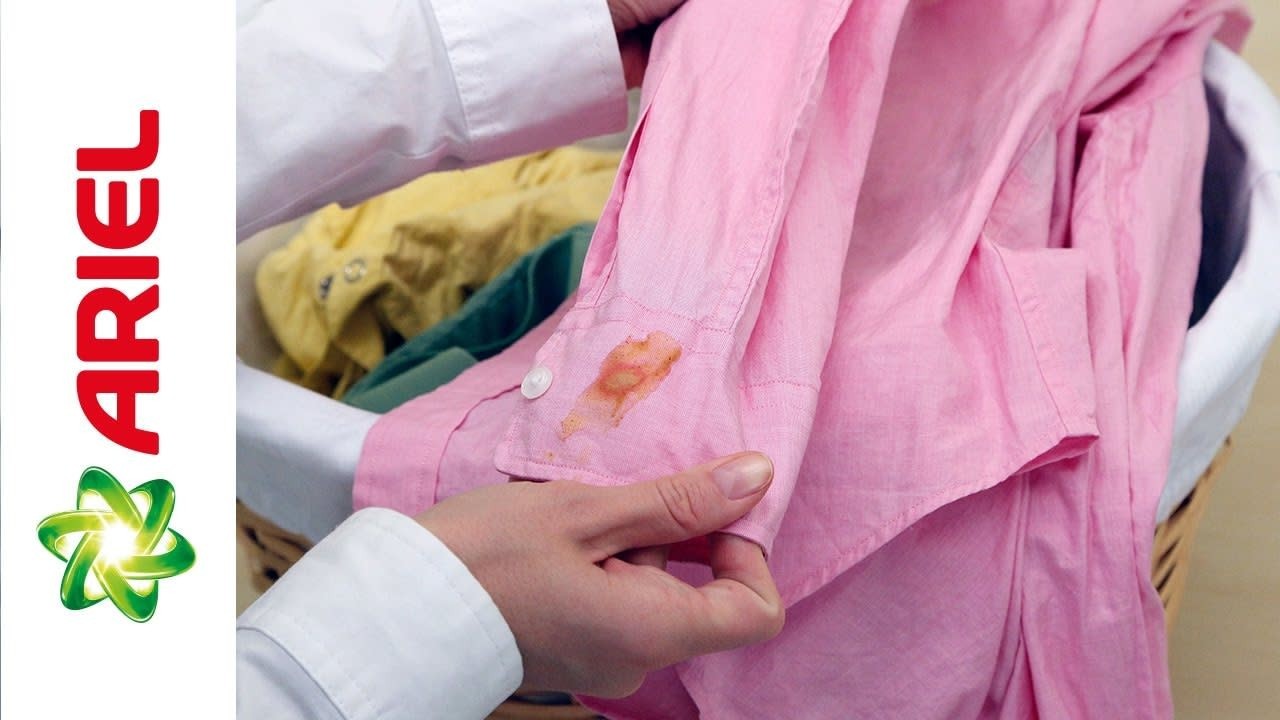
The guide recommends attending to stains before the main wash and describes a detergent soaking solution for suitable materials. Apply that idea only where the bedding and product instructions permit soaking, using the directed dose and treatment time. Separate dark or colored textiles from whites to reduce the chance of dye transfer. Matching the care requirements of items in the load is as important as matching their color. A lightly soiled white sheet and a heavily stained item may need different preparation, even if they ultimately allow the same wash cycle.
Give drying its own label check
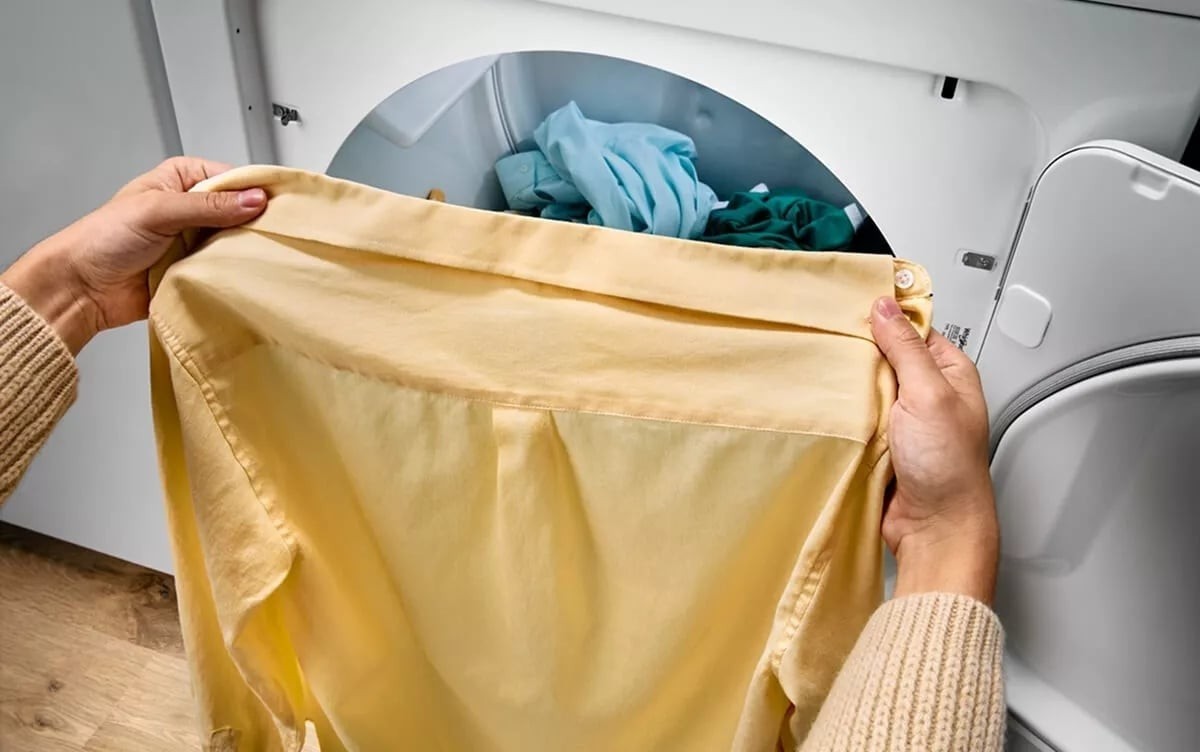
Ariel discusses line drying and tumble drying as alternatives, but the bedding's instructions determine which is suitable and what limits apply. Do not assume that permission to wash at a particular temperature also establishes an appropriate dryer setting. Check whether ironing is allowed before using it as a finishing step. Keep a regular cleaning routine that responds to actual use and soiling, rather than waiting for obvious discoloration. Preparing the stain treatment, compatible load and drying arrangement together makes the process more consistent while avoiding blanket claims that one temperature or finishing method suits every white sheet.
Build a compatible white load rather than a color-only load
White bedding can look uniform while carrying different material and treatment instructions. Ariel's distinction between cotton and blended sheets is a reminder to read each set's label before grouping pieces. A shared color does not establish a common maximum temperature, drying method, or bleach permission. Match those requirements before selecting a cycle. Also consider the actual condition of the items: a lightly used sheet need not automatically receive the preparation chosen for a conspicuous stain on another piece. This creates a more deliberate load. It uses whiteness as one sorting consideration while retaining the fabric and product-specific information that determines how the bedding can be cleaned without exceeding its stated limits.
Keep stain preparation within the product directions
The source describes soaking suitable stained bedding before the main wash. Treat this as a conditional preparation stage with its own checks. Confirm that the textile allows the proposed treatment, then use the detergent or pretreatment product's specified dose and duration. A longer soak or stronger mixture should not be assumed to improve the result safely. Identify the mark where possible and use guidance appropriate to that stain and material. Once prepared, place the item in a load with compatible care requirements. This separates the work needed on a particular mark from the general wash setting and avoids using one heavily stained piece as a reason to intensify treatment for every sheet in the basket.
Do not use a finishing method as a hygiene guarantee
Line drying, tumble drying, and ironing answer different practical questions in the bedding routine. Their suitability comes from the textile's instructions, and none should be treated as a universal guarantee that every hygiene concern has been resolved. Sun exposure or the mere use of an iron does not by itself establish a verified disinfection process. Where a specific hygiene requirement exists, consult appropriate guidance and a method compatible with the item. For ordinary care, plan a regular cleaning routine around actual use, address visible marks, and complete permitted drying before storage or reuse. This keeps the purpose of each stage clear without assigning unsupported germ-removal promises to an everyday finishing choice.