GarmentCare Guide

Temperature is one input to cleaning
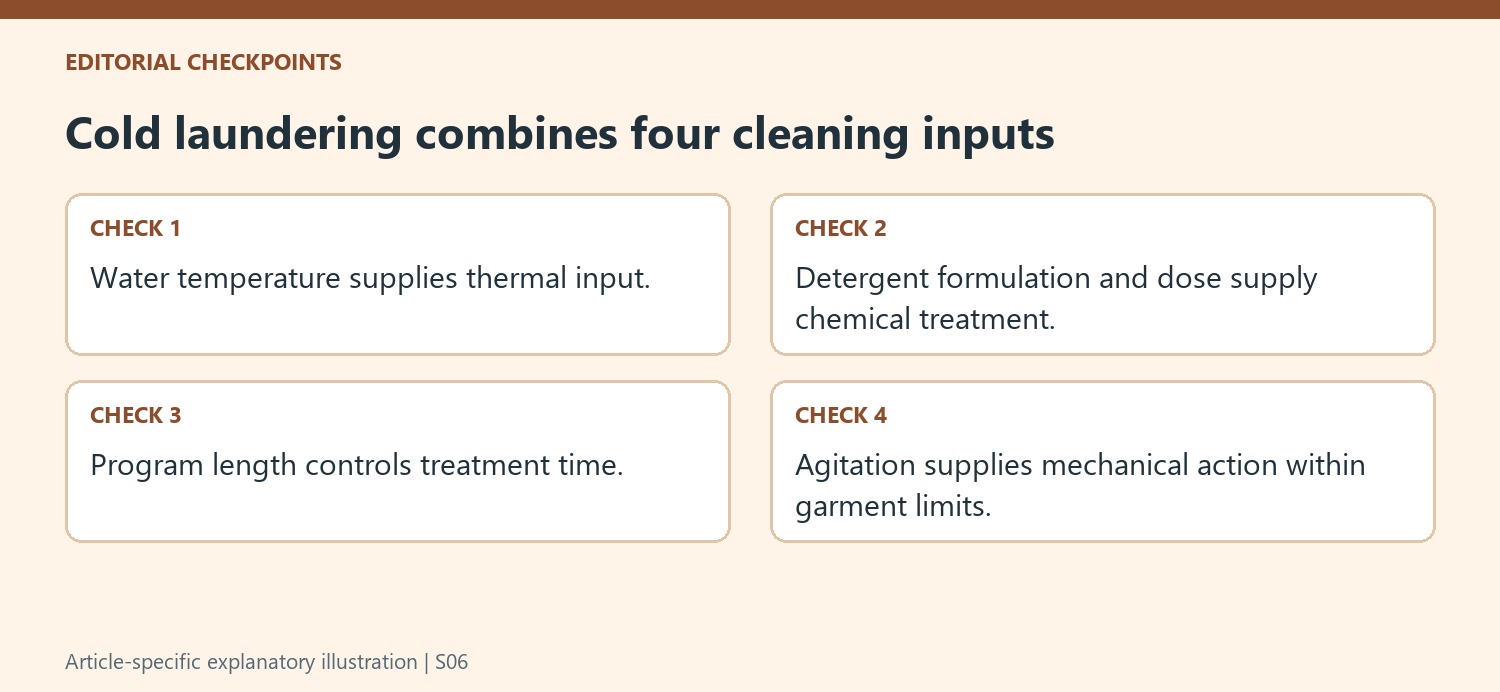
Ariel's cold-wash guide identifies four interacting parts of laundry cleaning: water temperature, detergent, cycle duration and mechanical action. Lowering the temperature changes one input rather than removing every other contribution. This helps explain why a suitable detergent and an appropriate cycle matter when washing cooler. The decision should still begin with the garment's care label. A lower-temperature option can fit many everyday tasks, but the required process and the actual condition of the laundry need to be considered instead of assuming one setting serves every load.
Choose detergent and cycle as a combination
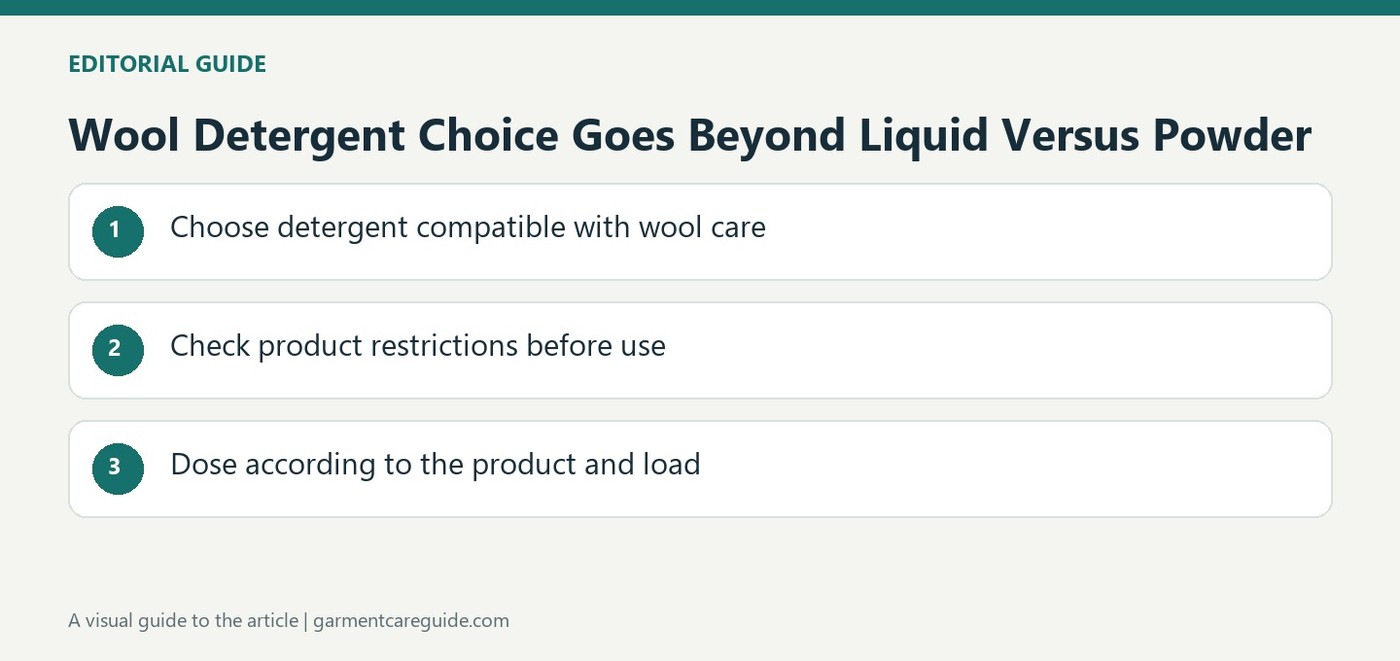
The source emphasizes detergents designed to work at lower temperatures. Use the amount directed for the product, load and relevant conditions rather than adding extra automatically. Cycle choice remains important as well. Ariel distinguishes a delicate process from simply choosing a quick wash at the same low temperature. Sensitive items may need reduced mechanical action, while another allowed load may need a different duration or treatment. These are choices to make within the clothing instructions, not reasons to increase agitation or extend a cycle beyond what a delicate garment permits.

Check what cold means on the appliance
Ariel notes that cold settings can vary, with some machines offering temperatures around 20 degrees Celsius and others commonly using 30 degrees. Read the washer's controls and manual instead of assuming that the word cold corresponds to one exact temperature everywhere. Its guide also links lower-temperature washing with reduced water-heating demand and possible color-care benefits, without making every item suitable for the same routine. A useful cold-wash plan combines a permitted temperature, compatible detergent and appropriate program, then checks the separate drying instructions before the load is started.
Distinguish a lower temperature from a lighter process
Ariel's discussion of delicate washing makes a useful distinction between two controls that can appear on the same machine panel. Temperature determines the water condition, while the program also determines movement and timing. A quick wash at thirty degrees is therefore not necessarily equivalent to a delicate wash at thirty degrees. Start with the clothing label and then identify an appliance program that fits the full instruction. If the permitted treatment calls for reduced mechanical action, selecting a cooler temperature on an intensive program does not supply that reduction. Read the machine manual where program names are ambiguous instead of treating a shared temperature number as evidence that the cycles behave identically.
Use the detergent instructions for the actual load
The source links colder washing with products formulated to perform at lower temperatures. That is a reason to check product suitability, not to assume that adding more of any detergent produces the same result. Follow the stated dose and relevant loading information. The guide's four-input account also helps explain why detergent choice cannot be isolated from cycle selection: the chemical treatment operates within the water, time, and motion provided by that process. Keep all of those choices within garment limits. If a difficult stain remains, consult compatible stain guidance instead of automatically increasing every available input. Longer action, stronger agitation, and extra detergent are not interchangeable permissions for a sensitive textile.
Evaluate energy claims in the context of the chosen wash
Heating less water can reduce the energy used for that part of laundering, which is the practical basis of Ariel's colder-washing advice. The precise outcome still depends on the machine, program, load, and starting comparison. Avoid reading a saving associated with one temperature comparison as a guaranteed reduction for every household cycle. First confirm what the appliance means by cold and whether the selected setting suits the load. Then consider the complete routine, including the separate drying instructions. A clearly planned permitted wash provides a better basis for making an energy-conscious choice than selecting the coldest number while overlooking detergent compatibility, mechanical treatment, or the next stage of care. Compare the actual permitted programs before making that selection.