GarmentCare Guide
The whole article determines its limits
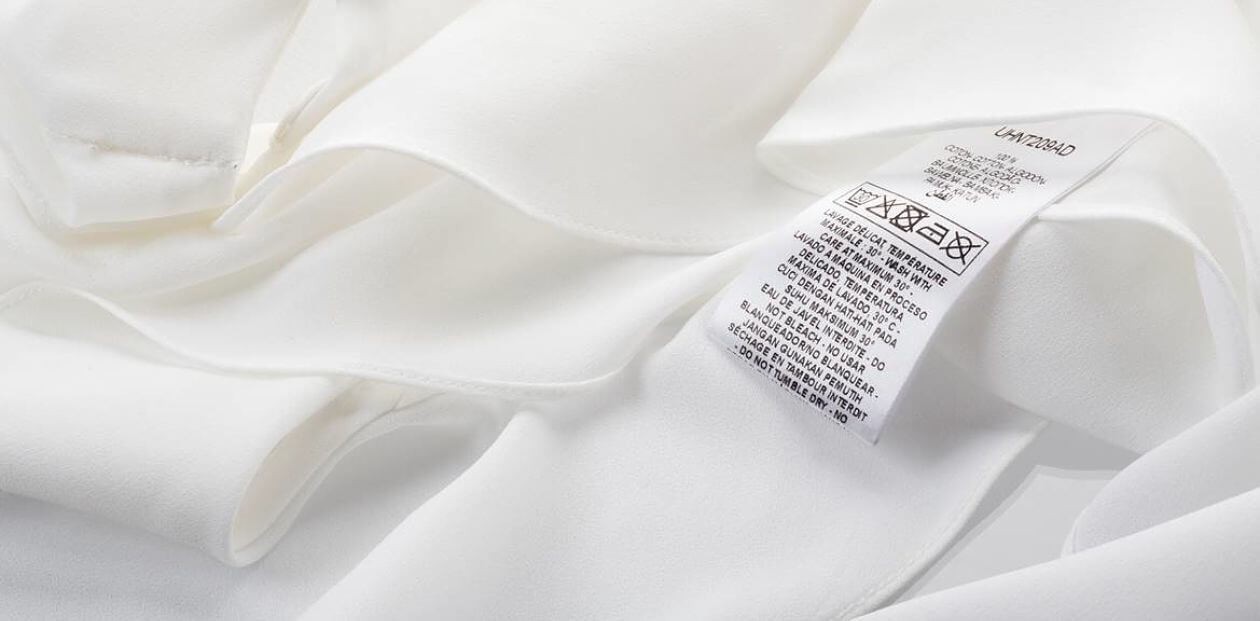
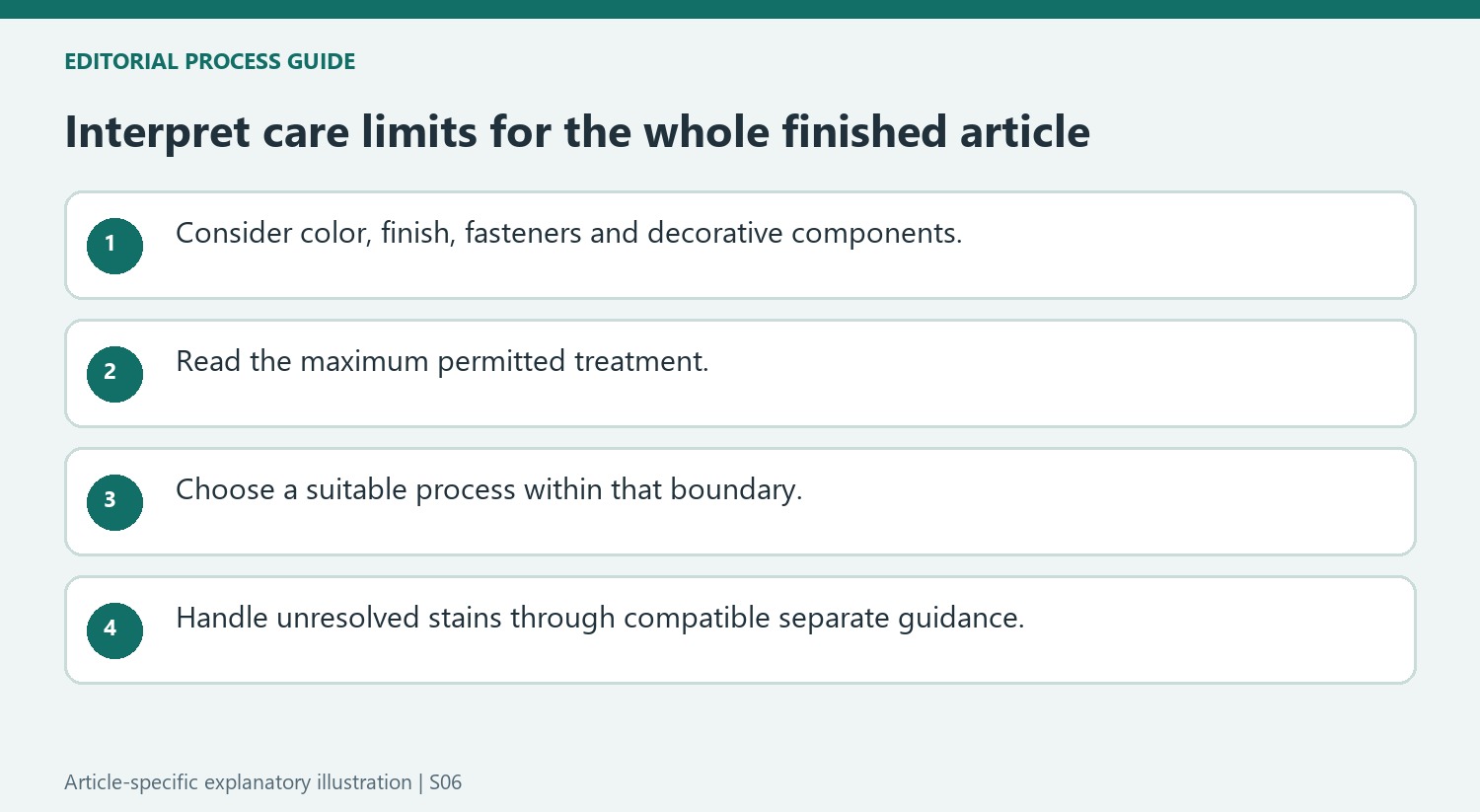
GINETEX's care-labelling principles explain that symbols refer to the most critical aspects of an article's treatment. Those aspects can include coloring, finishes, accessories and decorative applications. The instruction therefore concerns the completed textile product, rather than only its main fiber. A cotton label on the composition tag does not by itself establish that all buttons, trims or surface treatments can tolerate the same laundry conditions as an undecorated piece of cotton cloth. Read the care information as an instruction for the whole item being handled.
Permitted severity differs from cleaning success
The organization describes care symbols as information about the maximum permitted treatment. It also states that the label is not a guarantee of quality and does not promise that every kind of dirt or stain will be removed. These distinctions are useful when a mark remains after a correctly chosen wash. Increasing heat or mechanical action beyond the label's limits is not justified simply because the previous treatment failed to remove it. Stain identity and suitable specialist advice may need to be considered separately from the article's maximum permissible routine.
Milder treatment remains within the system
GINETEX states that lower temperatures and milder processes than those indicated are permitted. That creates room to choose a less severe treatment where suitable, while preserving the instruction's upper boundary. The full series of symbols is intended to provide information for consumers as well as professional cleaners. Keeping that sequence intact helps different people understand what the item can tolerate at different stages. A useful reading of the label therefore asks what process is allowed and how severe it may be, rather than treating a hot-wash symbol as a mark of superior quality or as an obligation to use maximum heat every time.
The most sensitive component can govern the article
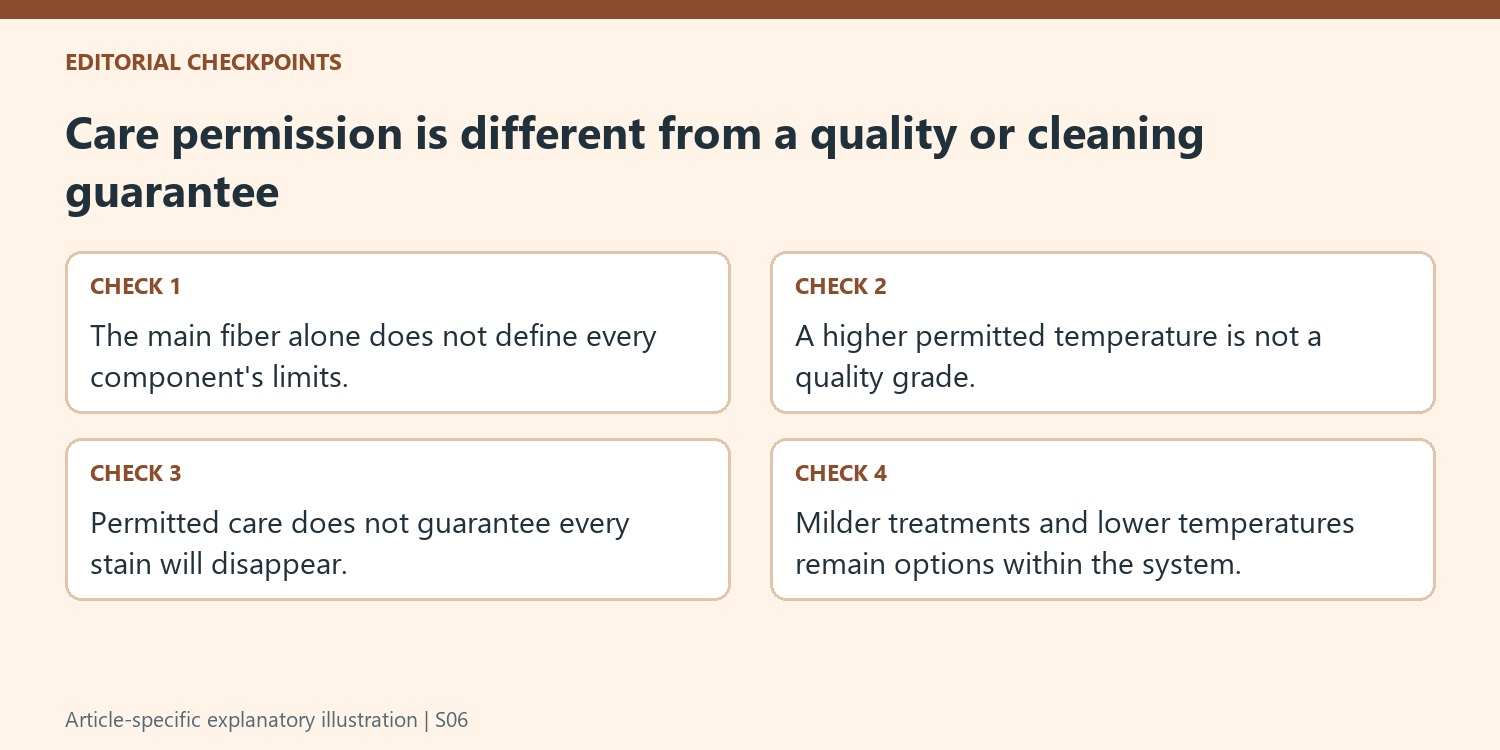
GINETEX says care information refers to critical aspects of the textile product, including color, finish, accessories, and applications. The main fiber is therefore not the only material involved in setting its limits. A garment can contain buttons, zips, decoration, or a finish whose requirements differ from an undecorated fabric sample. This explains why two items with the same composition label may carry different care instructions. Read the treatment label as information about the completed article. A general rule for cotton, wool, or polyester cannot independently account for every component assembled into the product, and should not be used to replace the actual limits supplied by its manufacturer.
Cleaning success is not promised by a maximum treatment
The organization explicitly separates permissible care from a guarantee that all soil will be removed. A stubborn mark can remain after a wash that stayed within the label's limits. That outcome does not authorize extra heat, stronger mechanical treatment, or an unrelated chemical that the article does not permit. Instead, identify the stain and seek compatible guidance or professional care where appropriate. The distinction makes the label more useful: it states what the article can tolerate, while stain removal remains a separate practical question. Treating the instruction as an assurance of perfect cleaning would confuse those roles and could encourage an unsuitable escalation when an ordinary permitted wash does not resolve a particular mark.
A lower setting is an option within the stated boundary
GINETEX permits milder treatments and lower temperatures than those indicated. The maximum is therefore not an obligation to select the harshest allowed process every time. A suitable less severe routine can be chosen for the actual condition of the item, while the stated upper limit remains in force. This also distinguishes the label from a quality grade. A higher-temperature permission is treatment information, not a declaration that one garment is superior to another. Keep the full symbol series available for consumers and professional cleaners so each stage can be understood. The practical reading combines permission, severity, and the completed article instead of assigning value or guaranteed cleaning results to a single familiar mark.
References
- GINETEX > Care labelling. GINETEX.