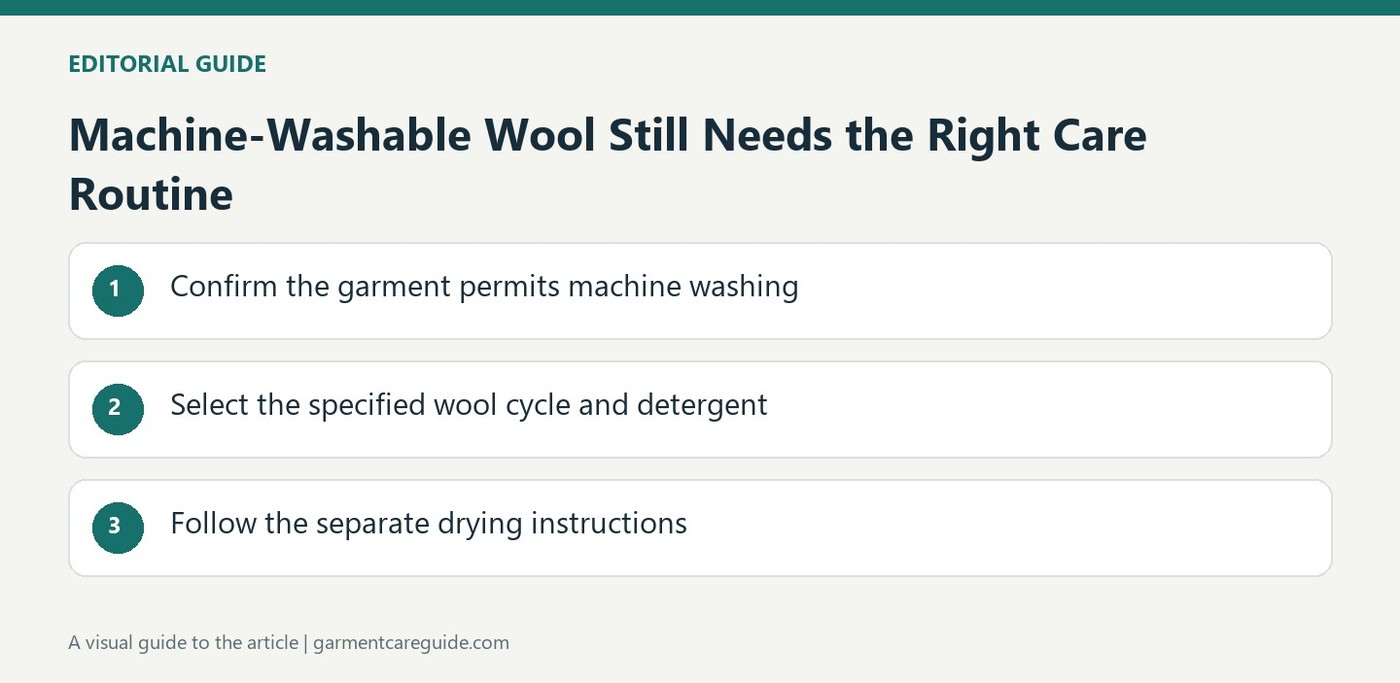
GarmentCare Guide
Choose a formulation intended for wool
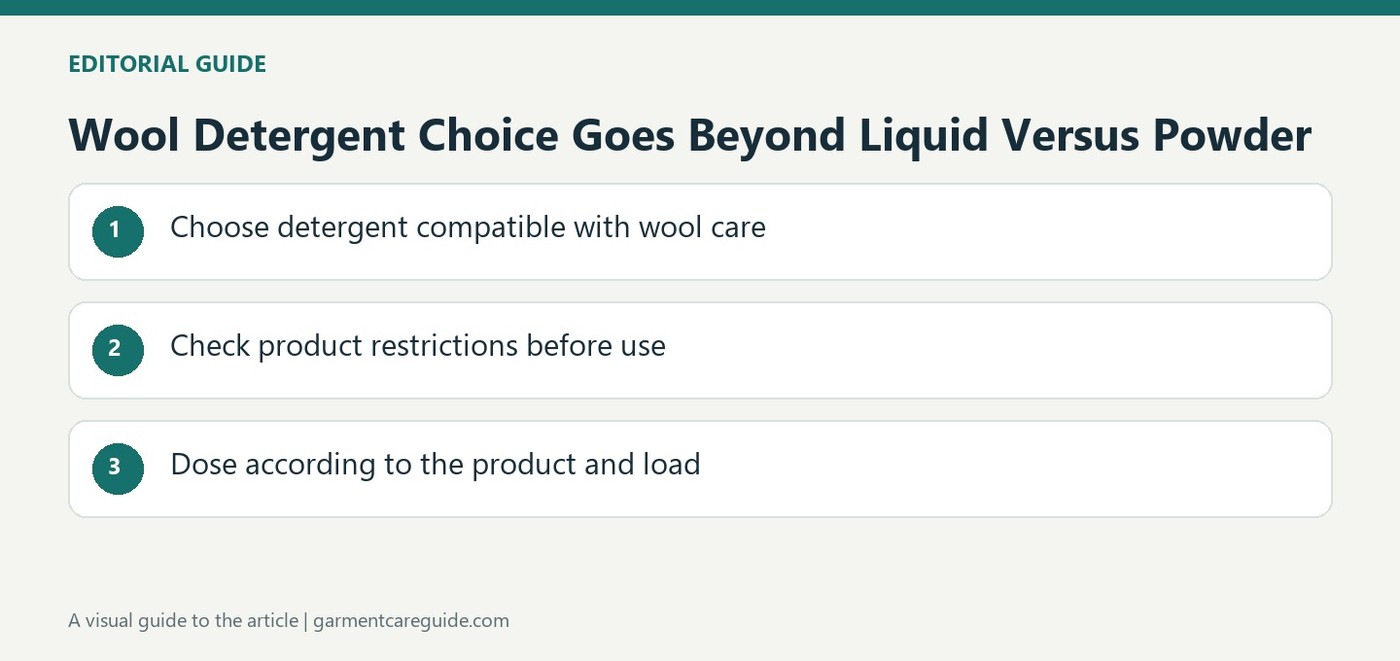
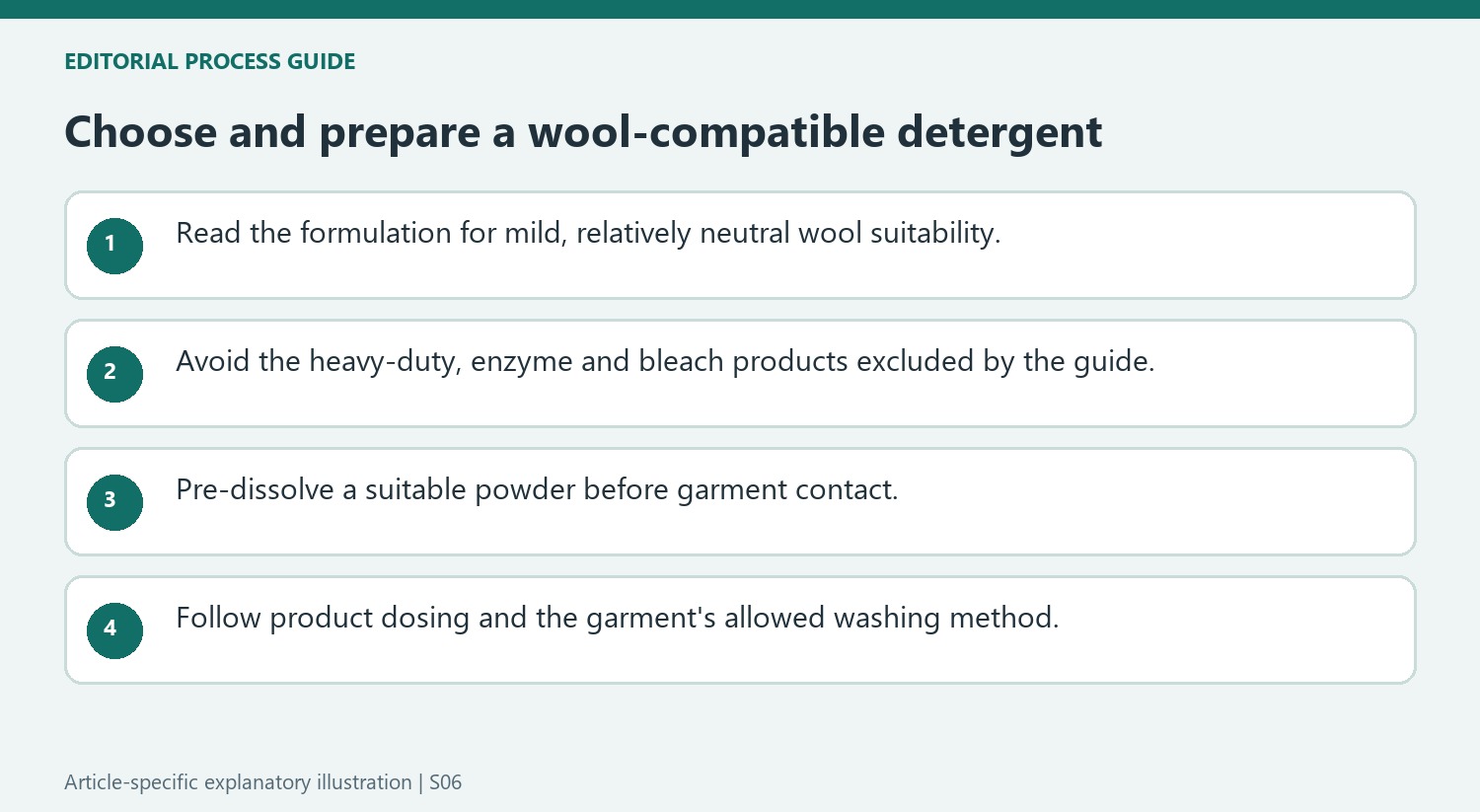
Woolmark recommends a mild detergent with a relatively neutral pH for washing wool by hand or in a machine. This is a formulation question rather than simply a choice between liquid and powder. The guide advises against heavy-duty products, biological detergents containing enzymes and detergents containing bleach. Read the product information alongside the garment's washing instructions before dosing. A general laundry product being suitable for everyday clothing does not establish that it is appropriate for a particular wool item. Wool-specific guidance helps narrow the choice to a more suitable treatment.
Dissolve powder before it touches the garment
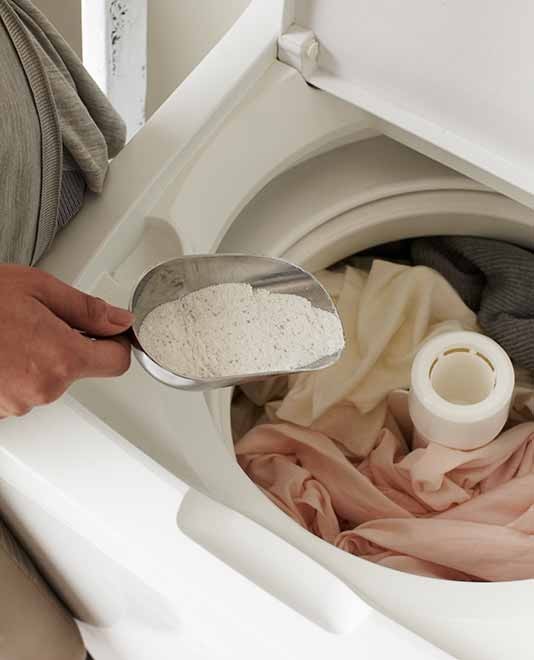
When a suitable powdered detergent is used, Woolmark recommends dissolving it before adding it to the wash. This reduces the chance of concentrated particles contacting the clothing directly. The advice shows why the way a product enters the wash matters as well as the product category itself. Follow the manufacturer's dosing and washing directions rather than assuming additional detergent provides extra protection. A mild formulation still needs to be used properly, with the permitted temperature and washing action selected for the item. Detergent cannot compensate for an unsuitable process.
Keep bleach and excess conditioner out of the routine
The source specifically advises against both chlorine and oxygen bleach when washing wool. It also notes that excessive final-rinse softener can encourage pilling in later washes by making fibers more able to move toward the surface. Conditioner is therefore not something to add generously by default. If it is used, the guide recommends keeping the amount minimal and following appropriate instructions. Together, these points support a straightforward wool-care routine: choose a suitable mild detergent, introduce and dose it correctly, and avoid adding products that conflict with the fiber or the garment's stated care requirements.
The detergent format does not identify the formulation
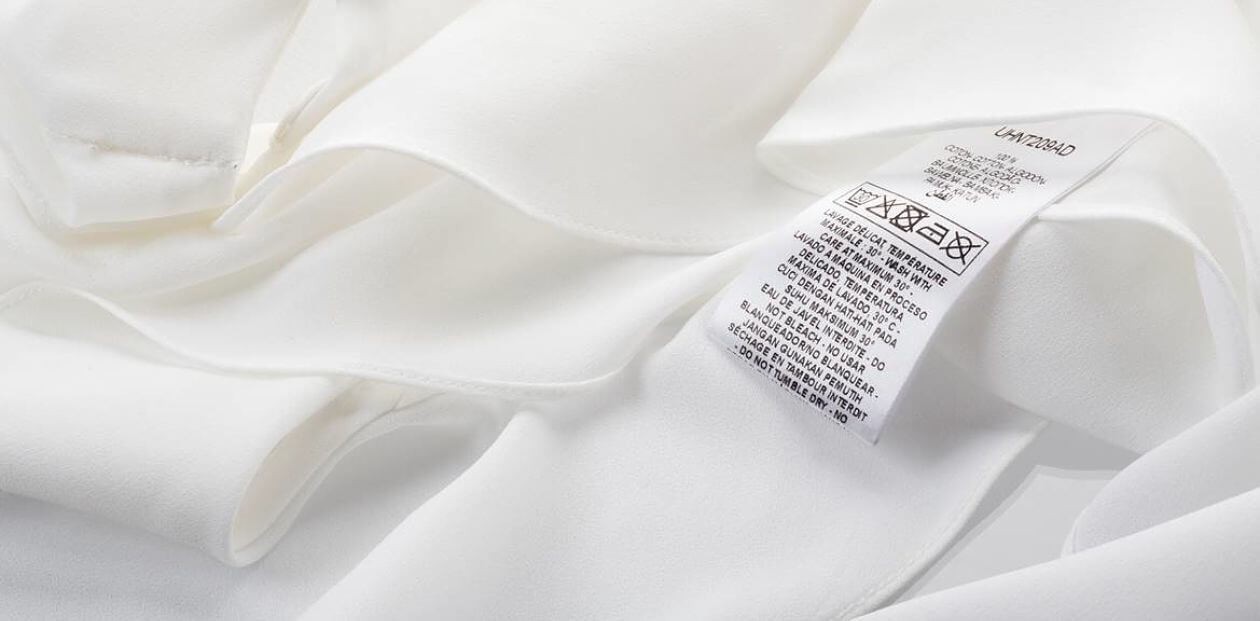
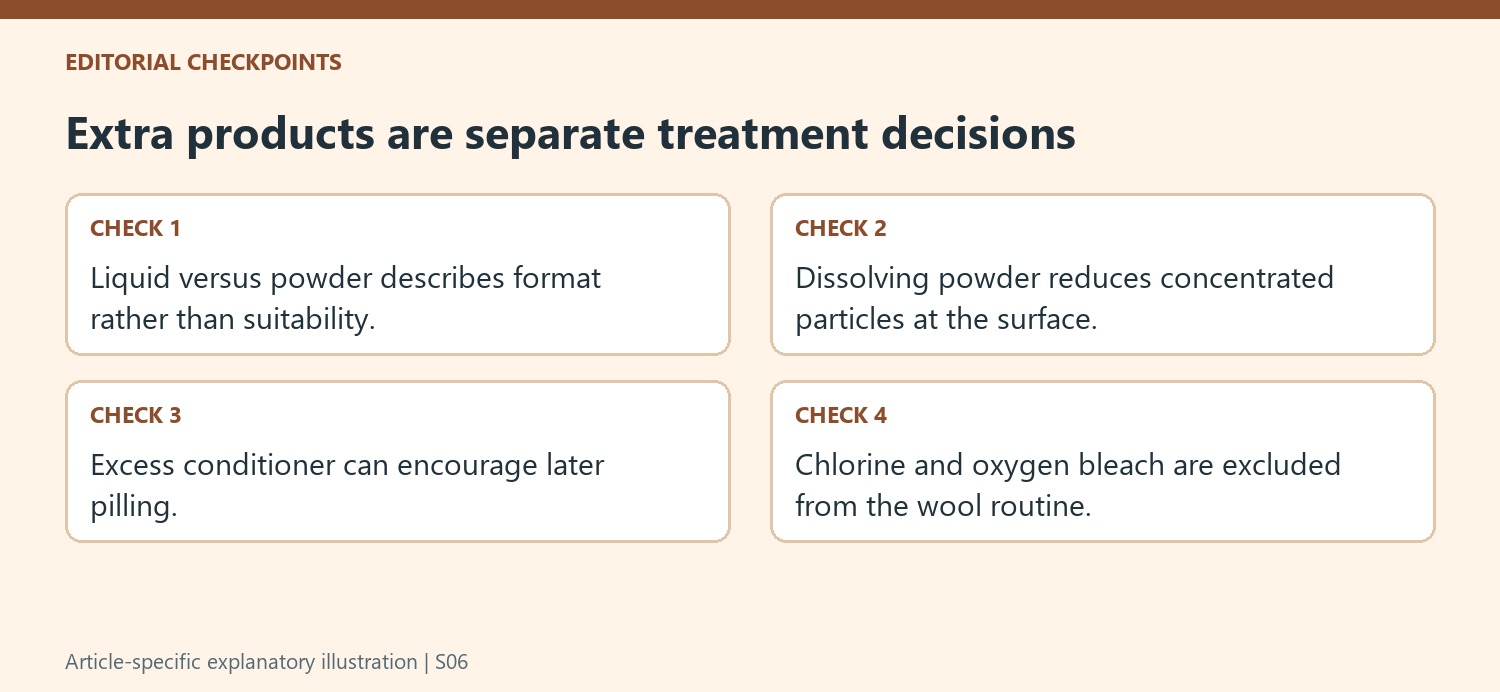
Liquid and powder describe how a product is supplied, while mildness and suitability for wool concern its formulation. Woolmark recommends a relatively neutral pH and advises avoiding heavy-duty, enzyme-containing biological, or bleach-containing products. Read the actual product information rather than choosing only by whether the bottle or box looks familiar. A detergent used successfully for towels is not automatically appropriate for a wool sweater. The garment's care claim also remains necessary because a suitable wool formulation cannot establish washing permission on its own. Together, the product directions and clothing label describe how to select and use a compatible detergent within the permitted method for the actual item.
Pre-dissolving powder addresses local concentration
The source recommends dissolving a suitable powder before it is introduced to the wash. This prevents concentrated specks from contacting the garment directly. It is a practical preparation step rather than a reason to use a larger amount. Follow the chosen detergent's dosing instructions and ensure it is intended for the wool item being cleaned. A well-dissolved product still requires an appropriate temperature and washing process, and a gentle program does not make an incompatible formula suitable. Thinking about how the detergent enters the solution helps connect formulation with handling. Both are part of the routine, alongside the care label's restrictions on water, movement, and any subsequent drying method.
Conditioner is an optional addition to assess carefully
Woolmark allows that final-rinse conditioners can be used but recommends keeping the amount minimal. The explanation concerns excessive lubrication encouraging fibers to move toward the surface and form pills during later washing. More conditioner is therefore not a general promise of better wool care. Check whether any additional product is appropriate and follow its directions rather than adding it automatically. The guide separately excludes chlorine and oxygen bleach from wool washing. These decisions keep the routine focused: a suitable mild detergent, correctly prepared and dosed, may be preferable to an improvised collection of laundry additives. Each product introduces its own treatment, and every one must remain compatible with the actual garment and care method.
References
- Best detergent to use when washing wool. The Woolmark Company.