GarmentCare Guide
Different spills call for different decisions
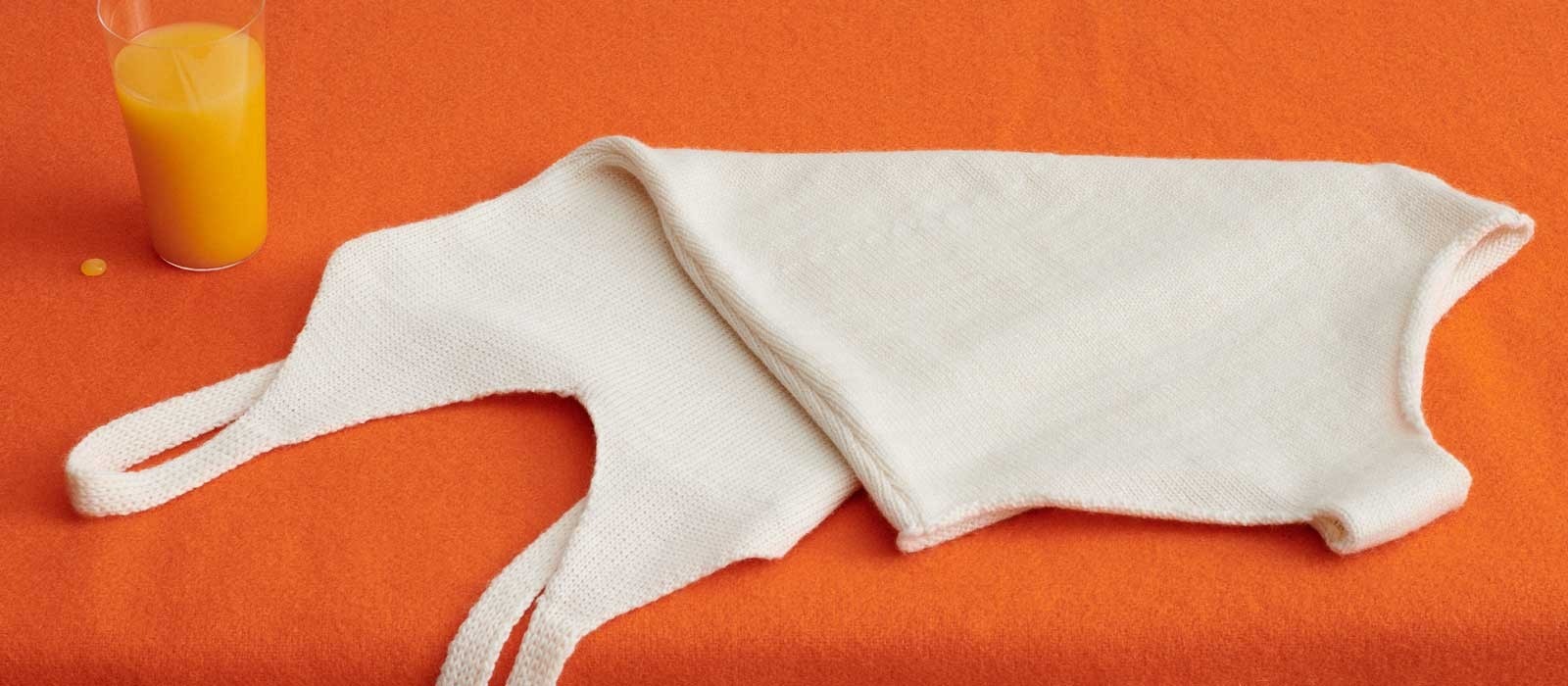
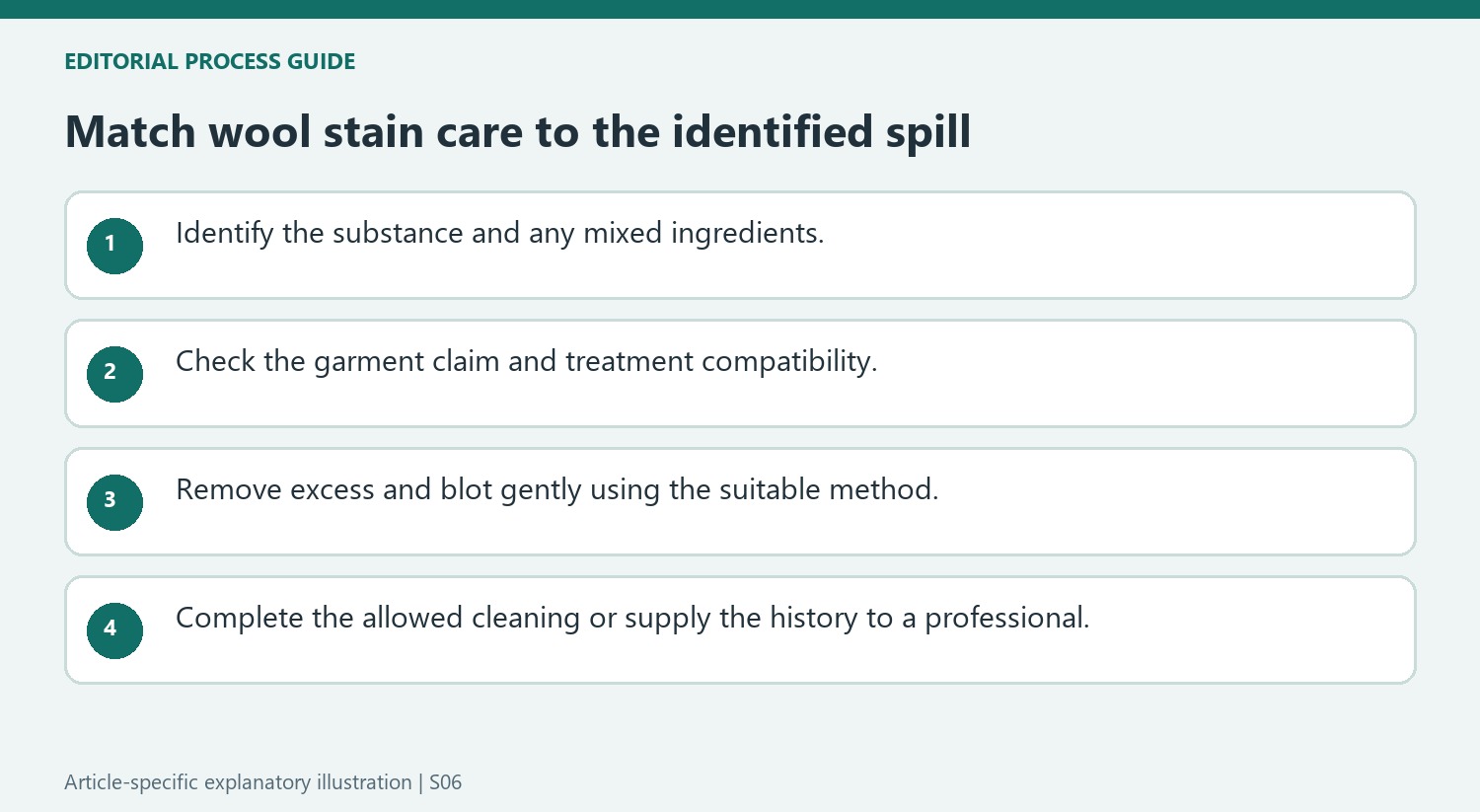
Woolmark's stain-removal guide organizes treatment by the substance involved, including greasy food, coffee, wine, milk and ink. That structure is useful because a mark's appearance alone may not reveal the best approach. Coffee with milk, for example, is listed separately from black coffee, while water-based writing ink is distinguished from ballpoint ink. Before applying a product, identify the spill as accurately as possible and check the garment's care claim. A general stain guide supplies context, but it does not remove restrictions on the finished item's permitted treatment.
Use blotting instead of forceful rubbing
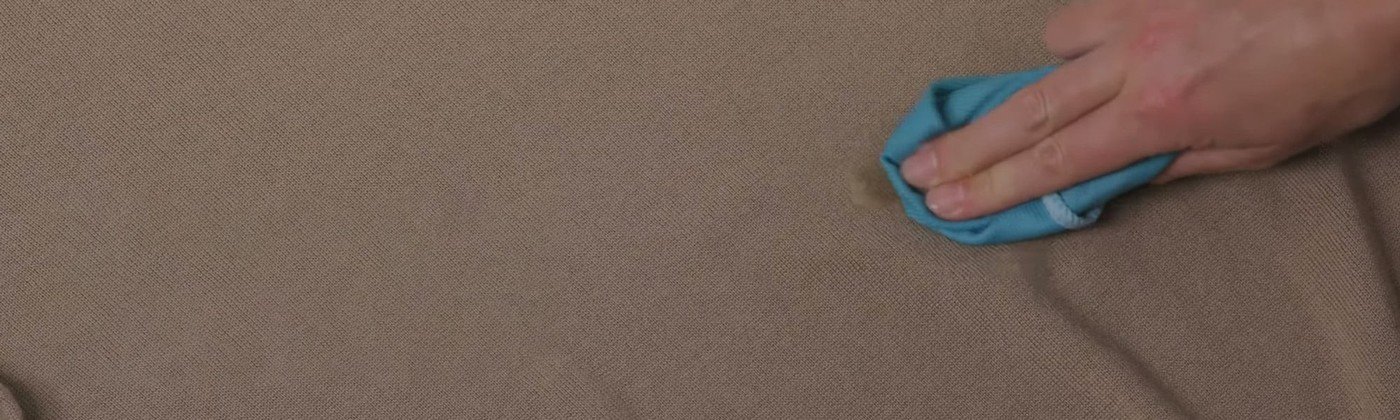
Across several of its routines, the source emphasizes a lint-free cloth and gentle dabbing or blotting. An absorbent towel helps take up excess liquid without scrubbing it across the material. For a fresh black-coffee spill, the guide begins with cold running water where the garment permits that treatment. Other drink routines use a dilute solution of suitable wool detergent before the later wash. The recurring point is controlled handling, with the specific liquid and next step matched to the stain. Vigorous rubbing is not an interchangeable substitute for those methods.
Keep specialist products within their instructions
Some of the source's detailed routines involve solvents or other targeted products for persistent marks. Such treatments need their own product instructions and compatibility checks; they should not be improvised or combined into a single all-purpose mixture. When the stain or garment is uncertain, seek appropriate professional cleaning advice rather than escalating through unrelated remedies. For washable items, Woolmark frequently ends the treatment with a suitable wool detergent and the allowed washing process. Thinking in that order, identification, gentle localized handling and permitted final cleaning, is more useful than reaching immediately for the strongest available laundry product.
A mixture in the spill can change the treatment category
The source lists black coffee separately from coffee containing milk, and distinguishes water-based writing ink from ballpoint ink. Those examples show why identifying the substance matters before choosing a remedy. A dark patch is not a sufficient description of what has entered the fibers. Note the original spill and any ingredients where known, then check the garment's permitted treatment. If professional care is appropriate, pass that information to the cleaner together with any products already used. This is more helpful than escalating through unrelated household mixtures. The guide organizes methods by stain because different residues can require different handling, while the actual wool article still places limits on the available approach.
Small controlled applications are different from saturating and scrubbing
Woolmark repeatedly describes gentle dabbing or blotting with an appropriate lint-free or absorbent cloth. The general tips also recommend checking a treatment in an unseen area for appearance change or color loss. These details keep a localized procedure controlled. Forceful rubbing is not equivalent to pressing a cloth against excess liquid, and adding more treatment indiscriminately is not a substitute for identifying the stain. Where a suitable method calls for working from the edge toward the center, preserve that direction rather than spreading the mark. The next step should remain compatible with the garment and the product's directions. A delicate fabric can be harmed by handling even when the liquid chosen appears familiar.
Keep the final cleaning route consistent with the care claim
Many routines in the guide end with a suitable wool detergent and the permitted wash. That final stage should be planned before local treatment begins, particularly if the article cannot receive ordinary wet cleaning. Specialist solvents need their own instructions and should not be combined with unrelated remedies or used as a universal first response. If the stain is uncertain or the garment needs professional attention, provide the cleaner with the known history instead. The practical sequence is identification, compatible localized handling, and an allowed final cleaning route. It preserves the distinction between removing excess residue at the surface and cleaning the complete item, without treating a generic stain guide as permission to override the garment's label.
References
- Removing stains from wool. The Woolmark Company.