GarmentCare Guide
Read the cleaning claim before using water
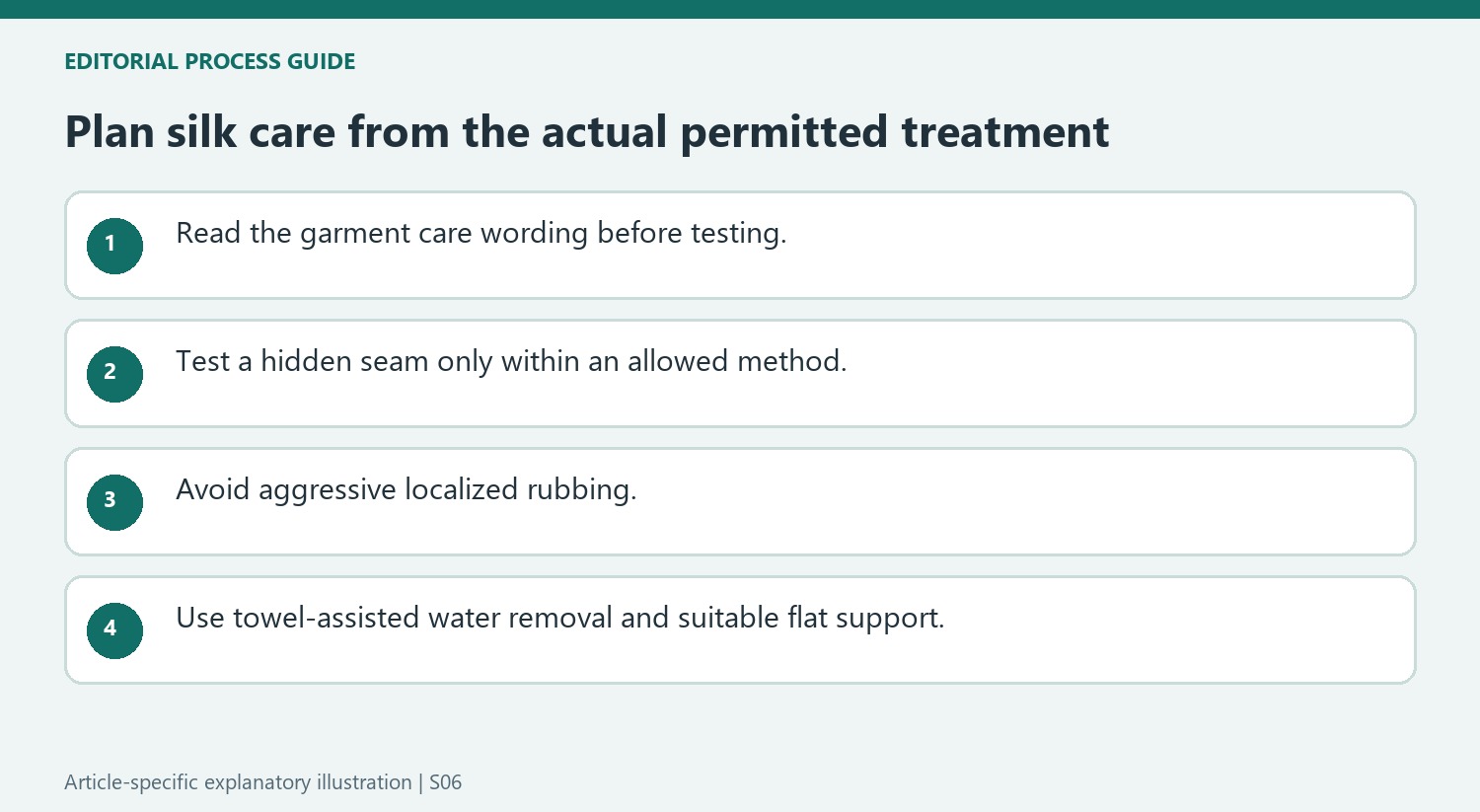
Ariel's silk guide distinguishes a dry-clean recommendation from a dry-clean-only instruction, emphasizing that the latter should be followed. This makes the precise wording on the label important before deciding on any home washing method. The source also recommends a colorfastness check using mild detergent and water on a hidden seam, observing whether dye transfers to a cotton swab. Bright prints or unstable colors may require professional cleaning. The test is an additional check for a permitted treatment, rather than permission to disregard a restrictive care claim.
Avoid aggressive localized treatment
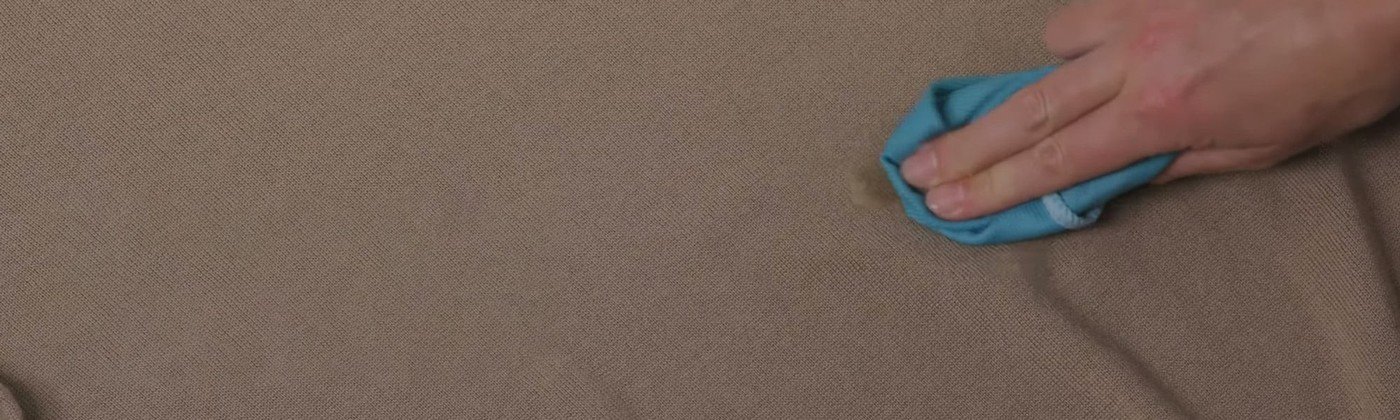
The guide warns that rubbing one area of silk can lighten that spot, creating a visible difference across the garment. It recommends considering the whole washable item rather than forcefully working one mark, with serious stains directed to a cleaner. Where hand washing is allowed, use an appropriate delicate detergent, gentle movement and the temperature specified by the garment. Machine washing requires explicit permission and a suitable gentle program. These decisions keep the treatment aligned with the finished silk item, whose dye, construction and details may impose limits beyond the fiber name.
Remove water without twisting the fabric
After rinsing, Ariel advises gently removing excess water without wringing. Its drying method uses a clean absorbent towel, with the garment rolled inside to take up moisture before being laid flat on a suitable drying surface. It cautions against using a dryer. Ironing is another separate permission: where allowed, the source recommends low heat and attention to the garment's condition. Preparing towels and the drying space before washing helps complete the routine smoothly. Gentle washing is only one stage; careful water removal and support while drying are equally relevant to the finished result.
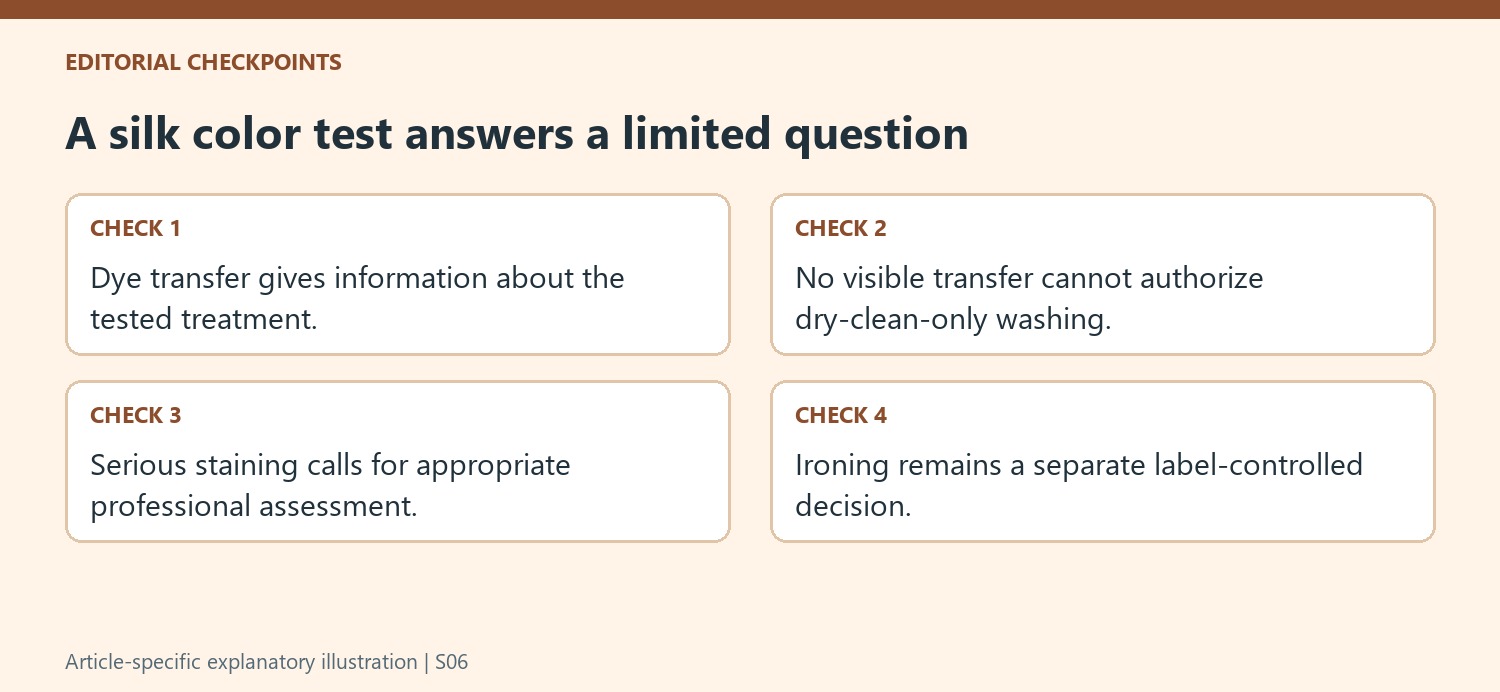
A hidden color check does not remove label restrictions
Ariel describes using a cotton swab with mild detergent and water at a hidden seam to check for dye transfer. This supplies information about the color response to that proposed treatment. It does not establish that a structured, embellished, or dry-clean-only article can be washed at home. Read the care wording first and use any compatibility test only within a permitted approach. The source directs unstable colors and serious staining toward professional cleaning. These distinctions make the test useful without giving it an oversized role. A small area showing no transfer cannot describe every component of the completed garment or guarantee the result of an otherwise excluded full cleaning process.
Localized rubbing can create a second visible problem
The guide warns that working one spot aggressively can lighten that area of silk. The resulting contrast may remain visible even if the original stain changes. Avoid treating forceful rubbing as a universal way to improve stain removal. For an appropriately washable garment, the source discusses gentle whole-item washing instead, while more serious marks warrant a cleaner's attention. This is a handling issue as well as a detergent question. A mild product does not make vigorous friction suitable for a delicate dyed surface. Identify the garment's permitted method, assess the stain, and keep the proposed treatment controlled instead of escalating pressure on a small patch until it no longer matches the surrounding cloth.
The towel stage connects rinsing to supported drying
After rinsing, the source avoids twisting or wringing and instead uses a clean absorbent towel to take up moisture. Rolling the garment within the towel is a different action from turning the fabric itself into a tight rope. A second dry towel can continue moisture removal before the item is placed on the suitable flat drying surface described by the guide. Prepare these materials before starting so the wet garment has an immediate place to go. Ironing is a further separate decision, allowed only where the care claim permits it. This makes the routine complete: permitted cleaning, careful water removal, appropriate support, and only the finishing treatment authorized for that actual silk item.