GarmentCare Guide
Choose the task before the treatment
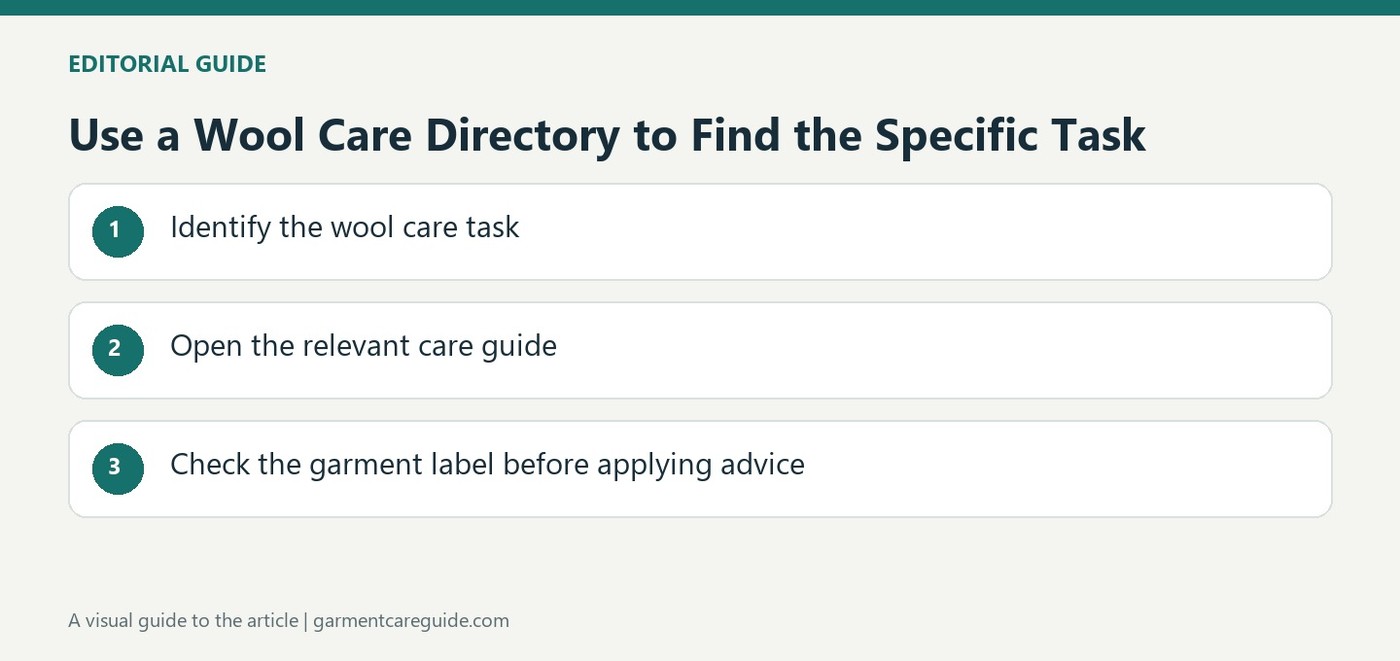
Woolmark's care directory brings together advice on washing, drying, mending and storage. Its organization is useful because those tasks address different needs. A garment with a loose area of stitching does not necessarily need laundering, and a sweater requiring washing still needs a separate drying plan. Start by identifying the actual problem and locating the relevant guide. The directory then provides a route toward more specific instructions, rather than functioning as one universal method for every wool product in a wardrobe or linen cupboard.
Garment type changes the useful guidance
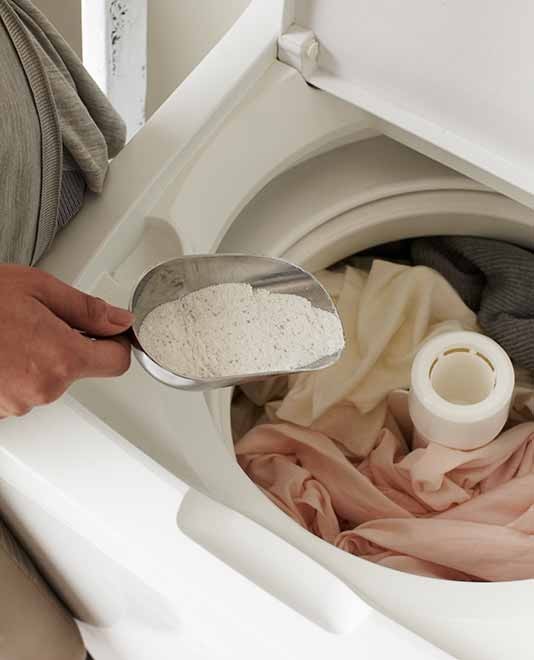
The page links to individual advice for blankets, socks and sweaters, alongside general wool washing information. That distinction helps keep care tied to the shape and construction of the item. A large blanket and a knitted sock share a fiber family but are handled and supported differently. The directory also lists a wool-detergent guide, recommending mild, neutral products. Use these links to assemble the appropriate sequence for the item while retaining its sewn-in care claim as the governing instruction. A general fiber guide should support that label, rather than replace it.
Stains and storage deserve their own attention
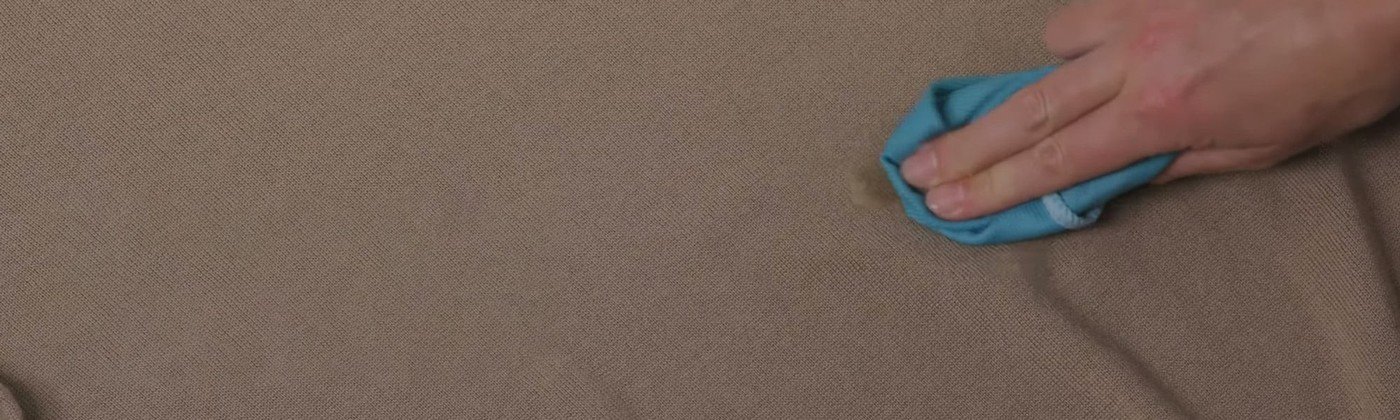
Separate links cover black coffee, red wine and other spills, showing that stain identification is part of choosing a treatment. A storage guide addresses what happens after cleaning and drying, when items may be put away for longer periods. The directory also notes wool's odor and wrinkle resistance, which can help explain why automatic washing after every wear may be unnecessary for some garments. Assess the actual condition instead. The practical value of the page is its structure: identify the need, find the matching guidance and check the item's own requirements before taking action.
Use the directory as a route to a narrower question
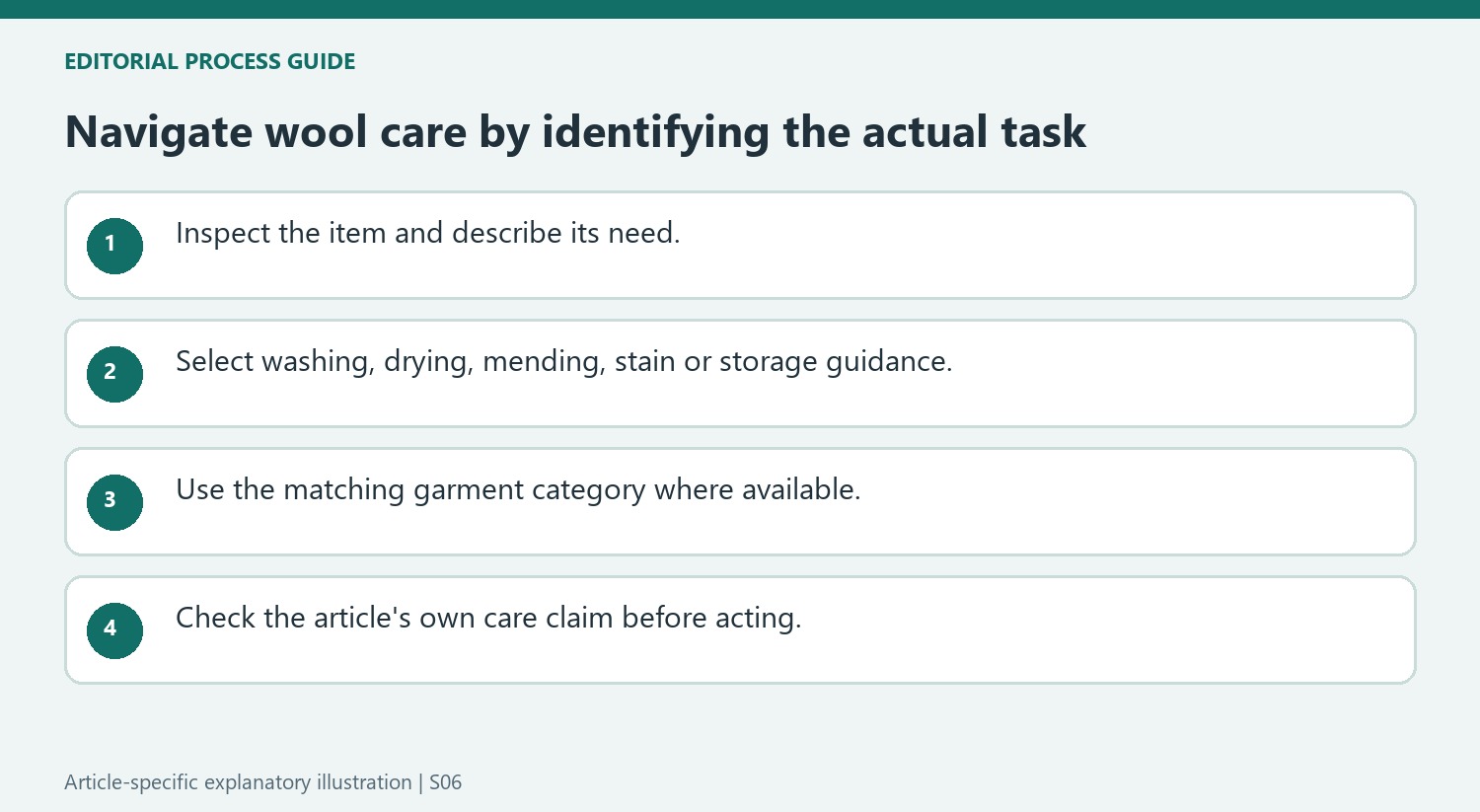
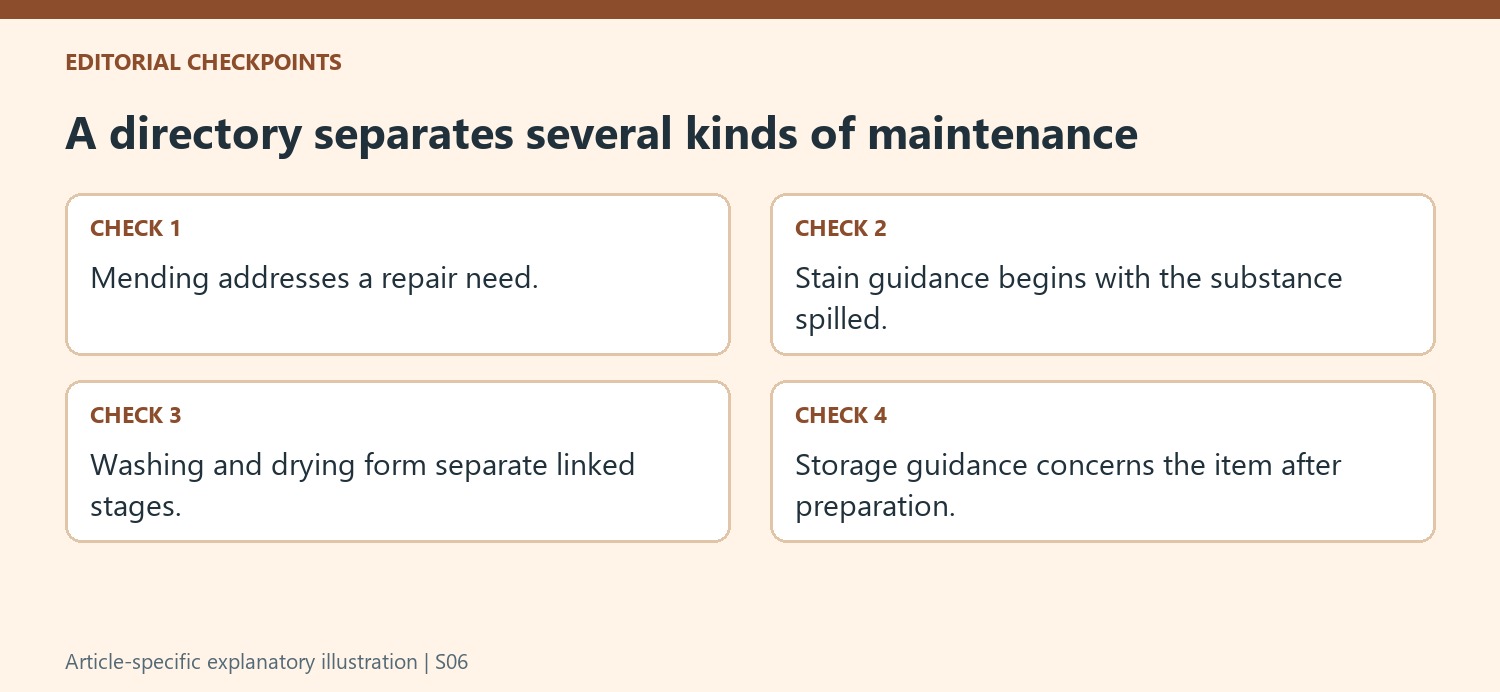
A directory groups tasks so the user can locate the relevant next step. Woolmark separates washing, drying, mending, stain care, and storage rather than presenting one action that resolves every clothing problem. That organization is useful when the visible issue is not general soil. A repair need calls for repair guidance, while a spill calls for identifying the substance before choosing compatible treatment. Begin by describing what has happened to the item. Then select the matching guide and retain the garment's own instructions. This uses the directory for its actual purpose: connecting a specific need with more focused information instead of turning a broad overview into an unsupported universal care recipe.
Build a sequence from the appropriate garment guide
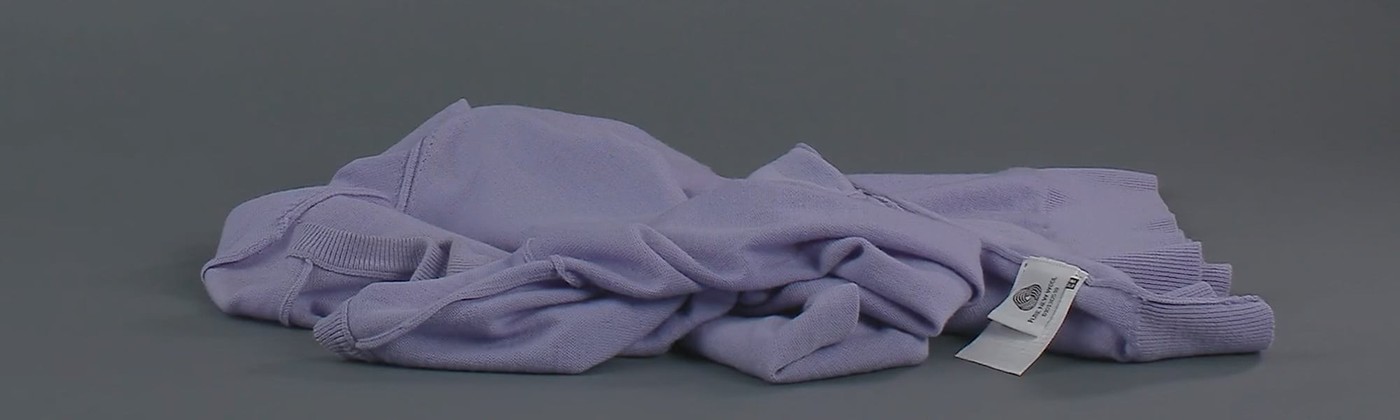
The page links separately to blankets, socks, and sweaters, even though each belongs to wool care. Their size, construction, and required support can differ. A large blanket's drying arrangement does not automatically describe a small knitted garment, and a sweater example does not establish that every sock may enter a machine. Select the item category before choosing a routine, then connect the washing advice with a permitted drying plan. The separate detergent guide adds another question: a neutral mild formulation should be suitable for the actual material and method. Reading these parts together helps assemble a complete process without assuming that one helpful link replaces the item's own sewn-in care claim.
Keep maintenance and long-term packing connected
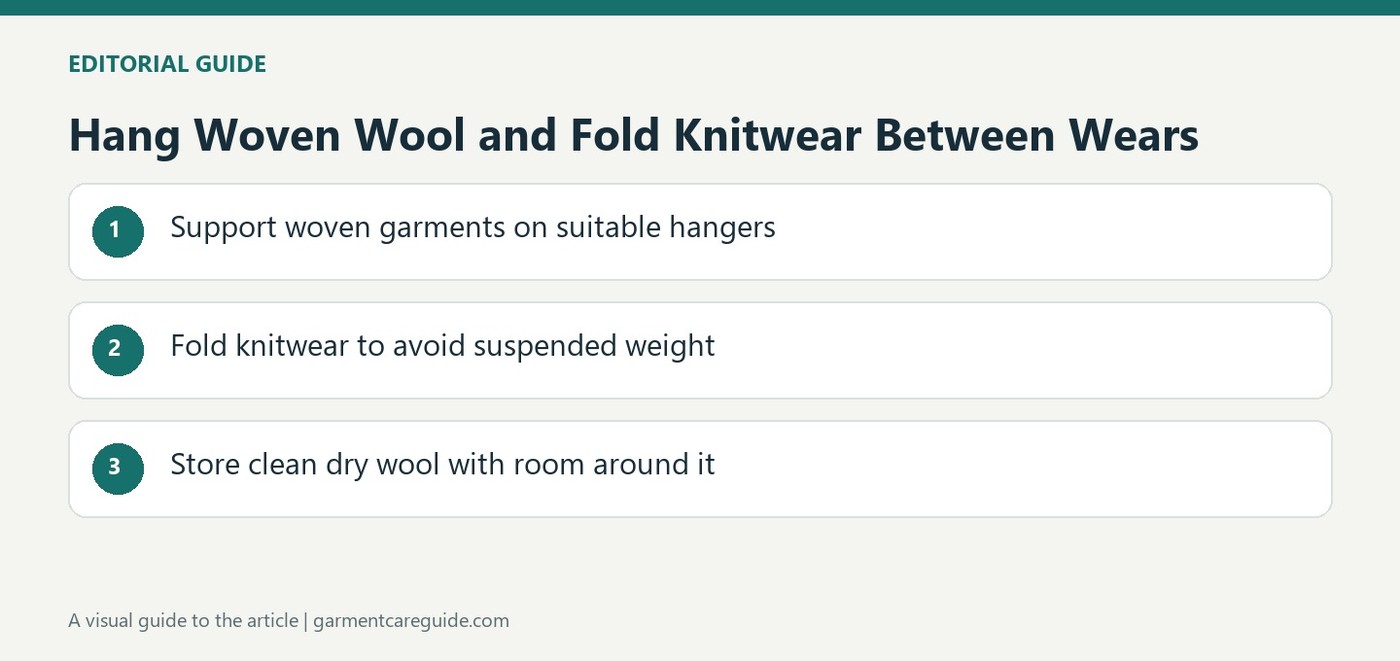
The directory includes storage because garment care continues after cleaning. A piece that will be packed away needs its own preparation rather than simply disappearing into a container after the last wear. Use the relevant storage guidance alongside the item's cleaning and drying instructions. The page's odor- and wrinkle-resistance discussion also provides context for assessing whether another wash is necessary during ordinary use. It does not mean a stain can be ignored or that a garment never needs cleaning. The practical routine is to inspect, identify the task, consult the narrower guide, and check the product's limits. This makes the directory a useful navigation aid across the garment's life rather than only a laundry-day reference.
References
- Washing wool is easy. The Woolmark Company.