GarmentCare Guide
Support each construction appropriately
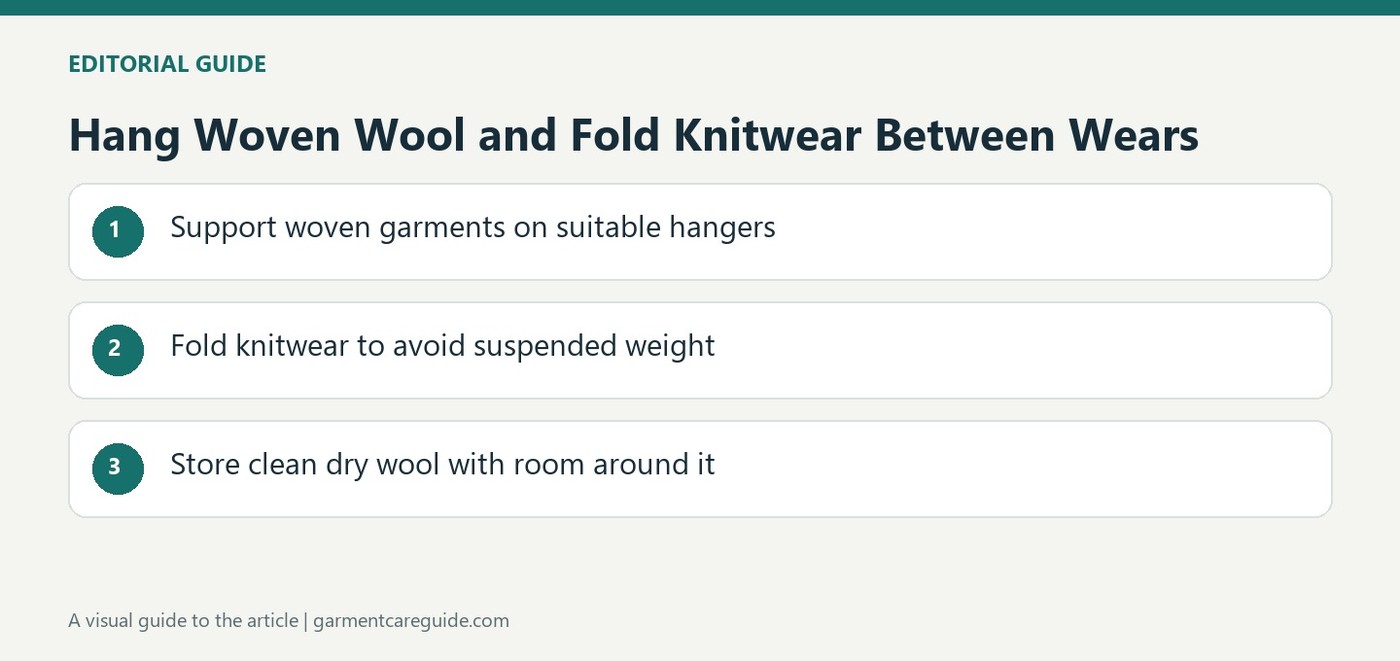
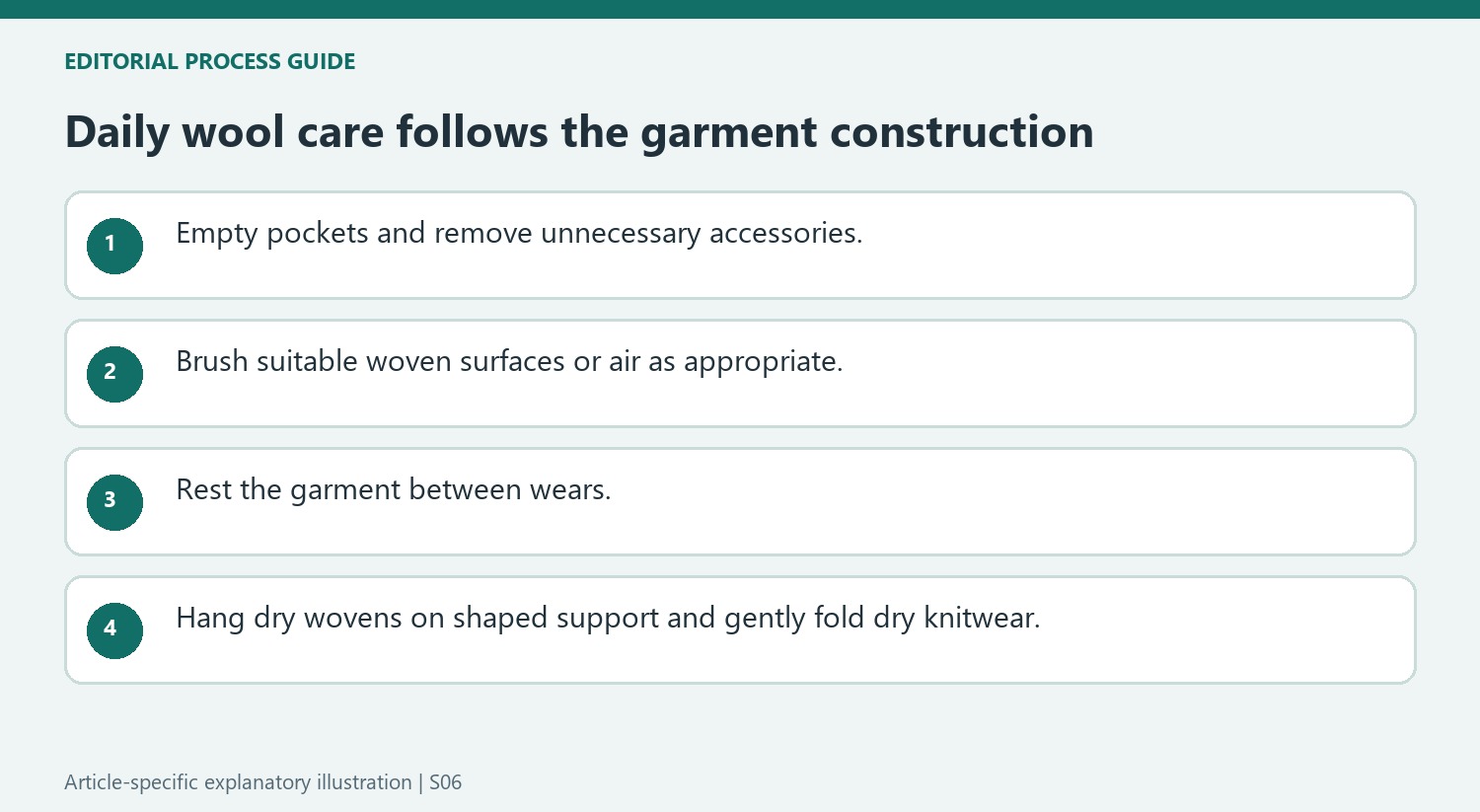
Woolmark's general care advice draws a useful distinction between woven and knitted garments. Woven wool clothing can be supported on shaped or padded hangers, while knitted pieces should be gently folded for drawer storage. This is a construction-based choice rather than a rule that every wool item belongs on the same type of hanger. Before storing or washing, empty pockets and remove accessories that could cause bulging or sagging. Close appropriate zips or buttons so the garment is put away in an orderly form rather than left carrying unnecessary weight.
Refresh according to the type of garment
For woven clothing, the guide recommends a soft garment brush used lengthwise to remove surface dust and soil. That instruction is explicitly directed at wovens, so it should not be extended indiscriminately to delicate knitted surfaces. Airing is another option between cleaning sessions. Woolmark describes laying wool garments flat to help disperse food or smoke odors, with suitable hangers available for woven pieces. Resting garments between wears also allows the fiber's natural resilience to work. These measures offer specific forms of routine care without automatically requiring a full wash.
Prepare clean garments for longer storage
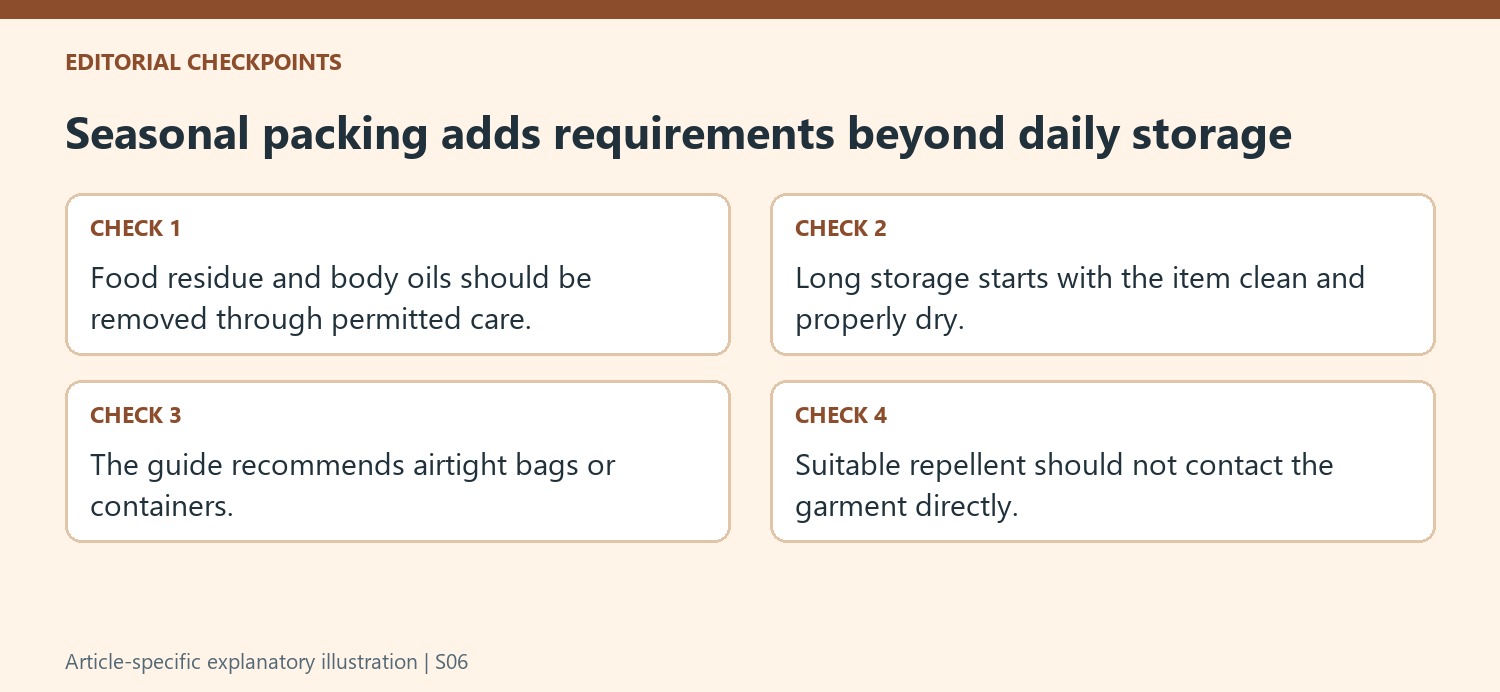
The source advises cleaning wool before packing it away, because food stains and body oils can attract moths. For long-term storage it recommends airtight bags or containers, with any appropriate repellent kept from direct contact with the garment. When washing is required, separate dark and pale colors and turn items inside out as advised. Wet wool should dry at room temperature away from direct heat or sunlight. These small decisions link daily handling to later storage: a garment that is properly supported, refreshed and cleaned is easier to put away in a suitable condition.
Remove carried weight before putting garments away
Emptying pockets and removing accessories are small preparation steps with a clear purpose in Woolmark's guidance: they reduce unnecessary bulging and sagging. A garment should not remain stored with the weight of keys or other objects pulling on it. Close the appropriate fasteners and choose support based on the construction. Shaped or padded hangers suit the woven garments described by the source, while knitwear is gently folded. These decisions concern daily storage rather than only seasonal packing. Keeping the piece in an orderly form after wearing also makes it easier to inspect for soil and decide whether brushing, airing, or a permitted cleaning routine is the appropriate next step.
Brush wovens rather than applying one treatment to every wool surface
The guide explicitly limits its lengthwise soft-brush recommendation to woven garments. That qualification matters because a delicate knit has a different surface and should not automatically receive the same handling. Brushing removes surface dust and soil that can dull appearance or develop into a more persistent mark. Airing supplies another form of routine care, with the source describing flat support and allowing suitable hangers for woven pieces. It also recommends resting garments between wears to allow recovery. These are specific maintenance actions, not a guarantee that no cleaning will ever be needed. Assess the actual condition and keep each treatment matched to the fabric construction and care information.
Long storage begins with a clean item
Woolmark connects food residue and body oils with moth attraction, which explains why cleaning comes before packing away wool. Follow the permitted cleaning method and ensure the garment is in an appropriate condition for storage. The source recommends airtight bags or containers for longer periods and says any suitable repellent should not contact the garment directly. These instructions belong to a planned storage routine rather than an emergency response after damage appears. They also connect with daily habits: removing pocket contents, choosing suitable support, and noticing marks make seasonal preparation easier. A storage container cannot replace cleaning, just as a clean garment still needs the right support and packing arrangement once it is put away.
References
- Caring for wool. The Woolmark Company.