GarmentCare Guide
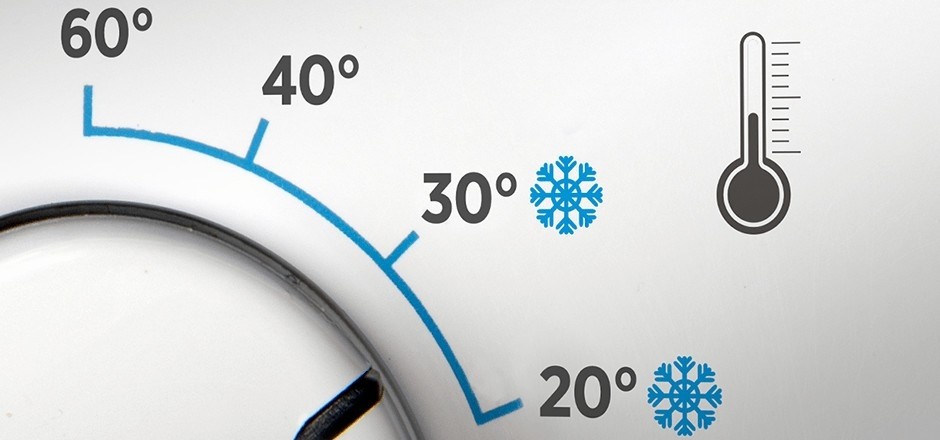
The number sets a maximum temperature
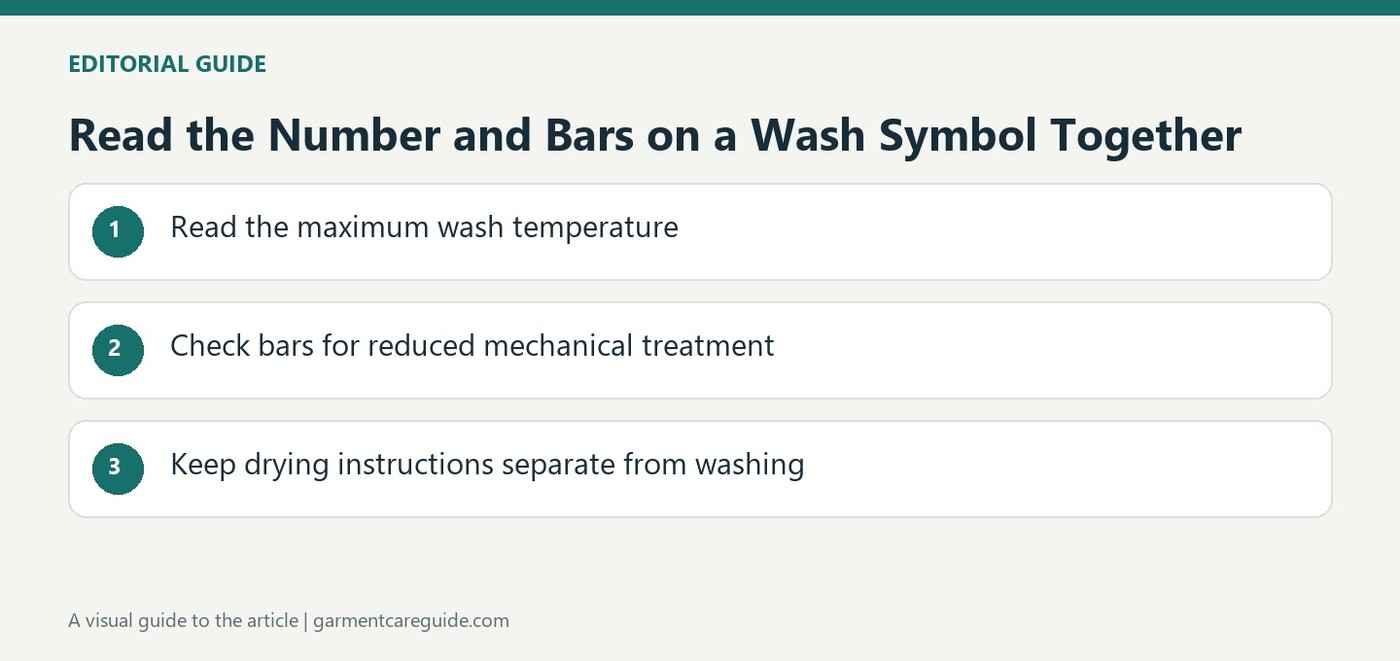
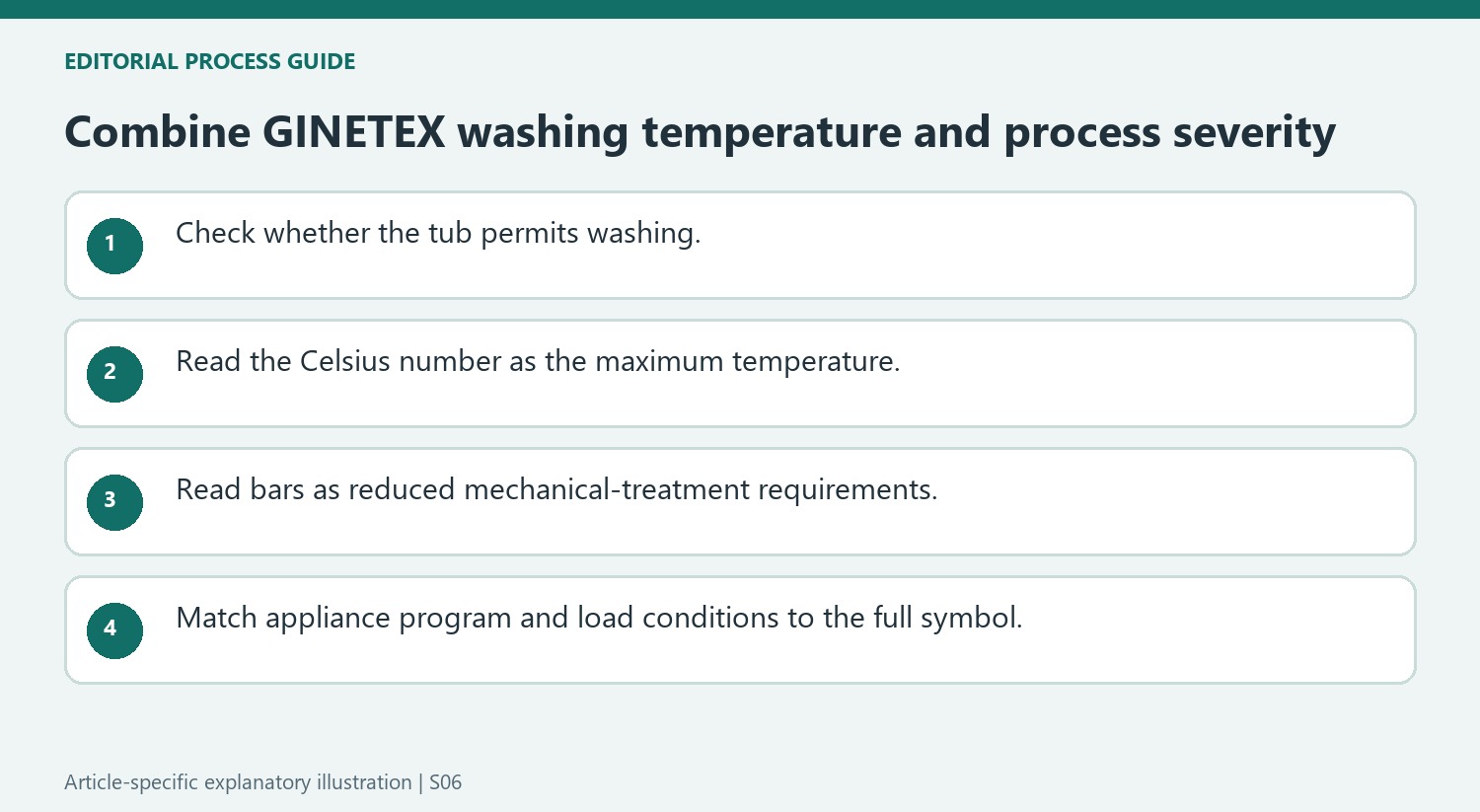
GINETEX's care-symbol reference explains that numbers inside the wash tub indicate the maximum washing temperature in degrees Celsius. They should not be exceeded. That information describes one part of treatment, so the number needs to be read with the rest of the symbol. A tub also indicates whether domestic washing is permitted at all. A crossed tub prohibits washing, while hand-wash variants identify manual treatment with their own temperature conditions. The shape, markings and number therefore work together instead of providing separate suggestions from which a convenient one can be selected.
Bars reduce the mechanical treatment
One bar below the tub indicates a milder process with reduced mechanical action. A double bar describes a very mild process, such as the treatment intended for suitable machine-washable wool articles. GINETEX also connects several of these processes with smaller loads and limited spinning. A cooler normal cycle is consequently not automatically the same as the specified mild process. Check how the appliance implements the relevant program and use the allowed temperature within that treatment. This preserves the difference between controlling heat and controlling the movement applied to a textile.
Read the other care symbols independently
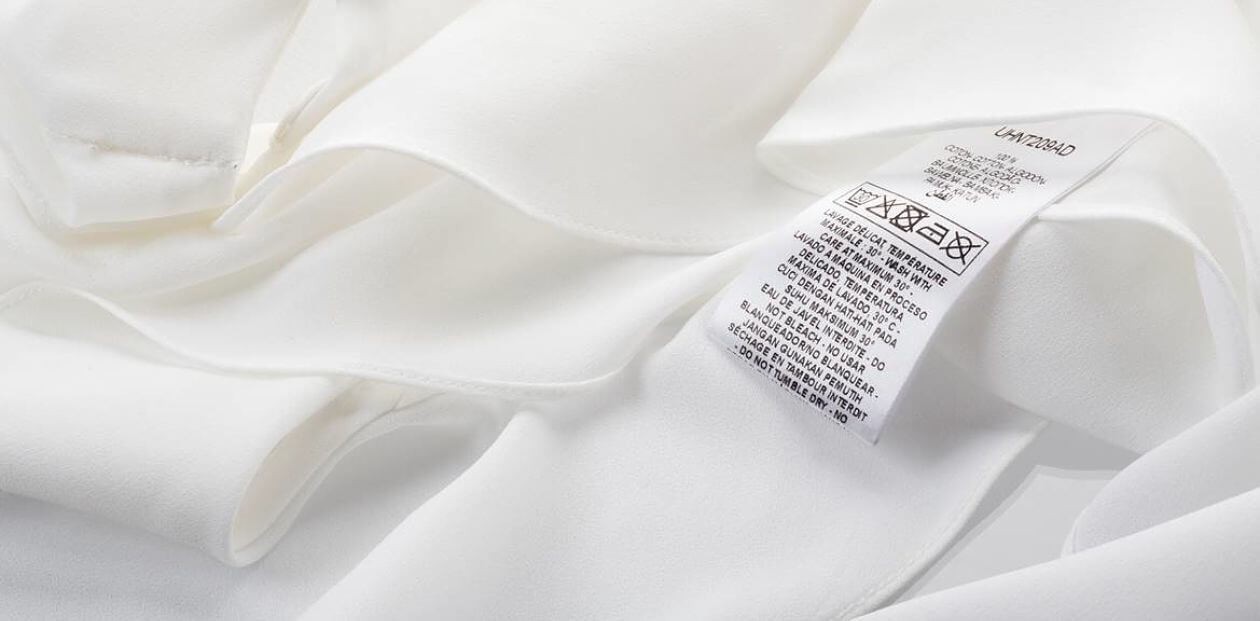
The same reference gives separate instructions for bleaching, drying, ironing and professional care. Its bleaching triangle can prohibit all bleach or distinguish oxygen bleach from chlorine bleach. Natural drying symbols specify arrangements such as line or flat drying, sometimes in the shade. These additional instructions matter after the wash setting has been selected. GINETEX's system makes the label a sequence of treatment limits for the finished article. Keeping the complete sequence in view is more useful than treating a 30-degree marking as a complete description of how an item should be cleaned and finished.
Use the bars as mechanical limits rather than decoration
GINETEX describes one bar beneath a wash tub as a milder process and two bars as a very mild process. These limits are additional to the number inside the tub. A thirty-degree normal program therefore does not automatically reproduce a thirty-degree very mild wash. The source connects some processes with smaller quantities of laundry and restrictions on spinning, making the actual machine behavior important. Read the appliance instructions to understand which program supplies the relevant action. The label's purpose is to define a permitted treatment, so the thermal and mechanical parts need to remain together. Selecting one while ignoring the other leaves the washing instruction only partly followed.
A hand-wash mark has its own conditions
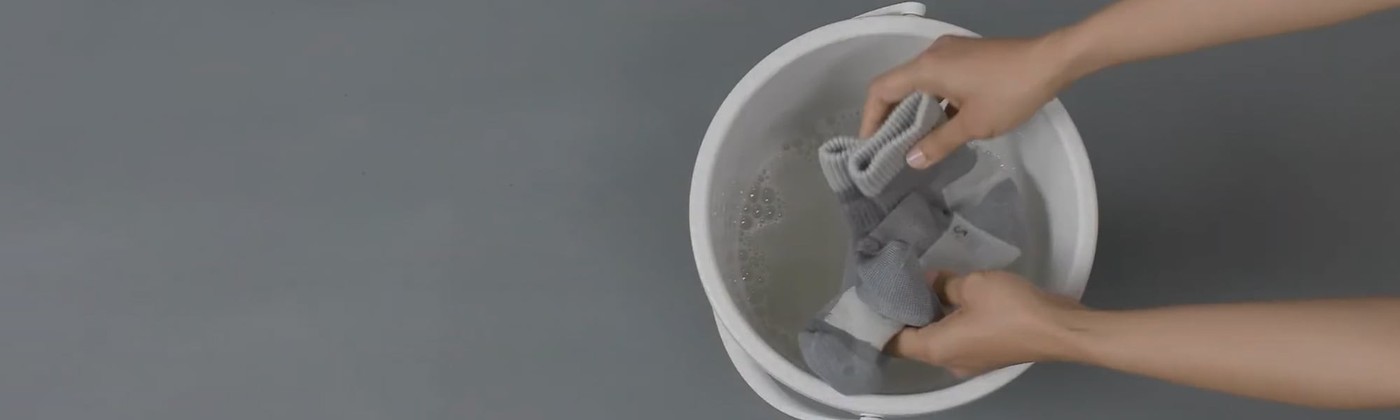
The reference includes hand washing at ambient temperature and a separate maximum-forty-degree route. Both describe controlled manual treatment rather than vigorous rubbing in a basin. The source advises dissolving suitable detergent first, allowing the textile to float, moving it carefully, and avoiding pulling or wringing. After rinsing, excess water is pressed out cautiously and the item is restored to shape. These details matter because manual washing still applies water, chemistry, and movement. The relevant variant and any more specific garment instruction should remain visible. A crossed tub is a different case altogether: it prohibits washing and should not be interpreted as an invitation to try a particularly gentle version of the same wet process.
The five care families complete different stages
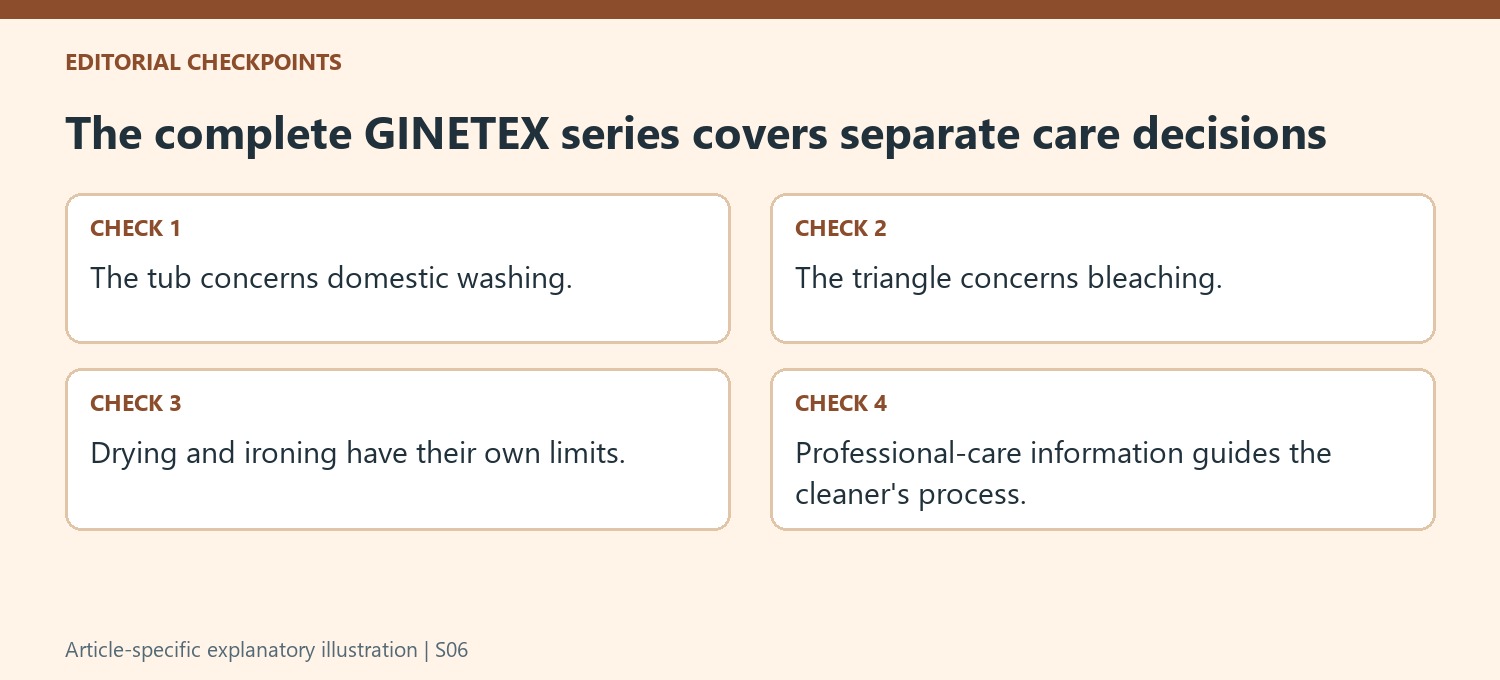
The same GINETEX reference gives separate treatment information for bleach, drying, ironing, and professional care. A washing temperature cannot resolve any of those decisions on its own. The triangle can distinguish permitted oxygen bleach from a prohibition on bleaching, while natural drying marks describe support and shade. Ironing temperature should follow the care label rather than the fiber name alone, and professional-care letters are intended for the cleaner's process. Read the complete series before starting so later stages are planned. This avoids a common sequencing problem: an item receives the correct wash but is subsequently tumbled, pressed, or treated chemically in a way that the remaining symbols do not permit.
References
- GINETEX > Care symbols. GINETEX.